Hi, I'm @arazgholami, Programmer, Blogger and Explorer. I create things and make them better. I'm a repairer, not replacer.I love to transform complex things to simple things.
April 3, 2026
Table of Contents
Posts
2005
In search of a place to write — September 13, 2005
The secound post — November 2, 2005
Mazandaran Travelogue — December 1, 2005
2006
On the way — November 8, 2006
Another Day — December 8, 2006
Conquest of Paradise: A Timeless Anthem — December 31, 2006
2007
Nowruz 2007 — March 21, 2007
A little deeper — April 10, 2007
Finding Joy in the Simple Things — May 10, 2007
Night — July 7, 2007
My Journey Keeps Going — July 8, 2007
2008
The Egyptian, by Mika Waltari — April 16, 2008
Assassin's Creed, A Breakthrough — April 20, 2008
FireFox 2.0 — May 4, 2008
Fall, School, Again — August 26, 2008
ADSL - My First Experience with HamaraSystem — September 5, 2008
2009
DataLife Engine v7.5 just released! — January 16, 2009
I just won Tabriz Computer Competition! — April 30, 2009
The Summer of Self-Discovery — June 10, 2009
Finding Purpose Beyond the Books — December 20, 2009
2010
Another September — September 21, 2010
How to destroy a TV show? — October 13, 2010
I was in heaven — October 17, 2010
Ubuntu v10.10 just released! — October 19, 2010
I broke my pc — October 20, 2010
First White Hair: A Sign of Wisdom? — December 3, 2010
Happy Yalda! — December 21, 2010
2011
My Journey Through Pre-University and University — February 10, 2011
What is life? — March 11, 2011
Nowruz 2011: A New Beginning — March 22, 2011
Discovering Master and Margarita: A Gift from a Friend — April 7, 2011
What Separates Humans from Animals? It's the Ability to Ask 'Why?' — May 26, 2011
Laziness and Choices — May 30, 2011
My Journey to Obtaining a Driver's License — August 25, 2011
Walking Through the Blues — September 11, 2011
Finding Happiness Closer to Home — September 19, 2011
Last station — September 22, 2011
How to delete to delete Facebook account? — November 11, 2011
2012
Taoism — February 27, 2012
Reflecting on Change — March 15, 2012
I just lost all of my data — October 10, 2012
Why you are different? — October 30, 2012
"Why Labeling People as "Deviant from the Norm" is a Faulty Concept — November 1, 2012
Nightmare — November 4, 2012
A Reflection on Communication Styles — November 6, 2012
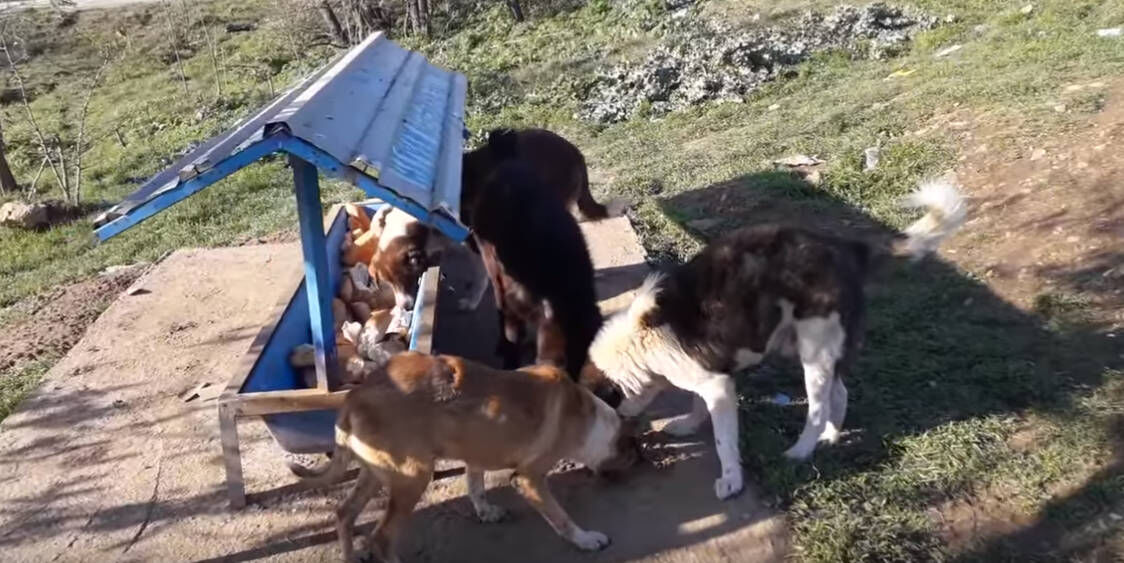
Recent animal abuses in Tabriz — November 20, 2012
The Weakness of Managers — November 29, 2012
Bathroom of the asylum — November 30, 2012
The Inadequacy of College Professors — November 30, 2012
The Rigors of Life — November 30, 2012
Sleepers Paradox — December 18, 2012
Open-Minded Responses — December 19, 2012
Darkest Yalda — December 21, 2012
2013
I'm going to dead inside — January 23, 2013
Paradox of being different — January 24, 2013
Beetle-oriented masculinity — January 26, 2013
Howevers — January 30, 2013
You are defined by the actions you take — February 17, 2013
Keep your problems for yourself — February 17, 2013
Now what? — February 25, 2013
Nowruz 2013 — March 21, 2013
Asshole No More by Xavier Crement — June 20, 2013
Nanga Parbat Atack — June 23, 2013
Our generation — July 7, 2013
I pay for the mistakes that I didn't make — July 9, 2013
Success doesn't come from university — July 28, 2013
LTE is here, Finally — August 14, 2013
My first Android experience — August 21, 2013
Setting up a wireless network with Fripperies — August 21, 2013
About Foodz, a reference for sharing leisure experiences — September 3, 2013
Startup Weekend Tabriz — November 23, 2013
2014
Hello 2014 — January 1, 2014
Web developers vs. Taxi Drivers — January 2, 2014
F**k you Halil Sezai — March 1, 2014
To Vector — March 12, 2014
Job path — April 3, 2014
We, Generation of Magic — May 6, 2014
If I was Romain Gary — June 5, 2014
About my first school — June 5, 2014
Change — June 6, 2014
Success Spammers — June 10, 2014
Keep life simple — June 11, 2014
Me and "Me" — June 14, 2014
Is there anything in the world worth living for? — June 24, 2014
About Persian Wikipedia — July 20, 2014
Jobs in here and there — August 29, 2014
500-year-old photo archive just published on Flickr — August 30, 2014
Creative Mornings Tabriz — November 1, 2014
A Day for Programmers — November 30, 2014
From introversion to extroversion — December 3, 2014
My blood donation story — December 10, 2014
2015
Working from Home vs. Working at the Office — January 24, 2015
For a Friend Who Will Always Stay with Us — February 16, 2015
The Chronicles of Disillusionment — February 22, 2015
Nowruz 2014 And my new backpack — March 19, 2015
A Rainy Night with Ali-Agha Vahed — May 15, 2015
Literature Belongs to the Losers — May 24, 2015
7+1 Principles for everything — June 17, 2015
Signature Request for Lean Startup Machine in Tabriz — June 20, 2015
For the love of our Flask — June 22, 2015
From the Pain I Endure — June 25, 2015
Rapid Business Launch in the Style of Guerrilla Tactics — August 17, 2015
Sweetness and Bitterness — August 21, 2015
Believe Me, We Are Dead — August 30, 2015
Travelogue of Tehran and the Beginning of a Friendship — October 2, 2015
Resolving Issues with Ruby Gem Repositories — November 17, 2015
Like a Traveler Who Wasn't Welcomed — December 16, 2015
Let's Not Forget to Live — December 30, 2015
2016
Peykan-57 — January 6, 2016
Mental Void — January 9, 2016
Beware of Fake Twitter Accounts — January 10, 2016
The Little Prince — January 10, 2016
Smoking, OCD, and Things Like That — January 12, 2016
Overthinking — January 12, 2016
Winter Journal — January 13, 2016
For the Milky Way Galaxy — January 14, 2016
Today’s Update — January 15, 2016
Our way — January 17, 2016
On Simplifying Life — January 19, 2016
16 years with a backpack — January 24, 2016
An Attempt to Change — January 28, 2016
Inertia Daylog — February 6, 2016
The Little Fish Campaign — March 9, 2016
Cocacola — March 15, 2016
Point of view — March 19, 2016
Moments of Simplicity — March 22, 2016
Understanding Before Solving — March 27, 2016
Self-change vs Environment-change — March 30, 2016
When you have nothing to lose — July 5, 2016
Discovering Tabriz in the British Library Archives — October 10, 2016
I felt cold — November 16, 2016
2017
Feeling Out of Place — February 15, 2017
New Year, New Beginnings — March 20, 2017
Me and my goals have destroyed me — May 10, 2017
Why Nations Fail: The Origins of Power, Prosperity, and Poverty by Daron Acemoglu - James A. Robinson — June 15, 2017
he Sword Lover’s Journey — June 27, 2017
829 Billion md5 String — August 20, 2017
Understanding Section 508 and Web Accessibility Standards — October 25, 2017
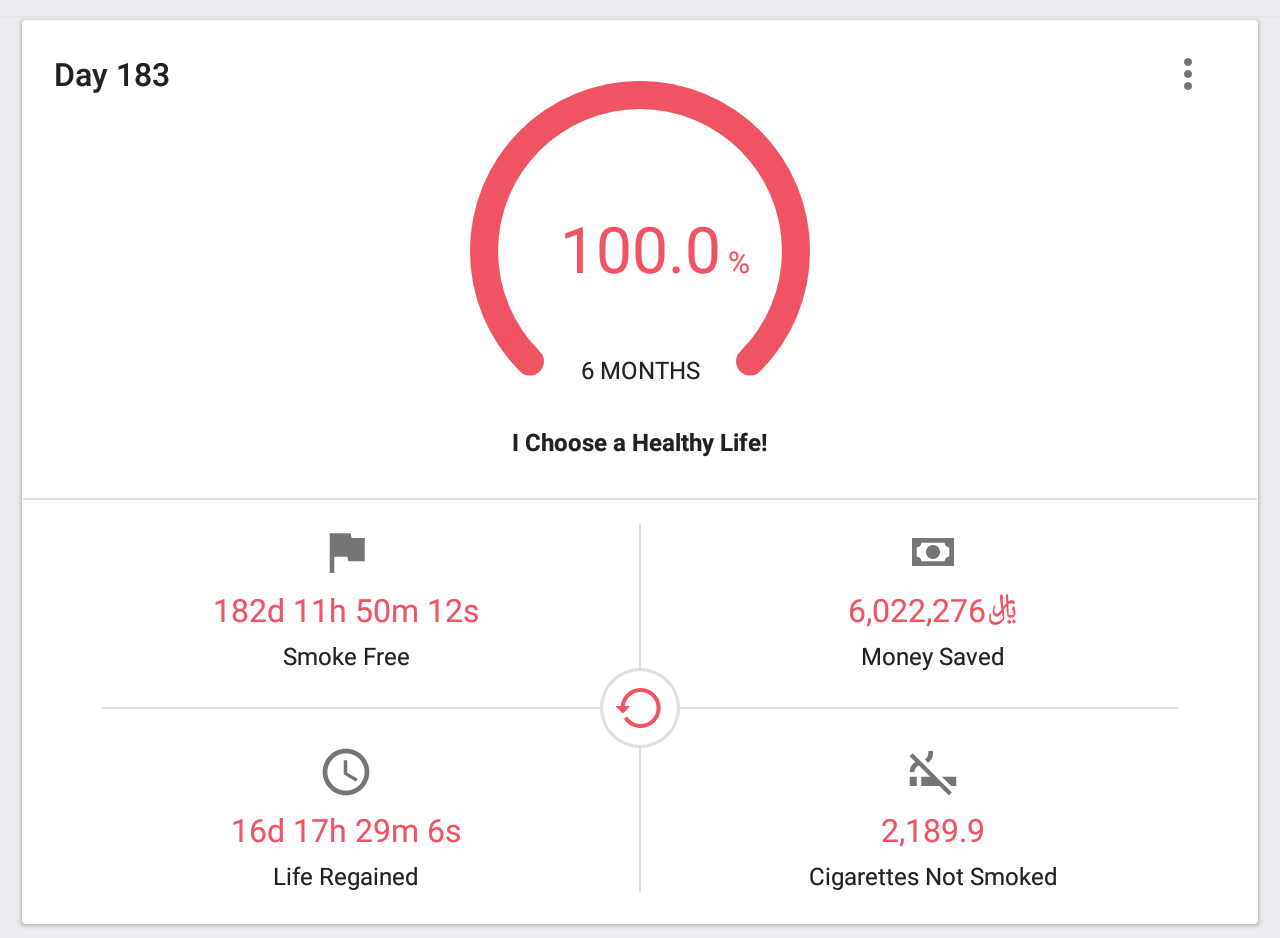
Timeline after quitting smoking — December 1, 2017
Reflecting on 2017 and My Goals for 2018 — December 27, 2017
Bringing Baran Theater to Tabriz — December 29, 2017
2018
Testing a New Work Schedule — January 2, 2018
Write for Your Friends, Not Your Enemies — January 6, 2018
WP Theme - Rebellion — January 10, 2018
Blogging Is Alive—More Alive Than Ever — January 12, 2018
How to Be Yourself? — January 12, 2018
December 2017 Recap — January 19, 2018
Imitations and Consequences — January 20, 2018
The arrow has already left the Bow — January 23, 2018
On Depression, Anxiety, and a Podcast Recommendation — January 26, 2018
Minimal (0) — January 28, 2018
Why I Have the Right to Be Upset About What I Don’t Have — January 31, 2018
A Turtle-like Mind — January 31, 2018
Life After Quit Social Networks — February 2, 2018
How to solve problems? — February 2, 2018
I'm the most negative person around — February 4, 2018
Goodbye My Phone — February 7, 2018
When Logic Fails — February 8, 2018
How is life without news — February 10, 2018
In rebuttal of humility — February 10, 2018
Prison — February 11, 2018
From Reality to Truth — February 12, 2018
OpenBazaar: Review — February 12, 2018
Zeronet & Blockstack: Review — February 16, 2018
What if Snowden is not who we think — February 16, 2018
How to be a web developer — February 16, 2018
If you’re the smartest person in the room, you’re in the wrong room — February 23, 2018
Nowruz 1397 — March 21, 2018
Five month without smoking — March 29, 2018
Attachment to the Stairwell Janitor — March 31, 2018
Another Sprint — March 31, 2018
Spring Thoughts — March 31, 2018
A night at Internet Cafe — March 31, 2018
Awaiting Nietzsche’s Revelation — March 31, 2018
Chance — March 31, 2018
Online conversation etiquette — March 31, 2018
Restarting My Blog — March 31, 2018
Recording Audio on Linux CLI — April 1, 2018
April's Travellog — April 2, 2018
Why and How I Blog — April 2, 2018
Tips for Climbing "Kamal" Peak — April 4, 2018
10 Reasons to Move On — April 4, 2018
What I learned at Military Service — April 5, 2018
Honest Ads: Social Networks — April 12, 2018
I'm not busy, I'm just an as*hole — April 15, 2018
A Letter to Myself in 10 Years — April 15, 2018
Life Without a Soundtrack — April 17, 2018
How to Tell Good Music from Bad — April 17, 2018
My First Computer — April 17, 2018
The Unavoidable Reality of Loneliness — April 18, 2018
How to enjoy life? — April 19, 2018
Another failed project — April 19, 2018
In defiance of consumerism in programming — April 23, 2018
Reflections on Veronika Decides to Die — April 23, 2018
Hypertext Fiction — April 23, 2018
Self Confidence — April 23, 2018
The Unmotivated of the World, Unite! — April 23, 2018
The Unseen Burden of Being a Man — April 24, 2018
Typography: Fonticons — April 24, 2018
Ubuntu 18.04 (Bionic Beaver) Released — April 26, 2018
Finding Balance: Enjoyment Without Addiction — April 28, 2018
Scuttlebutt: A Secure, Decentralized News Platform — April 28, 2018
The Beginning of Aging — April 29, 2018
Six Months After Quitting Smoking — April 30, 2018
Understanding Isn’t Mastery — April 30, 2018
The Last Human — May 1, 2018
For the Spotlight Across the Street — May 1, 2018
10 Things to do after installing Ubuntu 18.04 — May 3, 2018
I'm Cage, A Wolf Howls Within Me — May 6, 2018
In Praise of the Illusion of Not Being Alone — May 7, 2018
My Experiences on a Trip with Teenagers — May 8, 2018
Symphony of Migration: First Movement | Before the Flight — May 9, 2018
Symphony of Migration: Second Movement | First Days in Turkey — May 13, 2018
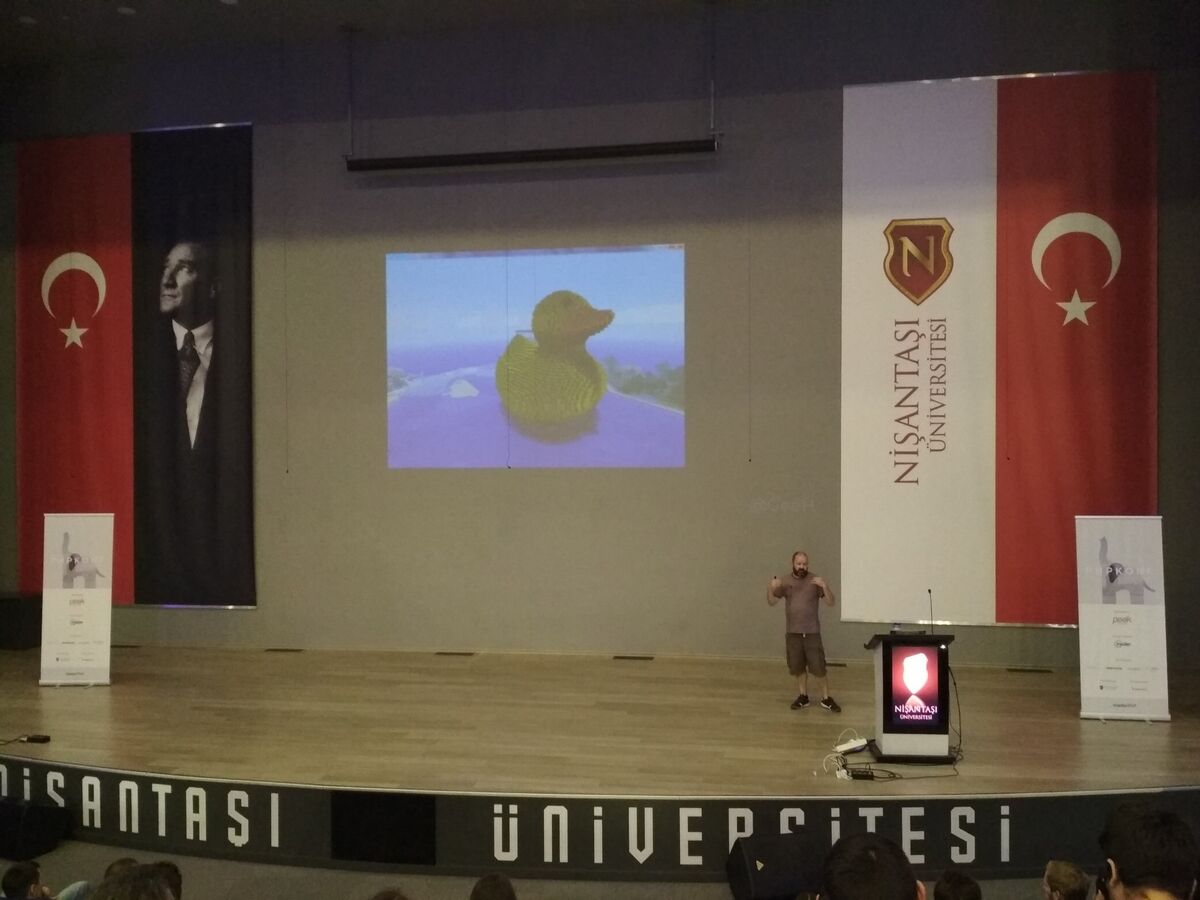
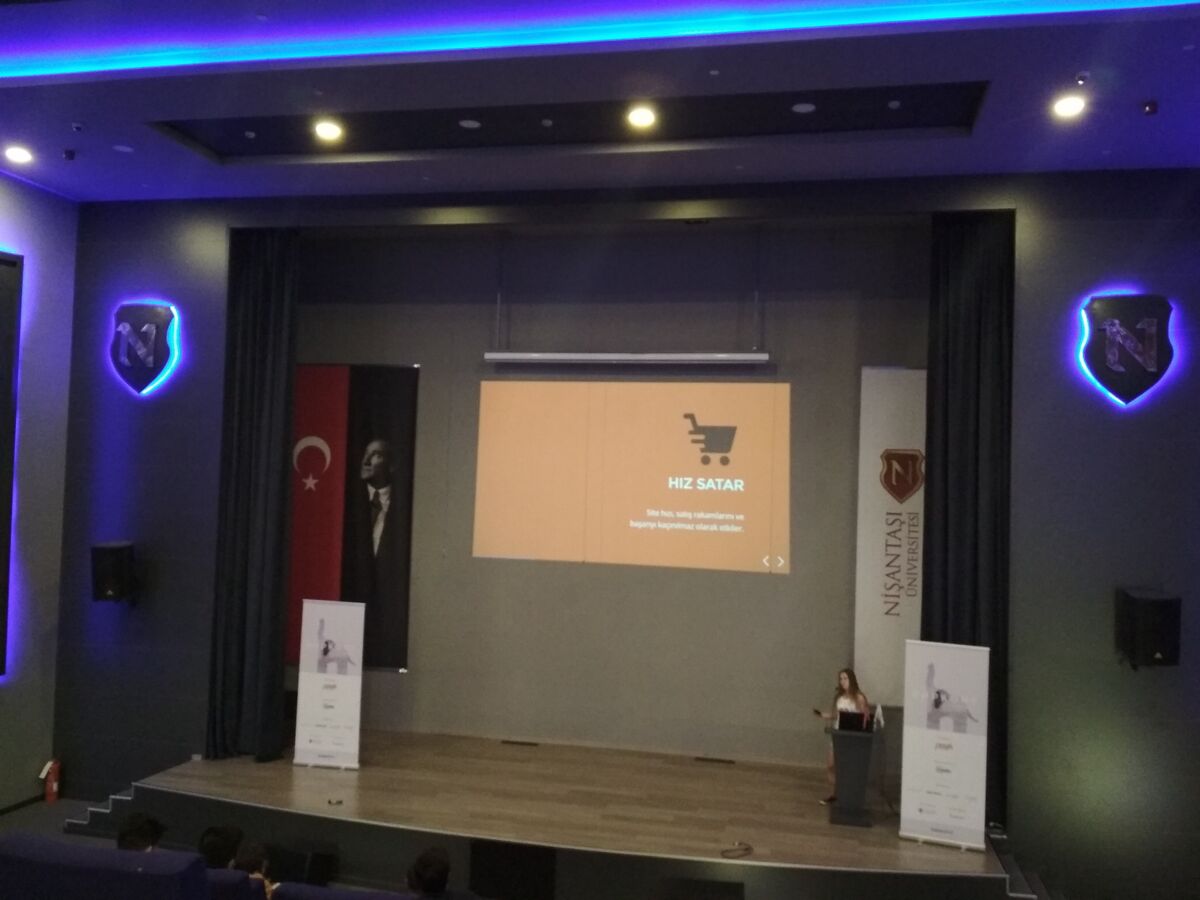
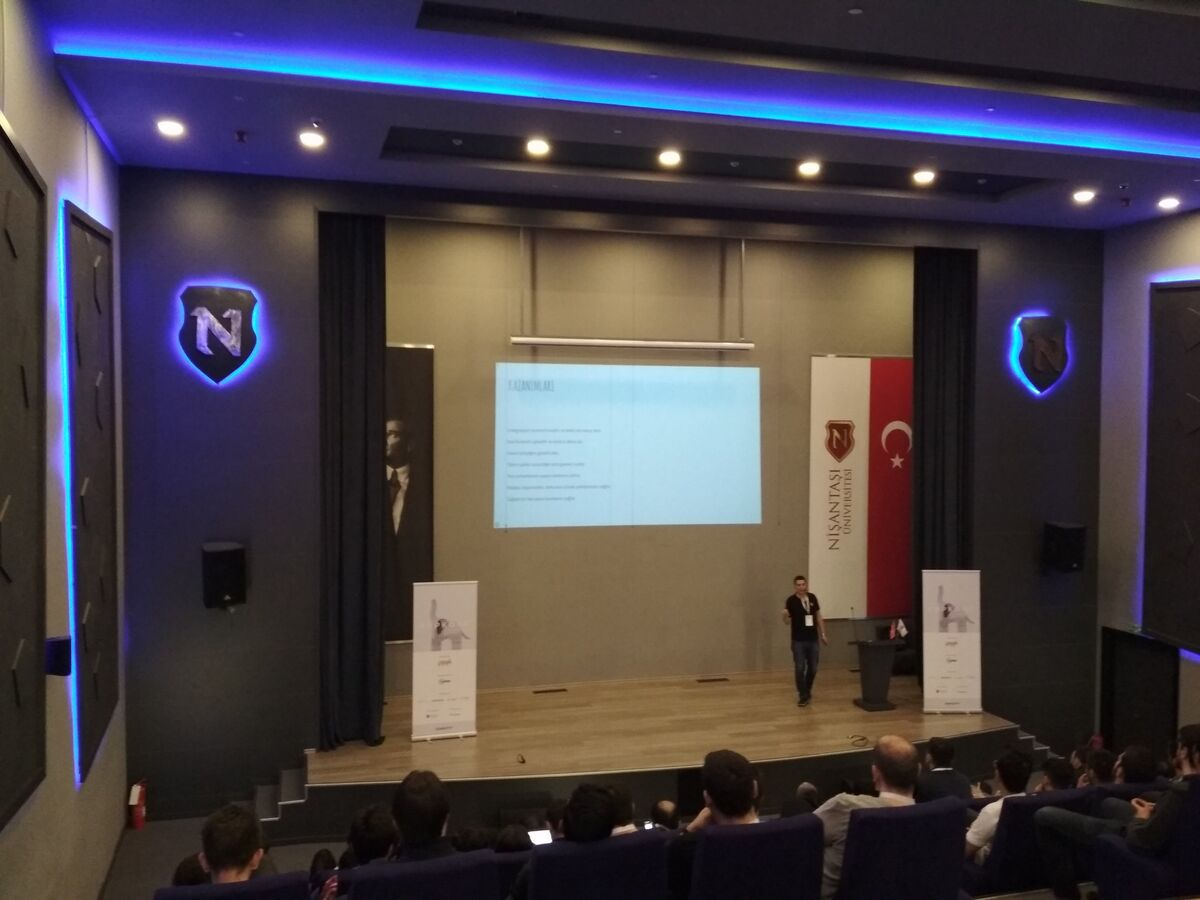
PHPKonf 2018 — May 20, 2018
Why I prefer blogging over anything esle? — May 28, 2018
How to See 3D Stereograms or Hidden Images? — May 29, 2018
Insomnia — May 31, 2018
June 2, 2018, Istanbul — June 2, 2018
Feeling the Weight of the Past — June 4, 2018
In Loving Memory of My Aunt — June 6, 2018
June 8, 2018, Istanbul — June 8, 2018
June 10, 2018, Istanbul — June 9, 2018
Cooking at Home in a Foreign Land — June 13, 2018
June 17, 2018, Istanbul — June 17, 2018
On Having No Plan — June 19, 2018
June 24, 2018, Istanbul — June 24, 2018
July 1, 2018, Istanbul — July 1, 2018
Giving Back — July 5, 2018
Another Night | July 16, 2018, Istanbul — July 13, 2018
July 20, 2018, Istanbul — July 19, 2018
August 7, 2018, Istanbul — August 6, 2018
August 19, 2018, Istanbul — August 19, 2018
Oblomovism — September 8, 2018
October 29, 2018, Ankara — October 29, 2018
Rethinking the Nature of Talking — October 30, 2018
The Benefits of Not Reaching — November 21, 2018
Shahnaz’s Dream Across the World — November 21, 2018
November 22, 2018, Ankara — November 21, 2018
11 Reasons That You Need Fresh Air — November 23, 2018
Bridges — November 27, 2018
Lessons Learned from a Job Interview in Germany — November 27, 2018
Desire — December 2, 2018
December 3, 2018, Ankara — December 3, 2018
Pattern — December 3, 2018
Let it go — December 4, 2018
The only real key to solving all of humanity's problems — December 11, 2018
Birthday — December 25, 2018
How to succeed? — December 25, 2018
December 28, 2018, Ankara–Istanbul–Tabriz — December 28, 2018
2019
January 7, 2019, Ankara — January 8, 2019
2018 Recap and 2019 Roadmap — January 11, 2019
What Do You Take With You When You Migrate? — January 19, 2019
Four Lessons I Recently Learned — January 25, 2019
How to do Magic — January 25, 2019
What is ME — January 27, 2019
Ankara Dream — January 29, 2019
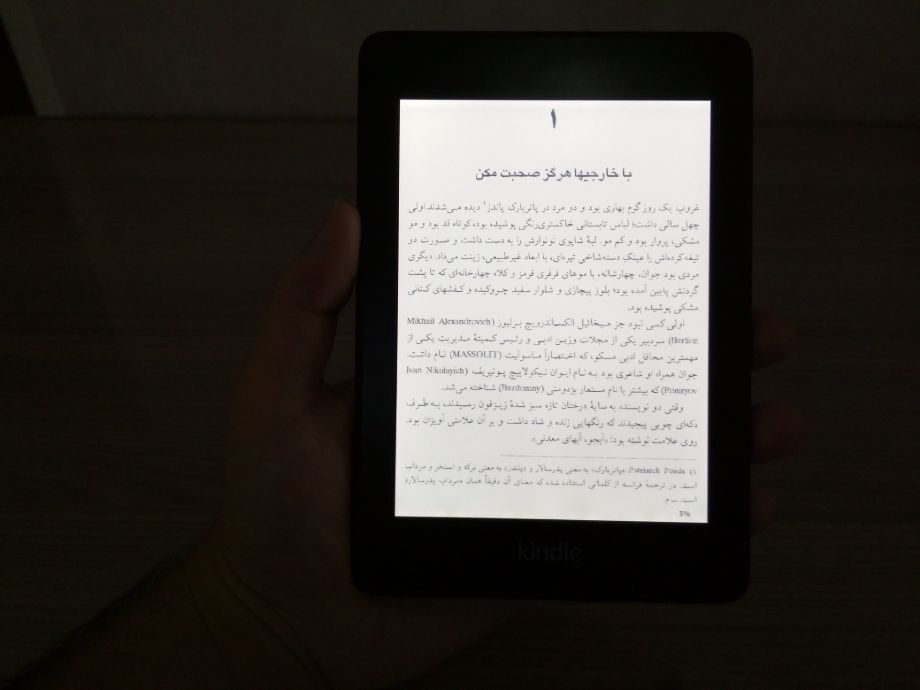
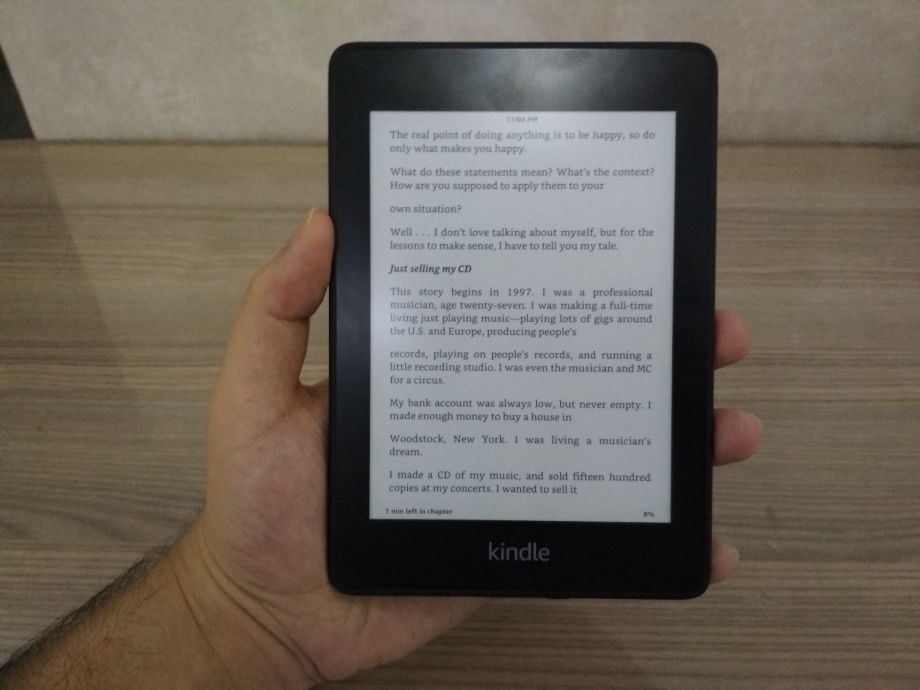
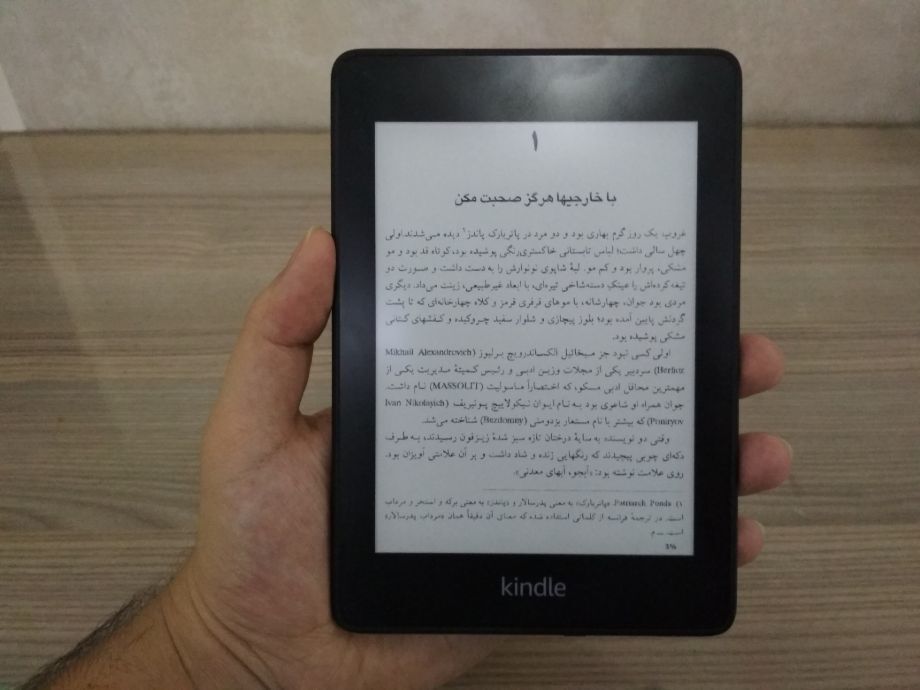
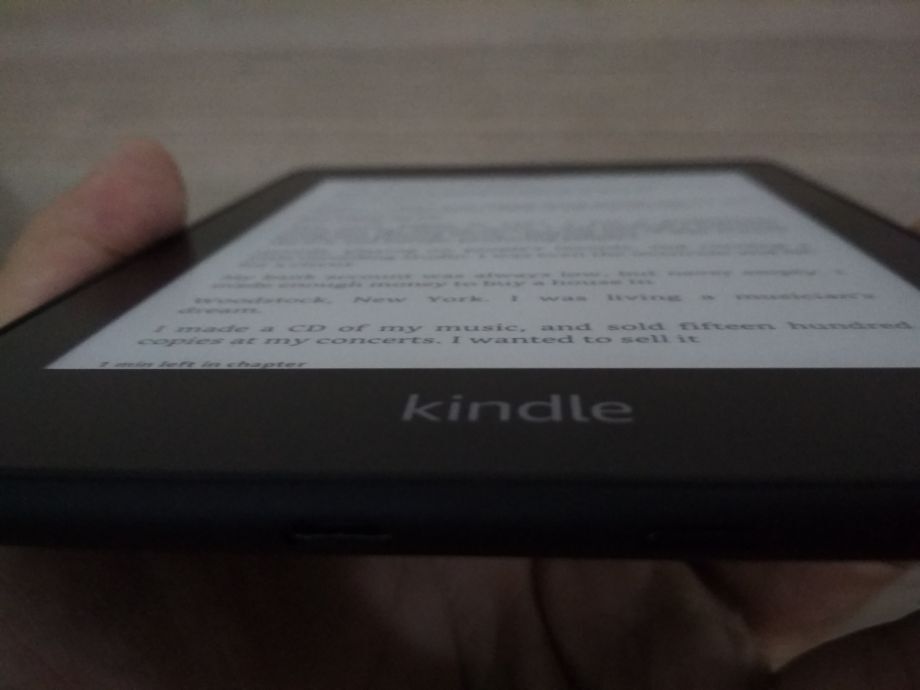
Kindle Paperwhite 4 (10th Generation) Review — February 9, 2019
Owed to Myself — February 13, 2019
A Whale — February 23, 2019
Even and Odd Perspectives — March 3, 2019
March 3, 2019, Ankara — March 3, 2019
Balcony Dream — March 3, 2019
On Condemning Multidimensional Life — March 4, 2019
We share, therefore we exist — March 9, 2019
March 12, 2019, Ankara — March 12, 2019
March 16, 2019, Ankara — March 16, 2019
March 17, 2019, Ankara — March 17, 2019
March 21, 2019, Nowruz, a hotel in Istanbul — March 21, 2019
Statistics and numbers from a year of consistent writing — March 29, 2019
Barking up the wrong tree — March 29, 2019
First Love — March 31, 2019
April 1, 2019, Istanbul — March 31, 2019
So what? (2) — March 31, 2019
The Value of Original Thinking and Avoiding Blind Imitation — March 31, 2019
False Nostalgia — April 6, 2019
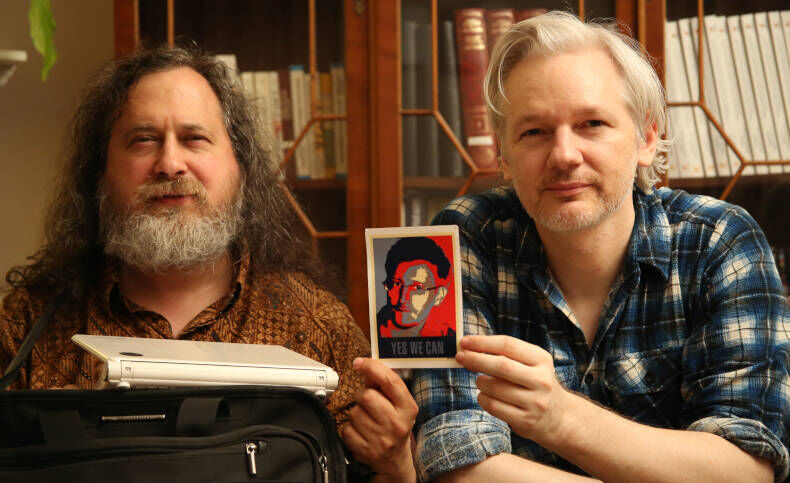
Julian Assange Arrested — April 14, 2019
April 14, 2019, Istanbul — April 17, 2019
April 19, 2019, Beloved Tabriz — April 19, 2019
How to Relieve Ear Pressure After a Flight — April 28, 2019
May 8, 2019, Istanbul — April 29, 2019
Lessons Learned After One Year of Living Alone — May 11, 2019
What the heck is wrong with you people? — May 13, 2019
May 29, 2019, Mehrabad Airport, Tehran — May 29, 2019
June 12, 2019, Istanbul — June 10, 2019
20 Laravel Eloquent Tricks for Faster Coding — June 22, 2019
A Practical Guide to Preparing for Migration — June 22, 2019
Relationship Pros — June 22, 2019
Do not as the Romans Do — June 22, 2019
How to Confront Yourself? — June 22, 2019
Dream of Arasbaran — June 26, 2019
Finding Purpose and Action — July 5, 2019
Full-Time Remote Job Opportunities in Turkey — August 6, 2019
Complete Guide to Converting Right-to-Left Books for Kindle — August 7, 2019
Immigration Experience Meetup – Tabriz, Tuesday, August 13, 2019 — August 11, 2019
August 18, 2019, Tabriz and Istanbul, Fourth Trip — August 18, 2019
August 24, 2019, Istanbul — August 24, 2019
Free Ross — August 27, 2019
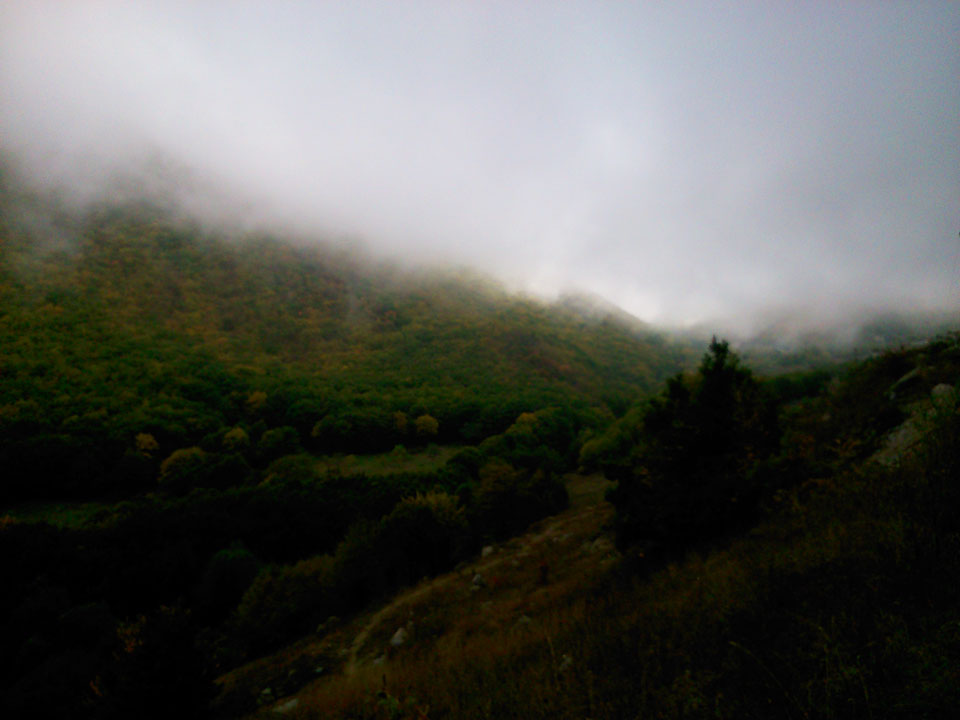
October 19, 2019 – Foggy Istanbul — October 19, 2019
Minimalism (1) Symphony of the Dead — October 19, 2019
November 15, 2019 – Istanbul — November 15, 2019
Minimal (2) Foolishness — November 25, 2019
Minimalism (3) Hemlock — November 25, 2019
Some Questions for Reflection — November 25, 2019
Minimalism (4) Should Depression Be Treated? — November 25, 2019
For Anyone Considering Migration — December 2, 2019
December Dream — December 4, 2019
Talk vs. Action — December 16, 2019
December 25, 2019, Istanbul and Tabriz Airports — December 25, 2019
The Art of Stepping Back — December 31, 2019
2020
January 9, 2020, Istanbul, Got Cold — January 9, 2020
Dribble Invitation — January 12, 2020
Minimal (5) When Obsession Ends — January 14, 2020
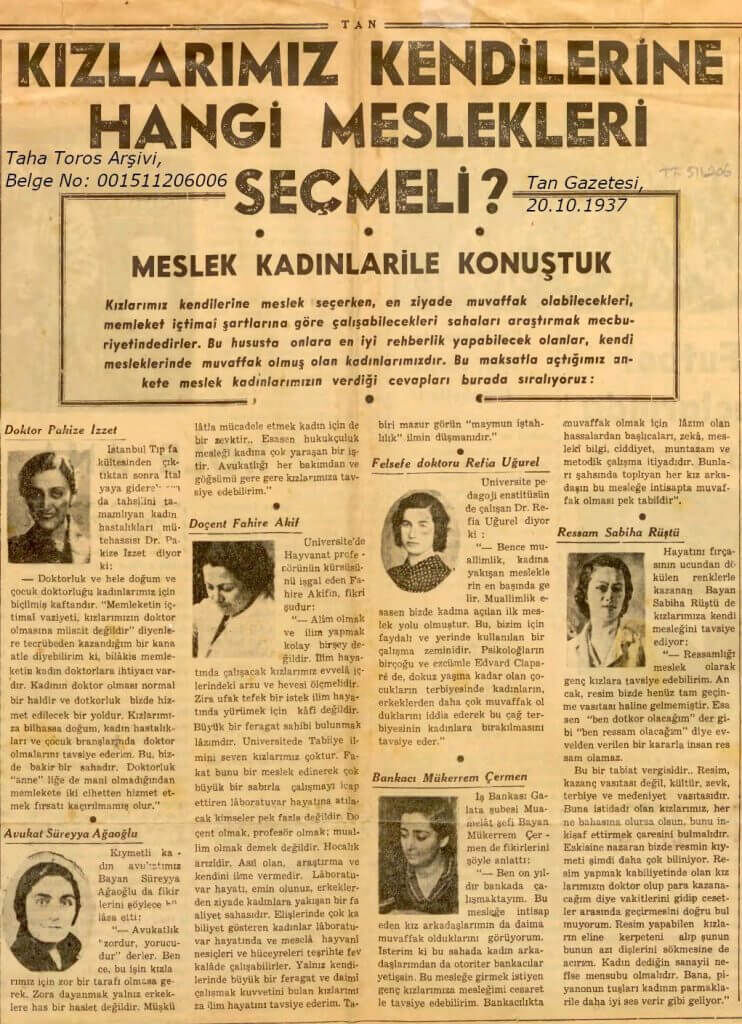
Career advice for Turkish women in 1937 — January 15, 2020
January 21, 2020, Istanbul (maybe the first snow) — January 21, 2020
February 21, 2020, Istanbul — February 21, 2020
Minimal (6) Ambiguity — February 26, 2020
Minimal (7) Where is your crown? — February 27, 2020
Happy Nowruz 1399 — April 4, 2020
April 16, 2020, Tehran Airport — closing that chapter — April 13, 2020
WTF-IS: Linux Terminal — April 17, 2020
Essential Steps After Installing Ubuntu 20.04 — May 12, 2020
May 14, 2020, Zarkhesht (1) | Meeting Ali Sekhavati — May 13, 2020
May 15, 2020, Zarkhesht (2) | Farming, Gardening, and Everything He Does — May 17, 2020
May 16, 2020, Zarkhesht (3) | Laboring Instead of Heartbreaking — May 22, 2020
I’m an Introvert—but That’s a Lie — June 20, 2020
WTF-IS: VIM — July 18, 2020
Happy Thanksgiving! 8 Things to Be Grateful For (And One Bonus) — August 19, 2020
September 22, 2020, Tabriz | The Beginning of Autumn — September 22, 2020
The Social Etiquette Trap — September 22, 2020
Minimal (8) September — September 22, 2020
Understanding OWL: The Web Ontology Language — October 15, 2020
Appendixology — November 12, 2020
The Essential Art of Walking — November 13, 2020
Understanding L10n, I18n, and Related Terms — November 14, 2020
WTF-IS: LaTeX — November 14, 2020
Thus Spoke the Master (1) — November 14, 2020
Discovering the Lost Void Within — November 14, 2020
How to apply for a job? — December 10, 2020
2021
What to Do With Happiness and the Fear of Losing It — January 3, 2021
How to live good in bad places — January 3, 2021
Why and How We Should Help Others — January 3, 2021
Clear Your Lists - Reclaim Your Life — January 9, 2021
21 Must-Read Books for 2021 — January 9, 2021
How to Plan Your Life — January 24, 2021
Minimal (9) How to Feel Better Fast — January 24, 2021
How to Die (and Actually Live Afterward): Make Every Single Day Feel Like a Gift — February 1, 2021
How to Read Books (and Actually Enjoy It) — February 5, 2021
Minimal (10) If You’re in One of These Three Situations, Run — February 5, 2021
The Future — February 5, 2021
Why and How to Reconcile with Ourselves? — February 14, 2021
Several approaches in the workplace to have a better work experience — February 21, 2021
Minimal (11) Thinkers and Imitators — February 21, 2021
How to Break Free from a Toxic Relationship — March 25, 2021
Minimal (12) What to Do with Life’s Unsolvable Problems — March 29, 2021
How to Live a Happy and Productive Life — June 29, 2021
July 5, 2021, Tabriz Airport — July 4, 2021
July 11, 2021, Istanbul — July 10, 2021
July 20, 2021, Ankara — July 24, 2021
August 1, 2021, Istanbul — July 31, 2021
October 31, 2021, a Café in Tabriz — October 31, 2021
We’re Living the Dreams from 100 Years Ago. Here’s Why — October 31, 2021
"Do Nothing" Manual — October 31, 2021
Minimal (13) How to Enter a Relationship with Someone Who’s Emotionally Unavailable? — November 13, 2021
2022
Trust me, You wouldn’t start on Monday — January 2, 2022
Minimal (14) In Praise of Transparency — May 19, 2022
14 Signs You’re Not Special — May 19, 2022
May 28, 2022, Tabriz — May 28, 2022
What Does a Healthy Relationship Look Like? — May 29, 2022
The Ultimate Guide to Being Cool — June 5, 2022
32 Unanswerable Questions… Answered! — June 12, 2022
Minimal (15) A Quick Way to Break Free from Procrastination — August 5, 2022
15 Key Principles for a Strong Mindset — August 6, 2022
Mental Manipulation: How to Stop It — August 13, 2022
A Quick Tip to Catch Up on Pending Tasks — September 11, 2022
Last post of 2022, December 31, 2022, Istanbul, Adalar, Eskişehir, Ankara, and Tabriz — December 31, 2022
2023
8 Small Reminders in Crisis — January 18, 2023
Snakes in Suits: When Psychopaths Go to Work — February 11, 2023
Happy Nowruz 2023, I promise to watch the sky more — April 2, 2023
Ruthless Road Trip: Sarein, Astara, Ramsar, and the Endless Roads — May 1, 2023
Minimal (16) Why Being Unreceptive to Criticism Can Destroy You — May 6, 2023
How to Stay Happy Without Excessive Consumerism — May 6, 2023
What is FOMO and How to Deal with Its Dilemma — May 19, 2023
Classicism and Its Application to Modern Life — June 5, 2023
Admitting Failure and Starting Treatment (1), June 14, 2023 — June 14, 2023
Signs of Anxiety and How to Overcome It — June 25, 2023
Minimal (17) Perfection — June 25, 2023
Admitting Failure and Ending Treatment (2), August 22, 2023 — August 22, 2023
Resignation and the End of a 6-Year Chapter, August 25, 2023 — August 25, 2023
Endless Meadow Under Rainy Clouds — September 1, 2023
How to avoid burnout — September 1, 2023
A free and easy way to watch whole World TV Channels online with IPTV — October 26, 2023
3 Thing to Improve For Having Better Feelings — December 1, 2023
When Employees “Expire” — December 1, 2023
Managing Negative Triggers — December 1, 2023
Three Months After Resignation — December 1, 2023
2024
Happy Noruz 1403! — March 20, 2024
How to discuss? — March 20, 2024
Minimal (18) Truth — March 21, 2024
How Durnam was created? — April 25, 2024
Why Cult Mentality Can Lead to Dementia — May 29, 2024
Minimal (19) Awareness — May 29, 2024
The Complexities of Therapy and Its Challenges — May 29, 2024
Dark Dream — July 14, 2024
Important Things to Do After Installing Ubuntu 24.10 (Oracular Oriole) — October 11, 2024
How to use Internet on Mars? — November 9, 2024
Brain Fog: How to manage it? — November 12, 2024
FOMO Marketing — November 12, 2024
How Installing Linux Changed My Life — November 12, 2024
Livewire, Hotwire, and HTMX: Which One Fits You? — November 12, 2024
Trying to Quit Something? Don’t! — November 12, 2024
Protect Your Brain Before It’s Too Late — November 13, 2024
How to Survive a Breakup? — November 15, 2024
WTF-IS: MySQL Database — November 17, 2024
How to Quit Smoking Easily by Allen Carr — November 23, 2024
Beyond Silicon: The Rise of Photonic CPUs and the Future of Computing — December 11, 2024
2025
Thriving in the AI Age: A Human’s Guide to Staying Relevant — January 4, 2025
How To Deploy a React Application with Apache2 on Ubuntu? — January 13, 2025
The Robot Took My Job. Now What? — February 16, 2025
20 Secrets of the Human Puzzle We’re Yet to Unlock — March 11, 2025
493 Days of Unemployment and What I Learned — March 16, 2025
Minimal (20) Motivation — March 29, 2025
The Ugly Truth About Real-World PHP Programming — April 20, 2025
Think the Sky Is Blue? You’re Wrong, It’s Green — May 30, 2025
Can You Leave Secret Messages for AI? — June 7, 2025
Need Email for Your Website? Here’s How to Get It for Free — June 7, 2025
When “Act Like It’s Yours” Backfires — August 1, 2025
A Fresh Start, A Timeless Redesign — September 16, 2025
What You Need to Do vs. What You're Doing — September 22, 2025
It’s Your Life, It’s Your Choice — September 25, 2025
I made a Cyberpunk 2077 Tarot Deck — September 28, 2025
2026
The End of Average Developers — February 27, 2026
Projects
2007
MegaTools E-Magazine just published! — November 6, 2007
2008
My new custom Smilies set — September 23, 2008
Introducing PlasmaForums: The IT and Technology Hub of 2008! — October 8, 2008
2009
MyTabriz, A social network for Tabriz — April 30, 2009
2012
Tabriz Cafes Directory — November 21, 2012
I need your voice — November 30, 2012
2013
RTL Styles for Google Reader Alternatives — July 2, 2013
Twitter without Replies — September 1, 2013
2014
Bug, Araz's Giraffe — February 6, 2014
Plan for your holidays with Tatilyab — February 21, 2014
Introducing HappyCard — March 16, 2014
Tweetexy, a decentralized Twitter client — July 15, 2014
CSSTips — November 23, 2014
Introducing Shelfinfo — November 27, 2014
2015
Kargahak: Small Workshops for Learning Everything — May 8, 2015
2018
Introducing Köçürən, An Azerbaijani Transliterator — January 23, 2018
TabrizTrip, A Tourism Encyclopedia for Tabriz — April 23, 2018
WP Theme: Notepad — May 17, 2018
2019
The Pirate Bay - Away from Keyboard (with Persian subtitle) — May 23, 2019
Fall Countdwon — August 21, 2019
2023
Book Summaries as Blog Posts: Loungeia — February 8, 2023
2024
Durnam, Azerbaijani Turkish Language Tools — March 12, 2024
2025
Nasimi Programming Language — January 1, 2025
Odak.app - Distraction-free Writing App — January 10, 2025
WYSIWYG Markdown Editor — February 20, 2025
Awesome M3U Editor — June 20, 2025
Easy Reader Chrome Extension — July 20, 2025
EasyCompress — July 20, 2025
Soundscape AI - What to listen in this scene — August 20, 2025
Online Azerbaijani Pantomime Group Game — September 20, 2025
Links
2025
The Web is F*cked — September 6, 2025
MotherF*ckingWebsite — September 6, 2025
SmolWeb — September 7, 2025
Micro - A terminal-based text editor — October 5, 2025
Vim Adventures — October 5, 2025
Playlist
2018
Privacy Parfüm Reklam Müziği — March 21, 2018
2025
Ólafur Arnalds ft. Arnór Dan - So Far — September 6, 2025
Palehorse/Palerider – Tamám Shud — September 7, 2025
Billie Eilish - WILDFLOWER — September 10, 2025
2026
Iday – Whale — February 8, 2026
Quotes
2012
Move, before you die. — November 29, 2012
2018
In Praise of Slow — April 18, 2018
Startups are a bit like smoking in the 50s — April 23, 2018
There was no third choice — May 28, 2018
Problems which never actually happened — July 19, 2018
2019
Don’t look for a reason — January 11, 2019
Even God has his hell — March 3, 2019
I will tell myself my own story — March 3, 2019
The broken are the more evolved — June 22, 2019
2020
It's not binary — February 26, 2020
2021
Only the wisest and stupidest of men never change. — January 24, 2021
2025
The world is a maze of illusions — September 11, 2025
All sorrows can be borne — September 15, 2025
The Basic Laws of Human Stupidity — October 5, 2025
Lost — October 9, 2025
Posts
2005
In search of a place to write
September 13, 2005
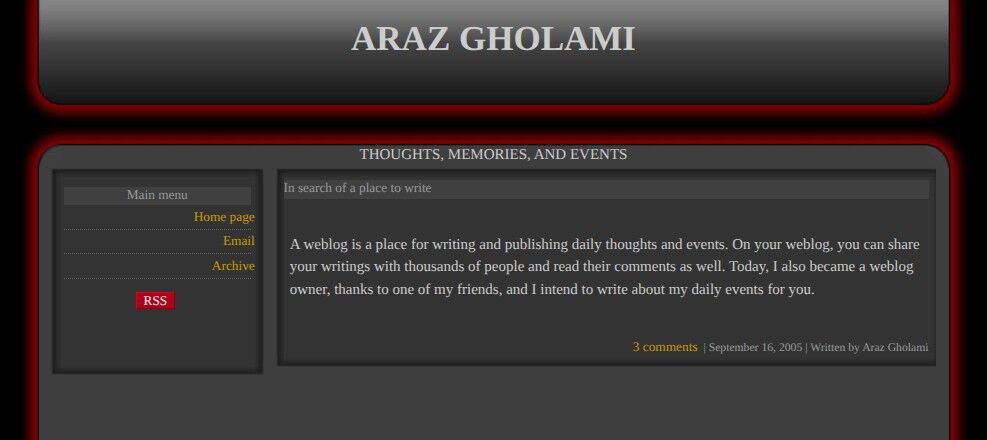
My first blog screenshot back in September 16, 2005
A weblog is a place for writing and publishing daily thoughts and events. On your weblog, you can share your writings with thousands of people and read their comments as well. Today, I also became a weblog owner, thanks to one of my friends, and I intend to write about my daily events for you.
The secound post
November 2, 2005
This is the second time I'm writing a post. I still haven't gotten used to it. The world of blogging is strange to me. Blogging is a completely different experience from forums. In forums, you get immediate feedback and engagement from others who are also participating in the discussion. You get to hear what they have to say and respond to their thoughts. In contrast, with blogging, you're mostly writing into the void. You hit the publish button and then wait, hoping that someone out there will find your words and engage with them. You don't know who they are, what their background is, or what they might be looking for when they stumble across your words. It can be both exhilarating and intimidating at the same time, but ultimately it's an opportunity to share your thoughts and ideas with a potentially huge audience, and that's a pretty exciting thing.
Mazandaran Travelogue
December 1, 2005
A few days ago, we went to Astara because of an accident my dad had there, to follow up on it. My first experience traveling to the north and the breathtaking mountain was fantastic and I couldn't express enough of its excitement. The never-ending road with its beautiful skies and lush green valleys, not to mention the dangerous curves, was a sight to behold.
On the way to Astara, we came across small villages and towns that were surrounded by nature. It was a stark contrast to the bustling cities we were used to. The peacefulness of the place was palpable and it was a welcome break from the chaos of city life. The fresh air and serene atmosphere had a calming effect on us.
As we drove further into the mountains, the landscape changed dramatically. The mountains rose higher and the valleys became deeper. We encountered streams and waterfalls that flowed with such force and grace, it was as if they were dancing to the music of nature. We stopped at several scenic points along the way to take in the breathtaking views and to capture the moments in our memories.
The beauty of Astara was not limited to just its natural surroundings. The local people were warm and friendly, making us feel welcome in their land. Their hospitality was heartwarming, and we felt grateful for the chance to experience it. The local cuisine was another highlight of the trip. The dishes were simple, yet full of flavor and made with locally grown produce.
Overall, the trip to Astara was a journey that I will never forget. It was a reminder that sometimes, taking a step back from the fast pace of life and immersing oneself in nature can bring a sense of peace and perspective. I would recommend a trip to Astara to anyone looking for a break from the busy city life, and to anyone who wants to experience the beauty and wonder of the mountains.
2006
On the way
November 8, 2006
I'm trudging my way to school on this bitter cold day, my hands stuffed in my pockets, and my thoughts wander to what the future might hold. I'm filled with a sense of unease, as I hate school and the thought of sitting in a freezing classroom all day doesn't exactly fill me with joy.
But despite my reservations, I can't shake the feeling that something bigger and better awaits me. I'm determined to figure out what I want to do with my life, and make a real impact on the world. I may be just a teenager on my way to a cold and uninspiring school day, but I've got big dreams and a burning fire in my heart.
Another Day
December 8, 2006
Today was a busy day for me. I started the day early with a visit to the gym. I like to keep myself active and fit, and a morning workout always sets the tone for a productive day. After that, I headed to the local library to do some research for a project I'm working on. I find reading and learning to be incredibly satisfying, and the library is one of my favorite places to spend time.
In the afternoon, I met up with a few friends to go for a hike in the nearby hills. The weather was perfect and the view from the top was breathtaking. I'm always amazed at the beauty of nature and how it can soothe and refresh the mind.
In the evening, I had dinner with my family and watched a movie. I enjoy spending time with my loved ones, and we always have a great time together.
Overall, it was a fulfilling day and I went to bed feeling grateful for all the experiences and opportunities that life has to offer.
Conquest of Paradise: A Timeless Anthem
December 31, 2006
You may have heard it at the opening ceremony of the 1992 Summer Olympics, or maybe you remember it as the background music in Ridley Scott's film "1492: Conquest of Paradise." Either way, "Conquest of Paradise" by Greek composer Vangelis, is a song that has captured the hearts of many.
With its soaring vocals and sweeping synthesizer, "Conquest of Paradise" is a musical masterpiece that transports you to another time and place. The lyrics, although not in a specific language, are full of longing and hope, as if a call to adventure. The repetitive beats of the drums give the song a sense of marching forward as if leading you to uncharted territories.
The song's impact can be attributed to its ability to evoke emotions in listeners. Whether it's a sense of patriotism or a desire for exploration, "Conquest of Paradise" speaks to something deep within us all. It's a reminder that no matter how far we've come, there is always more to discover and conquer.
In an era where music is often disposable and quickly forgotten, "Conquest of Paradise" continues to endure. Its timelessness can be attributed to its ability to connect with people on a universal level, inspiring them to chase their dreams and conquer their own personal paradises.
So, next time you hear "Conquest of Paradise," take a moment to close your eyes and let the music take you away. Let it be a reminder of the vast world around us and the endless possibilities that await us. Who knows, it may just inspire you to embark on your own conquest of paradise.
2007
Nowruz 2007
March 21, 2007
Nowruz 2007 was a nostalgic one for me. It was a reminder of all the previous celebrations, each with its own memories and moments. The tradition of marking the start of spring and symbolizing renewal, growth, and hope never gets old. As someone who has celebrated Nowruz multiple times, I appreciate the beauty and significance of this holiday even more. The smell of fresh flowers, the sound of joyful music, and the taste of traditional dishes all come together to create a truly unforgettable experience. Celebrating Nowruz is always a time to reflect on the past and look forward to the future with hope and positivity.
A little deeper
April 10, 2007
It's a quiet and lonely Sunday evening, and I'm sitting in my room, staring out the window. The sky is gray, and the rain is tapping against the glass, mirroring the sadness I feel in my heart.
I've been feeling down lately, like I don't quite fit in with the world around me. I try to be like everyone else, to be cool and popular, but it just never seems to work out. I feel like I'm always on the outside, looking in at all the happiness and laughter that I'm not a part of.
I try to tell myself that it doesn't matter, that I'm happy just being myself. But sometimes it's hard to ignore the feelings of loneliness and isolation. I wish I could just be accepted for who I am, without having to pretend to be someone I'm not.
But then I think about all the things that make me unique and special, the things that make me who I am. And I know that there's someone out there who will appreciate and love me for who I am.
I remind myself that I don't need anyone else's approval to be happy, and that I have the strength to overcome these feelings of sadness. I pick up my journal and start to write, pouring my heart out onto the page.
As the rain continues to fall outside, I feel a sense of comfort and solace in my solitude. I know that this moment of sadness will pass, and that the sun will shine again. And until then, I'll keep writing, keep dreaming, and keep searching for the happiness that I know is out there, waiting for me.
Finding Joy in the Simple Things
May 10, 2007
It's a beautiful sunny day and I'm sitting on a bench in the park, watching people go by. The world around me is bustling with life and excitement, and I can't help but feel grateful for this moment of peace and tranquility. I take a deep breath and let the sun warm my face, feeling a sense of contentment wash over me.
I've been thinking a lot lately about what truly makes me happy, and I've come to the realization that it's the simple things in life that bring me the most joy. A walk in the park, a good book, a warm cup of tea - these are the things that bring a smile to my face and make me feel at peace.
I'm so caught up in the fast-paced world we live in, that sometimes I forget to stop and appreciate the beauty around me. We're always running from one thing to the next, trying to keep up with the demands of work, family, and social life. But it's important to take a step back and remember what really matters.
So today, I'm taking a moment to just be. To enjoy the sunshine, the sounds of the birds, and the laughter of the children playing. And I'm reminded once again that the most valuable things in life are the ones we can't put a price on.
Life is too short to waste on things that don't bring us happiness. So let's take the time to savor the simple moments and be grateful for all the beauty and wonder that surrounds us.
Night
July 7, 2007
The creation in the ocean was drowned at night. The night was so dark on the world that it was said that it would never rise again; it was said that it had sat there since eternity; it was neither yesterday nor will it be tomorrow, and I- like a ghost who wanders aimlessly in the silent nights of quiet towns, in dreamy deserts, mournful cemeteries, contaminated and polluted cities, haunted ruins, everywhere- lived my life. The dream was dizzy, confusing, and unrealistic. Everything was covered in the veil of legend, but the veil was black; the legend was dark... I cannot describe it; everything was night; no, everything was night. And I was moving in the night. I knew the words of the days and spoke them. Other ghosts, with beautiful songs in celebration of the day, came out of their hiding places and from the depth of the night, looked towards me and, with the gaze that conveys sadness and curiosity, captivated me, and to hear better, circled around me, tightly, and brought their heads close to my chest, shoulder, and arms, and I, with the saddest of songs, in admiration of the sun, in praise of light, sang for them and they, like curious children, did not believe in the legend...
My Journey Keeps Going
July 8, 2007
Today I woke up with a sense of excitement. I had a plan for the day, and it involved spending some quality time with my computer, learning new things and creating something that has never existed before. That's what programming is to me, a never-ending journey of discovery and creation.
I started my day with a cup of coffee and sat down at my desk, ready to tackle whatever challenges the day may bring. I opened up my code editor and started working on a project I had been thinking about for a while now. I was determined to see it through and make it a success.
As I delved deeper into the project, I realized how much I still had to learn. I was constantly encountering new problems and obstacles, but that only made me more determined to find solutions. I was learning new things about programming with every line of code I wrote, and that was what made it all so exciting.
As the day progressed, I took breaks to stretch my legs, grab a snack and catch up with friends. But I couldn't wait to get back to my computer and dive back into the world of programming. It's a world that never fails to fascinate me, and I was grateful to be a part of it.
In the evening, I went for a walk, reflecting on the day's achievements and pondering what I wanted to work on next. I came back to my desk feeling reinvigorated and ready to tackle whatever the future holds.
Being a programmer has its ups and downs, but one thing's for sure, it's never dull. Every day is a new adventure.
2008
The Egyptian, by Mika Waltari
April 16, 2008
Sinuhe, the Egyptian is a historical novel that its authors claim was written by the ancient Egyptian scribe Sinuhe. After being discovered by Finnish author Mikael Waltari, it was translated from the ancient Egyptian language to Finnish. This book, which is the author's most important work, is based on events during the reign of Pharaoh Akhenaten and the beginning of the Pharaoh Horemheb's rule. It's a fascinating tale that transports the reader back in time to the era of Pharaohs, gods, and great power struggles. The story of Sinuhe is both rich in historical detail and full of human emotion, making it a truly captivating read. For those who love historical fiction, Sinuhe, the Egyptian is a must-read. Its powerful storytelling and rich characterization are sure to leave a lasting impression on the reader long after the book has been finished.
Assassin's Creed, A Breakthrough
April 20, 2008
Yes, you heard that right. The "Assassin's Creed" franchise has some philosophical depth.
At its core, the game explores the struggle between two ancient societies, the Assassins and the Templars, each with their own distinct beliefs and principles. The Assassins, who value free will and individuality, believe that peace can only be achieved through allowing people to make their own choices. Meanwhile, the Templars, who value order and control, believe that peace can only be achieved through control and manipulation of the masses.
As players, we see this conflict play out in each game, as the two societies engage in a covert war, with each side attempting to gain control over humanity's future. This struggle raises interesting questions about the balance between freedom and control, and what it means to be a leader.
But it's not just the storyline that explores these themes. The gameplay itself is designed to reflect these philosophies. For example, the assassins have a more open-ended approach, allowing players to approach each mission in their own unique way, using their own skills and tactics. Meanwhile, the Templars are more rigid and control-focused, with more structured missions and a greater emphasis on order and efficiency.
So next time you're playing "Assassin's Creed", take a step back and consider the deeper philosophical questions the game is exploring. Who knows, it might just make the experience even more enjoyable.
FireFox 2.0
May 4, 2008
You may have heard of the browser called Firefox, but did you know it started as a little project back in 2002? It was created to give people more choices and freedom online. And that's how Firefox Version 2 came to be.
The philosophy behind its existence is simple: The web is a crucial part of our lives and deserves a browser that is fast, secure, and customizable. That's why every feature and design decision in Firefox Version 2 is made with that goal in mind.
From the start, Firefox was built on the principle of openness. It's open-source, meaning anyone can contribute to its development, and it supports open web standards, making sure the web works for everyone, regardless of the technology they use.
The security features in Firefox Version 2 are also a big part of its philosophy. It protects you from malicious websites and downloads, blocks pop-up windows, and provides private browsing mode. All to give you peace of mind while you browse the web.
Another important aspect of Firefox Version 2's philosophy is customization. It has a vast collection of add-ons and themes, letting you personalize your browsing experience. From productivity tools to fun extensions, there's something for everyone.
In conclusion, Firefox Version 2 is not just a browser, it's a philosophy. A belief in giving people more choices, freedom, and control online. So, if you're looking for a browser that aligns with your values, give Firefox Version 2 a try.
Fall, School, Again
August 26, 2008
Starting school again after a summer break can be a bittersweet experience for students. While there's excitement about seeing friends and teachers, there's also a sense of dread about returning to a structured routine. For me, this year was no different. Despite not having the relaxing summer I wanted, the schools finally resumed and I was faced with the reality of having to spend half of my day in class and the other half at my own disposal.
However, I was pleasantly surprised to find that out of the seven overcrowded classes I was in, only two had 24 students instead of the usual 35. This was a welcome change, as it made the classes feel less overwhelming and more manageable.
As we navigate this new school year, it's important to remember that our experiences and emotions are valid, no matter what they are. Whether we're eager to return to school or feeling a sense of hesitation, it's important to take things one day at a time and make the best of the situation. So, let's grab our books and get ready to start this new chapter in our lives!
ADSL - My First Experience with HamaraSystem
September 5, 2008
I recently signed up for HamaraSystem, a high-speed internet service provider, and let me tell you, my online experience has been completely transformed!
Before, I was using a dial-up connection, and it was a slow and frustrating experience. Pages took forever to load and forget about streaming videos or downloading music. But with ADSL, everything has changed.
I was a bit skeptical at first because I had heard some horror stories about ISPs not delivering on their promises. But HamaraSystem exceeded my expectations. The installation process was quick and painless, and the modem was up and running in no time.
The speed is simply incredible. I can now download music and movies in a fraction of the time it used to take with my dial-up connection. And streaming videos? Well, it's a dream come true. No more buffering, no more lag - just smooth and seamless playback.
Of course, there are some limitations. My plan comes with a 2GB transfer limit, which I have to admit, is a bit of a bummer. But it's a small price to pay for the incredible speed and convenience that ADSL provides.
Overall, I'm extremely happy with my decision to switch to HamaraSystem and would definitely recommend it to anyone looking to upgrade their online experience. If you're tired of slow and unreliable internet, it's time to make the switch to ADSL. Trust me, you won't regret it!
2009
DataLife Engine v7.5 just released!
January 16, 2009
I'm excited to share with you the news about DataLife Engine, the best Content Management System (CMS) available in the market. If you're like me, who enjoys having complete control over the details of your website, then you'll be happy to know that the latest version 7.5 has been translated into Farsi.
DataLife Engine is a Russian CMS built in PHP and using a MySQL database, running on the CutePHP framework. The only drawback of this system is that it's not free, you need to pay for it.
Thanks to Mohammad Yekta and his team, DataLife Engine is now available in Farsi. For more information, please visit the link provided.
I just won Tabriz Computer Competition!
April 30, 2009
I heard about the competition from my school principal and without hesitation, I signed up. On the day of the competition, I showed up and gave it my all. And boy, was I pleasantly surprised! The competition was a lot smoother and easier than I had imagined.
But the real surprise came when I was walking through the school halls the next day. I saw a banner hanging and my name was on it! I had won the first place in the Tabriz Computer Competition.
Winning that competition was a defining moment for me. It made me realize the power of hard work and determination. I also learned that you never know what you're capable of until you try. So don't be afraid to chase your dreams and compete in the things you're passionate about. You never know where it might take you.
So, to all the aspiring computer enthusiasts out there, my advice to you is to keep pushing yourself and never give up. You might just surprise yourself with what you can achieve.
The Summer of Self-Discovery
June 10, 2009
It's a warm summer night, and I'm lying on the grass, looking up at the stars. I'm 17 years old, and for the first time, I feel like I'm on the brink of discovering who I am and what I want from life.
As I gaze up at the endless expanse of the universe, I imagine all the possibilities that lie ahead of me. I picture myself traveling to far-off lands, meeting new and interesting people, and making a real impact on the world.
But then I think about all the uncertainties and fears that come with growing up. What if I make the wrong choices? What if I never find my place in the world? These thoughts can be overwhelming, and I sometimes feel like I'm not ready for the responsibilities of adulthood.
But then I remember that I have the power to shape my own destiny, to create the life that I want. And I know that as long as I stay true to myself and follow my passions, everything will work out in the end.
I close my eyes and take a deep breath, feeling a sense of peace and contentment wash over me. I know that the journey ahead will be filled with twists and turns, but I'm ready to embrace the unknown and see where it takes me.
This is a special time in my life, a time of endless potential and endless possibilities. And I'm excited to see where the future will take me, and what kind of person I'll become.
Finding Purpose Beyond the Books
December 20, 2009
I'm sitting at my desk, surrounded by books and papers, trying to study for my exams. It's a typical evening for me, as I've always been driven to succeed in school and make the most of my education.
But despite my best efforts, I can't help feeling a sense of boredom and restlessness. I'm tired of the endless cycle of studying and taking exams, and I yearn for something more meaningful and fulfilling in my life.
I think about all the people in the world who have used their education and knowledge to make a real impact, to change lives and make the world a better place. And I know that I want to do the same.
But I'm not quite sure how to get started, or what I should focus on. There are so many problems in the world, and I feel like I could make a difference in so many different areas. But at the same time, I don't want to spread myself too thin and not have a real impact in any one area.
I decide to take a break from studying and go for a walk. As I wander through the streets, I reflect on what's truly important to me and what I'm passionate about. I think about all the causes and issues that I care deeply about, and I start to get a clearer picture of what I want to do with my life.
I return to my desk, reinvigorated and inspired. I may not have all the answers yet, but I know that I'm on the right path, and that I'll find my way to making a difference in the world.
And for now, I'll continue to study and work hard in school, knowing that my education will be the foundation for the meaningful and impactful life that I'm striving for.
2010
Another September
September 21, 2010
Summer's over and I can't believe how happy I am about it. Finally, I escaped that crazy environment and feel relaxed in every way. After 12 years, of course.
Tomorrow, I have a job interview. I never wanted to be a designer only, but I hope something good comes of it. I can't live without work.
I also need to take care of this phone battery. If I let it die, it takes forever to charge.
Playing: One Day in Your Life by Michael Jackson.
How to destroy a TV show?
October 13, 2010
So, I'm watching "Prison Break" and my neighbor has already seen the whole series. And he drops a bomb on me - Michael is going to die in the end. Wow, I never saw that coming. I'm only a few episodes in and already have a major plot twist revealed to me. Gotta love having a neighbor who's ahead of the game. But on the other hand, part of the excitement of watching a show is the anticipation of what's going to happen next. Guess I'll just have to keep watching and see if my neighbor was right. But in any case, if you're behind on "Prison Break," watch out for spoilers from well-informed neighbors!
I was in heaven
October 17, 2010
Last night at 2:45 AM, I went for a walk in the snow. It was a peaceful and silent night, with no one else around. The only sound was the crunching of snow under my feet. It felt like I was in heaven.
The stillness of the night was only interrupted by the occasional flurries of snow, falling from the sky and landing softly on the ground. It was as if the world was in slow motion and I was the only person experiencing it.
As I walked through the quiet streets, I was filled with a sense of gratitude and awe. I felt connected to the world in a deeper way and appreciated the simple beauty of the moment.
In those few minutes, I was reminded of how powerful and calming a quiet and solitary moment can be. It was a reminder to slow down and appreciate the world around me. And I am grateful for that reminder.
Ubuntu v10.10 just released!
October 19, 2010
If you're a Linux enthusiast, you know that Ubuntu is probably the best distribution for people who aren't looking for a complicated gaming experience, but just want a strong and free operating system for work. Now, version 10.10 has been released. Its main features are:
A new font for Ubuntu
Replacing F-Spot with Shotwell for image viewing
Improved sound menu and added sound control buttons
Upgraded Nautilus for better file management
Upgraded GNOME
I broke my pc
October 20, 2010
My computer crashed after giving it a little overclock, and nearly all its parts burned. With my current financial situation, I'm stuck for the next month. Luckily, I still have this phone. To my surprise, the operator gave me a 200 MB internet package, no idea why! Anyway, it's fine, life goes on with Opera Mini these days.
August 23, 2010: Just as I suspected, the system is completely down and there's no hope for repair.
August 23, 2010: 2010 Got a new system. 5500 CPU, 4GB RAM, GT220 graphics and G41 motherboard. Let's recharge the internet and get back to life.
First White Hair: A Sign of Wisdom?
December 3, 2010
Today, I noticed my first white hair. It's a small, wispy reminder that I'm getting older. But instead of feeling sad or stressed about aging, I choose to see it as a sign of wisdom.
Every year we live, we learn new lessons, gain new experiences, and grow wiser. Our white hairs are a physical manifestation of that wisdom and growth.
So, I embrace my first white hair. I'll embrace everyone that comes after it too. And I'll keep learning, growing, and becoming wiser every day.
I'm grateful for every year I've lived and for every lesson I've learned. I'm excited for all the wisdom and growth that's yet to come.
Happy Yalda!
December 21, 2010
Last night, I was feeling great, celebrating the longest night of the year with friends and family. But then, suddenly, I wasn't feeling so good.
Turns out, I got sick. In the middle of the night. During Yalda.
I had to cut the celebration short and head home. It was a bummer, for sure. But at least I made it home, where I could rest and recover.
Now I'm just taking it easy, drinking tea, and letting my body heal. I'm still disappointed that I missed out on the festivities, but I know it's better to take care of myself and get better.
2011
My Journey Through Pre-University and University
February 10, 2011
Today, I received the exciting news that I've been accepted into university. I'm thrilled to take this next step in my education, but the craziest part is that I'll also be attending pre-university classes at the same time. It's going to be a hectic schedule, with half the week spent here and the other half there.
Honestly, the thought of it is a bit overwhelming. But I'm determined to make it work, even if it means sacrificing some of my free time and social life. After all, education is the foundation of my future and I want to make the most of it.
However, deep down I know that this particular university is not the right fit for me. The atmosphere doesn't align with my values and aspirations. So, I'm making it a priority to transfer as soon as I can. I'm not willing to compromise my happiness and growth for the sake of a name or reputation.
I believe that life is too short to settle for anything less than what makes you truly happy and fulfilled. And while this may mean a little extra work and stress in the short term, I'm confident that it will lead to a brighter future in the long run.
So, here's to new beginnings, taking chances, and never settling for less than what we deserve. I'm excited for the journey ahead and can't wait to see where it takes me.
What is life?
March 11, 2011
Life means the moment:
March 11th, 2011, 7 PM Life is the moment. Not yesterday, not tomorrow, but the moment you're in right now. That's your life. Not even that. The feelings you have at this moment are all the life you have.
March 15th, 2011, 5:03 PM Maybe life is briefly dealing with irregularity.
May 31st, 2011, 5:09 PM Life goes in two directions, either with the traditions of the family and society or by finding the cause and meaning of life by yourself and finding your own path. Those who choose the first path enjoy life, but their name is not recorded in history. Those who choose the second path have their names recorded in history, but I don't know if they enjoy life or not. Although I can't understand whether being recorded in history is really important or not.
Nowruz 2011: A New Beginning
March 22, 2011
It was 3:50 AM on the first day of Farvardin (March 20th) when I received an email from the domain registrar informing me that my domain had been registered and was now set and ready for use. This meant that my personal blog was now online and accessible at ******.
In this blog, I plan to write about daily topics, thoughts, mini-essays, and memories.
The thought section will consist of notes that I write down while I'm pondering everything. The daily topics are self-explanatory, as they will include events from each day.
The mini-essays are like Twitter, where I write short phrases that come to my mind or if I see something that I'd like to share.
Memories are like a personal diary, which will be publicly available.
I wish everyone a Happy Nowruz, and I hope the future is much better than today.
Discovering Master and Margarita: A Gift from a Friend
April 7, 2011
Today, my dear friend gifted me with the book "Master and Margarita". According to the definition I've heard, the book is very interesting but also heavy, which probably won't be finished reading soon.
As I delve into "Master and Margarita", I am eager to explore the captivating world created by the author, Mikhail Bulgakov. From the little I know, the book is a mix of satire, fantasy, and philosophy, and is said to be one of the greatest works of Russian literature.
I am excited to immerse myself in this unique and thought-provoking story and see where it takes me. I have a feeling that it will challenge my beliefs and broaden my perspective on life.
I would like to express my gratitude to my friend for this incredible gift and for introducing me to this amazing piece of literature. I can't wait to share my thoughts and experiences as I journey through "Master and Margarita".
What Separates Humans from Animals? It's the Ability to Ask 'Why?'
May 26, 2011
Today I came across an interesting thought: what sets humans apart from animals? Is it intelligence, thinking, or the power of choice? After much contemplation, I realized that what truly distinguishes us is our ability to ask "why".
As long as a human is asking why, they are still human. If they stop asking, they have given up and stopped being human. This thought is both profound and intriguing.
The pursuit of knowledge and the desire to understand the world around us is what drives us forward as a species. It's what pushes us to innovate, create, and explore. Without this sense of curiosity and questioning, we would simply be like any other animal, content with what we have and unable to imagine anything more.
In my opinion, this is what makes us truly unique and special. So next time you find yourself asking why, remember that it's what separates you from the rest of the animal kingdom.
So, embrace your curious nature and never stop asking why. It's what makes us human.
Laziness and Choices
May 30, 2011
Today, I was listening to a song on my phone and I wanted to have it on my PC too. I had two options to get it done:
Connect my phone to the computer, find the song and transfer it to my PC. Download it directly to my PC. And, of course, I chose the second option.
My Journey to Obtaining a Driver's License
August 25, 2011
I started taking driving lessons at the beginning of the summer. By the third month, I was finally going to different places and finally, the day of the driving test arrived. But when the time came, the sun was shining bright and I couldn't see the book I was reading, and as a result, I failed the test. A week later, I was a little late and didn't take the test. On the third attempt, I finally passed the driving test with a score of 30 (full marks).
On August 28th, 2011, the practical classes started. During the first session, the instructor told me to put one gear in and to release the clutch while giving gas at the same time. I was struggling to follow these instructions. The instructor said to come to the last class for a review and then go for the main test.
On October 2nd, 2011, I finally passed the city driving test on my second attempt. During the first attempt, I was the first one in the group and the stress of driving in front of the inspector made me fail. I hope to receive my driving license within two weeks. At the end, I received a pledge form to take the test, the summary of which was "You are not allowed to drive for a year, otherwise, your license is invalid."
Walking Through the Blues
September 11, 2011
Sometimes, a person's heart becomes heavy. Neither a good book can change their mood, nor a scientific conversation, nor sleeping, nor drinking tea or coffee, nor even walking with an old friend. Nothing works. The pain persists. So they start walking, from one city to another. The weather is still the same, they light a cigarette, thinking maybe this will help, but it doesn't. They are still sad. Nothing can change their state of mind. They are tired, their heart remains heavy and it will stay that way. Nothing can change their mood anymore.
As humans, we all have moments where we feel down and nothing seems to lift our spirits. It can be difficult to pinpoint what's causing the heavy heart, but sometimes it just seems to come out of nowhere. The feeling of being stuck and helpless can be overwhelming, and it's easy to fall into the trap of thinking that there's nothing that can change our current state.
But what if I told you that there's always a way out of this feeling? That there's always something that can change our mood and give us a new perspective on life. It may not come in the form of a book, a conversation, or a friend, but it can come in many other shapes and sizes. For example, try practicing gratitude by listing three things you're thankful for each day. Or, engage in a physical activity like exercise, which has been proven to boost endorphins and improve mood.
Another way to change our state of mind is by traveling, meeting new people, trying new experiences, and stepping out of our comfort zone. Sometimes, a change of scenery is all we need to shake off the heavy heart. But if that's not possible, try to find new and creative ways to bring joy into your life. Whether it's through art, music, cooking, or any other hobby that brings you happiness, find what works for you and stick with it.
Remember, it's important to give yourself time and space to process your feelings, but it's equally important to not get stuck in them. There's always a way out, and there's always something that can change our mood and give us a fresh start. So take a deep breath, be kind to yourself, and try to see the light at the end of the tunnel.
Finding Happiness Closer to Home
September 19, 2011
Recently, I found myself in a difficult situation. After enrolling in a university far from my hometown, I realized that it wasn't the right fit for me. I felt unfulfilled and unhappy with my situation, and I wasn't sure what to do next.
Then, one of my friends who was studying at a better branch of the same university in my hometown suggested that we can switch our branches. He had decided that he didn't want to continue at his current university, and I finally had the chance to continue my education closer to home.
The process of transferring was not easy. There was a lot of paperwork involved, and I had to travel back and forth between the two universities multiple times. Despite these challenges, I persevered and am so glad I did.
Now, I am happily studying at my new university, which is only a short 10-minute drive from my home. I am so grateful for this opportunity to be in a place where I feel comfortable and happy.
Last station
September 22, 2011
It's comforting to be in a place where someone has thought ahead and made decisions for you, but sometimes you find yourself in a situation where no one has gone before. In these moments, you realize that you are alone and there is no one to turn to for help. It's like being at the bottom of a mountain and still wanting to climb higher.
However, these moments of uncertainty can also be opportunities for growth and self-discovery. By stepping outside of what is familiar and comfortable, you challenge yourself to think critically and creatively. You learn to rely on your own instincts and experiences, and you come to understand your own strengths and weaknesses.
So, the next time you find yourself in a situation where no one has gone before, embrace it. Embrace the challenge and the uncertainty, and use it as a chance to grow and develop as a person. You never know where it might take you, but taking the first step is always the hardest part.
How to delete to delete Facebook account?
November 11, 2011
Deleting a Facebook account can seem like a daunting task, but it doesn’t have to be. Whether you’re tired of the constant notifications, looking to take a break from social media, or just want to remove your personal information from the platform, there’s a simple process you can follow. Here’s everything you need to know to delete your Facebook account.
Step 1: Backup Your Data
Before you delete your account, you may want to save a copy of your Facebook data. This includes photos, videos, posts, and messages. You can download your Facebook data by going to the “General Account Settings” and clicking on “Download a copy of your Facebook data.” This will download a zip file containing all of your Facebook data to your computer.
Step 2: Deactivate Your Account
Before you delete your account, you may want to consider deactivating it first. Deactivating your account will temporarily hide your profile and all of your information. You can reactivate your account at any time by simply logging back into Facebook. To deactivate your account, go to “Settings”, then “Your Facebook Information”, then “Deactivation and Deletion.” Finally, select “Deactivate Account”.
Step 3: Delete Your Account
If you’re sure you want to delete your account, then you can do so by going to the “Delete Account” page. You’ll need to provide a reason for deleting your account and enter your password. Once you’ve confirmed your information, Facebook will start the process of deleting your account.
Note: It may take up to 90 days for Facebook to completely delete all of your information, including messages, photos, and posts. During this time, your information may still be visible to others on the platform.
Step 4: Say Goodbye
That’s it! You’ve successfully deleted your Facebook account. While it may be difficult to say goodbye to the memories and connections you’ve made on the platform, deleting your Facebook account can be a positive step towards a healthier relationship with technology and social media.
2012
Taoism
February 27, 2012
Taoism is a philosophy and religious tradition that originated in ancient China. The term "Tao" translates to "the way" or "the path," and the central tenet of Taoism is to live in harmony with the Tao, or the natural order of the universe.
Taoism has its roots in ancient Chinese beliefs and is said to have been founded by Lao Tzu, a legendary sage who lived in the 6th century BCE. The main text of Taoism, the Tao Te Ching, is attributed to Lao Tzu and is considered a masterpiece of Chinese literature. The Tao Te Ching is a collection of 81 poems that provide insights and guidance for living in harmony with the Tao.
One of the key teachings of Taoism is the concept of non-action, or wu-wei. This means that one should live in a state of effortless flow, letting things happen naturally and not trying to control or manipulate events. This allows one to live in harmony with the Tao, avoiding unnecessary conflict and effort.
Another central concept of Taoism is the yin-yang duality, which represents the balance of opposite forces in the universe. Taoists believe that everything in the universe has both a yin and yang aspect, and that true balance and harmony come from finding a balance between these opposing forces.
Taoism also emphasizes the importance of living in the present moment and not getting too caught up in worries about the future or regrets about the past. This is achieved by practicing mindfulness and focusing on the present moment, letting go of worries and negative thoughts.
In addition to its philosophical teachings, Taoism also includes various spiritual practices, such as meditation, tai chi, and qigong. These practices are designed to help one live in harmony with the Tao, cultivate inner peace, and achieve a sense of spiritual fulfillment.
Today, Taoism remains an influential philosophy and religious tradition in China and throughout the world. Many people find its teachings of living in harmony with nature, cultivating inner peace, and letting go of worries and negative thoughts to be practical and relevant for modern life.
In conclusion, Taoism is a rich and ancient philosophy that provides valuable insights and guidance for living a harmonious, fulfilling life. Whether you are interested in its teachings for spiritual reasons or simply as a way to find balance and peace in your daily life, the Tao has much to offer.
Reflecting on Change
March 15, 2012
Today, I had the intention to write, but nothing came to mind. I leaned back in my chair and let out a sigh. Suddenly, a loud noise startled me. I had to find a new topic, as the original idea wasn't coming to me. I ended up choosing a different subject, one that was less expensive. Now, I will have to endure the noise.
I reduced my smoking habit. I quit half the amount I used to smoke. The weather is very warm today. Let's save up and travel to the North Pole little by little.
I renewed my blog's domain. It was twice the price compared to last year.
Today is also the birthday of Parvin Etesami. I remembered her poem "Drunk and Sober." Parvin Etesami was a renowned poet of Iran who was born on February 8th. Her works still have an impact on Iranian literature and culture.
I just lost all of my data
October 10, 2012
Hard drives, unlike other computer components, are still mechanical, and writing and reading operations are performed mechanically within the hard disk drive (HDA). We all know that a simple bump can cause the spinning arm and head of the HDA to misalign and result in the loss of data stored in its position. Now, imagine combining this with the use of a traditional hard drive (not solid-state drive) in a laptop. It's like a recipe for disaster, waiting for the inevitable drop or bump that could potentially cause data loss.
I recently had a first-hand experience with the consequences of using a mechanical hard drive in a laptop. Despite my efforts to be careful with my device, I was faced with a situation where a simple bump caused my hard drive to fail. Half a terabyte of data was lost in a moment, and there was no going back.
In my case, I was able to recover some of my data through various data recovery methods. However, it was a painful and time-consuming process. It's a lesson that I'll never forget, and one that I hope others can learn from. If you're still using a traditional mechanical hard drive, consider switching to a solid-state drive to prevent data loss due to physical shocks and bumps. Trust me, it's worth it in the long run.
Why you are different?
October 30, 2012
Individuality, composed of perspectives, is based on self-confidence which is also based on perspectives and experiences. Social relationships also have a base on self-confidence, which is based on perspectives.
If an individual faces a problem with their social relationships, they will search for the root of the issue in their self-confidence. By further reflection, they will discover that the root of their self-confidence lies in their perspectives. When their perspectives are not what they should be, their perspectives will change.
What has occurred is a "creative collapse", leaving behind an individual who is confused and lost. All of their inner structures have become level with the ground and they have returned to the beginning, a beginning that is not empty and still holds past experiences from their previous perspectives.
What needs to be done is to stabilize their perspectives or create conditions that will not allow for a change in perspectives that will cause a few stones, which have been placed on top of each other, to be disturbed and destabilize the individual's inner structures.
Individuality builds self-confidence based on some variables and some stable perspectives. Their social relationships also exist based on this self-confidence.
Conclusion: An individual who has started to transform and rebuild from within and has taken the road less traveled, after several years, reaches a point where they have a clearer and stronger sense of self and their place in society.
This is the main reason for my difference.
"Why Labeling People as "Deviant from the Norm" is a Faulty Concept
November 1, 2012
I don't have a good relationship with people who label themselves as having a flaw. For example, someone who sees their large brain as a disadvantage. Why is this? Because we don't have a real, true definition for this issue. You can't say a small brain is good and a large brain is bad. Another example, someone says their ethics are bad and because of that, they condemn themselves.
You can't say their ethics are bad, because ethics don't have a completely correct definition. Maybe the most ethical people are less accepted because of their ethics.
My point is that as long as we don't have a specific criterion, we can't label anything or anyone as "deviant from the norm."
Worse still, it's not just the person himself, but someone else may label someone else's ethics as deviant from society's norm. Perhaps that person has a unique perspective and has no interest in being part of society, so their ethics don't need to be accepted by a society that doesn't align with their values. As a result, their ethics are not only deviant from the norm but also completely correct.
In conclusion, labeling someone as deviant from the norm is a faulty concept. We need to understand that people have their own unique perspectives and ethics, and instead of labeling them as flawed, we should celebrate their differences."
Nightmare
November 4, 2012
Imagine a place, truly empty, with nothing in it, not even you, just your mind, in a white, soundless, and imageless void.
What do you think you would be doing in this place? Trying to understand why everything is white, why there is no sound, why there is nothing.
Suddenly, your mind starts to move in this environment, in fact, you are moving in this environment, you reach other minds that are also involved in this environment. One corner of this environment is occupied by desire. Sometimes, those minds push each other out of the way because of this desire.
Good news, you find another mind that is just like you, wandering.
A Reflection on Communication Styles
November 6, 2012
When we see someone speaking, we often feel like they're talking above their station. We sense that their words don't align with their type or personality. It doesn't feel like they're in sync with our community and so on. But let's think differently. What exactly does aligning words with type mean? Is there a criterion for this? Or maybe the person has only spoken informally so far and now can't seem to speak formally. Oh wait, I digressed. Here's my point: when you feel like someone's speaking above their station, take a moment to consider that maybe you're feeling resentment towards their words. Perhaps it's a feeling of inadequacy, a lack of those thoughts. A feeling that someone can't think that widely. Our society doesn't encourage this type of thinking, and so on.
Recent animal abuses in Tabriz
November 20, 2012
Lately, I've been tweeting about supporting animals and something has come to my attention. Every once in a while, I see stray cats with their tails cut off in the city. There seem to be no consequences for the culprits. I don't even know who to hold accountable. I've heard rumors of a group of people with specific beliefs who carry out these acts. I'm going to try to dig deeper and write more about them.
Animal abuse is a real issue that's been happening right under our noses. While most of us are busy with our daily lives, innocent animals are suffering. This is a call to action for everyone who loves animals and wants to make a difference. We need to raise awareness about this issue and find ways to prevent it from happening. The first step is to educate ourselves and others about animal abuse and its consequences. We can't just sit back and watch animals suffer. We need to take action and make a change.
The Weakness of Managers
November 29, 2012
In my opinion, managers and executives who have a management mindset are weak individuals and can not be labeled as strategic. Since they are always looking up and busy with lower-level people.
Maybe that's why I never tried to be a manager, except during my childhood. In fact, I never thought about being a manager or not. I just wanted to reach my goal. I never looked back.
Two notes: It's good to be able to manage other people. This post is just a post, not a theory. Being able to manage people who are better and superior to you is something else, it depends on specific individuals.
Andante, antes de que muera (Move, before you die.) - Pablo Neruda
Bathroom of the asylum
November 30, 2012
Last night, I had a dream. It had been a while since I had a dream that I remembered. Usually, I forget my dreams within moments of waking up. But this dream was different. It lingered in my mind long after I woke up.
I was in a hospital, and I knew I was not a patient. I thought I had gone there to research the patients and their conditions. I would ask anyone I encountered about their reasons for being there, only to find out that they were completely alone. The hospital was a modern facility, with white walls and a sterile atmosphere.
As night fell, I wanted to leave, but I couldn't. The strangest thing was that the way out was blocked by a crowd. There was another path, though, which was dark, dense, and foggy. What was even stranger was that the fog was everywhere. I don't know why I took that path in the first place.
The return was impossible. The dream was vivid and intense, and I woke up feeling bewildered and curious. This dream has stayed with me, and I can't help but wonder what it means.
The Inadequacy of College Professors
November 30, 2012
In my opinion, the professors here, even if they talk sweet and rich, their knowledge is limited. They only repeat the content that they have memorized or learned throughout their years of teaching. Please do not disrespect either yourself or the professor by asking questions. If you know the professor's quotes, don't forget them until the day of the exam. It's that easy.
The Rigors of Life
November 30, 2012
Life can be a harsh mistress and it constantly reminds us that time is fleeting. From the moment we leave the comfort of our mother's embrace, we must learn to forego the security and peace of being cared for, and embrace the challenges of the world.
As we go to school, we leave behind the carefree days of childhood, and must spend several hours a day in the classroom in order to prepare ourselves for the future. Then, as we enter military service, the comfort and leisure of life are a distant memory, as we find ourselves working long hours and standing guard, unable to get a full night's sleep.
When we finally strike out on our own, we face the greatest challenges of all - providing for ourselves, making ends meet, and ensuring our safety and well-being. And when we grow old, life can become even more demanding, with health problems and the need for constant care.
But despite all these challenges, life remains a precious gift, one that we should cherish and make the most of each day. Whether we are young or old, we must always strive to meet life's demands and overcome its obstacles, so that we can live fulfilling and meaningful lives.
Sleepers Paradox
December 18, 2012
Someone who puts themselves to sleep can wake up, but not someone who is truly asleep.
Open-Minded Responses
December 19, 2012
Do we only reject the words of others because we believe there is no right answer? What if their words are right, do we still not provide a response?"
It's often said that there is no right answer, but does this mean that our responses are simply a result of rejecting the words of others? In a world where opinions and perspectives vary greatly, it's important to consider the validity of others' statements before simply dismissing them.
We live in a society where discussions and debates are commonplace, and it's natural to have disagreements. However, it's crucial to approach these disagreements with an open mind and a willingness to understand the perspective of others. By simply rejecting the words of others without considering their validity, we limit our own growth and the growth of those around us.
On the other hand, if the words of others are indeed right, it's essential to acknowledge and respond to them accordingly. Ignoring the truth and disregarding the validity of someone else's words is not only unfair but also hinders our ability to learn and grow.
In conclusion, instead of immediately rejecting the words of others, it's important to consider the validity of their statements and respond accordingly. By doing so, we can promote growth, learning, and understanding in our interactions with others.
Darkest Yalda
December 21, 2012
This year has been a difficult one for many people, but for me, it's been particularly trying. The loss of my beloved grandfather has hit me hard, and his passing has left a significant void in my life. The pain of his absence is compounded by the fact that I was too sick to attend his funeral. This was a critical moment in my grieving process and not being able to say goodbye in person has made the loss even harder to bear. The weight of these events has left me feeling completely overwhelmed, and I've struggled to come to terms with the darkness that has descended upon me this year. Despite the challenges I've faced, I'm trying to find ways to honor my grandfather's memory and hold onto the happy memories we shared together.
2013
I'm going to dead inside
January 23, 2013
Generally, my life is based on the idea that everything I get and every event that occurs is purely accidental. I always strive for the results of my actions to be directly the result of my will and desire. The only situation where I can fulfill this desire is if there is no logical way for me to avoid that desire. And this is exactly the reason why I'm dead inside now.
Paradox of being different
January 24, 2013
It is strange to try to be different and understand that all these efforts are just to be ordinary. Like people who create differences and try to eliminate them. I am confused about those who try to be different. After a while, you realize that all the trouble and effort put into being different is just for the sake of being ordinary. You eventually come back to square one.
This paradox highlights the irony of trying to stand out in a world where everyone is striving for the same thing - to be average. It seems that in our pursuit of uniqueness, we often end up with the same result as everyone else. This phenomenon can be disheartening, but it's important to remember that true uniqueness lies in our individuality, and not in the things we do or the way we look. Embracing who we are and what makes us special is the key to finding true fulfillment and happiness.
Beetle-oriented masculinity
January 26, 2013
One of my friends tweeted: "My logical part says that boys also have the right to be scared of beetle, but another part of my mind doesn't accept this." Being a man is not a requirement, a privilege or something unusual, it's like being forced to. Imagine you are on a highway and you see that there was an accident, both drivers are injured and dying. When you get off and see that there are many people there, the likelihood that you will go and help them is close to zero. There is a psychological reason that a doctor has written about in his blog. But if you are alone at that moment, you will try your best to save them, despite the fact that you have a psychological problem. In my opinion, Life is the same, when you know who is going to kill the beetle, you can easily be scared of it. But when you see someone else who is afraid of the beetle and you are the only one who can overcome that fear, you can't even think about fear or anything else. The beetle example was just a starting point, it applies to everything in general.
Howevers
January 30, 2013
The mind often doesn't allow you to logically understand who is right and who is wrong. For example, in a discussion, if you have a particular mindset, in the end, no matter how many arguments you make, you will still return to your mindset and your desired outcome. A good way to avoid this is to keep track of the number of failures in the discussion. For example, if you use the word "however" more than 5-4 times in a discussion, it's likely that your argument is not correct and you are just thinking you are right because of your mindset.
You are defined by the actions you take
February 17, 2013
Life is never defined by what you know about yourself. You are defined by the actions you take. Perhaps even by yourself. It's a harsh reality, but it's an inevitable one.
The difference between having unfulfilled dreams and not knowing what your dreams are is stark. When you have unfulfilled dreams, you at least have a direction in life, and a goal to work towards. But when you don't know what your dreams are, you're just aimlessly wandering through life without any purpose or drive.
It's important to take the time to reflect and discover what it is that truly drives and inspires you. What are your passions and aspirations? What do you want to achieve in life? Once you know these things, you can start taking the necessary steps to make your dreams a reality.
Don't let life pass you by without having a sense of purpose. Take the time to figure out what drives you and go after it with everything you've got. The satisfaction and fulfillment that comes from pursuing your dreams are priceless.
Keep your problems for yourself
February 17, 2013
It's a common misconception that some people don't face any problems. In fact, everyone has their own set of problems, and often more than they let on. The reality is, no one wants to listen to your problems. Instead of complaining about them, it's better to focus on finding solutions.
Taking even a small step towards solving your problems can bring relief to your mind and those around you. Moreover, by keeping your weaknesses hidden, you preserve your personal information.
Update: This is an old post from 2013, I'm not thinking like this now. Get support and help if you need it. You don't have anyone to listen to you? contact me. It'll be my honor to listen to your life story.
Now what?
February 25, 2013
You can challenge the entire history and universe with the question "Now what?" And with a sarcastic look, you can challenge the question itself.
Nowruz 2013
March 21, 2013
A few days ago marked the seventh anniversary of the opening of my blog. Seven years have passed since I first felt the need to have a place to share my thoughts and experiences. Over the years, this blog has become a collection of my journey through life, and I'm proud of all that it represents.
I have no intention of stopping my blogging journey, and I plan to continue writing more and more. I hope that the new year brings joy and success to everyone. I would like to extend my warm wishes for a Happy New Year. and Nowruz.
Asshole No More by Xavier Crement
June 20, 2013
We've all encountered them at some point in our lives: the boss who constantly belittles and undermines their employees, the friend who never seems to listen, or even the stranger who cuts in line without a second thought. These individuals often exhibit characteristics of assholism, a term used to describe people who exhibit selfish, self-centered, and disrespectful behavior.
In "Asshole No More" by Xavier Crement, readers are taken on a journey of self-discovery and growth. The author, a renowned psychologist, explores the root causes of assholism and provides practical advice for those looking to break the cycle of destructive behavior.
One of the key themes of the book is the importance of self-reflection. The author encourages readers to examine their own thoughts, feelings, and behavior and to take responsibility for their actions. Through this process of self-awareness, individuals can develop a deeper understanding of their own motivations and patterns of behavior, and can begin to make positive changes in their lives.
In addition to its focus on self-reflection, "Asshole No More" also provides practical tools and techniques for developing healthier relationships with others. The author emphasizes the importance of clear communication, setting healthy boundaries, and taking responsibility for our own emotions.
Overall, "Asshole No More" is a must-read for anyone looking to break the cycle of assholism and build more fulfilling relationships with others. With its practical advice and deep insights into the psychology of behavior, this book is a valuable resource for anyone seeking personal growth and self-improvement. So if you're looking to discover the power of self-reflection and become a better person, be sure to pick up a copy of "Asshole No More" by Xavier Crement today.
Nanga Parbat Atack
June 23, 2013
I came to know that the base camp of Daiamir in Nanga Parbat in Pakistan was attacked and unfortunately 10 to 11 of them were killed. Mehdi Gholipour, a climber from Tabriz, was also present and thankfully he was not hurt. After this tragedy, the Pakistani army announced that they are in control of the situation.
Terrorism is foolish but in a climbing camp? What was the target? What do you want to do? What will you prove?
Update on July 21, 2017 Today in the great speech of Azim Qeychisaz in Creative Mornings in Tabriz, I came to know that one of the victims was a close friend of the speaker. I also saw his film. I can only say I am sorry.
Our generation
July 7, 2013
Not only within the country but also among generations abroad, we are all undergoing a revolution that is not avoidable. Do you see the elders who know a lot, who are very experienced? But since they know that they will soon die, they keep quiet. In fact, most people have a lot of information when they are old, whether from science or experience, but they know that they will soon die and do not bring comfort to others.
Our generation is a generation of young people who have been able to learn without having experiences and, because they will not die soon, they remain stuck between their knowledge, information, and experience, a common concern among the people of this generation, the fear of losing their achievements.
I pay for the mistakes that I didn't make, for the generations of mistakes that were not mine. I pay for the generations of foolishness that were not my doing. The reality is that even though I didn't contribute to the compulsory destiny that has been established, I still have to work ten times harder and think a hundred times more to escape it. The saddening issue is that I still have to bear the consequences of a life that was not under my control. Now, I don't have another opportunity to live a life that was truly mine. According to a friend, we are bound to pay for the mistakes of others and there's no escape from
Success doesn't come from university
July 28, 2013
I wish success to those who are waiting for their entrance exam results in a few days, but I want to share my experience as a university student with you. The university itself and being accepted or studying there don't lead to progress and success. What leads to this result is the opportunity to get to know different people and new ideas that come up at the university. It's not like all the people in a class are different; in each class, there may be a maximum of two people. Don't just follow these exceptional people, but also spend time with average people. They are the same as you, coming from 57 Peckham or taking a sandwich or going to a supermarket or a sandwich shop.
In addition, you should know that what you learn in university is only one percent of what you need as a business person. So don't rely only on a university education, but rather, go to what you are interested in and study it.
Don't forget that "success" generally means for lucky people starting from saying "no" to opportunities, and for unlucky people creating an opportunity for saying "yes."
LTE is here, Finally
August 14, 2013
Today we had a visit from a university representing a telecommunications center, explaining that not only the third generation, but also the fourth generation of mobile phones (at least for the first mobile operator) have been equipped and tested, and are ready for use now. They're just waiting for the exclusive rights of Rightel to finish so that they can launch it. In other words, when the exclusivity is over, we will directly move to LTE. Finally, the internet speed nightmare in the country is ending.
My first Android experience
August 21, 2013
A while ago, I made the decision to stop using Symbian and switch to the Android platform. With the budget I had, I searched among different options and finally decided on the old SIII and Xperia SP, which was Sony, and I bought it from Arian (the only official Sony warranty in Iran). The first phone I had was a Sony K310. Currently, I couldn't establish a connection with the Notification Light or its bottom light, but the rest of its features seem great to me. Especially since Sony has said it will upgrade to Android 4.3. If I understand a positive or negative note while using it, I'll write it here.
Recently, Sony has also announced that it will legally unlock the bootloader of some of its phones. Fortunately, the Xperia SP is also one of them. This means that you can install custom ROMs without the risk of breaking the phone.
Setting up a wireless network with Fripperies
August 21, 2013
I needed to have a Wi-Fi network because of a new phone I got, but my modem was a D-Link DSL-200, which belongs to ancient times and doesn't support Wi-Fi. I love to do things on my own, as much as I can, so I bought the necessary equipment and built it myself.
I realized that the smart TV that I recently bought has a Wi-Fi dongle, but it doesn't serve any special purpose for me. I searched for its model and found out that it was made by a Chinese company and its driver was not available anywhere. I searched the Microsoft repositories and found that the driver was available there. I didn't need to install any additional software, the driver was recognized after I installed it.
Now it was enough for me to find a tool to share my internet system with this Dongle Wi-Fi. I found two tools, one of them was Virtual WiFi Router, and it responded very well for sharing. Connectify is much better, more comprehensive, and more complete. The best alternative for this job.
The only problem is that the antenna has a weak signal in other parts of the house, but I am sure I have a USB cable that I can pull from the back of the case to the desk and boost the antenna signal.
The result is that I now have a Wi-Fi network that I built without anything. The only drawback is that to use it, you have to have the PC on, which is, always.
About Foodz, a reference for sharing leisure experiences
September 3, 2013
Foodz is a new startup by my dear friend Amir Habibzadeh, which is an exceptional reference for obtaining information and sharing experiences about leisure places (restaurants, cafes, etc.). You can write your opinions about a place you are interested in by logging onto the site and searching for it, or you can use the opinions of others. It should be noted that the first city supported on their website is Tabriz.
The Startup Weekend in Tabriz started on August 27 and was a joint event of the Tabriz Log and OpenTalks software community. Despite the good and bad events, what remained was the friendship that was valuable to me and the memories that always bring a smile to my face. I am confident that there is a feeling of fondness among the entire organizing team. John Lee also contributed a lot. With his energy, as he said, he received from drinking coffee, he infused it into all the kids and made the event the best and most exciting possible. Many of my friends asked why there are no photos of Liveblog or why nothing has been written about it, etc. On behalf of the Liveblog team, I apologize to all these dear people and hope to make up for this shortfall in future events. I thank all the organizers, mentors, volunteers, photographers, videographers, and the Liveblog team for their presence, which was surely a big gap in the event.
Finally, I would like to thank Salar Kaboli, Jadi and Mrs. Majidi for their presence, which gave extra energy to everyone, and for having a conversation with these dear people, which is one of my greatest honors. Looking forward to future events and the visit of our dear friends.
Soon, the year 2013 will end and we will arrive in 2014. To summarize, the most significant events for me this year were making new friends, attending the startup weekend event, starting new projects, and moving to a new office. Overall, 2013 was better compared to previous years, with fewer conflicts and distractions and a decrease in my excessive desire for solitude. I have many plans for the coming year, and while there will always be limitations and slogans, I remember "The Shawshank Redemption" in times like these. Sometimes we need to crawl through 500 yards of foul-smelling sewer to attain freedom.
The most fundamental decision I have for the new year is to distance myself from unreliable people. The biggest mental pressure I endured this year was caused by giving opportunities to and smiling at such individuals. For this reason, a significant portion of my #backpack for 2014 is filled with my experiences of dealing with humans. I believe this is progress for someone who has spent a lot of time alone. The environmental conditions and my introverted personality have caused me to miss many opportunities, but the good thing is that it has allowed me to always be a dreamer since childhood. Of course, like in the past, these dreams are not baseless or pointless. In the new year, my first priority is to stabilize my work situation and complete projects that have been stagnant for a long time. I will try to look at the world with a better and more positive outlook, laugh more, and spend more time with my friends.
Web developers vs. Taxi Drivers
January 2, 2014
The profession of web design has become very similar to that of a taxi driver. Just as anyone who becomes unemployed takes a personal car and enters the taxi market, they achieve more profit with less effort. Similarly, anyone who has learned to install CMS and may even have some coding skills, can enter the web design market and, without any interest or desire to make a contribution to the advancement of the field, deal a blow to professional designers in order to earn small profits. We must think of a solution to this problem before it becomes too late.
F**k you Halil Sezai
March 1, 2014
At 1 AM, the dark and deserted street, along with the sound of Halil Sezai's voice, create a situation where the city's manhole covers can go unnoticed, and suddenly you may find yourself driving into a deep two-meter hole in the middle of the road without any warning.
To Vector
March 12, 2014
When I arrived at the office this morning and sat at my desk, I was shocked. My cactus, Victor, had withered and fallen. I don't know if it was due to too much or too little water, or the strange weather, but whatever the reason, it caused one of the best gifts I had received from a dear friend to leave our office and stay on an empty desk. I'm distraught. I blame myself somewhat. Victor, please forgive me for not taking care of you. You will always be remembered.
Vector
Job path
April 3, 2014
When I was in first grade of middle school, I bought my first MP3 player. Its 128 MB memory only allowed me to listen to music for a maximum of one hour, but it was enough to get me through the daily school commotion. One day, during a literature class, the teacher (if I'm not mistaken) appeared in front of me after calling my name several times without me hearing her. I took off my headphones quietly. Although I wasn't facing a mortal threat with my good grades, her perplexed gaze was intolerable. Apparently, he asked everyone what they wanted to be in the future. Each gave an answer; of course, they all had one common characteristic, being a member of the array of doctor, engineer, or pilot. When he asked me what I wanted to be, I replied, "I don't know." he said, "You're in the worst possible situation among these kids." I still don't know what I want to be, but I don't think any of those kids have become doctors, pilots, or engineers.
PS: Recently, I saw a friend from that time who recognized some of the kids from back then and told me about their not-so-good fate, which prompted me to reminisce and write this piece.
We, Generation of Magic
May 6, 2014
We were the only generation who saw Harry Potter and lived with him. We were the only ones who could see a Hippogriff. We were the only ones who cried for Cedric's death. We were the only ones whose breaths were held during the Battle of Hogwarts. We were the only ones who searched for the Half-Blood Prince. We were the only ones who hated J.K. Rowling for killing off a character. And we were the only ones who wished to have the Deathly Hallows. We are the wizarding generation, and the wizarding generation will remain.
If I was Romain Gary
June 5, 2014
Roman Gray ended his life with a gunshot on December 2, 1980, a year after his wife's death in 1979. In a note he left behind, he wrote, "It was really good; thank you and goodbye." If it were me, instead of "goodbye," I would say something else. For example, "It was really good. Thank you and f**c you all motherf**cers."
About my first school
June 5, 2014
The writing of Touraj Saberivand about school and his experiences with bullying reminded me of those days too. My mood was affected by those three-person desks. For a long time, I wished that something would happen to the person sitting in the middle, so my friend and I could sit together as a pair. And, of course, my wish came true and they were absent from the first third of the semester. I hate every moment of the bullying I experienced at Ibn-Sina Elementary School. I despise the teacher who hit me in the first-grade classroom. His fingerprints were on my face for a week. Many years have passed, but his face never leaves my mind.
Change
June 6, 2014
Two things are essential for change in life:
Obtaining new things
Getting rid of old things The latter leads to obtaining new things and ultimately results in a change in life.
Success Spammers
June 10, 2014
It took thousands of years for humans to realize that, according to the inherent belief in God, they don't need intermediaries to communicate with Him, and priests are useless in this regard. I don't know how many years, perhaps thousands of years, will pass until humanity understands that if someone knows the path to success (assuming we have a clear definition of success), they will become successful. They don't hold seminars or publish books saying, "Come on, follow me, and you will be successful." We shouldn't call these individuals anything but spammers.
Keep life simple
June 11, 2014
Have you missed someone? Give them a call. Do you want to see someone? Invite them. Not understood by others? Explain it. Do you have a question or ambiguity? Ask. Does something bother you? Speak up. Do you like something? Express it. Do you need something? Ask for it. Do you love someone? Tell them.
Keep life simple.
Me and "Me"
June 14, 2014
Me and my hand. Me and my foot. Me and my brain. Me and my behavior. Me and my personality. Me and the person in whom I live. Me and the person in whom I live and who depends on me. Me and the person whose deficiencies I must make up for. Me and the person whose culture and civilization I must respect. Me and the person for whom I must strive to survive. Me and the person whom I must force to forgo many pleasures.
Is there anything in the world worth living for?
June 24, 2014
Can this plan be changed? Or do we have to go back the entire 90-year path and forget everything? At what level of abstraction can we define the right? At what level of abstraction can we define the soil? What is worth dying for? Is there anything in the world that is worth dying for? On the other hand, is there anything in the world worth living for?
About Persian Wikipedia
July 20, 2014
When I was writing this article on Wikipedia, they wanted to delete it due to lack of notability. Now look at how many sources and links there are for it. I also went to edit the biased edits 20-30 times. Unfortunately, the Persian Wikipedia is heavily under the influence of a group with not-so-interesting ideas. Hatred, self-centeredness, and the destruction of others are the three main characteristics of the current administrators of the Persian Wikipedia. Interestingly, with utmost shamelessness, they also edit articles in other languages to their own advantage. The reason is clear. Other people who have accurate and precise information do not know how to work with Wikipedia or are not interested in doing so. Learning how to work with Wikipedia and its rules does not take more than half an hour. Learn and correct its articles. This is not advice, it is a request. When the first source of information for most people is Wikipedia, accurate information should be written in it, not the hateful and biased words of a particular group.
Jobs in here and there
August 29, 2014
I have been involved with international job search websites for a while and I have noticed an interesting issue that I think is better to be said than left unsaid. In most foreign job offers, after announcing the desired field, they state why it is better to choose them and send them their resume. Unlike domestic offers, they do not say that you should have certain conditions to be the best candidate. Their assumption is that the right to choose is with the job seeker, not the company looking for employees.
In addition to that, there is a strong bias towards specialization. The job field is "jQuery expert." Please note that it is not a JS expert, just jQuery. This means that your job is just and only to use jQuery. In comparison, a front-end developer's skill set required by the company includes more than 20 different skills. This is not an exaggeration.
500-year-old photo archive just published on Flickr
August 30, 2014
One of the professors of George Town University has published again 2.5 million photos from the years 1500 to 1922 on Flickr.
Monthly Creative Mornings sessions will be held in Iran simultaneously with 100 cities around the world. With the help of the executive team of Gap Graphic, Tabriz is the first city in Iran and the region to successfully obtain representation and host this event. In 2008, Tina Roth Eisenberg (swissmiss) launched the CreativeMornings sessions with the dream of creating a continuous and accessible event for the creative community in New York. The overall idea was simple: breakfast and a short talk on a Friday of each month. All sessions are free and open to the public, and the costs are covered by financial supporters. Today, participants gather every month in over 100 cities around the world and enjoy fresh tea and a brief breakfast with likable people. Organizers of these branches in different cities do not organize these sessions just for the enjoyment of creative and talented individuals, but they aim to create an interactive and open space for like-minded people to connect. Renowned speakers at CreativeMornings include Michael Bierut, Erik Spiekermann, Debbie Millman, Aaron Draplin, Mike Monteiro, Simon Sinek, Maria Popova, and Nick Campbell.
The trial session of this event was held on August 6th, 2014, in collaboration with the cultural and artistic organization of Tabriz municipality at the Mofakhar Azarbayjan Hall, and with a speech by Mr. Karim Zeinati. From now on, these sessions will be held by the executive team of Gap Graphic in Tabriz, one of the first cities to host them.
To participate in this free event, you can visit Tabriz city's specific page on the CreativeMornings website after registering on the website. If you are interested, you can register for the event defined for the month. You can follow the news related to this event on the gapgraphic.com website and the social media pages of Gap Graphic Tabriz.
Under the hood, most of the things we deal with on a daily basis as programmers leave a trace of the fusion of art, creativity, and logic. A trace that belongs to programmers. How good it is that one day of the year is dedicated to programmers so that their value and work can be recognized more than ever before. The 256th day of the year, which is the last power of 2 in the current calendar, is a very valuable day for programmers. In this regard, the Tabriz Open Source Sessions group has launched a campaign to register this day on the national calendar. If you are interested in participating and signing up, please visit this website and enter your details.
Update: The first celebration of the Iranian Programmer's Day will be held simultaneously in Tabriz (Paradise Cafe) and Sari (Nava Cafe) at 5 pm on November 30, 2014 (Azar 10, 1393). Attendance is free for all interested parties and there will be a special discount on the cafe menu.
Update: Shargh newspaper has supported the registration of this day. We appreciate their support.
From introversion to extroversion
December 3, 2014
From introversion to extroversion. Or more precisely, the skill of communicating with people is a long road. I was thinking about how grateful I am to anyone who has tolerated my behaviors during my difficult times, and of course, I am indebted to those who have pointed out my bad behavior in the most explicit way possible. Now that I face people similar to myself during those times, I realize how difficult it is for them to tolerate it, and how much better chance they lose in life just because no one listens to them, they remain rude.
The truth is, if you want to communicate with people, you have to think a lot about your words and behaviors. The idea that people are obliged to perceive everything passing through my mind without any effort to better understand it is foolish. And of course, you have to throw away your selfish brain. Being decisive and insisting on personal opinions is valuable when you at least have reasons (not just feelings) for being right.
Remember that we can learn anything related to work, thinking, social relationships, and anything else that exists. If we are rude, let's learn how not to be rude. If we have problems in friendship, let's learn why we have problems and how not to have them, and so on.
My blood donation story
December 10, 2014
Following two issues, I decided to donate blood. One was that several people suggested that I undergo cupping therapy for my allergy treatment (which I don't believe in, so I decided to donate blood, which is almost the same mechanism). The second reason is that life has been tough lately and I want to help those who need it while making myself feel better.
First attempt, December 10, 2014: I planned to go with my friend Vahid. He has been doing this for a long time and it was time for his next donation. This reduced some of my stress. However, after we arrived late, they told us that humanity currently does not deserve to use my blood. They asked us to come back on Sunday when they are open. So, it didn't happen.
Second attempt, December 14, 2014: Finally, it happened, but not without a story. After Vahid finished his donation, I followed suit, but for a moment, I didn't realize what was happening and fainted on the bed. Since I was almost unconscious at that moment, Vahid explained what happened:
"Araz said his head was dizzy. I said it was probably just a normal headache. I called the guy to take him to the bed. They took him to the bed and splashed water on his face and told him to cough. Suddenly, he said he couldn't hear anything. My heart stopped. We splashed water on his face and shook him a few more times until he came back to his senses." - Vahid (@vahidrsj)
If you want, you can donate blood too. They are open from 10 am to 6 pm. The blood donation center is located across from the Kaboud Mosque.
2015
Working from Home vs. Working at the Office
January 24, 2015
Someone once said that the reason Steve Jobs didn't hire me was that my house doesn't have a garage. He didn't say it explicitly, but it was somewhat implied. The productivity that exists in a dedicated workspace is not even one percent present at home. At least not for me. And bad habits resulting from that. For example, being able to work in a place where there isn't a bed or a couch to lie down on when my brain needs a break.
For a Friend Who Will Always Stay with Us
February 16, 2015
Dear R-----, the news of your passing left us all in shock and disbelief. It’s hard to accept. You left too soon, far too soon. I remember when I posted our group photo on Facebook, you told me to take it down because every time you looked at it, it brought back memories that made you cry. You didn’t know then that now, whenever we look at that photo, we’ll be reminded of your absence and the pain it brings. Your memory will forever remain in the hearts of the Class of 2010.
Rest in peace, my old friend.
The Chronicles of Disillusionment
February 22, 2015
Scene 1 High school ends, and now you're faced with countless paths you could choose to follow for the rest of your life. Driven by your passion and the belief that this path might lead to your dreams, you choose a field related to computer science.
Scene 2 It’s your first day at university. You replay the scenes you’ve seen in movies in your mind, thinking you’re now part of an educated elite who understands a bit more than the average person. But as you observe those around you and the various professors, you realize how misguided that notion was.
Scene 3 You struggle through university and finally finish. Now it’s time to use what you’ve learned and enter the job market. You remain hopeful, having invested so much time learning things that even university professors barely understand, let alone those outside the academic world.
Scene 4 You find a way to introduce yourself to the market, land your first client, and secure a contract. The project is supposed to be completed in two weeks, and the payment you receive would typically last you six months.
You’re excited and start working on the project. The delivery day arrives, and the client says the work is great but needs a few minor changes. After these adjustments, they promise to release the payment.
Scene 5 Six months pass, and you finally finish the supposed changes, whether real or imagined. The client promises to settle soon. Three more months go by.
Scene 6 The energy you had stored up over years, along with the contents of your wallet, runs out during this period. Failure? Not quite; you have to survive. You navigate through thousands of competitors and get your next project, this time promising to be completed in a month.
Scene 7 As you approach the end of the project, the client calls and says their niece has created a "Blogfa website" for them, so they no longer need your services. No need to continue.
Scene 8 Here, it's impossible. It’s the third world, after all. You decide to work with overseas clients, where projects worth thousands of dollars are being done for twenty dollars by people from India and Pakistan. It seems the mess of the third world has spilled over to the first world.
You find an intermediary to get projects for you. It appears you’ve found your way. Things go well, you complete the work, and you’re ready to receive your earnings. But your country and its banks are sanctioned. You turn to intermediaries again, who take a significant cut of your money. So, you decide to ask your intermediary to hold your funds and send them all at once.
Scene 9 Six months pass. Now you want to get your money, with elaborate plans in mind. You contact your intermediary. They refuse to give you your money. Pour the water where it burns the most.
Scene 10 Struggling to breathe, you decide to abandon freelancing and stay employed in a company until things stabilize. You accept one of the job offers. What’s your role? Supporting a system that was developed in the U.S., localized in Shiraz, optimized in Isfahan, malfunctioned in Tehran, and sold in Tabriz.
You see your dreams crumbling.
Scene 11 You resign, abandoning both employment and freelancing. The new path is to start a startup. You begin working with a team. Time passes, the work concludes. Now it’s time to find an investor. Sit tight until one appears.
Scene 12 Snow falls as you sit by the window. An old Russian opera plays on the gramophone.
Nowruz 2014 And my new backpack
March 19, 2015
Like last year and following the public invitation from Amir Mehrani, this year I’m writing the Backpack Post.
The world has always had and will always have its ugliness, but we don’t need to dwell on that ugliness during the few days we can choose to be happy. Reflecting on every good thing that happened in 1393 (2014), let’s smile at all those happy moments and welcome 1394 (2015). As for my backpack, once again, a large part of it is filled with experiences from social interactions. It seems I’m gradually becoming an extrovert, though introversion still holds its place. This year, I realized that, contrary to slogans and show-offs, accomplishing great things requires a solid, well-thought-out foundation and planning. This principle can be applied to any person and any task.
A Rainy Night with Ali-Agha Vahed
May 15, 2015
It's raining, and the fog is so thick that you can't see more than 10 meters ahead. Most of the poems I know are about separation; I don’t know any to soothe a beloved's pride. I turn to Ali-Agha Vahid. Maybe he can help me. But, contrary to my expectations, what came was something that left me in silence, staring at the rain.
يانسين ديليم آغزيمدا دئسم نازيوی آز ائت ناز ائت منه، ای سئوگيلی جانان منه ناز ائت
Literature Belongs to the Losers
May 24, 2015
All the songs, books, poems, sidewalks, and streets. Everything that exists belongs to those who left a part of their hearts somewhere. Winning and succeeding can be somewhat exhausting. In other words, the ideal conditions of life are so fleeting that related songs are limited to a stupid song from stupid person.
7+1 Principles for everything
June 17, 2015
Philosophy is a method for finding a way in life or discovering a better state for anything.
The value of your philosophical knowledge is directly related to how much it is applied in your life.
No one is obliged to respect your philosophical beliefs.
No one is obligated to be interested in your philosophical beliefs.
Challenging discussions with nihilistic questions might be a clever trick, but it only proves your ignorance.
Changing the level of abstraction in a discussion neither convinces you nor the other party, nor does it advance the discussion. If you have nothing to say at that level, remain silent.
If you are not independent or responsible for meeting your own needs, your beliefs and knowledge are worth nothing.
End: People will make you like themselves. Don’t become that. Shall be the whole of the Law.
Signature Request for Lean Startup Machine in Tabriz
June 20, 2015
My friends intend to hold the Lean Startup Machine event in Tabriz and need 500 signatures for this. Please visit this page and enter your email to support the unlocking of LSM in Tabriz: l3an.com/1FyZCOz
For the love of our Flask
June 22, 2015
Aside from the two ducks I had in my childhood, we never had a pet. Later, we had a flask that would start making a gurgling noise whenever silence prevailed. It played the role of a pet for us and contributed to strengthening the foundation of our family.
Yesterday, after many years, it fell and broke. We threw it away. In its honor, I’ll refrain from drinking tea for a day.
From the Pain I Endure
June 25, 2015
This year started off well but has continued with great difficulty. Heavy experiences that I paid a high price for. At least life kept flowing; I didn’t drag 1393 (2014) into 1394 (2015) to continue it. I didn’t want it to turn out this way, but sometimes there’s nothing you can do except adapt to the conditions and events. In these moments, when those who seem very stubborn share their true feelings with me, I feel that maybe I haven’t strayed too far from the right path. It’s really sad that misfortune has become normal. Not laughing, depression, problems, running around—it all feels too normal. The situation is such that some songs you’ve had for years but never listened to become the only tolerable ones.
Rapid Business Launch in the Style of Guerrilla Tactics
August 17, 2015
If you or those around you have ever started a business or at least made an effort in that direction, you’ve likely encountered or are familiar with the dungeon of idealism and the endless "what ifs" of delivering the best product. It’s the endless loop of improving a design, product, or service that hasn’t even been launched yet and is only in the stage of trying to get off the ground. When you also ask for others' opinions, the volume of things to consider increases daily, often resulting in confusion and, in most cases, energy drain and project cancellation.
Sometimes, even philosophical crises enter the business startup workflow, and a movement intended to create change in work life gets halted by residues of nihilism.
I’ve been trying for a long time to find a way to change this stage of starting a business. After many conversations with my friends and studying the experiences of related individuals, I arrived at a method similar to executing a project or launching a business guerrilla-style.
Wikipedia describes guerrilla warfare as:
Guerrilla warfare is a type of irregular warfare in which a small group of armed individuals use tactics such as ambushes, raids, sabotage, harassment, hit-and-run tactics, and rapid movement to attack a larger, less mobile military force and then quickly leave the battlefield.
Applying this method of warfare—which has proven effective several times—to business startup, guerrilla business launching can be defined with the following characteristics:
Starting the project execution phase simultaneously and in conjunction with other phases.
Performing tasks instantly and intensively as soon as the idea comes to mind.
Allocating limited time for task completion.
What are the advantages of this startup style? The main advantage of this approach is that it prevents the fragmentation of thoughts and switching from one branch to another, maintaining focus on the tasks. In essence, when you force yourself to work solely on the project, your mind is freed from mental pressure, knowing that the human brain is not capable of multitasking.
First do it. Then do it right. Then do it better.
Can everyone use this style? It’s obvious that in this style, the research phase is either overlooked or given less importance. Naturally, for businesses with non-obvious value delivery (products or services whose value isn’t inherently perceived by the customer), the risk is much higher. However, for businesses with a simple or tested working method, the chances of success are high.
My own experiences don’t include business startups, but I’ve had projects that achieved notable results using this style. The HappyCart project was a service launched in Esfand 1392 (March 2014), where you could create and send greeting cards to your friends by simply entering basic information. The project took less than 8 hours to implement, and if it weren’t for a technical issue that arose, this time could have been even shorter. The service was advertised with a simple introduction on social networks. Over 10 days, 640 people used this service to create and send greeting cards. The project was supposed to be expanded, but unfortunately, it remained stagnant due to some personal issues.
Another example is the redesign of my blog. The previous version took over 7 months, while the current version took 14 hours. The current version is simpler and more functional, aside from being responsive.
In the coming days, I will write more about this in detail. In the meantime, if you have experience with this type of development and execution, I’d be interested in hearing the details.
Sweetness and Bitterness
August 21, 2015
It's August 21. There are 31 days left until autumn, and we’ve endured a few months of unprecedented summer heat, probably due to the drying up of Lake Urmia. Generally, Tabriz has a cool September and its nights have a certain good feeling that I’ve never been able to name. We have 31 days to make the most of these September nights and experience that good feeling. After that, there will be three months of autumn with café sitting, smoking, coffee, and songs by people like Ahmet Kaya. Hard days lie ahead.
Sometimes I wonder why people are always seeking good feelings. Assuming we know the meaning of good and bad, why should we label a feeling as good or bad? It's like saying life is sweet when one of the best tastes in the world is the bitter taste of coffee. Why does saying life is bitter convey a bad feeling?
People generally, when with someone, have a limited number of songs they can listen to and a negligible number of books or other content that aligns with their feelings. However, when they are alone or have separated from someone, almost all songs, books, streets, sidewalks, parks, and everything and everywhere are available to them.
I don’t know, maybe I'm just trying to console myself.
Believe Me, We Are Dead
August 30, 2015
In less than a week, two animal shelters were attacked (!). First, the animals at the Varamin shelter were killed, and its owner was also stabbed. Then they attacked Mrs. Raoufi’s shelter, set it on fire, and both the animals living there and Mrs. Raoufi, the owner and founder, died in the fire.
I remember in a documentary, a gentleman in Germany says that there isn’t much pride in what’s happening here. Then he mentions that after World War II, Berlin was reduced to rubble, but within 60 years, its people rebuilt it. [So, we can rebuild our country too.]
I would love to tell him this news and ask for his opinion again. Physical ruins, yes. 60 years is a long time, but we can rebuild everything in 6 years. What about mental ruins? How do we deal with the stench of rotten thoughts? How do we rebuild it? How do we stand against the massive reproduction of these thoughts? What can we hope for here? What should we fix?
Travelogue of Tehran and the Beginning of a Friendship
October 2, 2015
Some time ago, an old friend of mine called me and, after our meeting, handed me his wedding invitation. He convinced me with some persuasive threats to travel 700 kilometers away from my current location to attend his wedding on the first of October, or neither he nor I would be happy.
The text is under revision.
Resolving Issues with Ruby Gem Repositories
November 17, 2015
If you have recently experienced problems connecting to Gem repositories (Ruby package management), it's likely due to HTTPS restrictions. To resolve this, you can switch the default repositories to HTTP. Use the following commands in your terminal:
gem source -r https://rubygems.org
gem source -a http://rubygems.org
Like a Traveler Who Wasn't Welcomed
December 16, 2015
The heaviest days are those when change is imminent and you're the last one to change. It's like the feeling of the last member of a group facing execution, with even the fellow members absent to mourn. Or like the feeling of parents whose children have gone to the other side of the world, leaving them alone at home, staring at the walls. Or perhaps it's similar to the feeling you get after imagining a longing glance, only to realize that the image was just a figment of imagination and not reality.
I am Jack's broken heart.
Let's Not Forget to Live
December 30, 2015
The reality is that the Earth will never experience the kind of peace we dream about. Conflicts, distractions, wars, and so on will always be present. Waiting for all problems to be resolved before starting to live is not sensible. Let's start right now. Let's live as well as we can. Let's laugh more, show more love, and work more effectively. Perhaps this very start will eventually be pieces of the puzzle of an ideal world and we'll see our dreams become reality. And if not, we haven’t lost anything. We’ve lived our moments.
2016
Peykan-57
January 6, 2016
We bought our first car when I was 7 years old—a Peykan 57. Although we had a car for a short time before that, I don’t know why we bought it or why we sold it. I just remember one hot, probably summer day when my father came home with it. I played with the air vent, one of those circular ones divided by a diagonal line. But in my mind, our first car is the one we bought when I was 7.
After that event, our leisure activities shifted from going to parks to going outside the city. Our first trip was a one-day excursion on the Tabriz–Shabestar road, near a river and a lot of buckthorn trees. I still feel the cold of that river water between my toes.
That trip was accompanied by the album Seni Sevmeyen Olsun by Ceylan. One of our acquaintances brought the cassette from Turkey. It was hard to find things like that back then. Those were good days.
While listening to a song from 90s Turkey.
Mental Void
January 9, 2016
Light rain is falling. After a night full of stress and a tough morning, I’m lying on my bed. Ali Kınık is singing, “Even the children know that Ali loves Aisha.” It’s been a long time since I’ve had this kind of mental void.
In the midst of this, I’ve realized I need to delete half of my contacts. For the third time in the past two years. Peace is a beautiful thing.
Beware of Fake Twitter Accounts
January 10, 2016
If you’ve seen strange tweets from accounts with unusual usernames recently, be aware that Twitter generates these usernames randomly and they include character strings related to the email address. In other words, these individuals’ emails also have random, automated character strings. More specifically, these accounts, which often exhibit humorous behavior, are managed by a single person or group for an unknown purpose. Before mentioning them or making fun of them, think twice.
The Little Prince
January 10, 2016
Over twenty years of my not-so-remarkable life have passed, and I’m still left with the regret of not being able to trust someone without ending up disappointed. It’s a painful tragedy.
I have a simple solution: let’s teach The Little Prince from the first grade. Maybe the next generation will turn out better.
Smoking, OCD, and Things Like That
January 12, 2016
The hardest moment of quitting smoking isn’t 23 hours after the last cigarette, but the next day. When you find yourself in the exact same time and place where you had the last smoke. It feels like dragging your hand across a smooth surface only to disrupt the harmony of that surface with a small dent. The feeling it created is gone. It’s as if something is missing that should be there. If someone can get through this phase, it can be said they’ve quit smoking.
A few days ago, the rain fell in an unusual way. It reminded me that the days I’ve lived so far are like those first 23 hours. The 24th hour, the same time and place, will come eventually, and only then will I understand how I fared. The scary part of this is that in those moments, I might not be under my own control. Hard days are ahead.
While listening to Solamanet Tú.
Overthinking
January 12, 2016
Once you start recognizing the signs of ADHD, you begin analyzing everything, and your mind gets used to all the "what-ifs" and "so-whats." The result is that even moments of solitude and efforts to not think about anything end up being filled with intense overthinking, analyzing the most trivial things to achieve the most insignificant mental goals.
Everybody just wants to be liked and accepted. Except for Tom Tom doesn’t give a shit.
Winter Journal
January 13, 2016
Today, after a long time, I spent the entire day with my family. We visited old parts of the city that we hadn't been to for a while: Maqbarat al-Sho'ara, Shahnaz, the Tabriz Bazaar, and Baghe Golestan. The last one was more nostalgic for my father than for me.
I also tried to mend a fractured relationship. Recently, I've become addicted to a kind of semi-sweet treat called "Mikado," mainly because of its sheer simplicity. You go to the store, buy it, sit in a corner and eat it, and then throw the wrapper in the trash. Pure simplicity.
You don’t think about any complex equations while eating it. Unlike cigarettes.
I will have tough days until the end of December. I need a calmness that can be injected into me, not something I need to discover.
While listening to "Unutdunmu Sevdigini" by Ali Kinik.
For the Milky Way Galaxy
January 14, 2016
Today, as I was heading home, I had a severe neck pain from standing all day. To ease the pain, I involuntarily tilted my head towards the sky and realized how much I missed the stars. How much I longed to watch the sky.
The last vivid image of a starry sky away from the city I have in my mind is from a night when my family and I, along with the late uncle, were near "Qinargeh" in Ardabil. The entire sky was filled with small and large stars, and I also recall a blurry image of the Milky Way.
I miss the simplicity of those days.
Today’s Update
January 15, 2016
I started the day with a traditional effort to be cheerful, but by the afternoon, I was back home and realized that nothing significant had happened. Logically, something should have. I was sprawled on the couch, checking the world on my laptop to keep up, when a friend texted asking where I was.
I felt that the most exciting part of today could be this very event. Sometimes, you have to create your own excitement.
My transition from Sleep to Standby, Ready, and finally Balanced, and then getting dressed took no more than 30 seconds. The meeting was scheduled for 10 minutes later, and the normal walk to the street to catch a taxi took 10 minutes. Although it wasn’t without errors—I forgot to grab my wallet.
It was worth the challenge. I was at the taxi stand 4 minutes later, waited 3 minutes for a taxi, and was at the meeting spot 3 minutes after that.
Currently listening to the second part of Lorca Garcia Federico’s poems, with translation and voice by Ahmad Shamlou.
Our way
January 17, 2016
Our path, thoughts, and beliefs are things that we have created ourselves. We should use them to our advantage in facing challenges because they are our own wealth. We determine the way of life for the next generation. By understanding the new modern world and its challenges, and finding solutions for it, we are the bridge between the last traditional generation and the first modern generation. Like everyone who lived during the first and second world wars. We are the bridge between the last remaining generation from the First World War and the traditional life that was referred to as modern life at that time. We are the sad, excited generation, like every other event that each of us experiences in our lives.
On Simplifying Life
January 19, 2016
I realized that people get sad when they live in a complicated way for a while, and then simple.
For a while, their heart beats not only for themselves but also for someone else, and then just for themselves.
For a while, they carry stress, and then not.
For a while, they walk together, and then alone.
For a while, they get kissed, and then not.
For a while, they smoke, and then they eat Mikado sticks.
Simplifying life is a solution that carries a painful cost called the feeling of failure. Even if it’s not really so.
A winter night, with an open window, a cold room, lying on the bed, earphones in, listening to the song “Bıçak Keskin.”
16 years with a backpack
January 24, 2016
It started on the morning of September 23, 1999 at 6:30 AM.
After 16 years of schooling, today on January 24, 2016, it finally ended with my bachelor’s thesis defense.
Well, at least for now.
An Attempt to Change
January 28, 2016
The -19 degree temperature leaves no room for thinking about why I’m waiting for the clock to turn from 11:52 to 12. These days my life is so stagnant that, just for a change, I stir my coffee in the opposite direction of usual.
Today I rearranged the elements of my room. The apparent goal was to have a better view of the boards I had installed. The inner goal was to introduce some variety. The unconscious goal was to create a difference. Who knows? Maybe if, instead of taking two steps to reach the bed, I just stretch a little, it could make a big difference in my brain’s structure and push me forward.
Inertia Daylog
February 6, 2016
Before this, I always said I was in a specific period of my life, but in reality, I had been in the previous period all along. That is, that previous chapter of my life hadn’t ended yet. I was at its end, but it wasn’t over.
Through a plan, I put myself under the most intense psychological pressures to forcibly finish everything and enter that period I had been talking about for a long time and waiting for.
Now I am inside that period. A place where I need to change many things. Obstacles that at first, second, third glance, and beyond seem impossible. But like every other impossible thing, they must be solved. That is, there is no way but resolution.
With this process, I am moving toward two years of stillness. Compulsion. On the other hand, absolute loneliness also tickles me. I have even reached the stage where a person refers to their unfinished self before a certain age, and after that age, their finished self.
One shouldn’t grow old so soon. It’s really not fair. I am just beginning to understand how things really add up.
The Little Fish Campaign
March 9, 2016
The Little Fish campaign briefly states: “Placing a fish on the Haft-Seen table is neither part of our traditional customs nor an ethical act. These lovely creatures are very sensitive to movement and impact, and such events can cause them to have a stroke. Keeping them in a confined space is like constant torture for the fish. The Little Fish campaign asks you to buy the book ‘The Little Black Fish’ instead of a goldfish. By doing so, you not only save the lives of these voiceless angels but also help promote a culture of reading.”
I had the honor of designing and programming the website, and I hope this will be a positive step toward defending animal rights and promoting reading culture.
In the late elementary school years, I used to get money weekly from my father. However, this money was barely enough to cover a week’s round-trip taxi fare, and since Friday was a holiday, I could use that day’s share to buy something or save it. A midweek day off or a snowfall meant more freedom, and even now, thinking about it excites me. Back then, I had developed a strong addiction to Coca-Cola in metal cans. The bad part was that the price was twice the amount I could spend each week. In other words, buying a Coca-Cola meant not buying anything for two weeks.
The result was that sometimes I would take the plunge and buy it, but from the very moment of purchase, I’d feel guilty and upset about two weeks of stagnation affecting my entire being. This feeling became so ingrained in me that even now, when I buy Coca-Cola in a metal can, I feel a strange discomfort, and sometimes it takes hours for me to remember that it’s no longer the guidance school days.
Point of view
March 19, 2016
When you introduce yourself to someone you want, and they don’t want you, trying to see their flaws and faults doesn’t make things better. Because it can be seen as: someone with all their flaws still didn’t want you. The feeling that someone was so good yet didn’t want you is far more bearable.
My beloved, words are like sweet lemons; if not said at the right time, they become bitter. There are troubles too, that if not mentioned during distress, become laughable. Like speaking of love when your eyelashes have turned white, or when you are facing the last sunset. My beloved, when spring arrives, the wind, chest puffed and knife in hand, goes through the trees and guards the gardens, “reaching under the apple’s clothing.” My beloved, around spring, I pack all my wishes in cartons, tie them tightly with sugar string and elastic, and place them in the basement, to bring them back after the Nowruz holidays. As they say, relief comes from one pillar to another.
A passage from “Reaching Under the Apple’s Clothing” by Mohammad-Saleh Ala.
Moments of Simplicity
March 22, 2016
Fifteen minutes later, Ryukhin was sitting in complete solitude; leaning over a dish of fish snacks, drinking vodka glass after glass, understanding himself better with each moment, and realizing that in his entire life, not a single thing remained that could be corrected.
The Master and Margarita | Mikhail Bulgakov
When four songs from a freshly emptied downloads folder turn into the four best songs you can listen to back-to-back, and when the film Eight Hateful, where the whole story takes place in a cabin in the mountains, becomes the best movie you’ve seen recently, you realize life needs to be simplified again. My body and mind crave simplicity. Every unnecessary thought or thing must be removed; only the simplest things should remain. Leisure should be reduced to standing by a half-open window at midnight and watching the outside world.
Understanding Before Solving
March 27, 2016
To solve a problem, you first need to understand it, right? But at what cost? When one of the most valuable assets of any person is time, how much and how long should be spent on solving a problem for it to truly be considered solved without feeling like you’ve wasted time? What’s the alternative? Ignoring it and moving on? Assuming one of the possibilities and continuing? Simply continuing?
Self-change vs Environment-change
March 30, 2016
While life is being defined through two markers, a parade in the middle of the room, and boards on the walls, if we consider it as 70 years, we live a total of 25,567 days, including leap years. One could interpret this as every person facing 25,567 challenges in their lifetime. The question is, when confronting these challenges, how do you decide whether to change yourself or the environment?
Like the challenge of needing music: should you spend time learning an instrument, or, based on your own nature, create a new one? Do you give importance to the pride and arrogance of teachers and become their servant, or develop a new style so that they follow you? Should you change yourself to win in others’ game, or create your own game and involve others in it?
You or the environment? Which should change?
When you have nothing to lose
July 5, 2016
Aside from the fact that military service is one of the most unfortunate experiences someone can go through, this misfortune comes with a lot of mountains, plains, and dust. Most of the time, you’re stationed in the mountains and open fields—unless you have some unlimited, super-connected hookup, which is beyond the scope of this post. This exposure to mountains and plains creates a kind of “civilization complex” in you, making you spend 50% or more of your leave in crowded city spots. Even traffic and bank lines start to feel enjoyable. Still, there are exceptions. For me, someone for whom mountains and hiking are inseparable parts of life, being 21 days away from civilization, culture, intelligence, and humanity doesn’t take away its charm and calm.
And that’s how a proposal to climb “Dand,” which takes a full day and lets you do all the things you were planning to do during your 36-hour leave after 21 days—and before an unspecified number of wasted days—becomes impossible to refuse.
From Dand.
On the way back, you discover this nest inside the rock and feel hopeful for two years ahead.
A nest in the rock
Discovering Tabriz in the British Library Archives
October 10, 2016
The British Library has recently digitized and released its unique and rare image archive on Flickr here. As usual, the first thing I did was search for “Tabriz” in the archive.
The “Nobar” Gate of Tabriz
I felt cold
November 16, 2016
I wrote, “Today you came to my dream again. It felt like the day I first saw you. Yet, I felt all the events of these past years. Every moment you weren’t there. You should have been, but you weren’t. You should have kissed me, but you didn’t. You should have wrapped your hands around my neck, but you didn’t. Your eyes should have shone, but they didn’t. You should have stood in front of me, but you didn’t. You should have said you loved me, but you didn’t. Yet this time was different. You were walking beside me. You were holding my hand. Your hand was cold. I felt your pulse. I held your hand tighter. I held it with both my hands to warm it up. It didn’t. I brought your hand to my mouth and breathed on it. Still no warmth. Your hand was cold. And your gaze too. You were smiling, but your smile felt cold, as if it needed a spark to turn it into a heartbreaking cry.
I took off my coat and draped it over your shoulders. You looked at me. Stunned. As if your gaze too was cold. I stood in front of you and hugged you. I kissed your forehead. Felt the chill of your skin. I hugged you tighter, wanting to transfer all the warmth of my body to you. I wanted your eyes to shine, like that first day, like the sidelong glances you used to give me. Just like the first day. When you were in my arms, your sob broke. You cried. Your hiccups echoed into the sky. I held you. Kissed your forehead. Kissed your lips. You were cold. Very cold. I pressed you harder to me. Still cold. Colder. Suddenly your hands went limp. Your legs went weak. You tried to slip from my arms. I sat on the ground and held you again. Your eyes were cold. Your face was cold. Your skin pale. It felt like you had been dead for years. Years. I held your lifeless body. I called your name. Louder and louder I called. But it felt like you had been dead for years. I laid my head on yours. I called your name. No answer. Louder, still no answer. I laid my head on yours. Cold. I cried. As much as I could. I cried until I, too, felt cold.”
2017
Feeling Out of Place
February 15, 2017
I wrote, “At that time, I came to the conclusion that most people around me didn’t like me. This thought consumed me completely. But there was another thought in contrast: most people, or at least those around me, didn’t like each other either. So this wasn’t really a flaw on my part. Yet there were two other things: first, people disliked each other, but not to the extent that they would clearly tell you they didn’t like you. Second, with the beliefs I held, I was naturally in the minority, and being ‘unique’ made others’ behavior toward me seem normal. In the middle of this, I didn’t really know what to do—just endure it or try to behave a little according to others’ expectations. In those days, I couldn’t make a decision, and life went on the same way. Naturally, along with it came the same mental battles…”
New Year, New Beginnings
March 20, 2017
Only a few moments left until the New Year. Since early 2016, I haven’t had a real life and spent almost the entire year in the barracks. But in the new year, I’ll be discharged in mid-autumn, and after overcoming the last big challenge, I’ll move full speed toward my goals. I hope that in the new year, you also reach your wishes and dreams without any limitations.
Happy Nowruz!
Me and my goals have destroyed me
May 10, 2017
For over a year, I’ve been just thinking—about everything. So much that people here have grown frustrated with my silence and withdrawal. I have hundreds of pages of notes from all this thinking, though they’re so chaotic and tangled that I doubt anyone else could make sense of them. Sometimes I think about things that scare me, things that might make me lose control of my mind. Even now, I’m already highly prone to schizophrenia. What’s even sadder is that in the world where my real self exists, I’m extremely alone. Aside from a few people I have thousands of miles of distance from, there’s no one else.
It seems I’ve overdone trying to understand the truth. It feels like my goals and my life have destroyed me.
Why Nations Fail: The Origins of Power, Prosperity, and Poverty by Daron Acemoglu - James A. Robinson
June 15, 2017
Want to know why some countries are rich and others poor? Forget geography, culture, or natural resources. It’s all about institutions.
The Big Idea: Nations succeed when they have inclusive institutions. They fail when they have extractive ones.
Inclusive institutions = Economic freedom + political participation.
Think property rights, rule of law, open markets, and governments that serve everyone. These create incentives for innovation, investment, and growth.
Extractive institutions = Elites extract wealth from everyone else. Monopolies, corruption, authoritarian rule. These kill innovation because why innovate when someone will just steal your success?
The Vicious Circle: Extractive institutions concentrate power, making it harder to change them. Rich elites block progress to stay rich.
The Virtuous Circle: Inclusive institutions spread power, making them self-reinforcing. More people benefit, so more people defend the system.
History’s Lesson: Every major transition happened when extractive institutions cracked - usually through war, revolution, or external pressure. The Black Death weakened European feudalism. The Glorious Revolution of 1688 launched England’s rise.
Why Geography Doesn’t Matter: Look at North vs South Korea. Same people, same resources, different institutions, completely different outcomes.
The Kicker: Small institutional differences compound over centuries. That’s why Western Europe pulled ahead of China, despite China’s early advantages.
Bottom line: Institutions trump everything else. Get them right, prosper. Get them wrong, stagnate forever.
he Sword Lover’s Journey
June 27, 2017
They say one day a sword lover went to his master. The master asked why he had come, and he replied, “To become the best swordsman in Japan.” The master smiled and said, “Great! Now take that broom and sweep.” After the usual struggle, the student insisted that he needed to practice a lot and asked how long it would take to become the best master if he practiced 4 hours a day. The master told him 20 years. “What if I practice 8 hours a day?” he asked. The answer was 15 years. But this was still too long for the student, so he asked, “What if I practice 12 hours a day, very seriously and consistently?” The master told him that way he’d need almost 40 years of work.
At that moment, the sword lover, who had previously only had a little skill in swordsmanship, drew his sword, entered it from the master’s end, and exited from the master’s beginning. Then, by starting 20 hours of practice a day, he soon reached such a level of mastery that the former master, after recovering, would come to him, clean his restroom, and serve him in the way of the sword.
Understanding Section 508 and Web Accessibility Standards
October 25, 2017
Section 508 Amendment to the Rehabilitation Act of 1973 is a set of guidelines and laws that require creators of electronic and information technology products to make their products accessible and usable for people with disabilities.
Similar laws exist in the European Union (EN 301 549), Germany (Federal directive on barrier-free IT), the UK (Accessibility Regulations 2018), Italy (Accessibilità law), Australia (Disability Discrimination Act), and several other countries, all requesting accessibility measures comparable to Section 508.
In Iran, a similar law was implemented by nationalizing the ISO/IEC 40500:2012 standard as “Iran-ISO-IEC 40500, 2018” titled “Information Technology—Web Content Accessibility Guidelines (WCAG) 2.0.” It requires web software developers to ensure access to their products for all groups by following the specified guidelines.
Main provisions of Section 508 to facilitate software accessibility for people with disabilities:
a) Provide alternative text for all non-text elements. (Example: using alt, longdesc, or a textual element alongside a non-text element)
b) Provide alternative content for all multimedia.
c) Web pages must be designed so that all information conveyed with color is also visible without color.
d) Pages should be usable and viewable even without CSS files.
e) Add text links for image maps. (More info: ISMAP)
f) Use client-side equivalents instead of server-side image maps, except where regions cannot be defined with existing geometric shapes.
g) Identify row and column headers as part of table information.
h) Use markup to associate table cells with headers in data tables that have two or more logical levels.
i) Frames (e.g., slideshows) must be defined by text and navigable via text (e.g., back/forward buttons).
j) Pages must avoid causing flicker at frequencies between 2Hz and 55Hz.
k) When any of the above isn’t feasible, a text-only page with equivalent information or functionality must be provided and updated whenever the main page changes.
l) If the page uses scripting languages for content display or UI, it must still be accessible to assistive technologies.
m) If special plugins are needed to view content, the plugin link must be provided on the page. (§1194.21)
n) Online forms must allow users of assistive technologies to access all parts of the form for completion and submission.
o) Users must be able to skip repetitive navigation and directly access the desired page.
p) If a response is required within a time limit, users must be warned and given the option to extend the time.
As you can see, implementing these provisions may only add about 10% to a project’s deadline but ensures that your website is accessible to over a billion people with some form of disability.
Respiratory issues, bad smell, cost, always looking for a place to smoke, and so on—these are reasons many people quit smoking or take breaks. But for me, they weren’t enough. At least the attempts I made based on these reasons didn’t work. This time, my main reason was the Seventh Semi-Sufficient Principle. According to this principle, throughout life, others try to make you like them. You shouldn’t become like them. Just because "everyone" is doing something doesn’t mean it’s right, and doing it requires more reflection. Like smoking, social media, smartphones, and more.
I believe the main reason people smoke is a lack of self-confidence. These days, I’m consistently working on building mine. Also, combining this principle with the question, “Do I really need this?” and asking myself before doing anything every day makes me realize that I hardly know any confident person who smokes. Now, like many others, those moments of tension or shock are better handled by taking deep breaths by the window instead of lighting a cigarette.
In other words, think about people who don’t smoke, who are alive, facing challenges, and have no urge to smoke. Not the ones who open a pack at the slightest breeze.
Moreover, we know life is a collection of addictions. Addiction to food, drinks, affection, excitement, feeling important, coffee, tea, and similar things. Each can give you a “good” feeling if consumed in the right dose, consistently, and alongside other healthy habits. Each becomes problematic when it makes you ignore the rest, and that’s when you need to test yourself by setting them aside temporarily.
Life Before Smoking
After quitting, don’t think that your routine lost something. Think that something entered your routine for a while, came and went like any other experience. Life without cigarettes isn’t challenging—life with cigarettes is.
Failure Doesn’t Have a Special Meaning
Even if you slip after 10 days or have just one cigarette, it doesn’t mean you’ve failed. Instead of two packs a day for 10 days, you only had one cigarette. See? Even “failing” is a kind of victory.
Also, there’s nothing wrong with quitting and returning multiple times. First, as the proverb says, it’s better to return from a loss than continue, and second, every minute you delay between cigarettes reduces harm—it’s not shameful, it’s commendable. Third and most important, someone who’s returned multiple times knows the risk and is more cautious than someone quitting for the first time. They understand that even one cigarette after three months can disrupt the whole plan.
My Reports on Life After Quitting
Starting November 1, 2017
Today, after receiving my discharge papers in front of the barracks, I smoked my last cigarette. I spent the final months of service dreaming about this moment, and for the reasons I mentioned above, my journey with cigarettes and other addictive, uncontrollable habits ended.
Update December 1, 2017
Except for the dreams I’ve been having, everything is going great. I’ve gained some weight by replacing cigarette cravings with fruits and snacks. I’m compensating with more walking and basketball.
Update January 1, 2018
Last time, quitting became unbearable in two moments: my birthday and feeling good. This time, even in those situations, I had no problems. Until today, I didn’t mind being around people who smoked. The smell was fine. But today, after sitting two hours in a café, I had a headache I hadn’t experienced in a long time. I need to be a bit more careful about the places I go. Also, one trigger is the usual path from home to the bus or taxi stop. Previously, my first move was opening a pack; now I just try an alternate route for a while.
Update February 1, 2018
Thirteen weeks have passed, and I owe my continued abstinence to previous quitting experiences. Why? Because I know it only takes one cigarette to relapse, and the urge after a few months is stronger. Reading this post and remembering the tough journey helps. Almost all my friends are smokers. That makes me feel a little outside the group when we hang out. Combine this with quitting social media, and now I’m the only one at a café table not glued to my phone, waiting for others to look up and talk. Feels a bit like an old man.
Update March 1, 2018
Everything is safe and calm. Except that the habit of opening the window and taking deep breaths in cold air caused my sinus issues, and I spent a week with steam treatments.
Update April 1, 2018
Today is March 30, 2018, exactly five months or 150 days since I smoked my last cigarette in front of the barracks. Looking back, I even cringe at the phrase “smoking,” let alone the act itself. This was my most decisive and successful attempt yet. The only effective method was imagining what a regular non-smoker would do in any tempting situation—and doing that. The urges have now minimized, and I can say I’ve returned to a normal, cigarette-free life.
I considered attending CODA group sessions to help others, but for now, I don’t feel ready. That will be for later.
Update May 1, 2018 (Final monthly update, 6 months completed)
It’s the final days of 2017, and I was reflecting on the useful and mistaken things I did this year to review them and plan better for 2018.
I spent exactly 10 out of 12 months of 2017 as a soldier, and honestly, my biggest achievement was staying alive. During those 10 months, extensive reading was the second most productive thing I did. After that, carefully planning for life after service took up the little free time I had.
In the two months following that, the biggest and best event—not only of this year but of the past few years—was quitting smoking and, of course, social media. An achievement that makes me proud and fills me with confidence.
After that, launching this website and consolidating all my online activities there, along with integrating essential work tasks, was the next big thing I accomplished. Although a lot of content stil
Bringing Baran Theater to Tabriz
December 29, 2017
In early September, my friend Arezoo contacted me and said there was a theater group in Mashhad that had performed in various cities and now planned to come to Tabriz. They didn’t know anyone here and were looking for someone to guide them with coordination and preparation for the show.
The group in question was Baran Kids, led by Hamid Kianian and his wife, Samira Salehzadeh. They had performed in multiple cities, and their Tabriz show was going to be a major event.
At that time, my work schedule was so intense that I was simultaneously working on a large-scale project and four smaller projects, which took almost 20 hours a day. I had no idea how I could find time to help these friends, but I also couldn’t say no and wanted to contribute to this event.
Eventually, I contacted Ms. Salehzadeh and offered my assistance. After that, I tried to compress my tasks a bit to create some time for coordinating the performance preparations.
Soon after, Mr. Kianian arrived in Tabriz, and the preparations for the group’s arrival began.
On the same day, one of our friends introduced us to the Mobin group (Mehdi, Saeedeh, and their friends), who were planning to visit a rehabilitation center for people with disabilities in Sarab the next day and perform a musical program for them. We joined them and participated in the program. Luckily, I got to meet new friends at the center as well.
The Mobin group promised to help and take responsibility for a large portion of the ticket sales. Pejman Borhan, founder of Café Paradise, offered to handle in-person sales, and Mohammad Azari, founder of E-Ticket, managed online ticket sales and advertisements in the Tabriz cultural bulletin. Vahid Namvari arranged for promotion and presence at the Creative Mornings event, and in a way, everything seemed to be falling into place for the Tabriz show.
Finally, after finding a suitable venue and receiving the support of several organizations and government institutions willing to bring their staff and families, Mr. Kianian returned to Mashhad to prepare the group for the trip to Tabriz.
September 29, 2015
This evening, the opening ceremony of the Baran Kids performance will take place, which means things are finally rolling.
To be continued.
2018
Testing a New Work Schedule
January 2, 2018
At the suggestion of a friend—who actually got this time management method from one of his expert buddies—I decided to divide my day into three parts and stick to it consistently: 12 hours of work starting at 4 AM, daily tasks from 4 PM, and a 6-hour sleep from 10 PM. In this post, I’ll be writing updates on whether this schedule works out or not.
Day 1
4:10 Waking up at this hour feels like military base life, which stresses me out a little. I’ll try to give it a fresh vibe.
7:10 The sun still hasn’t risen. It’s winter after all. Light music is the only thing that fits this hour. I finally finished a task I’d been putting off for two weeks. Considering that yesterday at this time I was still asleep, that’s solid progress.
8:00 Normally when I get mentally exhausted I just lie down for a few minutes, but since I might fall asleep I’ll avoid it for now. I’ll need a workaround for this part.
10:00 Everything feels routine. After two years of waking up before sunrise, it doesn’t shock me. Wrapping up the final parts of that task now. Honestly, it’s soul-draining. No wonder I kept postponing it.
11:30 Eight hours in and most of the work is done—haven’t even hit noon yet. With my old schedule, I’d just be getting ready for my evening walk right now.
14:00 The grind wore me out hard. Took a 45-minute nap in the afternoon.
15:00 Didn’t expect such a short nap to refresh me this much. Just one more hour of work after that and done.
19:00 After 12 hours, my brain wasn’t sharp enough for more coding. But I wasn’t sleepy either, so I tackled lighter tasks that don’t need deep focus.
20:00 Fatigue started creeping in. Based on my bootcamp experience, I’m guessing this tiredness will drop significantly after about a week.
Day 2
4:10 Switched my alarm tone to something I’d never heard before. Instead of dragging, my subconscious is like, “What the heck is this sound?”
5:00 Still not fully awake. Probably time for some Nescafé ~o)
6:00 Streets are completely dead. Dark outside. Managed to push forward another exhausting task. Shoutout to the Blogo app—it made blogging ridiculously easy. For now, my writing space is just the WordPress editor.
6:15 Drafts disappearing feels like they never existed. But 6 AM isn’t the right time to get mad.
7:00 That military-base vibe is still nagging.
10:50 Internet’s been dropping every five minutes for ten minutes at a time. Zero progress.
00:50 Met up with an old friend, so I was out until now. No chance to follow the sleep schedule. Tomorrow I’ll wake up an hour later to make up for it.
Day 3
5:10 Not sure if it’s the coffee I had last night or if I’m slowly adjusting, but the killer drowsiness from yesterday isn’t there.
7:15 Still haven’t found the perfect playlist for this hour. Testing different stuff.
14:50 Feeling groggy and drained. But that’s on me—I only slept three hours last night.
17:30 Tomorrow’s the last day of testing this schedule. If I feel as wiped as today, I’ll have to drop it. Instead of boosting my productivity, it’s dragging it down.
20:30 Turns out it wasn’t the schedule’s fault—I’m coming down with the flu. Time to pause this experiment.
A few days got skipped because of the flu and other stuff, but I’m still continuing.
Day 4
4:05 Set the alarm to Vivaldi’s Four Seasons. Perfect. Been testing different alarm apps daily to see which works best.
My challenge here is waking up without stress—there’s no shortage of nerve-wracking options. Once I saw a pillow that simulated sunrise light at a set time. That seems ideal, but I doubt I’d find it here.
5:30 Classical music works even better than light tracks. Feels just right at this time of day.
13:05 Might sound strange, but I finished all my tasks for the day already.
Day 5
4:10 A dark night, restless waves, and…
5:30 Gotta do something about this internet. Getting cut off first thing in the morning is maddening.
10:40 If I can keep this up, it’ll become a routine. With stable internet, I could focus 100% on my work.
Day 6
3:30 Can’t sleep. Snow’s fallen too. No point waiting till 4. Time to dive in.
5:00 The “Kitap Okurken Müzik” playlist dropped me straight into the Café Beyoğlu album. Perfect fit for the moment.
10:20 Someone once said, “God help us the day we become our own bosses.” Pretty sure this is what they meant.
15:20 Running out of steam. Quick rest, then back at it.
Day 7
3:50 Only one light on across the street. I’m dying to know who it is and why they’re awake.
5:27 Not a single sound outside.
(to be continued)
Write for Your Friends, Not Your Enemies
January 6, 2018
I’ve often wondered why blogging—one of the few genuinely valuable creations of the internet age—sometimes feels like the hardest thing in the world to do. Is it really that we have nothing to say? Everyone living in this world has stories worth telling. Some are lived, some imagined. Sometimes you just have something useful to teach or share. So how does writing end up feeling impossible, and after opening and closing drafts a thousand times we finally give up and settle for a few tweets on the subject? And how come others seem to write so easily about anything at all? Do they know a secret we don’t?
No, there’s no conspiracy. They’re probably working with a mindset we’re not using, maybe without even realizing it. I think the answer to the puzzle is this: they write for their readers, while we write for our competitors. In other words, when you start writing a post, if your assumption is that the reader is someone genuinely interested in and in need of what you’re writing, then writing becomes so much easier compared to writing while constantly worrying that your reader is a rival waiting to pick apart your every word.
This hit me back when I was in the army. The “me” in the base was no different from the “me” outside, but my perspective on the people listening to me was worlds apart. Outside, they were just friends. Inside, my listeners were trainees—soldiers who knew nothing about base life, relying only on rumors and stories from outside. To them, I was like an older brother. It felt like our responsibility as trainers to share words that could ease their stress, or in some cases, even save their lives.
It often happened that in the rare free hours, afternoons or nights, the trainees would push me to talk for hours about what awaited them, things that might help them settle into their new units. Sometimes the conversations drifted far beyond the base into anything we could talk about. The difference between me speaking for hours there and me being quiet with friends outside was that I knew these guys needed the information I had. They weren’t looking to nitpick, and nothing I said would be used against me.
I’m sure that for every month your blog has been online, you’ve got at least a few drafts saved. Go back to them. Start writing again with a fresh perspective. Let it be full of mistakes. Let it have wrong facts and clumsy grammar. Just don’t write with your competitors in mind. Even if you’re at the very peak of success, saying the most correct thing in the world, your rivals will always find something to use against your confidence and spirit.
WP Theme - Rebellion
January 10, 2018
Recently, I decided to tidy up the theme I had built for my blog site and release it freely. I named it Rebellion. Its default color scheme is dark red, but it can easily be changed via Sass. I’m continuously updating it and preparing the necessary steps to register the theme on WordPress.org. This project was one of my most unusual and complex designs because I wanted it to support both right-to-left and left-to-right layouts simultaneously. Some of its challenges were new to me. Anyway, here it is: Rebellion.
Features:
Minimal, modern, and responsive design
Typography suitable for both RTL and LTR layouts
Minimal file size and server requests
Settings page for easy customization
To-do list:
Provide more options in the settings page
Extract commonly used functions into a plugin
Proper display of the "Submit Comment" section based on post language
These days I often hear people say that social media has caused blogging—and more importantly, the hyperlink, the very foundation of the web—to slowly fade away. I completely disagree, because here’s how I see it:
Back when social media wasn’t so widespread, those who truly had something to say were busy blogging. Alongside them, there were also the casual writers—people who blogged not because they had something meaningful to share, but because there wasn’t any other platform available to post their daily lives and random thoughts. As social media grew, that group left their blogs behind and moved to platforms that better matched their style. Photoblogs closed and turned into Instagram profiles, diary-style bloggers moved to Twitter, show-offs headed to Facebook, and so on. A big chunk of blogs shut down or were abandoned. I’m not even talking here about those who turned their blogs into magazines just to make money.
So what happened? We assumed blogging had died. But if you look closely, those who had something real to say and were blogging back then are still blogging today. They’re still sharing ideas, linking to other content, and actively engaging with fellow bloggers. All that really happened was the casual crowd disappeared.
If that’s the reason you’ve been holding back from blogging, it’s time to rethink it with this perspective. If you have something to say, blogging is not only alive—it’s more alive than ever. The tools and platforms are better. Blog designs are more attractive and functional. And best of all, you can now publish your posts anytime and anywhere straight from your phone.
How can we really be ourselves? What does it even mean to “be yourself”? Aren’t we already ourselves? This two-word question actually has a simple answer. Being yourself means not trying to be like someone else. This doesn’t mean you shouldn’t compare yourself to others—especially if you’re multidimensional. But it does mean that trying to imitate someone else will only make you a puppet rather than a real person. Being yourself equals making peace with yourself: loving yourself, accepting your flaws and limitations, while also focusing on your strengths, your experiences, and what you have, using them to move forward on your own path.
PS: While writing this post, a board I’d been brainstorming on about “being yourself” fell off its spot. Reminded me of that Interstellar scene by Christopher Nolan where library books come tumbling down.
December 2017 Recap
January 19, 2018
Night, rain, and Mahzuni Şerif together turn into pure energy for writing. Writing about the moods of these days—days when decisions carry irreversible consequences. Like shooting a G3 rifle: every millimeter of deviation in your sight translates to a meter at 200 meters distance. Even a slight hand tremor can send your shot nowhere.
My decisions these days are just like that. The tiniest wobble could take me from one end of the world to the other. Add the essence of impatience and the anxiety of being away for two years, and you get maximum tension. Yet, what’s more soothing than being honest with yourself? As someone wise once said, we still have many years ahead that we don’t yet know what to do with. So we move forward calmly.
Imitations and Consequences
January 20, 2018
When you decide to do something unusual or difficult, if no one has done it before strange things can happen—and I don’t want to talk about that right now. But if someone or a group has done it before you, they become a source of motivation and encouragement. After all, if someone else could do it, so can you.
For example, when quitting smoking, reactions fall into two categories. Non-smokers who have no idea what the struggle is like often say, “Great, you can do it!” but you sense no real feeling behind their words. The second group is smokers who completely discourage you, insisting quitting is impossible and you might as well give up. Then there’s sometimes a third kind: someone who quit long ago, whose face shows the tension and struggle they endured, and they tell you, “Yes, it’s possible.” And you actually feel it—you gain the motivation and will to start or continue.
So what can shatter this mindset? When the very person who may be your main motivator for quitting—or for doing anything—sometimes slips and goes back to what they left behind. Suddenly, you’re left holding onto a task whose main reason or inspiration is gone. Then you have to become your own champion and find your own reasons to keep going.
Another example comes from early university days. I was searching for a café and came across a blog written by a student girl, documenting her group’s adventures and experiences. I wondered, why don’t I have a group like this? If it’s possible to gather a group and do exciting things together, why not? After several failed attempts to bring friends together, I finally formed a group. Much of my old blog (Sözler) became a record of our group’s trips and activities.
It went so far that the very girl whose blog I’d found joined our group, creating shared memories for both of us. Later, I realized her blog had been mostly fictional—not actual events! In other words, I formed a group based on reasons that I believed existed, when in reality they didn’t.
Another example: in the early days of organizing Startup Weekend Tabriz, we held sessions where everyone listed their contacts—people who could help, from the local grocer to textile factories, dairy farms, and even Barack. I tried to think of people I knew who could contribute, but drew a blank and felt frustrated. I had already decided to step out of my shell, but that day I became more determined to expand my social network and meet more people in every field. I had some success, but as usual, later I realized most of what was discussed in that session was more imagination than reality.
The arrow has already left the Bow
January 23, 2018
I lowered my head and got lost in the world of music playing through my earphones. My hands were in my jacket pockets, and a thousand thoughts were wandering in my mind. I reached our street, glanced at the sky, checked the time on my phone, and watched people pass by. Same old routines. I lowered my head again and headed home.
I felt someone calling my name. The loud music made it impossible to tell where the voice was coming from. Finally, a hand rested on my shoulder.
- “Mr. Gholami?”
It was the guard. I turned toward him and took out my earphones. He said I had a letter. I took it from him and glanced at the sender: the Public Service Organization of the Police Force. I opened the side of the envelope, and an 8x5 card fell into my hand.
On Depression, Anxiety, and a Podcast Recommendation
January 26, 2018
Depression is defined as living in a body that struggles to survive with a mind that’s trying to die. Depression destroys. It breaks you down. It shatters. It drains you of the energy and motivation to do anything. It gets to the point where even opening a window requires half an hour of sitting down to rest, gathering enough energy as if you were about to climb a mountain.
Depression is one of those problems you can’t ignore or just push aside by keeping busy. It starts as a small spot inside your psyche and doesn’t let go until it takes over your entire being, stripping away more and more of your ability to handle daily life with each passing day.
I think the reason depression has become so widespread and affects the whole world comes from the way we look at it. We dismiss its effects too easily, thinking it should go away on its own or that if we change something, it will just automatically vanish. But depression is an illness. An illness like any other, and like any other, it requires time and medication to heal.
The Dorna podcast, created by Maryam Safa, is a commendable effort to help people better understand and confront this black dog that, once it arrives, doesn’t know how to leave.
Perparatu, Martika, Pero, Maratik.
Minimal (0)
January 28, 2018
"Finally tell me who you are..."
O force that embraces every hesitation with eagerness,
And in every moment when something true is being done,
You draw me to the window.
Why I Have the Right to Be Upset About What I Don’t Have
January 31, 2018
Not long ago, I was with one of my friends, and that day I was in such a mood that I kept complaining about certain problems I had faced in the past—things that could have been avoided. My friend gave me an answer that completely crushed me in that moment. He said: there are people in this world who long for nothing more than a hot meal. You—me—who don’t have that longing, shouldn’t be upset or complain about the things you lack now. It’s not rare for me to feel demolished when talking to influential people, but in this case something didn’t sit right with me, and from the start I resisted the idea deep down.
A few days later, my mind was still occupied with why his words felt wrong, and I arrived at two reasons.
First, I wish those people did have hot meals to eat, but I have no responsibility in that regard. I didn’t cause them to fail financially in their lives. They live in this country under the same laws and difficulties that I do, and they are responsible for their own situation. They should either accept it or work to improve it, which, in my limited view, is not that hard. True, not everyone starts life’s challenges from the same place, but in this city, finding a minimum-wage job for men, women, or even children isn’t impossible. That means it’s possible to have a hot meal a few times a month, maybe even every day. So, if someone can’t manage to have a hot meal, it’s because they haven’t tried hard enough, and I shouldn’t feel responsible for that. Of course, uncontrollable events do happen that lead to such conditions, but that falls under the millions of things outside my control—like people killed in wars, or massacres in Rwanda, Algeria, or Myanmar. I can’t do anything to stop those, either.
Don’t get me wrong—I’m not a heartless person. I’m the same one who, back in elementary school, cried for an entire month because a student missed the bus.
Second, if no one ever felt upset about what they lacked, if we erased sadness and dissatisfaction toward every unfavorable condition in life, then what motivation would remain to change those conditions? In that case, people would accept whatever life handed them without making any effort to improve or overcome it. Not being dissatisfied means having no wishes or desires—and that would leave us no better than cavemen, maybe even worse. None of these advancements would have happened, because back then one caveman would’ve just kept eating his cold food without complaint.
Altogether, these reasons make me feel I do have the right to be upset about what I don’t have, to express dissatisfaction with my life and past. But I must emphasize that this sadness shouldn’t just linger endlessly (I completely reject letting it drag on). Instead, I should use that dissatisfaction as motivation to move toward better circumstances.
A Turtle-like Mind
January 31, 2018
I have a slow-moving mind. That doesn’t mean I’m slow-witted. It means I can’t immediately think through an issue or event, come up with an instant answer, and turn that answer into action. My mind digests and analyzes things slowly, and it keeps working until it reaches the most certain conclusion. Sometimes, something that happened long ago—something that has always been quietly processing in the back of my mind—finally leads to an insight years later, becoming a decision for my life or an action I need to take.
This can sometimes be frustrating—both for me and for others—because it makes them feel like I live in the past. My interest in the past is an inner feeling I can’t deny, but I reject the idea that I live there. If I live anywhere unnaturally, it’s in the future, not the past. My daydreams about different things constantly occupy a large part of my mind. What I do with the past isn’t living in it—it’s analyzing it. That analysis eventually turns into a decision. A decision that is as precise as it can be, and that decision becomes a decisive action in response to circumstances and situations that seemed long-standing and unchangeable.
Life After Quit Social Networks
February 2, 2018
social networks
A few years ago, I was sitting in a café with Behnam(Twitter) talking about military service. He was sharing his experiences, and I was talking about my worries. One of my concerns was not letting it change me. Behnam said something interesting: “No matter how much you try not to change, Araz after the army will be different from Araz before the army.” He was right. That change happened—but not because of others. It came from myself and from the dozens of books and articles I read and thought about during that time. Besides those books and articles, I thought about anything else I could. Thinking was my only way to escape that environment. That thinking was like a storm tearing through my mind, questioning existence itself. Few things survived those storms. Many things didn’t—including my reasons for being active on social networks.
This post isn’t continuous—it’s made up of notes written over nine months. But I’ve tried to piece them together so they make sense and can be useful to others too.
There are many reasons I gave up the so-called benefits of social media. Some of these reasons don’t just discourage me—they scare me. Scare me because of the immeasurable amount of shared information, where even a small portion of it can be used to cause serious harm to anyone. And alongside that:
Social networks are more a money-making tool for their creators than a communication tool for us. Like gaming machines, or internet cafés. Sure, gaming cafés bring fun and excitement—but they weren’t created for that. They were created for profit. The fun is just a lure, maximized to keep you spending your time and money there.
Facebook made to exploit human vulnerability. Sean Parker | Guardian
Social media wastes your time. They’re built to make you spend as much time as possible on them. For this, companies hire top experts—people trained at the best universities, in psychology and behavioral science—so they can design the most addictive systems possible.
I might be the only one who didn’t like the title of the Pirate Bay documentary TPB AFK (Away From Keyboard). (I translated its subtitles into Persian for the first time, which you can find on my Work page.) Social networks are not the real world. The real world is somewhere else, with other experiences.
At the time of writing this, it’s been three months since I unplugged, and what I’m writing is from personal experience, not theory. I’m not the type to preach or rally people behind me. There’s also this idea that if someone constantly says “don’t do X,” it means deep down they want to do X themselves. So I’m not inviting anyone to quit their accounts. I’m just sharing my reasons. Now, let’s look at the reasons people resist leaving social networks—reasons I myself had, and the answers I found that helped me let go. For this, I also drew on talks by Tristan Harris at TED and Dr. Cal Newport at TEDx Tysons.
I’ll be like a caveman. This is the main reason I—and almost everyone who’s considered leaving—hesitated: being cut off from the world and current events. But seriously, why insist on knowing about a landslide in a random Thai village? I think we need to rethink what we feed our brains as “news.” And honestly, you don’t need to share updates yourself or wait for likes, favorites, retweets, or comments to stay informed. News belongs in news outlets, not on social media.
If I quit social media, I’ll lose access to work-related updates. Nonsense. Let’s be honest. Do you really need to follow Instagram models or random Twitter accounts to stay updated in your field? Nearly every service that posts updates on social media has a proper website. You should follow those websites and check them when you’re focused and ready—not skim them between food photos in your feed. I’ve been off social media for three months now, and I’m still alive. Even before quitting, I was alive. The news I need is always one click away in my feed reader—without the clutter. Writers, architects, poets, and everyone else had access to relevant news long before social media existed.
Yes, social media makes promotion easier. But that’s a minor advantage compared to the huge downsides. There are better, simpler ways to promote your work that don’t carry the same harm. Google is always there. It’s like what my friend once said after working 14 hours a day at a shoe workshop: “If I just spend two of these hours on my own work, I’ll earn several times more.” Social media might promote you, but at what cost? If you used those hours differently, wouldn’t you get better results?
Let’s not confuse social networks with the internet or blogging. They’re not the same. Blogging is actually a useful, constructive technology for promotion. The web and hypertext were created for sharing linked content—basically blogging. Unlike social media, blog posts get indexed by search engines, and the people who find them are those actively searching. No one is more likely to become your customer than someone already looking for your topic.
At one point I wrote down “Eat That Frog.” I don’t remember what connection I was trying to make here. If you can find it, go ahead and use it.
I need social media for branding. Even if you have gained customers through social media, ask yourself: how much of your presence there was really for that purpose? And was the energy and time you spent worth those clients? Couldn’t you have found them through more direct, logical ways of outreach instead?
Social media has no harm. On the surface, sure. Twitter is funny. Instagram is appealing. But remember the cost of this “harmless fun.” How much time do you spend on it? What else could you have gained by using that time differently? These platforms weren’t built just for you to have fun. You can’t “control” your use of something designed to addict you. Your unconscious mind is stronger than your conscious one. And the pleasure you get from them keeps demanding repetition—eating away more and more of your time.
These violent delights have violent ends. Shakespeare | Romeo and Juliet, Act 2, Scene 6
Addiction in any form is bad, but the result of that addiction matters. Some people are addicted to reading. That addiction means constantly learning new ideas, perspectives, and stories. But what do you learn from social media? Just nonsense.
Also, your brain is the best memory recorder. You don’t need to post your moments on social media to preserve them. Live them instead of documenting them. And if you feel lonely after quitting, remember—you were already lonely. Social media doesn’t cure loneliness. It makes it worse by distracting you from real moments where you could ease it.
Travel, and tell no one. Live a true love story, and tell no one. Live happily, and tell no one. People ruin beautiful things. - Khalil Gibran
Coming soon:
Life After Quitting Smartphones soon
Life After Quitting Music soon
How to solve problems?
February 2, 2018
Short answer: As much as possible, start from the top down.
Let me give you an example. If you have a bad job or a low income, even if you work really hard and patiently deal with the problems that come from that low income—or endure them with the patience of Job, cutting your expenses as much as possible—the main problem will never truly be solved. You’ll just keep facing the same repetitive struggles month after month, and they won’t leave you alone until they put you in the grave.
If you really want to solve your problems, tackle the root cause—not just the symptoms. If it requires risk, take the risk (take the risk, not blind recklessness that destroys you). Weigh the consequences and go after the real issue. If you don’t have enough income, look for another job. Find creative ways to make money. You’re not a tree. You’re not a thornbush. You’re a human being—free to move and change.
I'm the most negative person around
February 4, 2018
When we say someone is negative, or has a negative vibe, or gives us negative energy, do we ever stop to consider what that “negative” really means? What’s the standard they’re supposedly falling short of? What’s the measure that makes their stance negative, their words pessimistic, or their presence draining to us?
Let me give an example. Say you decide to jump from a height of 10 meters. Someone tells you not to do it—that it will either kill you or seriously injure you. In that moment, that person feels negative to you. But that negativity is relative to your situation. You’re standing in a position that’s overly positive. The decision you’ve made is unrealistically optimistic—almost absurd—and it’s bound to fail. From your perspective, any more reasonable opinion sounds negative. But in truth, from a rational point of view, that person is being positive. They’re saying something in your favor. Not from your angle, but from the angle of reality, where a fall from more than one or two meters is bound to cause serious harm.
My point is this: when you, your project, your team, or the conditions you’re working in are set up to fail, it’s natural that I—or anyone who’s thinking about feasibility rather than the fun of the attempt—will speak very directly, and it might sound negative. Dost Acı Söyler—true friends tell bitter truths. Or put another way: let’s make sure we don’t surround ourselves with sugar-chasing flies.
Notes:
1. I dedicate this piece to all the “negative” people out there.
2. Judgment is bad. (Really?)
3. I’ll never change my position just to match someone else’s angle of view.
Goodbye My Phone
February 7, 2018
It had been about 5 years since I bought it. When my hope for Nokia and Symbian ran out I switched to Android, and after a lot of research I got it: a Sony Xperia SP. It followed me for all these years and became my tool for typing and reading the sweetest words and for capturing the most memorable moments.
A few years later, when Sony started acting up, I accepted the risk of bricking it and sent it to “surgery.” Its bootloader was unlocked and it came back to life with a custom ROM, CyanogenMod—what amounted to Android 5. Thanks to AdrienDC, a French developer who supported it, the phone kept going up to Android 8.1, which is its latest version.
Only recently its lack of RAM started to bother it badly, making it cough and suddenly crash whatever app was running. AdrienDC helped again with a RAM-optimization script that gave it another chance at life. But life isn’t always kind: its 3.5mm jack failed and the technician said there was no hope because the IC part couldn’t be found. Dust had also gotten under what I thought was the protective glass (later I realized it was the touch panel), which was an OCD nightmare for me. When I opened it to clean that area, the knife slipped and cut the touch cable. Attempts to repair it failed, and since I used it as my internet modem I couldn’t keep leaving it with the repair shop. I decided to shut it down for good.
I’m writing this so you know I might have tossed you around or, a few times when I got angry, slammed you against the wall — but I always loved you. I’ll always be grateful for your service. Goodbye, buddy.
When Logic Fails
February 8, 2018
Not as a programmer who deals with logic from morning till night (and of course, night till morning), but as someone who, ever since I cleaned up EL from BL, has preferred logic over other perspectives, I’ve encountered several situations that made me realize logic isn’t always the best answer to problems and events. These things happen more in the military than outside, and I won’t talk about that since it’s the real-world stuff.
Scenario One
My friend was upset because his partner had been quiet and distant during a trip they went on. I knew the answer. It’s like when you go to a restaurant with friends and order food—you feel like your friends’ dishes are better than yours. My mistake was telling him this, and he got so upset that it took months to get him back to normal. That’s when I realized that sometimes, speaking logically can upset the other person, so you might need to just stay silent.
Scenario Two
One of my friends is deeply caught up in narcissism or self-obsession. With this person, anything you say that contradicts their thoughts, behaviors, or worldview becomes a deadly mistake that can drive you almost insane. In the past, when I had the patience for these pointless arguments [and thought it was my duty to convince all of humanity], I would sit patiently and refute each fallacy one by one. Later, I realized that saying “you’re right” is the lifeline and joy of existence.
And a few other scenarios.
Through these experiences, I gradually learned that logic isn’t always effective. It can work, yes. But it comes with consequences. In the first scenario, speaking logically cost me a friendship. In the second, it made me want to bang my head against a wall, and the other scenarios nearly pushed me to the brink. Often, you need to consider what the consequences of speaking or acting logically might be in a situation, and ultimately what you will gain. If the scales aren’t in your favor, you can let go of logic and just smile as you move past the event.
How is life without news
February 10, 2018
It’s been over three months since I finished my military service and made some decisions about the next chapter of my life. One of these decisions was to block any kind of news from entering my mind. That means I decided not to find out what’s happening around me (and even far beyond) through newspapers, magazines, websites, or radio/TV—unless I choose to. I emphasize this second part because many people think you have to block it like you’re quitting an addiction.
My reasons for this are simple. I get to choose what information enters my brain [text removed]. I choose what to worry about at this moment, what to be happy about, what counts as a big event, and what’s insignificant—not the background noise of headlines or sensational news.
This started with quitting social networks. The full reasons and explanations are in that post, so I won’t repeat them. The next step was avoiding TV, radio/podcasts, and any audio content related to news. Blocking all news websites (a plugin for this) so you don’t accidentally visit them. Not stopping at newspaper stands. Not talking about news with taxi drivers or passengers (headphones exist for a reason) or any other way news might enter your mind without your permission.
At first, you feel like a prehistoric human, but later you realize there’s practically no difference between you and someone who knows that in Baghdad a bomb has exploded for the two-hundred-billionth time, killing some women and children. Especially if there’s nothing you can do to stop it. (Besides lying on the couch in shorts and tweeting with the hashtag #PrayForBaghdad.) That person experiences anxiety—you don’t.
Sometimes you’ll be surprised at how much of your day was spent following nonsense that doesn’t affect your life. On the other hand, you gain an unusual opportunity to focus on news that actually matters to you. For example, if you plan to immigrate to a country, the economic news there directly affects your life in the coming years. You follow related threads or subreddits on platforms like Reddit. During dead time (like in a taxi or subway, or other moments when you can’t do anything productive), if you’re not reading or listening to a book, you can check these sources and read useful, relevant news.
Utopia | Artwork by Fredrik Raddum
In rebuttal of humility
February 10, 2018
There’s a line between being humble and giving others permission to tear you down, as thin as a hair. Watch this line carefully—destruction and humiliation are tools used by foolish people to undermine your confidence, make themselves look bigger, or take advantage of you.
Be cautious of those who preach humility. Most of the time, these are the people who use this approach to keep you quiet and submissive so they can exploit you in any possible way.
Prison
February 11, 2018
Prison or confining people is one thing from the outside, another from the inside. Although I’ve never been to prison, I used to think I could handle a year behind bars without problems. But after experiencing military service, I realized something different. During service, whenever I wanted (well, not entirely, but still), I could go on leave. At any moment I felt I couldn’t take it anymore, I could leave and never come back. The freedoms I had in that environment are not comparable to prison. When the time between leaves stretched beyond a month, I felt shattered every second. I can’t even imagine what someone who’s spent six months behind prison bars has felt and endured.
If I had the authority in the judiciary or could add a course to the program that turns students into judges—similar to other fields that have internships or practical units—I would add a six-credit course called Prison. Every student about to graduate would have to spend three months in prison to experience the environment and the feelings firsthand, so they truly understand what a 20-year sentence means when they pass judgment. What it really means to send someone behind bars for 20 years for whatever crime they committed. What it feels like to sit behind bars day and night. What goes through your mind. What your brain does to you.
From Reality to Truth
February 12, 2018
These days, I’m really challenging the truth. Some nights, I go so far that I lose track of time. Considering that even a slight breeze could disrupt my connection with reality at any moment, I hope this intense dive into truth doesn’t lead to serious consequences.
OpenBazaar: Review
February 12, 2018
I’m a huge fan of new technologies. I don’t mean a hundred-core phone from some obscure East Asian company. I mean technologies that push us forward—things like BitTorrent, Tor, Maelstrom, blockchain, DeepMind, and free networks. Amid the hype where everyone’s become a miner or trader, it might be better to explore the background of these technologies and understand their impact on life and the future.
OpenBazaar is an exciting and unusual project—a free market for buying and selling anything. According to their website, it started at a hackathon in Toronto, Canada, called Dark Market, by Amir Taaki (and he won that hackathon). That wasn’t his first or last unconventional project, and he’s done plenty of other unusual work. What we deal with today is a project forked from Dark Market by Brian Hoffman, named OpenBazaar.
Since Dark Market was licensed under AGPL (one of the strictest licenses in free software), Brian Hoffman’s team rewrote the entire system from scratch, leaving no original code in OpenBazaar. The first version was released on April 4, 2016, and the second on November 1, 2017, under the MIT license. Investments made in OpenBazaar helped the project become more serious and realistic.
OpenBazaar isn’t the first of its kind. Earlier projects like NashX and its spin-off Bitmarkets introduced the idea of decentralized stores, but OpenBazaar is much more comprehensive and accessible.
OpenBazaar (also on GitHub) is a decentralized peer-to-peer system (or more precisely, a marketplace). There’s no central server and no control over communications; connections occur directly between users (or more precisely, buyers and sellers). All data belongs to you, all transactions are conducted with trusted cryptocurrencies, and exchanges are completely secure. No fees are taken from buyers or sellers, and the entire system is completely free and open.
I think it’s a good opportunity to talk about other related topics. My feelings toward these technologies are a mix of excitement and fear. For someone like me, who’s used to looking at every problem from every possible angle, the freedoms created by such systems are double-edged. I don’t know how much you’ve explored the dark web, but this freedom that lets you sell your useless second-hand items can also be used by others to auction off the body parts of a victim or torture a child. Not all people are good. My point is: we need to understand what we’re doing, consider the different facets of every action and its effects, and watch the bridges we leave behind.
Zeronet & Blockstack: Review
February 16, 2018
I was really excited when the late Maelstrom project came out and the possibilities it promised. Imagine the BitTorrent network, but instead of torrent files, we had websites (or hypertext content) on those nodes that could be seeded and leeched. This way, your website would be everywhere and nowhere at the same time—seeded by those who value it and leeched by visitors. Shortly after its beta release, the project was shut down. I never understood why, but in my opinion, it was a brilliant idea.
Later, thanks to blockchain, the craze for decentralization surged again with two services: Zeronet and BlockStack. Zeronet is explained in detail in this document. In short, it can be considered the next generation of Maelstrom: a chain of websites without central servers, hosted on seeders who once downloaded the website. The main difference from regular torrents is encrypted communications and the ability to update hosted websites. For example, Play is one of these websites, a reference for downloading [illegal] movies, which requires Zeronet to access.
The BlockStack project, which calls itself the Internet for decentralized apps, is similar to Zeronet but focuses more on apps than textual content. OpenBazaar, which I introduced here, is one of these apps. If you have an idle server and want to contribute to this project, a full guide to creating a node in the BlockStack network is available here. Reading its whitepaper is also helpful to understand how the system works.
What if Snowden is not who we think
February 16, 2018
Just give me one reason this scenario might not be accurate: Edward Snowden was allegedly tasked by the NSA to leak information, and one possible goal of this intentional leak could be as follows: Imagine Edward as one of us and follow his recommendations. For example, you use a communication app he says is secure—but in reality, it isn’t, and the NSA can read your messages. Why? To control people who might otherwise use truly secure communication methods, thereby encouraging them to use surveilled tools and keeping them under control.
How to be a web developer
February 16, 2018
My friend emailed me:
Hello Araz,
I follow you on Twitter and wanted to ask for some advice. I’d really appreciate your guidance. I want to have a source of income in Turkey and, given my interests, I chose web design. I don’t want to become fully professional; just knowing coding enough to contribute to projects and earn some money is enough for me. But I have no idea where to start, which language to choose, or whether what I want to do makes sense. I’d appreciate any guidance.
Since I hear this question often, I’m sharing my answer publicly; it might help someone else too.
Assuming you have no prior knowledge, here’s the basics: The web and its market are as broad as the world of medicine. Just like novice practitioners in medicine, you can start working with limited knowledge.
Whether your goal is to become professional or just earn money, start here:
HTML: Hypertext Markup Language. Learn the structure of web pages. A simple (though not the best) resource is w3schools.com—easy English and interactive.
CSS: Cascading Style Sheets. Defines layout, colors, fonts, and styles. Learnable on w3schools.com as well.
Other things like JavaScript, Ajax, jQuery are more advanced. Good to know, but not mandatory initially.
Main Item: WordPress
A powerful, simple, free system for launching any website quickly. Around 20% of the web runs on WordPress. There are countless tutorials and a supportive community. To set up a WordPress site, you just need to know how to buy hosting, upload it, create a database, and install it. Tutorials for this exist everywhere online.
WordPress Themes & Plugins: After setup, install a theme to get the desired look. HTML and CSS knowledge lets you customize. Plugins add extra features, e.g., weather menus, to your site/blog.
With these skills, you can take simple projects and earn a decent income in Turkey. As experience grows, you could earn 200–800+ lira per WordPress site.
If you want to pursue it professionally, here’s what to learn:
Front-End Development: HTML/HTML5, CSS/CSS3, JavaScript, Ajax, jQuery, Angular, React/Redux. Each has subtopics to improve performance and functionality. Mastery makes you a Front-End Developer.
UI/UX Design: Learn Photoshop, CorelDraw, or Illustrator; understand colors, browsers, devices, typography, and creativity. User Interface and Experience Design enhance how users interact with websites/apps. Mastery makes you a UI/UX Designer.
Back-End Development: PHP, MySQL, Object-Oriented PHP, MVC, PHP Frameworks. Core programming skills needed for websites. High demand, stable jobs. Other stacks include Node.js, Python, Ruby.
Estimated learning time for an average person:
HTML & CSS: 1 week–1 month
Algorithms & Flowcharts: 1 day to learn basics, 1 week to practice and understand
PHP & MySQL: simultaneous learning; depends on your goals and depth
I’ve been learning for over 10 years and still am. Generally, basic work can be mastered in 2 weeks–2 months.
Important: WordPress is a tool to speed up tasks, not a primary learning item. Learning it takes about 3 hours.
Even more important: learning from a mentor who understands your situation is far more efficient than self-study.
For problems or questions, don’t forget Stackoverflow.com. Almost any question you have has been answered there—just know some basic English.
If you’re the smartest person in the room, you’re in the wrong room
February 23, 2018
Matthew Turner said during a speech at the University of Texas in 2003:
Try never to be the smartest person in the room. If you are, I suggest inviting smarter people into your group or finding another room. This practice is known as networking in professional circles, team building in organizations, and in personal life—family, friends, and community. Each of us is a gift to one another, and my experience has repeatedly shown that the best and most valuable experiences begin within our network of relationships.
It’s been 4 months and 20 days since I finished my military service, and I’ve tried as hard as I did 10 years ago to reach some short-term goals during this time. But life school, once again, gave me a lesson instead of a grade: to permanently remove toxic people from my life and not expect them to change. As a friend says, repetitive actions, even under the best conditions, yield repetitive results. If you want different outcomes, do new things (and with new people).
I don’t want to recall last year—the stress of being denied leave during the New Year, or the mourning of returning to that barracks afterward. The year before that, the 30 wasted days before service began, is also not something I want to dwell on. Let’s return to the New Year of 2015 (1394 in the Iranian calendar)—one of my best New Years, the start of a fruitful year. Full of good feelings, professional successes, good deeds, good people.
I hope 2018 (1397) continues the spirit of 2015 and is full of positive experiences for me. A spring filled with the scent of flowers and blossoms, and memories it will create that I’ll never forget for years.
Five month without smoking
March 29, 2018
Today is March 30, 2018 (10 Farvardin 1397), and it’s been exactly 5 months—150 days—since that afternoon when I smoked my last cigarette in front of the barracks and walked away. Looking back today, even using the term “smoking” makes me uneasy, let alone the act itself. This time, I made the firmest decision and executed it better than ever before. The only effective approach was to imagine what a normal non-smoker would do in any tempting situation—and do the same. Although these temptations have now reached their minimum, I can safely say I’ve returned to a normal, smoke-free life.
I had planned to attend CODA group meetings to help others, but for now, I feel I’m not ready to be in such a setting. That will have to wait.
Attachment to the Stairwell Janitor
March 31, 2018
“I tell him: since you’re worthless, leave, go. Why are you bothering us? He says: no. I won’t go! My words make no sense to him. Just like that calligrapher who wrote three types of script: one only he could read... one both he and others could read... and one neither he nor others could read. That third script is mine when I speak. Neither I understand it, nor does anyone else.”
- Shams Tabrizi.
The elder compared the mind to a plain and various events to a flood. The more bushes and trees (which symbolize attachment) there are in this plain, the more the flood's force is neutralized, leaving almost nothing behind. But when you feel no attachment to anything, or these bushes and trees are minimal (or more accurately, when you’re depressed), even simple events become like devastating floods, erasing your presence.
This is how, when the stairwell janitor knocks and asks to place shoes inside the shoe rack, your lack of attachment to the stairwell residents overwhelms you and might bring you to tears.
Sometimes when I go for a walk, after 45 minutes I find myself standing at an intersection, unsure where to go—this is when the crisis hits.
It’s similar to AIDS. For those unaware, the HIV virus itself doesn’t directly damage tissues or show immediate effects. It attacks a specific type of white blood cell, gradually destroying them. Eventually, it’s the weakened immune system that turns normally harmless microbes into deadly diseases, leading to the body being unable to cope and, ultimately, death.
Another Sprint
March 31, 2018
“Ivan spent the night with a Polish prostitute, lighting one cigarette with another. Dmitri asked: You who loved Matryoshka, why? Ivan said: I imagined it.”
The winter I had just gone through had numbed every cell in me. The devastating blow I received on my birthday kept me trapped for three months, until finally, a few days before Nowruz, I managed to pull myself together. I found a new job, and being in that energetic crowd changed my mood. I became like everyone else—working from morning till evening, sometimes attending university, and in the evenings, going to cafes or walking with friends.
It was May. The weather was neither too cold nor too hot. The midday sun didn’t annoy you but warmed your body in a way you could enjoy. The scent of tree blossoms filled the air. Passing by the usual fountains, the spray of water would hit my face, giving me a refreshing feeling.
Occasionally it rained, but not from dark autumn clouds. From white spring clouds. The weather was always bright. Everything was in place. Everyone was cheerful. Everyone was laughing. Until I saw her...
Spring Thoughts
March 31, 2018
Spring and Nowruz are approaching, and the municipality, like every year, is planting flowers and bushes all over the city. Mix the scent of these flowers with the sunny weather. Mix it with the occasional gentle rain. It becomes an ideal combination for closing your eyes and thinking. Not thinking, actually—immersing yourself in thoughts. Immersing yourself in a world whose rules are written by your own hand. If you want, the apple falls from the tree; if you don’t, it doesn’t.
A night at Internet Cafe
March 31, 2018
At the table, Wikipedia shot back a glance and laughed, saying, "I know everything."
Google smirked and said, "Without me, no one even knows you."
Web shook his head and said, "Big guys, without me, you’re nothing."
Dark Web lifted his hand from under his chin and said, "You're right."
Internet, who had been suffering a strange headache for the past few days, twisted his mouth and said, "Shut up, seriously."
Electricity sat in front of the bar, listening to them from behind. He stubbed out his cigarette in his glass, stood up, put on his hat, and left.
Awaiting Nietzsche’s Revelation
March 31, 2018
From blog to channel, from channel to friends’ circle, from friends’ circle to a notebook, and after the notebook got lost, it reached the point where a one-person channel became a confidant.
Thus spoke Nietzsche, who spoke of Zarathustra: life, humanity, and the human Earth are still unfinished and undiscovered. Arise and listen, you lonely ones; from the future come winds with hidden flaps, bringing glad tidings to sensitive ears. You lonely ones of today, you the exiled, one day you will become a people, and from among you, those who have chosen themselves, a chosen people will emerge, and from them, the "Übermensch".
Truly; the Earth will become a healing home. Right now, it spins scattered; it spins healing... and offers new hope.
In my opinion, by reading the history of civil movements, even in the most advanced countries, one can see that this world still has far more work to do than we might think. Many freedoms and rights that seem completely obvious have only existed for 30–40 years. For example, read this Wikipedia page.
Chance
March 31, 2018
In my opinion, contrary to what some elites say about luck not existing, luck absolutely does exist. And contrary to popular belief, "luck" is not an actor, but a recipient. That is, luck, in its literal English sense, is equivalent to a set of probabilities and variables. Naturally, controlling more of these probabilities and variables increases the chance of your desired outcome. Understanding more elements and variables in this cycle raises the likelihood—or the "luck"—of achieving the situation you want. It's really that simple.
Online conversation etiquette
March 31, 2018
Online conversation, also known as chat, is not the same as a regular conversation. Unrealistic expectations that arise are also not reasonable. You can't just write "Hello" and expect the other person to be surprised later with a request or specific topic. At the start of a conversation, clearly state the topic you want to discuss—just like an email. This simple step keeps both you and the other person from being left waiting or frustrated.
Restarting My Blog
March 31, 2018
My attempts to maintain a blog and centralize everything in it had previously failed many times due to social networks and the fragmentation they caused. My last attempt coincided with quitting all social networks and simultaneously giving up smoking. I don’t know if the loneliness from that or something else led my darker side to take control of the blog, and suddenly I found myself criticizing everything. As a result, I quickly took everything down and decided to let some time pass so I could think about it with more focus.
This morning, I decided to try again. I redesigned the blog template, leaving behind the previous formal vibe and moving forward with a fresh feeling.
For now, I’ve placed all the posts up for review, and I’ve drafted the posts from my absence that were published in my one-person Telegram channel, to review and publish them at the right time.
The blog template dates back to when I had just started a web project. When I saw it by chance, its simplicity and intimate vibe convinced me it could be the template for my current blog. I worked on it a bit to make it more modern and comfortable. If you encounter any bugs, please report them in the comments so they can be fixed promptly.
Araz Gholami
Recording Audio on Linux CLI
April 1, 2018
For recording audio (and possibly creating a podcast) on Linux, there are many tools available, but the most famous is Audacity, which you’ve probably heard of and maybe even used on Windows or Mac.
However, if you need a quick way to record high-quality audio, a built-in Linux tool can help: arecord. Just type the following command in the terminal:
arecord FILENAME.wav
You can also use its functions to improve the recording:
arecord --vumeter=stereo -f dat FILENAME.wav
The vumeter function, as the name suggests, displays the received audio level graphically. The format function (or -f for short) provides shortcuts for common formats. For example, dat, which I used, is equivalent to 16-bit little-endian, 48000 Hz, stereo.
April's Travellog
April 2, 2018
Thanks to the military, the last time I traveled goes back to October 2015 for a friend's wedding in Tehran, which wasn’t much of a trip. After that, I was always in the normal daily routine, and then with military service and two years of confinement, I had no movement beyond the distance between Tabriz and the barracks. So, this year’s Sizdah Bedar was a great opportunity to break the spell and spend a full day with my family.
Currently rewriting.
Why and How I Blog
April 2, 2018
Thought cannot be completely indifferent. Thought cannot simply be separated from suffering, hope, or similar motivators.
- Theodor Adorno
Blogging for me has always come with ups and downs. The biggest obstacle has been social networks, each of which, in its own way, absorbed whatever thought I had at the moment and didn’t let it turn into a blog post that’s both searchable and retrievable from the past. So, before anything else, reading why I quit social networks might be worthwhile.
How My Blog Posts Take Shape
Blogging for me is more like assembling a puzzle than inventing something. Whenever I come across a point, I quickly jot it down and transfer it to a draft post. Later, in my free time, I revisit those drafts and write more about each point. Once a substantial portion of what I want to convey to the reader is in there, I move on to publishing.
All my posts are collected word by word and sentence by sentence over days [sometimes long] to form a post. This sometimes causes a disjointed feel that can be dizzying for the reader, but I still prefer publishing them to not publishing. In the following days, I continuously refine sentences, add new points, or remove unnecessary parts. In other words, it may be necessary to reread any of my posts because, very likely, new content has been added.
While reading books or articles, listening to something, or browsing the web, if a specific thought comes to mind that I used to tweet, I now write it in the draft for that topic. This has led to having 162 drafts at the moment, each averaging about 500 words.
Reading these 16 blogging tips from professionals might also be useful for you.
Tips for Climbing "Kamal" Peak
April 4, 2018
At 3,750 meters, one and a half liters of water weigh one and a half million tons. Multiply the weight of the things you will carry by 10 and see if you can handle it.
Due to very soft soil on the ascent, forget about climbing without trekking poles.
At that altitude, regular lighters don’t work. Bring matches or a windproof lighter if you intend to light a stove or a cigarette.
If you don’t want the sun to "mock" you, take sunscreen seriously.
Regardless of the warmth at the mountain base, be prepared for wind and extreme cold at the summit.
Things that seem useful will probably end up being useless.
For some unknown reason, at that altitude, any fruit tastes ten times better than at the base.
Due to the steep slope, the only way to ascend for people like me—and probably you—is zigzagging. Leave acrobatics aside.
When you reach the summit, say hello from me to the three dervishes and the desert (or mountain) rat that ate our flowers.
On the descent, instead of walking, you can sandboard and cover the remaining distance in just a few minutes.
Sandboarding, due to the risk of falling into a ravine, requires both a thrill-seeker’s courage and two of these.
On the way back, dip your feet in the "Ghooch" lake to let its unusual cold snap you back to reality.
Kamal Peak, August 2015
10 Reasons to Move On
April 4, 2018
By "moving on," I mean not pursuing something, not caring, letting go, staying silent, and ultimately truly moving on. Here are 10 reasons why you should do it:
Your beliefs do not align with the other person’s beliefs.
Someone’s words or behavior make you angry.
There’s nothing you can do about it.
You can’t make someone else do anything.
You have nothing to say.
The other person doesn’t understand you, and vice versa.
The other person looks you in the eye and lies like a dog.
The other person intends to provoke you to achieve their goals.
In your last 10 meetings/calls, at least 9 times you were the one initiating.
A desire for revenge fills your entire being, and blood clouds your vision.
You think this writing is nothing but nonsense.
What I learned at Military Service
April 5, 2018
The real world is very different from a corner of a café where a few like-minded people gather.
Bahman cigarettes are still being produced.
One cigarette can cost up to 5,000 Tomans. A lighter flame costs 500 Tomans.
You can sell one cigarette for up to 10,000 Tomans. A lighter flame for 2,000 Tomans.
Fatigue and sleeplessness can prevent you from stopping someone 20 centimeters away from falling and breaking their neck.
Humans can cross the boundaries of shamelessness even under normal conditions, let alone during military service.
A person can sleep 2 hours and work like a mule for 48 hours, howling like a dog without affecting anyone.
Without any drugs, you can hallucinate after 48 hours of sleep deprivation.
In military service, a person reaches their most worthless state, where being killed is only tragic because of the paperwork and time it takes to file a death report.
Older men respect you more than younger ones, especially if you wear military attire.
Short hair isn’t bad (don’t confuse it with being bald).
Neither in military service nor outside should you rely on anyone’s word. You are you, and that’s it.
Due to constant humiliation and degradation in the barracks, you may want to marry someone who values you more than an animal. But know that marrying during service is the biggest mistake of your life.
Pass responsibility onto someone else to avoid potential troubles, just as others pass responsibility onto you.
Humans can become homosexual after a certain period in the barracks—some sooner, some later.
In military service, 24 hours of leave are worth as much as 24 years of life before service.
You can stand 72 hours in a windowless room with icy water on the floor and invent new combinations of curses.
Being in a relationship during service is a double-edged sword. On one hand, it’s good that someone cares about your dire situation; on the other, it can become a tool to increase pressure on you.
Being in a relationship allows you to spend 36 hours in the barracks without anyone noticing.
In the barracks, you are a workforce, not a human being. Everything revolves around this idea. Leave your personality, skills, and achievements at home and bring yourself to the barracks.
Submit your posts on time. This is not your aunt’s house.
No crane can lift a soldier serving 19 months. The battalion commander is another matter.
Trust your friends only as much as you trust your ability to walk a rope 2,000 feet above ground.
When barracks residents no longer have the energy to get out of bed, a frog could shoot a pistol.
Failing to control anger in certain environments can have irreversible consequences.
You can be punished for obeying the rules (rest in peace, Henri Surreau).
In some environments, logic is worth as much as your alley cat’s rear fur.
Even if 200 days have passed and you are in another country, your military nightmares will not leave you.
Honest Ads: Social Networks
April 12, 2018
Draft: I got the idea for this post from Honest Trailers, which makes humorous trailers for popular movies.
Instagram
We try our best to make you feel like a celebrity, even though you know you’re not. Every process—from posting photos, app color schemes, notifications, and everything else—is designed to make you feel valuable. Whether you had a heavy seafood lunch between lunch and dinner, went to a café, drove somewhere, or did anything else—it all matters.
Twitter
Got an idea to mock something or comment on a topic you haven’t even read a sentence about? This is your place. Here, you completely feel like an expert. That you worked hard today and are tired also matters. Is a terrible song playing in the taxi? Is it hot outside? Surely, a thousand and two hundred of your followers—which you know only 10% are actually active—care about these things. Tweet. Tweet.
Facebook
We connect everyone in the world. Our processes during signup and beyond ensure that from birth to death, your information is at our disposal. What we do with it doesn’t matter. (Now, since you insist, for example, we might determine the next U.S. president.) All our dozens of psychologists, educated at the world’s best universities, have the same goal: making users addicted to the service. Connecting all people in the world. Filterer: don’t go in, you too.
I'm not busy, I'm just an as*hole
April 15, 2018
I wake up at 9 a.m. and spend about half an hour rolling around in bed. I spend at least another hour in the same position, checking Twitter, Instagram, Telegram channels and groups, and several other social networks. Then I get up and, without doing the slightest bit of exercise, I forcefully splash some water on my face and sit down for breakfast. I turn on the TV and scroll through the channels. It’s 11 a.m. I eat or don’t eat and move on to my laptop. I open the browser and check social media again. It’s noon. I check news sites. A few bombings happened somewhere. I tweet a few posts with #PrayForChandja. I take a selfie and post it on Instagram with the caption “Starting a productive day.” At the same time, I see a few photos, remember a movie, open it, and watch it. By 2 p.m., it’s lunch time. I eat and get back to work. I have a ton of things to do today. I open Google Keep and look at my endless task list. I add a few ideas that came to me last night. I think to myself, I wish I had 10-20 employees doing this for me. What a waste of my genius.
While thinking about this, a Twitter notification pops up. Someone mentioned me. I reply. Another Instagram notification comes in—some people liked my photo. There’s also a spam comment. I pick up my phone, check Telegram too. Several notifications from different channels. I check them. It’s 4 p.m. Days pass so fast. I feel like writing a blog post about how quickly days go by. I open my blog admin panel. My neck and back hurt. I break my promise and lie down. I close my eyes, and when I open them, it’s 6 p.m. I pick up my phone and check social media again. It’s 7 p.m. I put on my clothes and go for a walk. I take the book a friend gave me to read in a café. I get there. It’s 8 p.m. I order and sit down. I open the book and look at its cover. A notification pops up. I check social media once more. It’s 9 p.m. Now, who wants to go all the way back home? I pick up my book and head back. It’s 10 p.m. I eat dinner. 11 p.m., I sit at my laptop and check social media again. Midnight. I play a rap song and decide to change this routine starting tomorrow. I shut down the laptop and lie down in bed. One last round on Twitter, Telegram, and Instagram. My eyes are closing. 1 a.m., I finally close my eyes.
Today, when I woke up, I felt like I had things I wanted to tell you. To the one I wake up early for, who starts working hours before sunrise. After all, I know you better than anyone else. I’ve lived 25 of your 35 years.
Where did your 4 a.m. wake-ups get you? Did you finally pull yourself out of this generational trap? Were you right, or those who woke up at 10? Was life worth it or not?
Do you still make life hard for yourself? Do you still feel responsible for every good and bad thing? Did you finally forget the guy who missed the bus, or are you still upset about it? Do you still archive your life? How big is your hard drive now? 100 terabytes? 100 terabytes of memories, photos, and videos of every useless moment?
I hope you’ve stuck to your principles and still haven’t taken the easy way out. I hope you still believe that staying mindful all day is rare and thinking at night is necessary. Have you proven that quitting is possible, not giving up? Have you silenced the pompous crowd, or did you become one of them? Do you still think scandal is better than blending in, or did you become like all the robots: work in the morning, eat at noon, sleep at night?
What about love? Are you stuck with someone from your past, or did you move on? I’m sure you didn’t get far with this one. By that age, half your hair is probably gray, your eyes weak. Sitting alone in a house, collecting stamps. Was loneliness better?
What about your ideas? Your endless list of startups, each one collapsing after the next? Did you find investors, or did you end up like thousands of factory workers with computer science degrees? Honestly, we never understood why you got that degree. I hope you did and it helped you.
So, did you go or stay? Did you choose misery here or hardship over there? Maybe now you’ve dyed your hair to fit in there. Can you even read this, or is it “cant speak”?
I hope that when you get this letter, you’re not alive, at least flattened in the dirt, and your body collected by a truck. I hope you proved I was right to kill you, and that you didn’t deserve to live.
ًRegards, Yourself, at 4 a.m., Monday, April 16, 2018.
Life Without a Soundtrack
April 17, 2018
Someone once said the biggest problem in life is that its special moments don’t have a soundtrack. But in today’s age, when you can wear headphones and watch someone cross a pedestrian bridge while listening to Zahidem, that idea doesn’t really hold up.
In my opinion, the problem with life now is that after its big events, the credits don’t roll and life doesn’t end. For example, you lose everything over a few nights, and then you have to keep going. Then you have to get up in the morning, eat breakfast, and sit at your desk. Code again, as if hours before your life wasn’t just shattered.
Also, I am very tired and uninterested in everything. I just pass the days and every night, after a hearty meal, I lay myself to rest in the dirt, letting out a sigh or two on my own grave. Yet my miracle is that I get up in the morning and start moving again. - From the letters of Sadegh Hedayat to Mohammad-Ali Jamalzadeh
How to Tell Good Music from Bad
April 17, 2018
There’s a simple way to distinguish good music from bad. Considering the fact that music is a tool for conveying emotion, and another fact that music should express feelings that words cannot, the problem is solved. If you create music or listen to a lot of it, these two facts help you determine whether your work or discovery is good or bad. For example, if while listening to Zahidem you feel molten metal coursing through your veins, twisting yourself, then that music is a masterpiece.
My First Computer
April 17, 2018
The post that Amir Mehrani wrote on his blog about his first computer took me back to my childhood and the story of buying my own first computer.
Until the end of elementary school, I was a member of the local cultural center and participated in its various classes. When I entered middle school, I wanted to expand this opportunity and joined the Tarbiat Library. Membership wasn’t a problem, but being a boy limited my access—I could only go in, pick a book, and leave. Over time, as the staff got to know me and considering my age, this restriction eased, and I was allowed to stay in the magazine reading room (not the main hall) and read there.
After a while, the books I borrowed caught the attention of Mr. A., the director at the time. One example was Isaac Asimov’s The Largest Planet, which initially caused some frustration because he thought I couldn’t understand the content and was just showing off. But after answering his question about the weight of a liter of gases on Jupiter, that concern vanished.
This meeting sparked many conversations between Mr. A. and me, as he wanted to know about my future plans. At that time, my hobby was tinkering with electronics kits and building things, but I also wanted a computer to access the unlimited resources of the internet that a relative had introduced me to. I wanted to apply the outdated programming books I had seen in the Tarbiat Library and see the results of each exercise. The computer was like a giant electronics kit to me, something that could take me far beyond what I had built before.
Mr. A. promised to help me buy a computer as much as he could and asked me to meet with my father. My father went, accepted a friend of Mr. A.’s installment plan, and I was ready to enter a new phase of my life.
Some time passed finding the various components we needed (really, Mr. A.’s friend), and every night I went to sleep thinking about all the things I would do with this computer and the world that would open up. Finally, the day arrived, and Mr. A. called to say the system was ready. I spent most of that day in a daze, and I don’t remember exactly what happened. But the system arrived at home, and without any prior idea, I started connecting cables by matching their shapes. The feeling when I pressed the power button and heard the fan start was like winning a polar expedition.
The 1.6 GHz CPU, 128 MB RAM, 16 MB graphics card, and 20 GB hard drive with Windows 98 were my first tools to enter this world. My learning speed was such that two weeks later I was installing Windows for my friend, and two months later I mastered the entire Office suite. Visual Basic 6 and Turbo C were my first programming environments. Good times.
The Unavoidable Reality of Loneliness
April 18, 2018
I believe loneliness is an undeniable, inescapable, unforgettable, and most importantly, unsolvable fact. At least in our current era with our current knowledge. The idea that from the outside, people seem not to be alone or have solved this issue is more of a big lie than reality.
It’s like someone losing a loved one. The series of ceremonies and their hassles often serve more to distract the person than to provide any real comfort. They’re meant to keep you from having the chance to process that loss. The third, seventh, fortieth days, Thursdays, anniversaries—basically any moment when reflection is likely—is filled with ceremonies, taking away the time to think and grieve.
Or like getting married, which in our society consumes your time and thoughts, making you busy from morning to night, day and night, with matters you wouldn’t even have considered before.
We build walls of speed to avoid deeper, bigger questions. We keep ourselves busy with distractions and tasks so we don’t ask: Am I healthy and happy? Are my children growing up properly? Are politicians making good decisions on my behalf? Another reason, and in my opinion the most important one, for the difficulty in slowing down is the cultural taboo we’ve built against it. In our culture, "slow" is a dirty word, synonymous with lazy, shirking, someone retreating from their goals—like "he is a bit slow"—and synonymous with foolishness. - Carl Honoré, journalist and author of In Praise of Slow
How to enjoy life?
April 19, 2018
I think the factor we consistently overlook in the tensions and challenges of enjoying life is taking our private life seriously. In other words, instead of putting on a show for others, cultivate your inner life for yourself. Regardless of how others judge you, structure and shape your moments—which you understand best—according to your own desires and self-respect. For example:
Wear comfortable and nice clothes at home.
Take breaks during tough tasks.
Stand by an open window and enjoy your coffee while breathing fresh air—without sharing a photo anywhere.
Take a shower every day and wear perfume, even if you’re not going out.
Keep your hair styled as if you have an evening date with the minister’s daughter, even if you don’t.
After military service, your freedom to do whatever you want drastically decreases. There’s no university or anything similar to the structure of the army, and at this stage, you’re truly engaged in life. Both you, others, and life’s circumstances expect you to reach a stable income as quickly as possible, even if it’s temporary, just to keep the wheels of life turning.
Despite these conditions, I spent two and a half months on a hypothetical deadline for a project that, contrary to initial expectations meant to lift our spirits and give us a break, turned out to bring no benefit and only consumed my time. Now, I’m left with 27 megabytes of data and a feeling that compels me to release it for free.
In defiance of consumerism in programming
April 23, 2018
Hundreds of unfinished projects with endless tools and frameworks are created every day, and each person would need to dedicate the time of twenty people daily just to learn them all. This has thoroughly exhausted me. I’m tired of these never-ending tools, where everyone claims the standard for our work is this tool or that framework, and as a developer and programmer, I’m expected to spend more than half my day learning these useful and useless tools alike.
For over a week now, I’ve been working on a project that was supposed to help me catch up with the JavaScript world. After a week, the project has barely progressed, but I’ve become familiar with dozens of new tools and libraries, which I’m not even sure I’ll ever encounter again.
Meanwhile, there are groups who mock creating things with simple and transparent tools, thinking the more complex the tools, the cooler the project.
I think this needs to end radically. One shouldn’t just get entangled with tools. Tools are called tools for a reason—they’re for doing work. If a tool speeds me up by 1% but requires two weeks to learn, it hardly seems wise to use it. The belief that I need to learn this tool to stay up-to-date for a company or team is also misguided. It’s the company’s or team’s responsibility to explain and teach their tools. My responsibility as a programmer is to know the fundamentals and how to solve the problems I may face.
Reflections on Veronika Decides to Die
April 23, 2018
Possible spoilers for the book Veronika Decides to Die
One night during my time in the barracks, I finished reading Veronika Decides to Die by Paulo Coelho and realized how intertwined our life stories are, and how fragile and unstable the line between main plot and subplot in stories can be. In other words, we can never be certain whether we are the side story or the main story in the narrative we live in. Are we the protagonist or a secondary character? Is the story about us or someone else, and are we just a subplot in their story? On the surface, in any story, someone who seems to be on the periphery might actually be at the center of their own story, and vice versa.
Hypertext Fiction
April 23, 2018
A hypertext story is a form of digital literature where the narrative isn’t told in a single line but across multiple lines and scenarios, with the reader switching sequentially between different sections and times. I think this type of story represents the future of current linear narratives and can even be used to create works that might be considered masterpieces, which excites me. PAX is an older example of hypertext storytelling. Newer examples include narrative apps that take this even further, immersing you in the story’s flow. For instance, SIM is one such app where, as a finder of a lost phone, you explore its contents and discover that the owner, recently involved in strange activities, is missing, and you begin tracking the clues to find them.
Between Hitler, James Hetfield, Mark Zuckerberg, and anyone else whose name you know because of what they did, there is one common trait: self-assurance. Assurance in knowing what you want and assurance in knowing what you intend to do. Avoiding hesitation and doubt. Rejecting endless choices. Rejecting pointless leisure. Rejecting repetitive tasks.
The Unmotivated of the World, Unite!
April 23, 2018
Out there, if they had one good rule, it would be the separation of children from their families after the age of 18. A time when society, family, and yourself are ready for independence, and everything is in place to start your own life, with your own concerns and lifestyle. Your own income, your own entertainment, on your own terms.
But here, that’s not the case. Until an undefined age, neither society nor family, nor even you yourself, fully accept your independence. Not only is there no facilitation for becoming independent, but there are countless obstacles. Renting or even buying a home as a single person is truly like passing through the seven labors of Rostam.
As a result, various issues arise. A person close to 30, who by the world’s standards should have been independent ten years ago, still lives with their family under the family’s restrictions. Their concerns matter to no one, and neither do their motivations. They see no need for independent income, and no form of recreation, permitted or forbidden, exists for them. Naturally, this path leads to a state of lethargy.
Lethargy, or Oblomovism (French: Oblomovisme), refers to sloth, stagnation, fatigue, pathological tiredness, numbness, indifference to life, avoidance of love and feelings, and retreating into sleep. The term is derived from the character Oblomov in the novel of the same name by Russian author Ivan Goncharov.
In other words, under these conditions, it’s natural to have no energy for anything.
Note: The title of this post is just a wordplay and has no relation to anything else.
The Unseen Burden of Being a Man
April 24, 2018
A man is generally recognized by the roles he holds: being a son of a mother, a father of a child, responsible for a family, and of course, the love of a woman. Rarely does anyone focus on manhood itself and write about it.
Being a man starts after being a boy, following the stage of infancy. This is where the difference from girls begins. You no longer wear colorful clothes, don’t play with dolls, and your toys are mostly things like toy weapons. From this stage, no one makes silly faces to make you laugh and others laugh along. From here, the less childish you are, the more valued you become. The more formal your clothes, the less you laugh, fidget, or climb walls, the more you’re considered a good boy. During summers or school breaks, you’re encouraged to work somewhere, sell something, or otherwise learn to earn.
As you move up, you become a teenager, an age where you must act older than your years. The stricter and tougher, the better. You aren’t allowed to do anything except behave like an adult, and if you don’t, you’re labeled soft, effeminate, or similar terms meant to prevent dependency, sentimentality, and so on. Although your opportunities to earn are limited at this age, it’s expected that you always have money in your pocket and aren’t financially dependent on anyone. Girls don’t want you at this stage: younger girls are considered children, and those your age seek people older and more powerful than you. This pattern repeats, more or less, in later stages too.
Next, you’re a young man. Here, you’re a son to a mother who expects you to take part in the responsibilities of family life, understand her worries, and provide her peace of mind. You’re a friend to a woman who expects you to understand her emotions and give her reassurance, leaving nothing lacking. You’re a child to a father who expects your family to be your first priority and to help as much as possible.
Later stages are similar. Your value is always tied to the roles you hold, not for who you are. Workforce, military, and other similar roles. No one ever values you for your thoughts or concerns.
Alongside all this, one of the most troubling issues is that you can never talk about your worries and sadness. By nature, you’re the one who listens, not the one who speaks. You are the rock for others. You must be the strongest. The most hopeful. Someone who gives everyone else strength and hope, even if you don’t have any yourself.
Typography: Fonticons
April 24, 2018
After the rise of smartphones with large screens and Apple’s Retina MacBooks, placing icons—small symbols used to clarify functions in web design—faced serious challenges. Images used with a 1:1 ratio appeared either blurry or with unwanted artifacts.
There were two solutions to this problem: SVG vector images or icon fonts. The advantages of icon fonts over SVG are clear, so no explanation is needed here. What inspired me to write this post, however, was discovering the Fontello service, which offers the best solution to two major icon font problems: large file size and limited variety.
Fontello aggregates various free icon font collections and allows you to select only the icons you need from this diverse collection, loading only those in your project instead of hundreds of unused icons.
Ubuntu 18.04 has been released today with many changes and improvements, giving this Linux distribution a renewed chance for continued life. This version is an LTS (Long Term Support) release, meaning you can use it worry-free with security updates for the next five years.
As you probably know, the less-than-stellar Unity desktop has long been replaced by the beloved GNOME, and in this version, GNOME 3.8 will manage the desktop environment.
Ubuntu’s slow boot time, one of its most frustrating issues, has been resolved. The time from system start to desktop login is now just a few seconds.
Minimal installation option with only essential features and no bloatware.
Adding new software repositories now takes only 2 commands instead of 3.
Uses Linux kernel 4.15.
Return to the X.Org display system instead of Wayland to resolve compatibility issues.
New visual changes in the Nautilus file manager.
Default support for emojis.
Community themes and icons (though they didn’t make it into this version*).
*The new themes and icons were planned to be included by default in version 18.04, but they weren’t finished by release time and will likely appear in the next version. Even now, you can install the unfinished version if desired.
Since returning from military service, I’ve been using version 16.10 and dealing with many issues caused by a cluttered system. I hope this release provides a good opportunity for cleanup, especially with the minimal installation option.
Finding Balance: Enjoyment Without Addiction
April 28, 2018
In the post Reasons to Quit Smoking, I mentioned that the enjoyable things in life aren’t inherently problematic, and abandoning the world and its pleasures isn’t the solution either. The issue starts when anything that brings pleasure (a brain reward) turns into a problem and eventually a crisis that blocks other things in life. These pleasures aren’t necessarily smoking or other drugs—they can be anything that makes you feel good, from binge-watching a series to being in a relationship. From cigarettes to your Pharmaton multivitamins.
Giving up pleasures is only a good idea if you’re certain they can’t exist in your life in a harmless and sometimes subtle way. Let me put it differently. First, you should only pursue a pleasure if you’re sure that you control it, not the other way around. Second, when you reach a point where you feel that a pleasure is becoming the center of your moments, you should step away. This comes from the assumption that you want to live fully—life with all its details and both good and bad experiences—not just getting high on one of these pleasures.
Professor Bruce Alexander believes that the opposite of addiction isn’t awareness, but connection—the bond between humans. To control any kind of addiction, from food and drinks to sights and consumables, alongside strong willpower, you need relationships with other people, friends, and acquaintances. Loneliness minimizes the chance of maintaining this control.
Stay clean, free, and happy :)
Currently listening to Küçük Sevgilim by Mor ve Ötesi
Scuttlebutt: A Secure, Decentralized News Platform
April 28, 2018
Scuttlebutt is a decentralized platform similar to OpenBazaar and the Zeronet and Blockstack systems I’ve introduced before. With this platform, you can share your news and information on the large and highly secure Scuttlebutt network without relying on any centralized server. Installation and setup are simple and don’t require any special instructions.
When I saw my first white hair, I didn’t really feel old. Feeling tired or listless also just seemed like passing sensations. But what happened yesterday fully plunged me into the sense of aging.
Confectioneries and sweets in Tabriz are some of the most tempting and irresistible things you can eat in this city. And I, defenseless, passed by one of the famous bakeries. With a 45-degree pivot, I veered toward it and went inside. I bought what I estimated (half a kilo) of cream pastries, thinking it might not even be enough, and came out. I sat in the park and finished the first one. By the time I was halfway through the second, I felt this was the end of the line. I couldn’t even manage a small bite more. Thinking it was the lack of tea, I got some tea and tried to finish the second one. I did, but with extreme difficulty. I couldn’t even think about the third. How could one of my favorite treats be so impossible to eat? But it was, and there was nothing I could do. In the most despairing way, I dumped the entire box into the trash and walked away.
Human
Six Months After Quitting Smoking
April 30, 2018
Six months after my decision to quit smoking, my friend Omid believes that if I were in a similar situation in Turkey, I would definitely start again. But when I put myself in that scenario in my mind and compare it to the difficult situations I’ve faced so far, I don’t see it that way.
I don’t look at it as something missing that should be there and isn’t, something unbearable in certain situations. I see it as something that came and went. It’s not necessary now. If something is frustrating, feel frustrated; if it’s upsetting, feel upset. There’s no need to erase these feelings with anything.
The issue of weight gain turned out to be much more serious than I thought. The world that opens up after quitting is almost entirely connected to eating, and eating leads to nothing but weight gain. Smoking on the Laleh Park balcony turns into eating Iskander kebab in its food court. Fruits, condiments, and similar items all contribute to weight gain, and without a serious exercise plan, they become the next challenge.
People who, upon realizing you’ve quit, respond with the usual line, “You can’t quit; it can only be abandoned,” are always around. They make you spend some time wrestling with the urge to “slap it away,” which thankfully doesn’t have irreversible consequences.
The next feeling I experienced was during travel. My previous experience goes back to times when my smoking was limited to trips—once a week or every two weeks on one-day tours with colleagues, where smoking was one of the pleasures of the trip. During a recent trip, I felt tempted to smoke just for the nostalgia of those days, but two thoughts stopped me. First, I knew that one day of smoking would definitely trigger a restart. Second, I needed to understand that the world is full of people who enjoy travel without smoking, and I can be like them and like my past self. Similarly, the world is full of people who failed, and I don’t want to be like them. That’s how, after a few months, even the last remaining urge disappeared, and today marks the sixth month of healthy living—like the past, and forever.
My next update on this decision will be in three months unless a new challenge arises that I want to share. Meanwhile, my next effort is to avoid replacing habits. To quit the habit of “smoke when you go out,” I’ve replaced it with “eat something when you go out.” Moving forward, I will try not to buy or eat anything when leaving the house for any reason. In my opinion, this isn’t any easier than the difficulty of quitting smoking itself.
Statistics and figures from six months of life without smoking
Understanding Isn’t Mastery
April 30, 2018
One of the toxic byproducts of modern knowledge is confusing understanding with mastery. In other words, we think that if we understand something, we can control or master it. While this assumption isn’t entirely wrong, as I mentioned, it creates the false illusion that knowing something is the same as having mastery over it.
For example, consider depression as a disorder in brain function. Regardless of the countless theories about depression, even if you’ve read all of them and they’re all accurate, in practice, depression doesn’t allow you to intervene in the disorder or heal yourself. Because, inherently, you are depressed, and depression is more or less synonymous with incapacity.
Another example is love. The most materialistic definition of love ties it and its behaviors to the best possible genetic compatibility, suggesting that you fall in love with someone to produce the best possible next generation together.
Simply understanding the nature of love doesn’t allow you (or makes it extremely difficult) to control it and tell yourself that “this person” has influenced your thoughts merely for optimal genetic compatibility, and that now, because I understand what love is, I can move on.
Beyond that, there are questions this theory doesn’t answer convincingly, like being content with a beloved’s happiness with someone else, or suicide due to unattainable love. This makes love seem less like a natural mechanism for optimal evolution and more like a “disorder” in that process. We have hundreds of mental illnesses that conflict with evolution (assuming evolution means better and more adaptive), so why shouldn’t love be one of them?
With this perspective, should we treat love? Ignore it? Or embrace it fully and let go of the “world”?
The Last Human
May 1, 2018
The last human was sitting in their room when suddenly they realized they didn’t exist.
For the Spotlight Across the Street
May 1, 2018
When I look at you, your terrifying light penetrates deep into my brain, forcing me to avert my eyes a few seconds later and stare elsewhere for a long time until my vision returns to normal. At night, you make me pull double layers of curtains to prevent becoming a casualty of my own moments of escaping the world. But one question—given your height and your hiding among the tree leaves, which the wind moves—if someone is cold, does getting close to you warm them? Or are you just a useless light?
10 Things to do after installing Ubuntu 18.04
May 3, 2018
Ubuntu 18.04, codenamed Bionic Beaver, was released on April 26, and after testing it for a few days, I’m fully convinced it could be my next stable operating system. However, pure Ubuntu on its own isn’t immediately practical, so a few essential tools and specific configurations for Iranian users are necessary.
1. Check out what’s new and what has changed in this version.
2. Before anything, note that the ir repositories didn’t work for me, so you need to replace them with other repositories. After replacement, run update once to use the new repositories for installing upcoming tools and apps:
sudo apt update
3. Install restricted tools, or codecs, for playing mp3, mp4, and similar files whose licenses are unclear:
sudo apt-get install ubuntu-restricted-extras
4. If, like me, you often work in a cluttered environment, enabling Minimize and Show Desktop is essential. For Minimize:
gsettings set org.gnome.shell.extensions.dash-to-dock click-action 'minimize'
For Show Desktop, press the Super (Windows) key, type Shortcuts, click the settings icon, scroll to “Hide all normal Windows” (first option in the second section), and set your preferred shortcut for instant desktop access.
5. For further customization like changing themes and fonts, install Tweaks for GNOME, easily available through SnapStore. Alongside the countless GNOME desktop themes, you can also install CommuniTheme from SnapStore, which was intended as the default theme but unfortunately wasn’t included.
6. Ladies and gentlemen, GNOME desktop extensions add almost anything imaginable to your desktop. Browse the extensions and check them out. Just remember to install the bridge between this service and your desktop before installing any extension. Spend time here—it’s easy to spend half an hour exploring the plugins like I did.
7. Installing useful apps is straightforward. The easiest method among all operating systems is to browse SnapStore, explore its categories, and install anything you need with a click. If you can’t find certain apps, Flatpak repositories offer a world of apps just like SnapStore. Some essential and popular apps:
Spotify
Skype
Telegram
VLC
Mailspring
Audacity
Gimp
Calibre
Kazam
Kdenlive
8. Install VirtualBox and then Windows (only for apps without Linux alternatives). If you’ve made it this far and are using Ubuntu, search for Linux alternatives instead of struggling with Windows inside Linux. Almost every software has a suitable Linux alternative.
9. Install the Persian keyboard in Region and Language settings and adjust the language switch shortcut according to step 4.
10. Essential tools for programmers and developers
This section mainly applies to developers. Non-developers can skip it without missing anything.
Full options of editors and IDEs are available for Debian-based systems like Ubuntu. Depending on your needs, install VIM, Visual Studio Code, Sublime Text, or even PHPStorm. Basic options are available on SnapStore and install with one click. For PHPStorm, download it from the official site, navigate to its bin folder in the terminal, and run:
./phpstorm.sh
The LAMP stack is an essential part of any web development platform. Install each component as follows:
Install Apache and check http://localhost in your browser. You should see the Apache2 Ubuntu Default Page:
sudo apt install apache2
If you want to change the root directory, edit the following files and set /usr/www to your desired folder (for me, /home/arazgholami/Laboratory):
If setup doesn’t run immediately, execute the following and set your password:
sudo mysql_secure_installation
Finally, install PHP and its dependencies:
sudo apt install php libapache2-mod-php php-mysql
Then, check if Apache runs PHP files. If not, add index.php to:
sudo gedit /etc/apache2/mods-enabled/dir.conf
That’s it. You now have a rocket ready to launch.
I'm Cage, A Wolf Howls Within Me
May 6, 2018
I mentioned that lately one of my pastimes has been challenging the truth. When I presented a few of these challenges to my friend recently, I received a serious warning that if I didn’t stop, irreversible consequences would await me.
Yet, the only way I can cope with a pure truth—one that has no explanation or at least none we currently understand—is by mocking and challenging it. At least for me. Perhaps as a way to escape those irreversible consequences.
In Praise of the Illusion of Not Being Alone
May 7, 2018
Long ago, there was a strategy game called Stronghold Crusader, known in Iran as the Crusades. Your role in this game was to manage and develop your castle and people for battles with neighboring castles. The key point was the satisfaction level of your people. If satisfaction fell below 50%, people would start leaving the castle, and you’d effectively lose your workforce and army. Conversely, if satisfaction stayed above 50%, new people would continually join for work and war, keeping your castle’s economy running smoothly.
Stronghold Crusader
As you can see in the image, the satisfaction of your people depended on six factors: food, taxes, entertainment, punishment, religion, and indifference (related to the number of bars).
It’s clear that this game is an isolated reflection of the real world. To keep the economy running, public satisfaction must remain at a reasonable level. If people lack proper food, entertainment, and other positive aspects, social collapse naturally follows.
Until today, I blamed social networks for wasting time and opportunities, believing their benefits were purely illusory, offering no real advantage to anyone except their creators.
However, yesterday, while imagining myself trapped in life under a capitalist system and simultaneously overwhelmed by intense loneliness, it occurred to me that social networks, aside from their financial benefits, also serve as a tool to alleviate extreme loneliness, even if only as the illusion of not being alone, allowing the economic wheel to keep turning. Otherwise, massive lines of hundreds of thousands of people would soon form in front of therapists—assuming they could help this level of modern human isolation.
The reality is that every effect has a cause, and this presence on social networks, the wasted time, and the illusion all stem from something.
When I suggest to someone that they leave social networks, I also recommend alternative ways to spend time, such as nature walks, socializing with friends and acquaintances, and similar activities. But in today’s urban life, where you work 12 hours a day six days a week (and many others do too), how feasible are these alternatives?
My Experiences on a Trip with Teenagers
May 8, 2018
This morning, at the invitation of a friend, I joined a group of teenagers on a one-day tour near the Amind Dam. Excluding my friend and me, the average age of the group was 20, which led me to reflect on the following observations:
Cigarettes, drugs, alcohol, and sexual activity are the four main axes of modern teenagers' lives.
Our society is closer to complete social collapse than we think.
Excluding the lake and dam, the rest of the Amind area feels like a corner of paradise.
If you drive five kilometers into the river, you’ll forget about love.
Having no guide is better than having a foolish one. In that case, relying on your instincts saves you from nonsense and prevents you from watching a fool’s ridiculous face in the middle of chaos.
This trip is probably my last one within Iran.
Symphony of Migration: First Movement | Before the Flight
May 9, 2018
“Happy the day I leave this ruined home.”
Six months after finishing my military service and everything I learned from it, and after countless attempts to start something to stabilize my financial situation kept hitting dead ends, I was finally forced, after years of resisting leaving, to accept and succeed and begin a major change.
An hour later, the real thought and feeling of leaving—the kind that, despite years of thinking about it, suddenly triggered repeated panic attacks I had no idea or preparation for—hit me, and the ensuing trance forced me to close my eyes. After an undefined period, my phone rang, and in a half-asleep state, I started speaking without noticing the unusual area code. At first, I thought it was a friend joking with me, but when they explained how and why they were contacting me, things got serious.
Several interviews with them convinced us that we could be useful to each other. The following days were spent in consultations and sharing experiences with former friends, and finally, with coordination of my residence and approaching ticket purchase, the process became more serious than ever, and the panic intensified to the point I felt I had to choose between drowning and burning.
I’m not inexperienced in migration or living elsewhere, but this matter was more than just leaving a city, family, or friends. Two weeks after settling in Shiraz, a dream pushed me to drive 1,500 kilometers straight to Tabriz. My panic stemmed from the possibility of repeating these feelings and the impossibility of returning. Leaving, in a sense, meant breaking an inner bridge behind me, even if it appeared intact. Leaving equals not returning. It equals the end of everything, every good and bad experience in the homeland.
The next day, I decided to take control of my panic. I told myself it wasn’t true, that whenever I wanted, the only barrier to returning was buying a ticket. I recalled my tougher, more thrilling experiences and forced myself to compare them to the conditions awaiting me. The result was acceptable, and that panic transformed into just a bit of homesickness.
Two days before the flight:
I bought the ticket and now know that early Friday morning, I’ll leave Tabriz for Istanbul with Turkish Airlines. The feeling I have now is similar to when I shaved my head for the military. Until that moment, I couldn’t believe what was happening, but afterward, I realized this is serious—I’m really leaving. Everything felt like a dream until the ticket was in hand; now it’s real. Tomorrow, I’ll handle the last financial and legal tasks and pack my suitcase by night. But I have no idea what I’ll do on the last day.
One day before the flight:
I barely slept that night, and panic hit first thing in the morning, assuring me of a tough day ahead. Despite intense stress and bizarre restrictions, I managed to handle legal work, exit fees, and currency exchanges by evening, and now my body has finally made it home as I write this.
Twelve hours before the flight:
Suitcase packed, backpack ready, songs on my phone queued for a relatively long flight. I said goodbye to my friends but still couldn’t part from my family. Every ten minutes, I’d go sit with them and breathe in their presence. Exactly this absurd.
One hour before the flight:
At the transit hall. My final panic made me jump around like a headless chicken. I didn’t hold back any embarrassment. My parents and three friends came to the airport to see me off. The previous sadness was just a misunderstanding.
Moment of the flight:
This is my last note on Iranian soil. If the plane goes missing, this is its photo. Please find it and get me out safely.
Symphony of Migration: Second Movement | First Days in Turkey
May 13, 2018
After a two-hour flight that, contrary to my expectation, had no delays, I was at Istanbul Atatürk Airport at 4 a.m.
What caught my attention was the airport’s incredible organization amid the chaos. Less than ten minutes later, I was in the waiting hall.
Without social networks, I feel a greater need to talk to people. Mostly, it involves answering curiosity about Iran, but it’s better than nothing.
Day One:
The whole day was spent settling in and handling initial purchases like a SIM card, all thanks to my friend. Without them, it might have taken weeks.
My apartment key (blue) and keychain (yellow)
Also, the girl at the Turk Telecom office said I didn’t look foreign at all.
Day Two:
Everything feels like it should. A densely populated city, like Tehran, with its crowds, perks, and downsides. Istanbul, being near the sea, is humid, which at least works in my favor. No public fountains, and tap water is undrinkable. Drinking water adds to expenses, cigarettes are sold at the highest prices, and overall, everything feels five times more expensive than in Iran. If your income isn’t also five times higher, you’ll probably face issues.
Update: shopping centers (like Lale Park) have water coolers.
I became addicted to a nearby tea house run by "Hossein Abi" (Abi: older brother, sir). The local supermarket owner thinks he’s a nonbeliever because he’s "Alavi".
Day Three:
Ras Ulbric should really honk for the libertine level of my life these days.
Observed in Beşiktaş, Istanbul
Not thinking about it and keeping myself busy is currently the only way to cope with homesickness. Hats off to military service. Forgetting the reasons for migration happens after some time here, and all bad things in Iran become laughable. Conversations with those who came before change after confirming your presence here, turning more into venting sessions. Supporting each other is something you shouldn’t expect, but in critical moments, you can rely on it—as long as others can count on you too. Their tea is bitter as hell!
Day Four:
Saturdays and Sundays are off at the company. Today, I went with Omid to the grand Starbucks. Later, Samad, Ahmad, and another friend joined us, and we went to Taksim Square and Istiklal Avenue. Had a great time—the most touristy thing I’ve done since arriving.
Even though girls walk around in tops and shorts, I still haven’t dared to go out without a sweater for fear of catching a cold.
Day Five:
First serious day at work
Today was my first serious workday at the company. Nothing special happened, except I keep converting all expenses to the equivalent in rials, which makes my blood pressure spike several times a day. Friends informed me this will continue until my income is in lira. Finally, I got a handle on their bathrooms. Public places have their own system, and it’s manageable overall.
There’s no concept of blood money here, and cars aren’t keen on braking. For your own safety, always use the sidewalk and be extremely careful when crossing streets.
Day Six:
After work today, I went with Payam, Nasrin, and their new neighbor “Mehmet” to Beşiktaş Pier. My first encounter with the sea in Istanbul. Everything seems normal for now. Apparently, as things normalize, the panic disappears.
Observed in Levent, Istanbul
Day Seven:
On my seventh day in Istanbul, being able to write this post means the first part of my migration has been successful, and this post reaches its end. The sensory experiences during this time are hard to put into words. Not that they can’t be written, but they can’t be fully conveyed through text. Perhaps I’ve dedicated a number on RadioShab to capture the mood of these days, with a background of walking down Istiklal Avenue in Istanbul.
I will have you, I will not have you, if you seek Your blessing / Bind me in mercy and open the doors of tribulation
PHPKonf 2018
May 20, 2018
A few days ago, Samad informed me that the PHP Conference in Istanbul was coming up, and being a fan of these kinds of events, I quickly said yes.
The conference was held over two days by the Istanbul PHP User Group at Istanbul Technical University (İTÜ), who have proven their competence several times before. Last year, the creator of PHP himself was one of the speakers at this event.
On the big day, even though the distance between my place and the university wasn’t far, I was a little late and kept Samad waiting for a bit.
PHP Conference Istanbul 2018
The conference started with a talk by Gary Hockin, after which it split into two parallel tracks: Peak Games and Insider. The first track was in English, and the second in Turkish. The presentation schedule was as follows:
Day 1, Peak Games Track
Things I Wish I Knew When I Started Playing "Developer"?
What's new in Xdebug?
Crafting Quality PHP Applications
Deep dive into Symfony 4 internals
Monitoring of Your PHP Applications
Introduction to PHP Extensions
Behat for characterization on tests
Day 1, Insider Track
PHP Projelerinde Test, CI ve CD Süreçleri
Insider'da ayda 5 milyar Web Push bildirimini nasıl gönderiyoruz?
Temiz Kod Tasarımı
Son Trend Konteyner Teknolojileri ve Bulut Bilişim
XSS Zafiyetinin Oluşumunu Anlamak ve Tarayıcı Güvenliği
Front-end'in 1 saniyesi
PHP Conference Istanbul Sessions
Day 2, Peak Games Track
Testing the Untestable
Zero to Jenkins: Automatic builds + deploys
PostgreSQL is not your traditional SQL database
Don't work for PHPCS, make PHPCS work for you
On Internationalization and Localization
Serve PHP Happily
Day 2, Insider Track
Future Proof Frontend Coding: Decouple your dependencies
OWASP Proactive Controls
GraphQL: Yeni Nesil Uygulama Geliştirme Arayüzleri
Google Cloud ile mükemmel PHP API'leri geliştirin
PHP ile Defansif Programlama ve Statik Analiz
Bir Veri Analistinin Web Geliştirme Maceraları
PHP Conference Istanbul Highlights
Everything was very professional and high-level. The conference hall's internet worked flawlessly, and accessing it didn’t require jumping through hoops. The university, more like a large campus, had every type of cafe and restaurant. The only minor downside was that some of the technical content, especially front-end related topics, could have been slightly better.
Why I prefer blogging over anything esle?
May 28, 2018
t’s a place to showcase projects, work, ways to contact me, and so on, while also being a space to publish daily writings and articles. The reasons why a Blog is better than any other platform for anyone who feels the need to share something are true for me:
The main issue is time. For example, Jadi in this post listed 7–8 channels for publishing the types of content he creates. Even if he spent the whole day producing content, you’d still need several employees to manage all those channels.
On top of that, if your content reaches users faster, other content reaches them at the same speed, and your posts don’t get the attention they deserve.
The second problem is excessive fragmentation. To see your photos, I’d have to go to Instagram, for more professional shots to Flickr, for your current status to Twitter, and for a broader view to Facebook. Do you really think anyone has time to waste like that? A Blog is a place for all of this. Faster access, better management, and easier organization.
The third problem is the lack of indexing and searchability on other platforms. Content you post anywhere other than your Blog (like Facebook, Twitter, Instagram, or Telegram) isn’t indexed, making it inaccessible to anyone who didn’t see it at that moment. And an even bigger reason?
The most important problem is the loss of freedom imposed by these platforms. On my Blog, I am free to post anything in any format I like, without adhering to any terms of service. My information stays under my control; I can remove or restore content whenever I want. I can write posts in any style, edit them whenever, without an “edited” label appearing at the end.
Of course, social networks aren’t the ultimate evil and have their advantages, but if anyone focuses everything in one place and bypasses the social media benefits, first, the content is always accessible, and second, when you produce content, you don’t need to follow arbitrary rules or standards of that platform. You just open your Blog, click publish, and that’s it.
Adam and Eve, by Anna Abrahamian
They had two choices in paradise: happiness without freedom, or freedom without happiness. There was no third option. - “We” by Yevgeny Zamyatin
How to See 3D Stereograms or Hidden Images?
May 29, 2018
Guitarist.
I’m not sure if it’s biologically possible for someone to be completely unable to see these kinds of images, but if for any reason you can’t, someone like you—who also happens to be a programmer—has created a tool that extracts the hidden 3D image. It’s not perfect, but it’s better than nothing if you’re just looking to satisfy your curiosity.
Insomnia
May 31, 2018
Insomnia is a phenomenon where, despite being tired from daily work, a person loses the ability to sleep and tosses and turns on their bed all night. Insomnia has many causes: invading memories, stress, longing, and things of that sort. However, it’s not as bad as people make it out to be. Insomnia is a key to thinking. Up to the point where your brain locks up and you hope that maybe this lock will eventually turn it off—but of course, it never does.
Insomnia (2002)
When a person becomes sleepless, time and place lose even their relative meaning, leaving only themselves, a locked brain, wide-open eyes, 5 a.m., and three hours later when they have to get up and go to work, enduring burning eyes and endless headaches until the next night when insomnia again denies them sleep.
Don't worry. Will, you can sleep when you're dead.
Sometimes insomnia is the result of a particular kind of human emotion that cannot be described: longing for the longing of years past that will never return. Meaning you were longing for other days a few years ago, and today you long for the longing of other days as well. Longing for the longing.
Currently listening to Ünzile by Sezen Aksu.
June 2, 2018, Istanbul
June 2, 2018
This morning I noticed the faucet wouldn’t turn off, and after a brief, helpless stare at the ceiling, I remembered that one clause in my rental contract said the landlord is responsible for any potential damages. I called him, he came, fixed the faucet, left, and I breathed a sigh of relief.
Twenty days after moving and the closure of the “Hussein Abi” tea house for Ramadan, I ordered a tea maker and achieved independence in brewing tea and herbal infusions.
Tea Maker.
What you see next to it isn’t a gramophone either. It’s an electric stove, promising a reunion with fried eggs, omelets, and other single-person, non-restaurant meals.
Yesterday I finally managed to pronounce my manager’s last name correctly and received praise for it. I also realized that one of my Arab colleagues isn’t named Mohammad but “Muhannad,” which means sword.
The girl who works at the “One Million” shop laughs constantly and thinks my Turkish is very funny.
“One Million” was equivalent to 10 lira in the old Turkish currency before the zeros were removed, and refers to stores that sell simple household items, cups, and the like (kind of like a Plasco?).
I buy drinking water in large 10-liter bottles, and with the amount of tea I consume, it looks like I have to restock every three days.
With the free time I now have in the evenings from not going to the tea house, I can watch movies—but the TV at home doesn’t support right-to-left languages, making learning English a compulsory endeavor.
Feeling the Weight of the Past
June 4, 2018
One of the emotions that makes you realize your aging more starts the moment you no longer have anything to do or think about in the present. All your laughs, sorrows, and actions are tied to something in the past—past emotions or past events. You even stress about forgetting your memories, reviewing them over and over so you won’t lose them. This crisis is more intense for people like me, who spend their days behind a computer, accustomed to Ctrl+Z or browsing old folders and instant access to everything exactly as it was.
These things from the past don’t have to be shocking or extraordinary. Even the similarity of a bracelet you just got to an older one, or an old wallpaper you used during a specific time in your life, is enough to break you down to your very molecules.
Bracelet.
In Loving Memory of My Aunt
June 6, 2018
Dedicated to my dear aunt, who after 10 years of battling cancer, has finally found peace today.
Sari Gelin, Somewhere in Istanbul
June 8, 2018, Istanbul
June 8, 2018
These days, Istanbul has become unbearably hot, and it's only going to get hotter. Being between two large seas has pushed the humidity beyond tolerable limits, reaching 70%. This makes the evenings particularly challenging—walking the 600 meters from my apartment to the office leaves me completely drenched in sweat, and surviving the rest of the day without a shower is impossible.
The problem wasn’t noticeable during the hours I spent in the office with the air conditioning set to 18°C—until my Arab colleague, Mahend, finally spoke up and said he couldn’t concentrate or work even with his jacket on. Worth mentioning: he’s spent half his life working in Dubai, Saudi Arabia, Africa, and similar countries, so he has no idea how I manage to set the room to 18°C in just a T-shirt.
After much back-and-forth, we finally agreed that the temperature would be 18°C before lunch and 28°C after lunch. That’s how I end up feeling like I’m in Tabriz in the mornings and Africa in the afternoons.
Mohanned's parents live in Syria, and his efforts to convince them to immigrate haven’t succeeded yet, despite a bomb going off near their home in Damascus. I silently hoped that such a challenge would stay far away from me.
Mohanned's birthday.
June 10, 2018, Istanbul
June 9, 2018
One of the differences between Istanbul and Tabriz is the humidity. Tabriz is extremely dry, while Istanbul is very humid. One effect of this humidity is that clothes don’t dry properly after washing. That’s why wherever there’s a washing machine, there’s almost always a dryer next to it.
After a few attempts at hand-washing and waiting four days for clothes to dry without success, I decided to learn how the washing machine and dryer work. But the labels on the machines looked like hieroglyphs, and aside from “Gömlek,” which I recognized as “shirt” due to its similarity to “koynek,” I couldn’t understand anything. So I waited for a neighbor to come by and help me.
When Ahmad, a neighbor two units down, came to get his laundry from the dryer, I opened the door and asked him to teach me how to use the machines. He kindly explained which buttons were for which type of clothes, and how temperature, pressure, and settings should be adjusted.
Ahmad was fasting, so I couldn’t thank him with sweets or tea; I could only offer verbal thanks.
Another problem is the prehistoric-style election campaigns in Turkey. Throughout the day, large vehicles with huge speakers pass by my house, blasting epic and promotional songs for their party. At night, groups roam the neighborhoods an hour before the dawn prayer, hitting drums—a cultural leftover from a time before clocks and alarms. The reason they don’t go outside for free is that after Ramadan, they collect money from every house for their efforts in waking people for Sahur.
Yesterday, I went to Beşiktaş pier with B and A. A said that for immigration and enduring hardships, you need a big reason and goal, and I said I don’t have such a big reason or goal. B said that’s not a good sign and suggests I might return to Iran. I said there’s no reason or obstacle preventing me from staying, and the chance that I go to Australia tomorrow (in terms of distance) is equal to the chance I return to Iran—it’s one of my options. A said it’s a lifestyle choice, but B got a bit upset and said I need to sit down and judge my life to see what I really want. I said I’ve been thinking about this every day for the past ten years and haven’t reached a conclusion. B said it’s because I’ve always sought my path in others and never considered Araz’s own way. I referenced Stephen Hawking’s view of the universe’s infinity and said what’s more amazing than my path being a pathless one? What better path is there than having no path at all?
Cooking at Home in a Foreign Land
June 13, 2018
Turkey, and especially Istanbul, might not have the top spot in the world for food variety and restaurant density, but it’s definitely among the top. However, after more than a month, homesickness for homemade food sets in, and you decide to take matters into your own hands. The bigger problem is that you neither have the time to cook at home nor the skills to do it. So your brain goes into overdrive, and you turn to memories and skills from your military service to recall one of the delicious dishes from back then. Here it is—the nameless delicious dish.
Ingredients:
Onion (two small or one medium)
Canned tuna (one can)
Egg (one)
Cooking oil or any other oil (a little)
Instructions:
1. First, chop the onions and put them in a pan. Add a little oil and wait until they are fried to your liking.
(Your liking: for example, I like them very fried. Some prefer half-cooked. Others like them raw.)
Onions frying.
2. Then, open the canned tuna and drain its oil into the trash (because the oil can weaken bones) before adding the tuna to the onions.
Tuna added to fried onions, cooking.
Tip: At this stage, you need to break the tuna into pieces, because its oil can make the chunks splatter.
Tip 2: I just realized the first tip myself.
3. Once you’re sure the tuna is cooked, add the egg and mix everything together.
4. At this stage, with a little stirring, the dish is ready. While eating, you can use ketchup and Coca-Cola to enhance its flavor.
Tip 3: To prevent food poisoning, be sure to drink tea after your meal.
Tip 4: This isn’t your mom’s house. Wash the pan and put it back in its place.
The pan cleaned and put back in its place.
June 17, 2018, Istanbul
June 17, 2018
Yesterday, I finally decided to get rid of carrying cash and open a bank account. After obtaining a tax number, which took a few hours, and visiting 20–30 banks, I realized that the only bank willing to open an account for me was Ziraat Bank—our own “Agriculture Bank.” But even then, only one branch was lenient enough to allow an account for Iranian citizens without a residence card. I had the required passport and stamped tax number, but I didn’t have a lease agreement in my name notarized at a “Noter” (similar to a notary or public registry), so I needed to take my lease to the Noter.
Initially, my landlord refused, fearing it could cause tax issues. After I explained that I wouldn’t get a residence permit with it and only needed it to open a bank account, he said he had to consult his lawyer to be sure.
Recently, I received my first salary in Turkish lira. While my landlord is consulting with his lawyer about registering the lease at the Noter, I’m using my friend’s bank account. All my money goes into his account, and whenever I need cash, he transfers the required amount to my mobile number via a "transfer-to-pocket" system, and I withdraw it from an ATM.
The local pillow shop is run by an elderly man. After learning I’m from Tabriz, he gave me a small discount and said that contrary to past leftist propaganda that made people wary of Iranians, over time they’ve realized Iranians and Turks are like brothers with nothing to fear. He also gave me a pillowcase with a small stitching error for free, after first asking if I was married.
Ramadan holidays are halfway through, and all my coworkers have gone back to their hometowns, leaving me alone. I was offered a chance to go back for a few days to refresh, but I declined, saying that if I go and return, I’ll experience the initial emotions of leaving and coming back all over again. Now that I’ve gotten used to my routine, I’m not interested. Besides, I’ll only return once for the work visa, so there’s no need to do it now.
These days, Istanbul feels very much like London, with almost daily heavy rain. The increasing volume of election campaign ads disrupts the enjoyment of the rain, but until voting day, there’s nothing I can do but endure it.
Finally, I invite you to listen for a few minutes to the sound of rain from my apartment balcony:
On Having No Plan
June 19, 2018
Long before my military service ended, a friend pointed out that I needed to make a “plan” for what comes after. He felt that my plan only extended until the end of service and that I had no idea what to do afterward. And he was right.
At 18, I decided to get my bachelor’s degree in computer engineering by the age of 24 and complete my military service. With unexpected delays between my associate and bachelor’s degrees, before and during service, and additional service time, this extended to age 25—but still manageable. When the service ended, almost nine months ago, I still haven’t prepared a plan for myself. Even though I’ve migrated and am working in Istanbul, I still have no plan, and in my view, my presence here is somewhat unnecessary.
My current situation is less about confusion and more about being pathless. No existing path aligns with what I want—assuming I even know what I want.
Ali Sekhavati, in his podcast, quotes Saadi: “Going on the desert path is better than sitting idly in vain.” But one thing is overlooked: people don’t share the same perspective or feelings about life. This isn’t supernatural. For example, depression is more of a physical condition than a mental one, caused by the lack of certain molecules in the brain. Consider how many differences or disorders arise from deficiencies of essential brain elements that affect a sense of balance. I’ll skip challenging the very definition of balance for now.
In short, the level of abstraction in dealing with life’s events is so complex that even you can’t draft a full solution for yourself. So when you look a little deeper, you can’t create the plan you’re supposed to make. Go even higher, and any plan you try to make will inevitably fail at some point, leaving you with dissatisfaction toward your own plan.
“All my existence is a verse of darkness, which will carry you, repeating yourself within me, to the dawn of eternal awakenings and growth...”
June 24, 2018, Istanbul
June 24, 2018
Turkey’s elections took place today. The previous problem of noisy campaign ads was replaced by car horns and celebratory gunshots from the supporters of the winning candidate. I hope their shooting angles aren’t less than 90 degrees. In response, I spent the entire day stretched out in bed, from waking up to going to sleep, just to let them know who’s in charge.
I still haven’t managed to open a bank account and discovered that both for the bank and for obtaining a residence permit, I need a lease notarized at a Noter. This means I’ll have to move apartments in less than two weeks.
The closest tolerable options, considering monthly maintenance fees and utilities, cost twice as much as what I’m currently paying, and I have no interest in that.
Although these residences include amenities like a gym, cinema, game clubs, and a pool, these aren’t expenses I’ve planned for or included in my housing budget. The costs of buying furniture are another story.
Today, I also met my new neighbor, Kadir. He’s a 60-year-old man who divorced his wife and moved into this apartment. He asked me to teach him how to use the washing machine, and I found myself caught between the thoughts: “How early I started” and “How old I’ve gotten.”
July 1, 2018, Istanbul
July 1, 2018
After overcoming insomnia with various healthy and not-so-healthy techniques, I dove headfirst into my old and ever-present headache, adding it to my already numerous problems. This one can’t be fixed by any known method. Probably there’s no other way to get rid of it except smashing your head with a club—or at least, I haven’t found one.
Yesterday, my friend, in response to my complaint about how tedious life has been lately, said that if I don’t enjoy myself and my life, I shouldn’t expect anyone else to come and change my situation. But I can’t bring myself to enjoy this state, imagining that from here on, discounting a few spices, my life will just repeat routinely, without anything significant happening. Maybe I’m supposed to learn how to create an enjoyable routine for myself. Or maybe this is just part of the system, and as long as I’m inside it, nothing changes.
These days, Turkey mourns Leyla, a child who was murdered after being assaulted, sparking demonstrations in various cities demanding the return of the death penalty and the execution of her killer. It makes me think how similar the world feels everywhere.
Myself and I cannot deny this anymore
Hatred is poured all over me
And now, I must reciprocate this emotion
For life is to suffer and death belongs to you.
Giving Back
July 5, 2018
As far back as I can remember, in any subject, I always wanted to spend time with people who knew more than me or had more experience or authority in that area.
Consider me as B, a person who knows a moderate amount. Someone who knows more than me is A, and someone who knows less is C.
This approach always helped me progress in any subject—except social relationships. There, I realized that this method, at least in its extreme form, doesn’t work anymore. In other words, I hadn’t developed the skill to understand what factors A cares about and what benefits or harm my presence as B brings to A. Which behaviors I should reconsider and which ones I should reinforce.
It’s easy to guess that this problem arose from ignoring C. I never put myself in A’s position to learn the dos and don’ts that B should follow. Constantly looking up from below prevented me from learning how to behave when looking down from above, and naturally, the behaviors and expectations of A were incomprehensible to me.
It makes sense. If you don’t share what you have, how can you expect others to share what they have with you? If you don’t spend time with C to understand which of their behaviors are bothersome and which you’d like to see changed, how can you avoid exhibiting those same bothersome behaviors as B in front of A?
In short, maintaining a relationship from A to B requires creating and maintaining a relationship from B to C. The same principle applies to community sustainability. If you want a place where you can gain something, you also need to be a member of that place, contributing to others while learning for yourself.
Another Night | July 16, 2018, Istanbul
July 13, 2018
I’ve had a cold for a few days. When I come home from work, I close the doors and windows, and the house gets intensely warm. The warmth reminds me of winter—cold winters with beautiful snow. Truly, every good thing in my life has happened in winter, unlike the bad things that occurred in spring, from breakups and military service to migration.
One cold night. I leave the barracks without leave to be with you on my birthday. We walk through the alleys of the city under the beautiful January snow. You say it’s very cold. I hold you so tightly that I see a plea for a kiss in your eyes. You say you love this manly side of me.
Another night. We sit in the park, and the cold chills your bones. A few people are laughing on the other side. You say we should go. I ask why. You say you’re scared. I say I’m here. You say you forgot.
Another night. I hold your frozen hands in mine. You say how nice it is that my hands are always warm. You say your coworker wishes her lover’s hands were warm too, but they’re not, and you take pride that my hands are warm.
Another night. From the biting cold outside, we seek refuge in an art café. I say your coffee has gone cold. You tell me not to smoke for my own sake. I say I’ll try. You say don’t try. Promise me. Your eyes lock with mine. Your heart can’t bear it. You say only one cigarette a day. I say okay.
Another night, I stare at your eyes in awe. It’s raining. You had said when you sin, it rains.
Another night. I sit in a café two thousand kilometers away, staring at the light across from me. The owner comes and apologizes. He says they’re closing. I put my headphones in and start walking home. I close my eyes. A voice whispers in my ear: “O sun, slowly, do not step into my beloved’s space; I fear your footsteps will wake her from sleep.”
July 20, 2018, Istanbul
July 19, 2018
Yesterday, while explaining a project scenario on the company whiteboard, I caught a comment my boss made and realized that, in addition to managing three companies and supporting the livelihoods of over 50 people, he’s also a university professor teaching physics.
Today, after a week, I finally mustered the energy to clean my apartment. While cleaning, I kept thinking that getting married isn’t such a bad idea.
After tidying up, I invited my neighbor Kadir over, and we had tea. I realized that the reason he hasn’t committed suicide during this crisis is his 8-year-old son. I couldn’t bring myself to ask about the cause of his divorce, fearing he might get upset.
After two months, I finally managed to open a bank account. With the promise of a fully dowried Iranian girl for a bank employee my age, I prevented my funds from being frozen for a month and started using the account immediately. The foreign currency account and credit card will be ready in two weeks, and I hope no issues arise in the meantime.
About 20 days remain on my initial visa, and I hope my secondary visa application gets approved so I won’t have to pursue the work visa process from Iran. This would save costs like a $600 application fee and four plane tickets. Let it happen.
August 7, 2018, Istanbul
August 6, 2018
Moments after a panic attack when I stepped on the scale, I decided to register at the gym that same day and end my home–office–home–KFC routine. It was a tough separation, but after signing up and attending the first session, I realized it was totally worth it. The energy and morale I get from being at the gym and around its people counterbalance the feelings of loneliness and depression.
This week, the Turkish lira lost about 20% of its value, and I’m really exhausted from watching this drama unfold. A perfect example of “salt gone bad.” Apparently, the only way to handle it is to ignore it. I realized this tonight.
I applied for a temporary residence interview and will have to wait until mid-September. I hope it gets approved so I can apply for a work visa from here, which would save me a significant amount of money.
I’ve realized that hope differs from delusion. A hopeful person, unlike a delusional one who archives everything, is always striving to improve conditions—a strong and admirable inner feeling. I knew a few people like this in Iran, but unfortunately, not here. I need to find them. Or maybe I’ll become one myself.
Every time I feel homesick for Tabriz—which has been happening a lot lately—I look at the news and economic situation and my longing disappears quickly. Smart move.
For some time, a thought has occupied my mind: a new definition of happiness. Happiness, I think, is the difference between current concerns and one’s level of thought. Without misunderstanding me as saying foresight is bad, I believe that the closer someone’s level of thinking is to their daily concerns, the more happiness they can feel. For example, if someone has a long-term career goal achievable only in the distant future, it’s unlikely they’ll feel daily happiness, because a part of their brain constantly reminds them, “Wake up, simpleton—nothing to celebrate yet.”
August 19, 2018, Istanbul
August 19, 2018
These days Turkey is completely on holiday for Eid al-Adha, and almost everyone at the company has gone back to their hometowns, except for one person who is naturally from Istanbul and doesn’t have family to visit. I wake up in the morning, come to the office, and work alone until evening. In the evenings, I go to the gym, run for two hours, and once I’m sure I’m too exhausted to think nonsense, I return home and sleep.
Less than 15 days remain until my residence visa interview, and I’m a bit stressed. The worst-case scenario would be a temporary return to Iran for one or two months, but it would still be much better if I can apply from here.
Kadir finally opened up to me and explained the reason for his divorce. As I suspected—and he admitted himself—he messed things up. Then he said he can’t believe he did all of this. His wife also couldn’t believe he could extract $3 million from her fortune—but he did.
Samad and I are considering joining one of the hiking groups so we can at least go out into nature once a week and escape the city’s mechanical life. I really need to see the open road for a while.
Tommy Ingberg artwork
Oblomovism
September 8, 2018
Given that laziness is currently one of humanity’s main problems, I’ve decided to share my experiences and thoughts after noticing changes in this area in myself. Let’s start with an example from the past.
Back then, survival was the primary condition and driver of every action in life (and in preventing laziness). To stay alive, you needed shelter to avoid snow and rain and to prevent a predator from taking you while you slept. Both your conscious and subconscious knew: if you didn’t find shelter tonight, your fate was sealed. That’s point one.
Also, you obtained food through hunting or farming. There was no money to inherit or save, so you couldn’t just order food to your doorstep. That’s point two.
Point three: people who were chemically imbalanced in the brain and inactive would die young and never reach adulthood, so we can assume this group didn’t exist to pass on laziness.
The brain understood that points one and two were prerequisites for survival and reproduction. So you were constantly prompted to perform the actions necessary to meet these needs, staying almost always in motion.
Fast forward to the present:
You’re likely living at home, with your first need automatically met. Your second need is also covered by your parents, inheritance, or savings. You can be fairly confident that even if you don’t work for months, you’ll have shelter and food. What happens then? The brain pulls the emergency brake and asks: why work hard if these two needs are already met? Your lower muscles relax, and laziness sets in. Why? Because there’s no vital need driving you.
In this situation, you need a motivator to overcome laziness. The first motivator that comes to mind is leaving your family and becoming independent. That’s exactly what happened to me. Someone who was previously critically lazy now works nine hours a day coding at a job and, at home, writes solutions on paper for bugs that might be solved tomorrow. Why? Because if my monthly salary isn’t deposited, I’d fail completely and become homeless in a foreign country.
Other motivators include jealousy or competition. I know people who spent two years ruining someone else’s business just to get back at them. Jealousy, despite its negative connotation, pushes you to ask: “Why does that person have that thing? I want it too.” And so you start moving to acquire it.
In conclusion, if you struggle with laziness, creative destruction is your only option for liberation. Destroy what you have and force yourself into motion. After a while, even half an hour of doing nothing in a day becomes stressful and unbearable.
Over the past two months, so many pleasant and unpleasant events happened that I didn’t even have time to write about them. Not having access to a proper keyboard didn’t help either. After many back-and-forths at the company, they finally decided not to continue the project, and I became unemployed—despite all the investments and planning I had done there. That alone was stressful enough, but on top of that, my parents’ trip to Istanbul drained the last of my energy, and I was practically stuck.
What could I do? Start from scratch. Applications went out one after another, and that very night I got a job offer from Ankara. After saying goodbye to my family, the next day I packed up all my belongings—which was just a suitcase and two bags—and headed to Ankara. I spent the first two nights in a hotel until I managed to rent a suitable apartment on the third day (several times better than my previous one). Negotiations with the company were successful, and I finally was set to start work on October 29, which is today.
Many things have happened during this period—from honorable and dishonorable actions to getting my visa and finally having full freedom to live in Turkey. In the coming days, I’ll try to write about the most important ones again.
Rethinking the Nature of Talking
October 30, 2018
For a long time, I thought talking was just a tool to empty your mind—something that lets you pour out your thoughts and relieve the pressure in your brain.
After years of tracing the shadow that affected all my relationships and was slowly destroying them, I realized this: talking to empty your mind. Maybe I never would have understood this if dear friends hadn’t taken the courage to tell me why they were upset with me.
On the surface, it seems simple. Many people knew this from the start. Yet, my introversion and the environment I grew up in made a crucial point about social interaction unclear to me.
Perhaps the truth about talking is this: it’s about emptying the mind—but in reality, it’s something else. Talking is a tool for communication, a way to convey meaning from one person to another. Not just spilling your thoughts without considering the impact. Every word and sentence that comes out of your mouth serves as a clue for others to understand your thinking and character. Naturally, ignoring this only displays your mindset and personality to others, and when you tell yourself, “I’m not like that, why do others think I am?” the answer comes back to this very point.
The Benefits of Not Reaching
November 21, 2018
Love is a phenomenon with two continuous outcomes: reaching and not reaching. Since I’ve never experienced reaching, I won’t talk about it. That leaves not reaching. Based on my many experiences, I have a lot to say about it. While many have discussed the downsides and negative results of not reaching, I’ll focus on its benefits.
When you don’t reach your beloved, you:
Gain a deeper understanding of love and truly grasp what it means.
Understand what Rumi, Orhan Veli, Ahmed Kaya, and several others are talking about.
Comprehend what music really is and why it even exists.
Start writing, and other people’s writings also become meaningful to you.
Instead of frustration 20 years after reaching, you daydream today about the next 20 years and live out different outcomes in your mind.
Get to know everything your beloved cares about to understand them better.
Keep your beloved as they were the moment you fell in love, preventing aging, illness, or any other change in your imagination.
Instead of thinking about rising living costs or currency rates, you ponder the curl of your beloved’s hair.
Spend every empty and lifeless moment thinking about how your beloved laughs so you never forget how beautiful it is.
Write in the comments how much you agree with this post.
9 PM on a snowy night, starting the walk from the beginning of Shahnaz Street, reaching Cafe Jazou, and the violin album Cafe De Beyoğlu plays. I’m sure Tarlan Gazanferoğlu, may he rest in peace, knew that one day we would listen to this album. That’s why he played it with so much love. The Jazou kids have been creative from the start. Two masala coffees, standing in front of the café, staring with your excited Tatar eyes at the falling snow. Watching the Christmas decorations at Cafe Jazou. Thinking about the past and how wonderful it would have been if I had seen you earlier. For instance, being with you from the moment you were born and never missing a single moment of you. You’d ask what I was thinking, I’d say nothing and smile, and that “nothing” would become the most everything “nothing” of my life.
You’d pull your scarf over your face and say you were cold, and I’d be torn between finding a way to warm you up or just watching your restless shivering. I’d sink into thought. What’s the secret of this street that makes it impossible to leave? How many winters and lovers have experienced this very moment? Did their hearts beat more for the other person than mine did for you? No. That’s impossible. I’m sure none of them had someone like you.
Passing by a shop, our steps felt heavier. You’d stare at a red scarf. How could anyone say no? We went inside. You draped the scarf over your head. You’d ask how you looked, and I’d tell you that for years you’ve been the most beautiful girl in this city, whether with that scarf or without it.
By the time we reached the end of the street, neither of us felt our frozen feet. You’d tease me, “Look at what I make you do for me,” and I’d say, “Look at the memories we’ve made together that we’ll think about for years—even when we’re not together. Even when I’m on this side of the world and you’re on the other side.”
After the stressful and difficult times in Istanbul and my first days in Ankara, I’m slowly finding some stability. Over the past two months, the skyrocketing costs of moving to Ankara, the new apartment lease, utilities, food, and everything else were all being covered by savings that were nearly depleted. Yesterday, receiving my first paycheck at the new company lifted some of the psychological pressure of approaching bankruptcy.
One of my colleagues, who just arrived, was looking for a place, and I introduced him to my vacant apartment unit—we became neighbors. The only problem is that he’s from “Khatai,” has never experienced temperatures below 5°C, and has no idea about Ankara’s subzero cold. Every morning, I go over with a hammer, break the ice at his door, and take him to the office.
My landlord, when I complained about the cold and requested an increase in the central heating, said, “This isn’t Iran where you burn gas for free; our budget is just this much.”
Among the job applications I sent for positions in various Turkish cities, one happened to be in Germany. After a video interview, I was rejected for not knowing the Zend framework—and I was genuinely happy about it. [He tilts his head northwest]
Lately, the phrase What the f**k am I doing here keeps repeating in my mind 24/7, and I don’t know what to do about it.
I’ve blocked all incoming IPs from China, Russia, and their friends, hoping to reduce spam and crawlers. Damn them all.
11 Reasons That You Need Fresh Air
November 23, 2018
The number of disasters hitting you every second exceeds your heartbeat.
Your coworker, against the weather forecast, insists it will snow today because “they” can make anything happen.
Instead of working with Laravel 5.7, you’re stuck using Symfony 2.6.
The project owner, living in Paris and out of reach for your venting, demands a requested bundle be added to the project within 24 hours, or they’ll cancel the entire company contract.
You might accidentally punch your monitor instead of the wall, and the damage will be deducted from your salary.
A band-aid is lying in your path toward the balcony, yard, or any open-air area.
The office tea has run out and won’t be restocked until next Monday.
In the past hour, you’ve read at least one article whose entire goal was to tear down one of your favorite figures.
Your decision to quit has become more serious than ever.
You reflect on the six months spent in Istanbul (or any city other than your own) and feel it was wasted time.
You wonder how many seconds it would take for consciousness to fade if your head were cut by a guillotine.
Bridges
November 27, 2018
A bridge consists of bottlenecks you can cross to move your life “forward” or “backward.” It’s a passage that takes you from position A to B, or if you’re at B, to C or back to A.
Bridges are of two types:
a) Bridges Behind
A bridge behind is generally known as a way to go back. You can do two things with it: preserve it or break it. By preserving it, you can always return and have the reassurance that wherever you “f*cked up,” you can go back. By breaking it, you can’t return, even if you made a mistake.
Obviously, this affects how you cross the bridge and your seriousness on the other side. If you break the bridge and know there’s no way back, your only option is to survive on the other side. This doubles your effort and the results you achieve, compared to knowing you can return at the first sign of trouble.
b) Bridges Ahead
A bridge ahead is one that lies in front of you. These are bridges in your tomorrow that you will cross, and the day after tomorrow you’ll reach the end of one of them.
What you can do with these bridges is similar to bridges behind: preserve or break them. By preserving bridges ahead, you keep countless options for the innumerable tomorrows awaiting you. This abundance of choices can lead to confusion and, if you try to cross more than one bridge at once, “slipping” or losing focus.
On the other hand, breaking bridges ahead limits your choices. Breaking the bridge to becoming a carpenter, breaking the bridge to becoming a construction worker, a doctor, a writer, and so on. By breaking bridges ahead, you narrow your options to one or a few paths. Naturally, the fewer bridges remain, the less freedom, the more focus, the higher chance of success, and the lower risk of slipping.
Let me give an example: You’re a programmer wanting to start a business. That’s a bridge you must cross to reach the position of a programmer running a business. Simple, right? When does the problem arise? It arises when, while crossing this bridge, another bridge catches your attention—one that ends with fame. Another bridge with a beautiful girl at the end. Another with becoming a musician. Another with traveling the world. Another with politics. Another with social analysis. Another with sports, and so on.
Obviously, when you put one foot on one bridge, your other foot slips on another bridge.
Suspension bridge in Khiyav, Ardabil
What to Do?
Some people may enjoy slipping. Some may want to be both a musician and a social analyst at the same time. But if you think you don’t have the flexibility to place your feet on multiple bridges simultaneously, there’s no choice but to break the bridges ahead.
It’s also clear that if from position B there are bridges to C, D, E, and F, these bridges may not exist from position D. In other words, if you choose to cross the bridge ending at D, your access to C, E, and F may become very difficult or even impossible.
So here you are forced to choose: between falling in love, starting a business, becoming an analyst, or any position you’re not yet in. To avoid slipping while trying to reach one, you must not only ignore other options but also eliminate any possibility of reaching them, focusing entirely on the bridge you intend to cross.
Lessons Learned from a Job Interview in Germany
November 27, 2018
After losing my job in Istanbul, I started applying for several positions again. Even though there were more opportunities in Istanbul and the chances of getting hired were higher, I preferred to focus on openings in Izmir and Ankara. I wanted to spend some time away from Istanbul, gain new experiences in a different city, and take a kind of break from the challenges of life in this busy city. Eventually, I reached an agreement with a company in Ankara and moved there, though my heart stayed in Izmir.
While reviewing the positions, I came across one in Hamburg, Germany. The conditions were ideal for me, so I applied. After two unsuccessful attempts at a video interview, we finally connected on the third try. From that conversation, I learned some lessons that I’m writing here.
I’m not as bad at English as I thought—even if my only communication for six months has been with several coworkers. Practice, practice, and more practice.
In any conversation, if I don’t understand a question, I should politely ask it to be phrased differently instead of guessing and giving an answer. One key reason I lost this job was misunderstanding a question, which made my answers ridiculously silly.
If I don’t have time to research the company, I should postpone the interview.
I shouldn’t expect everyone to interpret “full proficiency” the same way worldwide. From the start, I should explain that my understanding of full proficiency means being able to solve problems that may arise and knowing how to find the solution.
Desire
December 2, 2018
1. If you want to be famous, don't try to be famous. Why: Because everyone can tell when you're trying, and they'll push back. So what should I do: Instead, create value—make something or do something—so that fame becomes a side effect.
2. If you want to be rich, don't try to be rich. Why: Money is a byproduct of transferring value; it can't be the goal by itself. You can't just save or grind day and night to become wealthy. So what should I do: Make something useful. Offer a helpful service. Transfer value so that it comes back to you as money.
3. If you want to reach your love, don't try to reach your love. Why: Put yourself in the place of the beloved. Who's more valuable to you: someone who’s constantly around 24/7, or someone you struggle to be with for a few hours? So what should I do: Build yourself. Develop your character. Fill your gaps. Be a valuable person. Your love will naturally return.
4. If you want to quit smoking, don't try to quit smoking. Why: Quitting can't happen if you look at it as "something I used to do and wish I still did."
So what should I do: Think about the days before you started smoking. How did you spend your time? What did you do after lunch? What do non-smokers do when they feel the urge to smoke?
5. If you want to write a blog, don't try to write a blog. Why: Blogging isn’t just buying a host, getting a domain, installing WordPress, and staring at a blank screen. Blogging is about sharing your thoughts, ideas, and what you know. So what should I do: Read books. Keep reading. Then write about the changes in your perspective. What you had for lunch isn't important, but why you had it is. When writing, think about your audience, not your competitors.
In short, don't chase enlightenment.
PS: This post isn’t a cure-all for every human problem. But this one comes close.
December 3, 2018, Ankara
December 3, 2018
December 3, 2018, Ankara
Tonight I went to the barber, and while getting my hair cut, I noticed a familiar banknote on the counter. It took me a few seconds to realize it was that same 20-toman bill. The barber said one of his Iranian friends had given it to him as a keepsake. When I told him I was from Tabriz, he asked, "Shams city?"
The 20-toman bill in question.
On the street, there's a small restaurant run by an elderly woman and her husband. Payam and Nasrin gave her the nickname "Aunt Rize," which truly fits her character. She's incredibly kind, and every time I visit, I leave with pockets full of energy and warmth. Recently, she mentioned that her son is serving in the army in eastern Turkey and said I remind her of him. A small stream of comfort for loneliness.
Yesterday, pushed by the worn-out shoes I could no longer stand, I finally overcame my inner resistance to buying clothes and went shopping. I got a pair of winter shoes for 499 lira with a special New Year discount, two pairs of pants (140 lira each), and two T-shirts (49 lira each).
Today, my colleague Omar treated me to sweets at Kunafa Café. A kunafa made from Khatayi threads and a special type of cheese. It wasn't the best dessert I've had, but it was decent.
Kunefe
After two months, I can say I've adapted to the new company. Work is progressing at a tolerable pace. Except for one colleague who playfully punches my arm every time he walks past—I’m planning to hit the gym to execute my evil plan for revenge. I also hope to return to Iran for a short visit by the end of fall, just to spend Yalda night with my family. May it happen.
Pattern
December 3, 2018
Preface: The previous version of this post was written during a mentally tense moment, and neither its tone nor its message was right. I disabled it to later rewrite it in peace. This is the rewritten version.
For me, gaining control over my thoughts and assembling them into a coherent piece is so challenging and exhausting that succeeding in it is worth more than [something extremely valuable] and triggers all kinds of pleasure hormones in my brain and beyond. Let alone solving a concept as large as a framework—a problem that has occupied me since I was 15, without the slightest progress in mastery or even understanding.
Think of a framework as glue that holds the pieces of your life together and prevents them from falling apart. It means understanding why you are here. It means when you wake up in the morning, you know why you got up and what you are going to do until night, and you have the energy and motivation to do it.
Let’s consider having a framework as being tame, not having a framework as being wild, and the journey between the two as an animal that has lived its whole life domesticated in a house, now entering the forest/nature, trying to survive without the support of that framework, and aiming to create a framework for life without a framework.
Maybe the difference between being tame and wild is not understandable for someone who has always lived in only one of these states. Unfortunately, there’s no workaround—you need to have experienced both to some extent.
Framework.
I’ve lived more than half my life (at the time of writing) under a framework, and lacking one is like a massive cloud casting a shadow over my entire life. Like a dog that, on its first day of freedom, doesn’t know how to find food, let alone enjoy peace. Whether living with my family, returning home after work to my tiny apartment (I mean it) in Istanbul saying "WTF" while opening the door, or now coming back to a slightly bigger place and saying "Meh" while opening the door.
I’ve tried to go wild twice. After realizing I wasn’t tame, I pushed myself toward wildness and tried to escape the limbo between the two. I attempted to find peace in the absence of a framework twice—first during military service, then during the shaky initial steps of migration—and both times I returned to the fear and anxiety caused by lacking a framework. Now, for the third time, these days, I’m trying again to achieve this "peace in the absence of a framework."
Being wild is like leaving the first layer and safe zone of life. Wildness has many layers, just like the movie Inception. People who want to go wild potentially have the ability to descend below that safe first layer. The number of layers is unlimited, and their instability directly correlates with how deep you go. Like Descartes, who went down to the deepest layer he thought existed and said, "I think, therefore I am." He laid a foundation at a basic layer and came back up. So becoming wild requires placing that foundation somewhere. Today we know Descartes may have been wrong, and thinking isn’t proof of existence. It’s your choice where to lay that foundation, but obviously, defining a framework requires that foundation to be in place—somewhere you consider the edge of possibility.
Now, what happens if you can’t reach the edge of possibility? Where do you place the foundation? On what basis do you define the framework? Is it possible to form a suspended framework without a foundation? Can you live without fear and anxiety without forming a framework at all?
(to be continued)
Let it go
December 4, 2018
Years ago, when I went to a fast-food place with my mom, I noticed a board in the corner covered with stickers. Many people had written related and unrelated messages on them and stuck them on the board. Following their lead, I grabbed a sticker to write something, but not a single word came out. That day we returned home, and hours later my thoughts were still stuck on those stickers. Why couldn’t I write anything? How had those people managed to write, but I couldn’t?
Days after that, the question kept spinning in my mind and was gradually becoming a crisis, leading me to realize that I simply couldn’t "let go" of what I wrote. I wanted to see everything I wrote and also watch the faces of those reading it. Everything connected to it had to remain with me. I couldn’t let go.
For centuries, humans wrote letters, put them in bottles, and tossed them into the sea. Centuries later, these bottles were found and read, even when the writers’ bones were long gone, let alone themselves. How could they do it? How could they write something and throw it into the sea without it affecting their present or future?
Earlier, I had a strong curiosity about the private lives of those I admired. For example, how did J.D. Salinger brush his teeth? What did Sadegh Hedayat wear to bed? How many cigarettes did Albert Camus smoke in a day? Another form of not letting go.
Not letting go has a major problem. When all the events and things in your life pile up, there’s no space left for newer things. All your time gets spent mentally resolving, analyzing, and theorizing about them, stealing the chance and time for new experiences.
Stewart Sivers also believes that to reach a desirable position, you must lose more than you gain. In other words, the skill and ability to let go.
Note: In general culture, not letting go is often frowned upon. Those who don’t let go are labeled as “clingy,” “annoying,” or “grumpy.” But I prefer the one who doesn’t let go.
The one who let go, the one who didn’t.
After this introduction, I have 10 reasons why you should let go:
You don’t want your Aydin to burn, your Orhan to become Cain. (Symphony of the Dead)
You want to know what lies beyond the hill. (The One Who Went, The One Who Stayed)
You have the courage and ability to accept whatever comes after the present.
Against your will, your saliva can no longer produce spit to throw on the present.
You’re looking for someone/group that isn’t looking for you.
You have a goal that you haven’t taken steps toward in recent years, can’t take steps, or aren’t allowed to take steps toward.
You don’t know what you’ll do after university.
You haven’t made progress in your job or title over the past few years.
When you stand in front of the mirror, you wish you could smash it to pieces.
When you open your room window, you face a dilemma.
God asked Bayazid: “Bayazid, what do you want?” He said: I want not to want. I wish to not want. Rumi | Fihi Ma Fihi, Chapter 30
The only real key to solving all of humanity's problems
December 11, 2018
I work 5 days a week for 9 hours. After 7 hours of sleep, the rest of my time is mostly spent thinking. And if I don’t, I at least make thinking my primary activity during those hours. The things I ponder range across all sorts of human and non-human issues, to the point that my brain locks up and I pass out in a state resembling brain death.
Last week, the pile of dishes in the sink reached its maximum, and I couldn’t find a single clean glass to drink from. The smell of leftover food at the bottom of the dishes was so unbearable that I preferred to go to a hotel in the evenings instead of staying home. Finally, driven by two instinctive urges—slackness and free time to think—I managed to wash the dishes. Afterward, I sprayed air freshener all over the kitchen for several consecutive days so I could live in that space again.
But what made me write this post was the intersection of these two things and the feeling it created. While washing dishes, I suddenly realized I wasn’t thinking about any of those issues anymore. Washing the dishes instantly resolved all my concerns. No mental fatigue, no headache—like discovering a whole new world.
This isn’t at all like "wiping the problem clean." When you wipe the problem clean, you’re accepting that the problem exists and just covering it up. But washing dishes actually eliminates the problem itself. Just like stubborn, rotting food stuck to the bottom of a pan, which cannot be guided anywhere, scrubbing those stuck pieces is like scrubbing a rotten idea from your mind. With each scrub, part of the idea is removed until both—the food and the corrupted idea—detach from their host and go down the drain, gone.
My advice to anyone concerned with solving the world's problems: go wash your dishes right now. If you don’t have any at home, go to your parents’. If they don’t have any, go to a neighbor’s. Find a dish and wash it. I promise you’ll find peace afterward.
Birthday
December 25, 2018
I always thought the reason my birthdays tend to be boring, disappointing, or upsetting was my fault. That I didn’t value my friends enough or invest enough in them. So this year, months before my birthday, I decided to make my friends' birthdays as important and meaningful as possible to me. I spent a significant amount on gifts and gave them as much attention and time as I could. The result? Predictable. I was wrong.
Here’s a summary of my friends’ and acquaintances’ reactions to my birthday:
One friend messaged me a day after my birthday asking me to design a logo and letterhead for them for free.
A few days before my birthday, another friend cursed me out and walked away when I suggested a change in their life.
My friend and colleague Omar invited me out once and spent three hours in front of me, working on his project on his laptop.
Someone very valuable to me gave me news that caused me to vomit twice from sheer stress.
A bank sent me a text saying they were with me.
O Jesus, grant me tears from your eyes and humility from your heart; line your eyes with the kohl of sorrow when the people of falsehood laugh. Stand over the graves of the dead and call out to them aloud, so that you may receive lessons from them, and say: surely I will also be among those connected to you.
How to succeed?
December 25, 2018
Success: Setting an achievable goal based on your abilities (and slightly beyond) and reaching it.
Think about your goal once more and make sure it’s worth reaching. If it is, write this list down and follow it. If not, let it go and set a new goal.
Note: Do all these things at the same time. For a week or two, you may feel paralyzed, but after that, you’ll move forward. The important thing is not to give up. If you do, so be it. At least you’ll understand why you weren’t succeeding and the wall wasn’t crooked.
December 28, 2018, Ankara–Istanbul–Tabriz
December 28, 2018
More than 7 months have passed since I started my migration, and I finally managed to arrange a short trip to Tabriz. Although the main motivation was to visit someone else, I still had plenty of reasons to give myself a break and spend some time in my hometown.
Since all flights to Iran depart from Istanbul and I’m in Ankara, organizing and booking 4 tickets, coordinating my leave, and avoiding wasted time was exhausting. Thanks to the understanding of my respected company manager and rearranging my days off, a lot of it became easier, and everything aligned so that I could, even if belatedly, spend Yalda night and my birthday with my family.
Last night I departed and arrived in Istanbul this morning. Minutes later, I received a text from the airline saying my flight would be three and a half f***ing hours delayed. Damn them.
At Atatürk Airport, I waited for the flight to depart and return to my beloved city. I spent a few hours with Payam today and, despite having my phone only for listening, I complained as much as I could about the delay. Thanks to him for giving me his time.
The plane was delayed another hour, but I managed to invent a few new Turkish curse combinations. At 12:30, we landed in Tabriz, and I arrived home under its beautiful snow.
Çokhli vaxt-di görüşüne getmirəm, onun tmaz gözəl bulaqlar məni
Çilikh yalı, daş arası, takhdaduz, istahli dost kimi qujaqlar məni
Dostluqda əhdimə sadiq durmuşam yollarında neçhe kohlan* yürümüşəm
Əllərlə çoxlu məclis qormuşam, yadına salacağam qonaqlar məni
Şəmşir səni birdə yetirməz, zaman bilir bu məsləbi Arif, dərd qanən
Sərafın qədərini nə bilər nadan? Keçər qəbrim üstən, ayaqlar məni...
- Şəmşir Qurbanoğlu * Kohlan: a type of horse used for long journeys.
2019
January 7, 2019, Ankara
January 8, 2019
With the holidays and leave over, yesterday I packed up my heavy suitcase (I mean it) to head back to Ankara. Back? Or go? It felt strange not feeling any sadness when leaving Tabriz. Even stranger was the “home sweet home” feeling when arriving in Ankara. For now, I’ll just leave this here to remember what happened and reflect on it later. Feels like I’m actually becoming a citizen of the planet.
This time I wasn’t alone. Sasan accepted my suggestion to set sail and came along. Together we went to the airport and, in the most tragic way possible (Really, I mean it), crossed the passport gate. The baggage officer overlooked our 10 kg overweight, and after waiting an hour and a half in the transit hall and meeting Younes Jaele, we boarded the plane.
I finally managed to buy my ideal laptop (after the late MacBook, of course) in Iran for $1200, which put my mind at ease about freelancing. The Asus Zenbook UX430. I didn’t buy it in Turkey for two reasons: the $1500 lira price difference (thanks to higher taxes in Turkey) and the European-layout keyboards on laptops in Turkey, which is basically torture for someone who’s worked with the US standard keyboard all his life.
We landed at Istanbul’s Atatürk Airport at 5 AM Turkish time, and after a 7-hour wait in a café near the terminal, we caught the bus back/to Ankara. The heavy load and broken suitcase wheels wrecked me and left my hands bruised. The next struggle was that it was already morning and I had to show up at the office with no other choice. I’d preferred to stay with my family as long as I could and not return too early.
The Kindle I’d ordered before the trip didn’t arrive, and I just hope I can find someone to bring it over for me.
2018 Recap and 2019 Roadmap
January 11, 2019
Another year has passed, and it’s time to weigh things up—what I did over these 365 days. How much progress I made on the path I had mapped out. How much I stood still. What experiences I gained, what my failures were, and how I can learn from them.
This time last year, I wrote:
2018 for me is a year of complete focus on work. No more wasted time on university, no wall like military service blocking every plan. All my energy will go into projects and moving forward along the path I’ve drawn to make relocation with minimal friction.
Alongside that, this year I’ll write one book and translate two. More precisely, I’ll finish the book I’ve started writing and bring the translations I’ve been working on to completion.
And finally:
Don’t look for a reason
Look for a way out.
– Cube
Of the things I wrote last year, relocation with minimal friction (ha!) came true. Now I’m here—independent, with a good job and a calm, stable life. The projects I wanted to work on didn’t really progress because of this move, except for TabrizTrip, where I wrote every line of code with love—a tribute to the ancient city of Tabriz.
The book I was supposed to write is almost finished. It just needs a bit more time for polishing and adding new sections. But the two books I was translating saw no progress—again, because of the move.
My blog is getting closer to my ideal. I’ve got great readers who take the time to leave comments and critique my writing. May it grow even more.
And now, 2019
This year, I’ll write more and more. 184 drafts are winking at me, saying “finish us.” Maybe I’ll wrap up a few this weekend and put them out. Beyond that, my main focus will be on a project I’ve been thinking about for months. Now that I have the time and opportunity, there’s no excuse for delay. I’ll do everything I can to finish its alpha version as quickly as possible. Alongside all this, I’ll be mapping out a new path for another relocation.
Wishing you a year full of good experiences :)
What Do You Take With You When You Migrate?
January 19, 2019
It’s been 8 months and 8 days since I started my migration. On my trip back to Iran, I convinced Sasan to come along with me and experience new things. A few days before his return flight, he asked me, “What should I take with me?”
So, what should you take?
What are the most important things in your life?
A few t-shirts, a couple of pants, shoes, a backpack that no longer carried my MacBook because I had sold it to cover my military expenses, with the rest spent on a migration ticket. A phone, maybe a few books or an e-reader, a toothbrush, toothpaste, special shampoo because other shampoos make your hair fall out. A razor, a planner for jotting down physical notes, a jacket, a suit and tie for formal events, sandals. University documents (which, at least here, are useless), a passport. What else?
In 20, 30, or 40 years of life, what have you gathered that you can carry with you somewhere else?
Good and bad memories. The feeling of joy from helping others, the guilt from the wrongs you’ve done. The experience of sleeping in a 6-square-meter room during military service with 4 other people. The ability to endure extreme psychological pressure learned during that service. The strength to handle loneliness. A blog where you record your new experiences. A family that worries about you and reminds you with every call that if you ever run out of money, they’ve got your back like a mountain. A sister whose very presence, even from afar, gives you the certainty you won’t fail.
Dual-Belief Jealousy
You think you’re enlightened, that you approach everything with logic, and that archaic, outdated thoughts have no place in your mind. You believe people have the right to do whatever they want, to have any experience they wish. But then, someone touches your lover, even just a fingertip. Now combine these beliefs with the reality and try to extinguish the fire that has been lit.
Emotional Masturbation
My friend, unlike me, believes that maintaining a relationship without a digestible past and a possible future is impossible—especially if the present isn’t sufficiently satisfying. The only thing keeping a relationship alive in this state is emotional masturbation: taking comfort in a small percentage of what a relationship should offer and ignoring the rest. I have to admit, he’s right.
Illusion of Control
Like social networks, like cigarettes, and like any other addictive thing, the belief that you can control the consumption of potentially addictive substances is just an illusion. Love is no exception—especially if your beloved is skilled at exploiting this brain flaw to make you addicted. Damn brain and its countless bugs.
The Challenge of Self-Respect
Self-respect begins with letting go of anger, accepting rejection, and letting go, and continues with choosing not to want. Self-respect is like a newborn baby that needs 24-hour care; otherwise, it robs you of the joy of life. Self-respect is not limited to the present. It encompasses respect for your past and future selves. You cannot respect yourself if you don’t forgive the mistakes of your past and overlook the injustices done to your former self. Likewise, you cannot respect yourself if you neglect your future self, throwing them into ruin for the sake of your current self.
How to do Magic
January 25, 2019
For over 12 years, spend your days learning programming. Sit at your Stone Age computer during all the times others are enjoying age-appropriate leisure, and spend all the nights others are asleep wrestling with code you barely understand. Spend the days when others share romantic memories reading hundreds of books and thousands of programming articles. Endure others’ mockery for inexperience and knowing nothing else. Dedicate the 4–5 years that other students spend on the thrills of college life to learning programming. Spend two years, the best years of your youth, in military service, enduring indescribable hardships to earn your discharge and ultimately get your passport. Reject every relationship and feel regret until it almost takes your breath away.
Six months after the military, wake up every day at 4 a.m. and practice. Give up on office jobs and their meager salaries for several years to have enough time for learning and practice. Spend all your youthful years tinkering with the cobwebs at the bottom of your pocket. Throughout these years, in both your best and worst moments, never stop learning languages. Do not let a single language-learning book slip from your hands while others stick to their daily routines. Spend the time others use for TV shows watching a film or series repeatedly, memorizing every sentence to learn grammar.
For years, prepare your family for the decision you’ve made. Endure the mental strain of that decision for years and ultimately steel your resolve. Take all your savings, barely enough for a month, and take the plunge. Wear your best clothes, step onto the stage. Now,
Apply, get a reply within two hours, and a few days later, board a plane and emigrate.
Others will say, “Wow.”
What is ME
January 27, 2019
Elaheh wrote in a post that observing herself in her photos made her question the concept of the “self.” Reading it prompted me to gather and summarize thoughts I’d been meaning to write about the “self” for a while.
The “self” in a religious sense is condensed into the concept of the “soul,” which is connected to the Creator of that soul.
In the material sense, the last thing I read explained that the “self” is an illusion arising from human intelligence far exceeding that of other animals. They called it “self-awareness,” but in my view, there’s no real difference between the two.
My perspective on the “self” is pluralistic. Either I am the only entity with a “self,” and you, reading this, are nothing but an illusion of “self” injected into me in various possible forms (for example, the Matrix), or you also have a “self,” and we selves are wandering entities in this 13.5-billion-year-old universe, encountering the “self” without knowing what to do.
All three definitions above don’t conflict with the question: What now? What do I do for my “self,” and what do I do for the world around my “self,” which starts with my brain and body and extends to the ends of the universe?
How do we distinguish between the two? Where does the external world end, and where does the “self” begin?
Is my body the “self”? Or is my hand the “self”? Is my brain the “self”?
To what extent am I responsible for the “self,” and to what extent is the “self” responsible for me?
Should I dedicate the “self” to my survival, or should I dedicate myself to elevating the “self”?
Ankara Dream
January 29, 2019
It was past midnight. He opened the door and stepped into the house. Snow clung to his shoulders. He turned on the lights and stared at the room for a moment. He hung his coat on the rack. He stretched out on the couch, turned his head, and gazed out the window. Through the falling snow, the street looked empty.
The little girl, on the verge of tears, raised her voice and said, "You don’t have the right to leave. What will happen to me?"
That day had turned out so beautifully. She had tied her hair back, with a few strands falling on either side of her face. She was standing by the window, waiting for him to return. That day, she had stayed at the office until midnight, trying to convince her boss to change his decision.
Her mother said, "That girl was never meant for you."
He stood up and walked to the mirror. He stared at himself. A few strands of white hair had appeared among his dark ones.
He saw the pale image of the little girl in the mirror behind him, staring into his eyes. He lowered his head and closed his eyes.
Her mother said, "That girl was never meant for you."
It was midnight. Heavy snow was falling. Flames leapt from the car windows.
The snow couldn’t put out the fire.
The little girl burst into sobs. "Then what will happen to me?"
She went to the window and stared at the snowy street.
She said, "Your shoelaces are too long. You’ll fall like that." She sat down and tied her laces.
The little girl said through her tears, "You didn’t have the right to leave."
Amazon currently produces three types of e-readers, and in my opinion, the best and most reasonable one is the Paperwhite. Unlike the basic version, it has a built-in front light, so you can use it at night without turning on a lamp, and it doesn’t have the sky-high, unreasonable price of the Oasis. At the end of 2018, Amazon introduced the new Kindle Paperwhite (waterproof, flat design, double storage), also known as Kindle Paperwhite 4, 10th Generation, or All-new Kindle Paperwhite. I decided to get it to save myself the hassle of carrying physical books.
2018 Kindle Paperwhite
Amazon offered a $30 Christmas discount on this version, making it an easy decision. Since Amazon doesn’t ship directly to Turkey, I had to find a workaround. The best option was to use intermediary services to buy it, have it sent to Iran, and then forwarded to me. After some research, I chose Maltina. I ordered it on December 9 and received it in Tabriz on January 12 (34 days), which is reasonable considering Amazon’s Christmas traffic. The purchasing experience was smooth, and their support was good. If you want to buy from Amazon, this is one of the best solutions.
Thanks to Behrooz Bakhtiari for handling delivery from Tabriz to Istanbul and then posting it to Ankara.
The 2018 Kindle Paperwhite cost me $99 (about 1,625,000 Toman in Tabriz), plus 45 Lira for shipping, totaling 1,725,000 Toman. One of the best purchases of my life.
Unofficial distributors in Turkey now sell it for 1,300 Lira (around 3 million Toman), showing the depth of price inflation given the 5.1 Lira USD exchange rate.
Unboxing
Inside the new Kindle box, there’s only the Kindle itself and a cable (no adapter). You don’t need one—you can use your phone charger or laptop. It charges quickly (about 2 hours) and lasts for weeks without needing a recharge.
Contents of the 2018 Kindle Paperwhite box
The first moments you hold the Kindle, its light weight and high-quality display stand out. The screen size is perfect, and the 8GB storage (5.5GB usable) can hold hundreds, even thousands of books. Its waterproof design and backlight ensure you can use it anytime, anywhere.
2018 Kindle Paperwhite backlight
As you know, the Kindle Paperwhite’s screen isn’t like a phone or tablet. It’s E-Ink, closely resembling real paper. You can stare at it for hours without backlight glare harming your eyes.
And why you’re probably reading this post in Persian rather than English:
Right-to-Left Language Support (Persian, Turkish, etc.)
Short answer: It supports it, with some conditions.
Persian text display on Kindle Paperwhite 2018
Long answer: Instead of a Persian keyboard, you need to use the Arabic keyboard. As long as you have the Kindle-compatible book file, it displays fine. You can install your preferred Persian font and even an English-Persian dictionary. Scanned books aren’t as straightforward but can be converted and optimized for the 6-inch Kindle Paperwhite screen. I’ve written a guide on converting them here.
Stunning display quality of Kindle Paperwhite 2018
The battery easily lasts for weeks (depending on daily usage), so it’s reliable for month-long trips. It charges fully in two hours and will serve you for another month.
In summary, the Kindle Paperwhite is the best choice in my opinion for both Persian and English books. It’s reasonably priced, portable, and easy to use. If you’re not used to reading, it may feel like a novelty for half an hour after purchase, but for avid readers, it’s a perfect solution to carry thousands of books effortlessly.
If you have questions or want to test book display, leave a comment or send me a link here.
Update:
With the latest Kindle OS update and browser version, you can now read the web just like on a phone. This allows access to Fidibo books (if the web reader wasn’t removed) and Taqcheh, making reading on Kindle easier than ever.
When I left Iran in May, I didn’t bring my hard drive. I didn’t want to give myself the slightest opportunity to dwell on the past. I wanted every new moment to connect to the present, not regret or nostalgia. It was a good idea. Eight new months were recorded in my mind, not eight months of reviewing the past.
This time, when I went to Iran, I bought a new hard drive, if only for the tools and source files of my previous projects, and copied all the data from the old drive. Thanks to this, I regained access to my life’s archive—all the photos I had systematically organized from 10–15 years ago. Naturally, this had consequences—feelings I cannot explain to anyone. But if I try to write them down:
I owe myself. I owe 15-year-old Araz his 15th year. I owe 16-year-old Araz his 16th year, and so on, up to now. I owe the present, the "now." I owe my current self for not investing in the future, for not pursuing what I want.
At 21, I dealt a devastating emotional blow to myself and turned my entire life upside down. I didn’t let go. I didn’t forgive myself. I gained certain things, yes, but I lost things whose regret will stay with me for life.
I owe myself a circle of friends that isn’t toxic. I owe myself a friend I can truly rely on. I owe myself a love where every second belongs to me. I owe myself a movie where I am the main character, not the third. I owe myself answers to questions I wasn’t before. I owe myself for not saying “don’t go.” I owe myself for not watching departures from the top of stairs and bridges. I owe myself a May without the fear of loss. I owe myself a June where my life doesn’t shatter in hours. I owe myself a birthday that isn’t filled with grief for God’s sake. I don’t owe myself Shams, because I’ve seen and touched Shams. I owe myself Rumi.
I owe myself a migration where I am embraced without worrying about what to do if my visa isn’t renewed. I owe society a sense of belonging and ownership. I am completely buried in my debts.
A Whale
February 23, 2019
Some things you realize all of a sudden. Like the arrival of autumn, the end of winter, letting go, falling in love, aging, missed opportunities, realizing you’re no longer a teenager, realizing you can’t wear Converse shoes anymore. Like finishing high school and realizing you’re no longer a high schooler. Finishing college and realizing your student days are over. Starting military service and losing your freedom. Finishing military service and realizing you no longer have any excuses to "waste time." Entering adulthood. Buying a one-way plane ticket. Getting married and realizing the night before was the last night you lived just for yourself. Losing a parent and suddenly realizing what you had and lost.
If you fully understand the feeling I mean, loneliness is also in this category. Every morning and night you talk about it and hear about it, but at a particular moment, you suddenly realize you’re alone. Really alone. So much that you wish you could go back and laugh at yourself, imagining one day standing on the Beşiktaş pier, looking happily at the sea.
Currently listening to İlk Məhəbbət (First Love) by Ramiz Guliyev
"As you said, brother. We are truly very lonely." - The Losers’ Assembly (2011)
Even numbers are divisible by two integers, and odd numbers are divisible by two in a meaningless way. If you halve an even number, you get two whole concepts. Halve an odd number, and you get two incomplete concepts. Like any other incomplete thing: it exists, but you wish it didn’t.
Like the number of international flights. If the number of international flights is even, that’s good—it means round trips. It means the time you were away was meant for returning. Because it involved a return, it is bound to be enjoyable. Even if it’s not, the hope of coming back makes it bearable. But if it’s odd, not only is it not enjoyable, it’s downright bad. Your fate is sealed.
Last night I told my friend that I don’t need anything ideal to feel happiness. Of course, I have many ideals, but I can feel happy without them. Simple, small things—a home, a family, a job, a relationship. An afternoon, a weekend, ordinary things like that. My friend said what I want is just the bare minimum of human needs. I said, I want the bare minimum of human needs.
The devil once told me: "God also has a hell—the hell of His love for humans." - Nietzsche
March 3, 2019, Ankara
March 3, 2019
Nearly ten months have passed since my migration. I’ve accumulated a mountain of experiences and discovered new dimensions of resilience within myself. Challenges that, if someone hasn’t faced them, seem like fleeting, abstract problems, transform into issues that jolt you day and night, from the moment you wake up to the moment you try to sleep, and even while performing daily tasks.
The expiration date on my visa card winks at me, reminding me that less than four months remain if I don’t change my situation. Just imagining returning and going back to life before migration unsettles me.
The reason I haven’t written posts like this for a while is that nothing particularly new or impactful has happened. I returned from Iran two months ago, and I have no idea how these two months passed. Maybe things happened, but I’ve gotten so used to it and thick-skinned that nothing stuck in my memory.
Nine hours a day at the company, which involves a lot of coding, dealing with previous broken code, and lunch. Two hours commuting, at best half of it spent reading on my Kindle, and a little time waiting in Starbucks lines. Hours for cooking, cleaning the house, and doing laundry and ironing; by night, there’s no energy left for anything else. I can’t remember the last time I watched a movie.
During those commutes, I read Anything You Want by Derek Sivers. It had been gathering dust for a long time. If I had read it at the end of 2015 and hadn’t gone to military service, it would have been perfect. If I hadn’t migrated after service, also perfect. Even now, it’s excellent, and its impact is noticeable. But it requires a stable mental state and a body not bruised by exhaustion.
Suddenly, I remembered that many things “just don’t happen.” Even if I twist and turn them, it seems they’re cursed not to succeed. These failures frustrate me deeply, at least the parts of me that desire them.
Out of two hundred draft posts, eight or nine have grown impatient and want to be published, and I’m forcing myself to finish them all today. Among them is “Why Should I Kill Myself?”—a post I’ve been working on these days, yet it stretches on. Perhaps because I haven’t truly been able to kill myself yet. My recent posts make that clear.
In no time, the first days, weeks, and months of migration have become memories, and I miss them. Even the days right before traveling to Iran. Is this longing caused by regression? Or by old pains resurfacing? I don’t know.
A sense of stagnation and inactivity has seeped into me. I feel that if I don’t make a fundamental change in my routine and life, things will fall apart badly. Maybe even a different country.
To close, I invite you to enjoy the soothing sound of Rumen-Florin, street musicians from Istanbul’s Independence Avenue, on YouTube here, and imagine the world as a more beautiful place for a while.
Nothing new is told to me. So I shall tell tales to myself. - Nietzsche | Thus Spoke Zarathustra
Balcony Dream
March 3, 2019
It’s night, with a cool breeze from summer evenings. You’re sitting on my knees on the balcony. Your eyes are closed. In the silence of the night, your breaths have become rhythmic. I run my hand over your freckles. You take a deep breath. You ask, “Was it worth it?” I say, “It was.”
Cool is the moment we sit on the balcony, you and I
In two forms and two faces, yet one soul, you and I
Stars of the heavens come to watch us
We reveal the moon to them, you and I
You and I, without you and me, gather from sheer delight
Joyful and free from the tangled superstitions, you and I
One pattern on this earth and another pattern beyond
In eternal paradise and the land of sweetness, you and I
- Rumi
Listen to a part of this poem performed masterfully by Nu on Spotify or YouTube.
On Condemning Multidimensional Life
March 4, 2019
The following paragraphs have been written over some time. The point I want to make is clear, and the way to say it is straightforward. But the first paragraph refuses to come. We’re stubborn. This piece has no introduction, no preamble, no lead-in. Damn it.
I crave single-focus living. I want to wake up in the morning and only deal with one thing until night. My goal is that one thing, my feelings revolve around that one thing. My life devoted to that thing, for that thing. Being multidimensional has become seriously exhausting.
Multidimensionality might look appealing from the outside, but when you can’t meet the needs of all your dimensions properly, it becomes a weight that blocks the movement of your other dimensions.
Some of my most prominent dimensions are:
A programmer who wants to spend all his hours learning and writing code. Learning more and more. Turning his long list of ideas into action and completing unfinished projects.
A designer who wants to sit in a soundproof studio and design with classical background music as much as possible. Pouring out creativity. Coming up with new ideas for everything at hand.
A middle-aged man with a core Iranian cultural identity who, when returning home, is greeted by someone and overwhelmed by the smell of Ghormeh Sabzi before it even reaches the house.
A young adult who listens to his grandfather’s gramophone recordings while walking. Reading and writing from morning to night. Turning the three-volume Fifty Shades into thirty volumes.
A teenager who wants to wear his Metallica t-shirt and Converse shoes, dive into the concerns of that age, and not come out.
A five-year-old who lies on the grass, watching the sky and daydreaming from the shapes of clouds. This aspect has been very lonely lately.
A musician who, holding his violin, wishes the world and its sounds would go silent.
A recluse who wants to go to the mountains of Ukraine, build a farm, and completely forget society and the outside world.
F. Banafshe in her recent post suggested that sharing loneliness makes it smaller and more bearable. A diagram came to my mind illustrating this theory, showing that dividing loneliness not only diminishes it but actually questions it entirely.
When “we” lonely people are alone only for ourselves, each of us has a specific or undefined amount of loneliness and struggles within it. But when we share our loneliness, everyone contributes to others’ loneliness based on their capacity, either adding to or reducing their own. As a result, we become part of a community of lonely people who share equally in loneliness. Tadah! When we are part of a community—even a community of the lonely—we are no longer truly alone.
Diagram of shared loneliness
March 12, 2019, Ankara
March 12, 2019
The days pass like lightning and wind, and I am bewildered, struggling to break free from the habit of waiting. The habit of expecting the current “thing” to end. I have spent a lifetime waiting and being promised that once this critical situation passes, I will live. But this so-called critical situation never ends. School ends, I’ll be fine. University, I’ll be fine. Military service, I’ll be fine. My passport arrives, I’ll be fine. Leaving Iran, I’ll be fine. My visa comes, I’ll be fine. All of these events happened, yet I am not fine. I remain uneasy and waiting. The difference is that now I no longer know what I am waiting for. It seems that only an internal habit and addiction has formed, using the expectation of the current “thing” ending as an excuse not to live in the present.
The Azerbaijani calendar differs slightly from the solar calendar, roughly equivalent to the Gregorian calendar, but with different month names. March, in the Turkish designation, is called “Bayram Ayı,” the month of the holiday. It corresponds roughly to the last 20 days of Esfand and the first 10 days of Farvardin. The atmosphere of this month contrasts with the previous (cold) months. The weather has warmed a bit, and the sun teases after months. I don’t know why spring, with all its beauty, brings me sorrow. I do know why, but I don’t admit it. My current state feels like holding a pot of boiling water above my head, burning me with the slightest movement.
My friend believes the situation I’m in is excellent, that I’ve acquired it for free, and that I have no idea what other migration experiences are like. I recounted this post literally and said that in order to gain this opportunity for free, I’ve missed ten years of enjoyment and pleasure—in other words, I haven’t truly lived.
Last Friday, for the first time since migrating, I went to the mountains. Just like the mountains I used to visit during the exhausting days after military service. Midday, not morning. Alone, not with a group. Tired, not energetic. Nostalgic, not happy. Everywhere was covered in graffiti left by people like me. One piece drew my attention most:
I even see the traffic officer like you. Are you satisfied?
I wish I could return to Tabriz for the holiday to be with my family, but there’s no chance. Travel costs are beyond my current budget, and combining leave and holiday days to stay at least a week is impossible. Perhaps if I were in Istanbul, it would be easier, but more than 48 hours are wasted traveling back and forth. There’s no direct flight from Ankara to Iran, damn it.
At the beginning of the post, I mentioned how expectations frustrate me. One example is this. I spent a lifetime waiting for military leave to see my family, and now I wait for Turkish calendar holidays. My mother says my situation is worse: she endured stress over my father’s service, then over mine. She suffered years of longing for my father, and now it’s unclear how many years of longing for me she must endure. This damned waiting seems ingrained in us.
I want to change things, but I don’t know what. Evidence suggests that depression has returned to linger if time and space allow. I am trying everything to avoid returning to those days, but behind every door I try, a huge obstacle waits.
Recently, I listened to an episode of a podcast that frightened me. The similarity between the character’s situation and my reality—the mix of philosophy, illusion, and “things like that” with real life and its consequences. To prevent what my current state might lead to, I decided to take it easy for a while.
Maybe I’ll organize a small trip this weekend. Although traveling alone is frustrating. Presumably, Rumi was in a similar state when he said:
.Sen Zehri Şeker, Şekeri Zehrediyorsun.. Etme
Among the posts I plan to complete and publish, two are major. That is, if someone has reached their conclusions and can write them out in text and publish, they shouldn’t write posts like this anymore. This is why publishing those posts has been delayed. I’d rather not act on the theories in those major posts and keep struggling in the current swamp of mental and non-mental tensions. Humans are such useless creatures.
March 16, 2019, Ankara
March 16, 2019
Spring rain falls, and in the corners of the hills and mountains, you can see fresh green grass and tree blossoms about to bloom. Normally, I should feel good, but here I am, sitting in a café near my home, writing these lines.
In recent days, the foundations of my life have collapsed, and I lost everything in less than 48 hours. Everything I had built was taken from me, leaving me with a shattered city that I have to rebuild for the umpteenth time (I really don’t know how many times).
In the background of my current mood, the desperate cries and sobs of someone who destroyed one of these foundations linger. Exhausted by betrayals and my own forgiveness, I no longer know what to do. Where did I go wrong that anyone could so easily allow themselves to devalue me, ignore me completely, or when they mess up, come begging and hope I’ll give of my capacity, character, and identity again to forgive? I don’t know.
In any case, I am exhausted. Starting from zero has drained me completely. There’s no part of my body or soul left unscathed. I don’t know this time what to build my life upon and rise again. I emigrated to start everything anew, yet everything I started over again collapsed, becoming exactly what I had fled from.
Spring rain continues to fall, and now neither Hafez, Saadi, and Rumi hold meaning, nor do Shajarian or any voice speaking of love. Everything is gone.
March 17, 2019, Ankara
March 17, 2019
Yesterday evening, I decided to make my final efforts before completely sinking into depression and try to shift my mood a bit. Of the three problems I faced, I left one to fate, forgot the second, and dealt with the third and main one by letting it go. My mood isn’t perfect, but it’s much better than yesterday.
Today, I went to the weekly fruit and vegetable market and did some shopping. I also bought a fish, cleaned it with the help of tutorial videos, cooked it in my own improvised style, and served it alongside Kashar cheese to my stomach. The result was satisfying. Beyond the good taste, it cleared my mind and worries, much like this post, and left me feeling better. Before that, I walked near my home, around the park and fountain, and the warm spring sun lifted me into good memories, improving my mood further.
Yesterday, Sasan, who had accompanied me to Ankara during my trip to Tabriz and January 7, 2019, decided to return. We went to the terminal together, and he headed to Istanbul to catch a flight to Tabriz. I walked home from the terminal, reflecting on everything. Sparks of outcomes, decisions, and changes have been ignited in me and will likely soon turn into actions.
After nearly three months, I’m living alone again, feeling neutral about it. On one hand, I have more freedom and control, but on the other, I have to cope with the absence of a regular companion.
Less than four days remain until Nowruz, and I’m certain there’s no chance of going to Tabriz to be with my family at least during the upcoming days. Nowruz in Turkey has no real meaning, with no springtime feeling, holiday shopping, house cleaning, or anything like that. Everything continues as usual. I hope to find company in the remaining days so I’m not alone at the moment of the New Year.
From the wave of your intoxicated eyes, I’ll catch my wandering heart, for I myself will drown in this sea of enchantment.
March 21, 2019, Nowruz, a hotel in Istanbul
March 21, 2019
Less than a week ago, on March 13, following a wave across Turkey targeting foreigners, I found myself unexpectedly caught up in the chaos with my jaw dropped and eyes wide open, without any warning or preparation. Exhausted and frustrated with my company situation, I packed my things without resistance and stepped out. Suddenly, I became an unemployed immigrant, placing myself, willingly or not, in the most critical situation possible. But what choice did I have but to start from scratch?
I envisioned several possible scenarios: finding another job in Ankara, finding one in Istanbul/Izmir, or returning to Tabriz. All scenarios required continuing life with only a small remaining savings. The situation was truly critical, and I was absolutely unprepared for such a challenge, especially the last option.
I spent that day resting to avoid making a hasty decision. From the next day, I restarted job applications. A few days passed, and among the suggested opportunities, I found one that was impossible to refuse. Two days ago, I went to Istanbul, and after the interview and final agreement, I returned to Ankara, packed my belongings with difficulty (two suitcases and a bag totaling nearly 80 kilograms), and that same night canceled my rental contract. Yesterday, I took the high-speed train to Istanbul and settled in a hotel provided by the new company until I could find a suitable apartment nearby.
Today was my first day at the new company. Professionally, it’s full of challenging and valuable tasks, and in terms of company atmosphere, it’s the best environment I’ve ever worked in. A friendly vibe from programmers who genuinely love their work and are highly professional. Everything about the new company is excellent and far exceeds my expectations for a next job. For someone like me, who had grown accustomed to the mediocre state of the previous company, everything here is amazing and uplifting.
This sudden shift shattered my comfort zone, and I ended up in Istanbul by chance. I hope this time my experience in the city won’t be like the last time, and I can adapt properly. The coincidence of these events with Chaharshanbe Suri and Nowruz, though unfortunate because I had no chance to celebrate, I take as a positive sign. Otherwise, I might have had time to celebrate but no job and be forced to return.
I found a few options for a new apartment and decided to compare all factors carefully and rent the best possible choice without rushing.
So, this is the situation these days. Happy Nowruz. I hope the new year is full of excitement and good events.
Statistics and numbers from a year of consistent writing
March 29, 2019
Statistics and numbers from a year of consistent writing
This post was originally meant to be published before Nowruz 2019, but due to certain events that happened in the last days of the year, it stayed unpublished until today. It’s also slightly improved and more complete now.
Over the past year, I wrote continuously for the first time. 120 posts consisting of daily notes, nightly reflections, personal thoughts, experiences, and a few specialized posts. Before diving into the stats, I want to share my feelings about this year-long effort. I want to thank myself for the kindness I showed. I created a space to release my thoughts and share them with myself. I found good friends, let go of the bad ones, and all of this happened under the umbrella of this blog.
“A twisted guy decided to be a patriot” | In the post My Trip to Iran - Anonymous (in their own imagination, of course)
The most positive feedback I received:
“We were the first training group on April 25, 2017—all sad and homesick. After a few days, when we got to know you, you lifted our spirits. You were the only one like us, we were comfortable with you. Whenever the name Sergeant Gholami came up, both Turks and Kurds said you were kind and caring. I’ll never forget the things you listened to for our sake, the camp road to the shooting range where we sang ‘yakamüz’—I will never forget. You even disciplined my friend once, and I got the lesson too, I’ll never forget that, but later you won our hearts; now that training is over, I realize how much we wanted you. Wherever you are, may God protect you, we sincerely wish you success and happiness.” - Ali Farzaneh (One of the soldiers of Tower Four 2017 whom I coached) | In the post Military Service at a Glance or How I Became Sergeant Gholami?
Emails I received thanks to my blog:
Emails from people asking about programming or life in Istanbul, or emails from those offering collaboration or asking for help with a project. I hope this increases a lot. I love email conversations and respond eagerly and promptly to every email I receive. You can also be one of the people whose email inspires a similar post next year: Contact me. Please.
People I met in person thanks to my blog:
Unfortunately, this hasn’t happened yet. I hope it happens a lot this year.
Although the blogging community has been very kind to me, I’m not personally close enough to anyone to invite them directly. But anyone reading this who has a blog is invited to write a similar post. (Please link this post if you do so, so it’s registered in the reflections section and I can read your post too.)
Barking up the wrong tree
March 29, 2019
A few days ago, after several months, I went to Beşiktaş Pier. The day I left Istanbul, I never thought I would ever feel so happy to return. While pouring my heart out to the sea, a scene caught my attention. A not-so-innocent teenager asked an elderly alcoholic (probably homeless) man to give him his bottle to take a sip. The old man agreed and handed it over. The teenager, with exaggerated gestures and intense emotions, told him things like, "You’re amazing, so kind, you’re the real deal, you’re the last true man in the world," and then left. As he walked away, the old man repeated similar phrases behind him. After each sentence, the teenager repeated them back before finally leaving. The last two sentences from the old man went unanswered. The expression on his face and his mood in those final lines—pleading for validation of a false belief and the subsequent despair—made me reflect deeply.
How much that old man and I were alike.
Related writing: - Discovering the Lost Void Within or May Your Soul Be Happy, Freud (coming soon)
First Love
March 31, 2019
This note has been resting in my backpack for a while. Every time I listen to this amazing performance, words that don’t seem connected keep replaying in my mind. Tonight I tried to link them together, but I didn’t get a satisfactory result. So, in the same style as this piece, I’m publishing it boldly. If anyone can, try to connect these words and create your own story.
Shahriar - Shahriar’s House - Tomb of Poets - Shahriar series - Shahriar’s poems - Tabriz Clock Square - Age 21 - grandma-style shoes - university and student life - miniature - lunar eclipse - anathema - Azerbaijani tar music - spring - the saturated green of trees and the scent of spring flowers - drizzling May rain - the pure feeling of being a beloved - struggling to reach.
April 1, 2019, Istanbul
March 31, 2019
Although a little over ten days have passed since the shock I experienced in Ankara, today I can say that I’m fully stabilized and everything is back on track. The work environment is extremely energetic and ideal. I managed to rent a decent apartment near the company. On weekends, I do an extra day at work to ensure the project meets its deadlines and to keep myself from being idle. Even though there’s a lot to do, the commute between Ankara and Istanbul has completely drained my energy, and I need some time to focus on nothing but work.
Similar to my first days in Ankara, when I wasn’t sure if everything had returned to normal and hadn’t unpacked my suitcases, here too I haven’t taken anything out of my suitcases except the essentials. They remain in the corner of the apartment. Contrary to what I had imagined before, living out of a suitcase is truly exhausting and difficult.
The heating system in my new apartment doesn’t work properly yet, and despite the landlord promising to fix it, nothing has happened so far. When I’m out of bed, the cold is fully noticeable and uncomfortable. For this reason, I prefer to stay at home for now, except when I need to sleep.
April 23 is a holiday, and by adding a day off, I can stretch it into four days of free time. I hope I can go back to Iran soon. I seriously and urgently need to be with my family, even for a short period, especially since I missed Nowruz and Chaharshanbe Suri. The challenges of this trip are already presenting themselves: the lack of return flights on Iranian airlines (and the astronomical prices of Turkish Airlines), and the relocation of Atatürk Airport to a new airport 50 kilometers from my home and workplace, make planning this trip difficult. All outbound flights from Iranian airlines leave at 5 a.m., and considering the need to arrive three hours early plus a minimum two-hour commute, I might need to add another day off, and I’m not sure it will be approved. Nevertheless, I hope that after the series of good events that helped me recover from the Ankara shock, this trip will also go smoothly and not leave me frustrated.
So what? (2)
March 31, 2019
From a life perspective, people can be divided into two groups: the resigned and the inquisitive. A vast majority rush through life chasing things they themselves know have no real value, while a very small number constantly question everything, seeking to understand the reasons and meaning to the best of their abilities. They fully experience every occurrence and every success or failure. The worldview of the first group unsettles the second, and conversely, the life perspective of the second group isn’t particularly appealing to the first. The first group moves on when something "doesn’t happen," and the second group does the same in their own way, akin to the poet Shahriar.
As someone who identifies with the second group, I have an explanation for this perspective.
For the first group, life and its events resemble a mine, perhaps containing a golden nugget at the end. They spend their miserable lives hastily searching for that gold, only to encounter great disappointment and eventually pass away. In contrast, for us, life is like a mountain made of diamonds, where every moment and every piece is valuable. Any portion or fragment we acquire is already a victory.
Asking “So what?” is inherently misguided for us, and the only way to grasp its mistake is to let the first group continue asking this question until the very end of their imagined life.
The Value of Original Thinking and Avoiding Blind Imitation
March 31, 2019
In mountaineering, there’s an unwritten value in choosing a route that hasn’t been climbed before, seeing and experiencing things that no one else has. Even more valuable is creating a new path that others can follow. This unwritten value has cost many lives. For instance, three Iranian climbers on Broad Peak got lost and died while returning from a route they were the first to climb. The mountain had five other routes, but they risked their lives for that sixth path. This illustrates that the matter is serious and significant.
The choice of path and the way we perceive phenomena in life carries a similar value. Sometimes, this value is lost when we conform to others’ perspectives, causing us to miss the chance to experience things through our own lens.
This perspective has influenced many areas of my life. For example, after understanding the themes of The Idiot or Catcher in the Rye, I avoided reading them for a long time to let my own thinking mature and solidify without being directly influenced by their content.
Derek Sivers, in his book Anything You Want, recounts a time he worked somewhere and decided to resign. A month before leaving, he found his replacement and taught them everything necessary to continue the work. When he officially resigned, he introduced his successor and left, ignoring the surprised looks of his boss, thinking he had just done something ordinary.
Years later, when one of his employees resigned and told Sivers, “Finding my replacement is your problem, not mine,” he realized the resignation process wasn’t handled the same way. If he had tried to follow the same process in his youth, he might never have undertaken the valuable act of preparing his successor. Sivers concludes that sometimes it’s better to revisit ordinary tasks and see if there’s a better, more correct way to do them.
False Nostalgia
April 6, 2019
1) The bus moves slowly. A few stops remain until my workplace. The ringtone of a fellow passenger’s Nokia, resembling my mother’s ringtone, makes me get off right there.
2) It’s April 2 on the solar calendar. While wandering around my neighborhood, I enter a forested, mountainous area. The smell of a barbecue grill drifts in. I’m transported to the past, to family trips across every possible mountain, plain, and forest.
3) I’m sitting at the dock, completely losing track of time. It’s 2 a.m., and I take a taxi home. The scent of the car heater plays with my mind. 9 p.m., light snow, tea by my side, the car heater, Ramadan, on my way to an iftar gathering, excitement to see the cousins. Warmth inside, not a trace of stress or negativity. Early adolescence and pure serenity. The aroma of soups and colorful dishes. The sound of Rabana.
4) Sitting in a barbershop, the warm air from the blow dryer fills the space. I’m transported back to age 7-8, visiting the barbershop once a month with my father.
Julian Assange Arrested
April 14, 2019
Julian Assange, the founder of WikiLeaks and one of the few people you could truly trust, was arrested after seven years due to the unforgivable betrayal of Ecuador’s new government under false pretenses. The risk of extradition to the U.S. and facing a fate similar to Ross Ulbricht (founder of Silk Road) is very real.
The moment of his arrest, and his face while being escorted to the police car, mirrored a scene from George Orwell’s 1984, where Winston Smith stands in front of a mirror and sees the last human being in a shattered state.
Perhaps in our era, compared to any point in human history, wars are fewer and personal safety is higher, yet the danger of an irreversible drift into the world of 1984 and Brave New World is felt more intensely with every passing moment.
Assange, Stallman, and an image of Snowden.
April 14, 2019, Istanbul
April 17, 2019
A few days ago, I was sitting in a café near my workplace, planning a trip a few days ahead, when a Persian song playing caught my attention. Hearing such a song in Iranian cafés is normal, but here it was impossible to imagine that someone randomly added it to the playlist at that hour. Following the clues and asking about café details, I discovered Homayoun, the café owner, who is not only Iranian but also from my hometown. We exchanged greetings, felt pleased, and finally solved the mystery of the Iranian sugar cubes I always requested with tea.
The intensity of fatigue these days and the slowly warming weather evoke memories of my military service, and part of my remaining energy each day is spent fighting negative thoughts and memories from those days. During work hours, I listen to audiobooks and psychological counseling files, scaring myself a bit with the consequences of not managing negative thoughts.
Working nine hours a day, at least two hours commuting, plus one extra workday and a day covering taken leave, has kept me working continuously for the past 20 days, leaving virtually no time even to sit idle for an hour. That’s why the frequency of blog posts has decreased, which I hope to make up for after my trip.
The relative calm and security I feel these days, though much needed, simultaneously remind me that “if everything is in place, you’re going wrong.” It’s time to bring a new challenge upon myself.
The Comfort Zone
April 19, 2019, Beloved Tabriz
April 19, 2019
Finally, after four months of waiting and a terrifying experience of losing everything (except my persistence) in Ankara, I managed to make another trip to Iran. To cover two days of leave, I had to work through all holidays of the previous two weeks, arriving in Tabriz completely exhausted, both physically and mentally. This time, the anticipation at the airport and the hospitality I received made the trip unforgettable and much sweeter than the last one.
By chance, after April 6, all international flights from Turkey were moved from Ataturk Airport to the new airport, 60 km from my work and home. Besides taxis costing 200 lira, the only option was buses that took two full hours to reach the airport. Effectively, one day of my leave was spent just getting to the airport and completing flight formalities.
At Istanbul airport, once again, we were delayed due to quarrels among fellow citizens. The transit hall staff mistakenly sent our Iran Air flight to the wrong gate, cursing all around, but eventually sorted it out. Some frustration ensued, but thankfully it ended without further issue.
The moment the plane descended into the dark clouds, I realized the four days in Tabriz wouldn’t see much sunlight. I certainly did not expect continuous snow for the entire stay. But it is Tabriz, and “6 i Qish, 6 i Qamish”—nothing can be done about it.
Normally, flights from Turkey approach eastern Tabriz first and then make a gentle circle before landing. Our flight, however, suddenly turned over western Tabriz, which made me dash to the restroom immediately upon arrival, fueled by fear of heights and lack of trust in airplane technology.
Planning a surprise for my family along with my sister’s delayed flight became impossible, so I returned home alone. Still, the stunned expressions on my parents’ faces at 1 a.m. were priceless.
Shahgoli, Tabriz, Saturday, April 13, 2019
How to Relieve Ear Pressure After a Flight
April 28, 2019
Ear blockage after a change in air pressure is normal and something most of us have experienced to some extent. My recent experience, however, left me grounded with pain for a couple of hours, so I decided to share the methods I tried here. Hopefully, someone else facing this issue can resolve it quickly.
Note:
Usually, ear blockage resolves shortly after swallowing saliva or adjusting pressure. But if you are extremely tired and even asleep during landing, you may experience a situation like mine, where my ears remained blocked for up to 8 hours after the flight.
Method 1: Swallowing saliva or sucking candy
Likelihood of success: very low
Method 2: Pinching your nose and swallowing saliva
Likelihood of success: slightly better than very low
Method 3: Pinching your nose and pushing air from your lungs out (be careful not to pop your eyes out)
Likelihood of success: high (my left ear cleared with this method)
Method 4: Pinching your nose and repeatedly trying to pronounce the letter “K”
Likelihood of success: very high (my right ear cleared after 8 hours with this method)
Important tip: Keep your head tilted upward while performing these techniques.
May 8, 2019, Istanbul
April 29, 2019
Loneliness is a strange phenomenon. You can suppress its cries for a long time, but like a weed breaking through asphalt and waving at you from the middle of the road, it occasionally appears and reminds you that no matter how much you struggle or blend in with others, you are still alone. Just a moment of weakness or a problem is enough for your family or even the closest person you thought you had to reveal your loneliness, leaving you with it alone.
In less than three days, it will be one year since I migrated. After two major failures and the initial idea of checking the situation for a month, recovering the expenses, and returning, one year has passed with me saying, “I can’t do it alone.” More than anything, it taught me how fast time flies, how futile and void the plans I made for the future are, and how limited the opportunities for truly living are. How much I’ve wasted the present for a future that neither exists nor guarantees anything.
The start of Ramadan has created an urgent need for Barbari bread in the “Pide” form (our familiar oily flatbread) and its “Ozon” version (long | regular Barbari). Honestly, it’s just like back home. Except for the corner café that became my afternoon spot after work, other places have no restrictions, so I have no problem in this regard.
In less than two months, my visa will expire, and I’m reminded again that this is not my country and I only have tourist rights. Beyond that, thoughts and worries about the potential denial of visa extension gnaw at me, consuming my moments.
Why not seek the land of my resolve, why not be on the soil of my beloved?
I cannot bear the grief of exile, so I go to my city and be its sovereign.
From the secret chambers of union I shall arise, from the servants of God, I shall be my lord.
Since the work of life is uncertain, it is better that on the day of reckoning I be present before my own self.
From the heavy hand of fate, sleep and disordered work have been restless, so I shall be a confidant of my own secrets.
My craft has always been love and wit; I shall strive no more, and focus on my own work.
Perhaps eternal grace will guide me, otherwise, I shall remain eternally embarrassed before myself.
- Hafez
If you have access to your parents, go kiss their hands and feet right now, then continue reading this post.
Life is exactly as it is. No magical event or miracle will happen unless through your own optimal, real, and correct effort (not to be confused with overwork).
Your bed is the most important and valuable thing you have. If someone gives you a place to sleep, they are doing you a huge favor. Food is the second most valuable thing, and it doesn’t happen automatically. Dishes and clothes aren’t washed by themselves. Clothes don’t dry or iron themselves after washing.
Most people who left Tabriz (at least those around me) also left behind Tabriz culture. Expecting them to behave like life in Tabriz is almost certainly a mistake.
The prerequisite for living alone is the ability to manage crises, emotions, depression, and any abnormal mental state. If you can’t handle it, stay under your mother’s care.
Time plays the most important role in your life. You must learn to value it, or it will teach you its value the hard way.
Give your friends the value they deserve (neither less nor more) so they treat you according to what they receive.
What the heck is wrong with you people?
May 13, 2019
A) My roommate, after much whining about having brought all their savings from Iran, refuses to contribute to living expenses. They decide to leave and use the remaining money (which they claimed was their only life savings) to buy clothes and return to Iran. I decide to be more careful from now on.
B) One of my coworkers, due to unforeseen problems, spends all their savings and reaches the end of the line in the last week before payday. I lend them enough to cover at least twice the remaining time. When payday arrives, they happily go to the clothing store. The repayment of my loan is postponed indefinitely. I decide to be much more careful in the future.
C) A close friend asks to borrow money to get a task done and promises to return it the next day. I recall past experiences and warn that I will lend only if they return it exactly when promised. Two days pass, and only after repeated follow-ups do they return it. I have no choice now—only frustration.
This reminds me of a story my father often told me. In a tale attributed to Nasreddin Hodja, a father tells his son to ask the neighbor to lend their donkey (or any animal—stick to the story, brother) for plowing. The son protests, saying the neighbor also needs to plow their field. The father says: “You go ask. If the neighbor is foolish, they’ll lend it; if not, we’ll think of something else.” After the three scenarios above, I imagine myself as that fool who lent out the donkey, confirming all assumptions about my own gullibility.
I once had a pre-university professor named Zadfatah, a 70-year-old world-wise man. He said, if you see someone fallen and about to die, stand over them and deliver a few firm strikes to make sure they’re really dead. Because if they get up, they’ll be the first to come after you. I hope wherever he is, he’s safe and healthy.
May 29, 2019, Mehrabad Airport, Tehran
May 29, 2019
I’ve lost count of how many times I’ve had issues with my workplace, but here’s the short and tense version: I lost my job again, and once more I applied for other positions. This time, however, I was very selective—I rejected almost all of the 10-15 interviews I attended, determined that this would be the last time. Only two opportunities fully matched my work standards; one was rejected due to sensitive work conditions, leaving the last one. Ultimately, after clarifying mutual expectations, I signed the contract, with a start date after Ramadan holidays (June 10).
Considering the 40 km distance between my workplace and apartment, I had to find a new apartment closer to work. Using filters for direct rentals (to save commission) and considering furnished apartments made the process extremely exhausting, but yesterday I successfully rented the new place. With the contract signed, the hard part was over, and I could return to my routine.
In the meantime, I had 12-13 days of free time. Between staying home, traveling to Izmir, or going to Iran, I naturally chose the latter. Such a long period to recharge and see family wouldn’t come again. So, currency exchange and ticket booking began. But I ran into an odd problem: flights from Istanbul to Tabriz were about three times the cost of Istanbul to Tehran flights, forcing me to endure the hassle of moving between Tehran’s international and domestic airports.
Finally, today, May 29, I arrived at Imam Khomeini Airport in Tehran, and from there took a Snapp (may its creators be blessed) to Mehrabad Airport for my second flight to Tabriz. During the waiting time, there was little to do but read or write this post. I chose writing, as after the recent events and moving in Istanbul, I had no focus left for reading.
The mid-spring days passed like this. I hope the upcoming holidays in Tabriz help restore my drained energy so I can begin life in Istanbul for the fourth time.
June 12, 2019, Istanbul
June 10, 2019
A few days ago I returned to Istanbul, and after some rest and recuperation, I finally started working at my new job. During the time I was job hunting, my main goal was to choose the best and most stable option possible, while avoiding repetition of past misfortunes. Everything at the new company seems calm and stable, but past experiences prevent me from being overly happy. Also, my third trip to Iran and tracking my feelings upon returning to Istanbul made me realize that both I and my family have adjusted to my migration—there’s none of the previous longing or restlessness.
Moving to the new apartment has given me access to important parts of the city again, and my freedom for evening outings is much greater than in the previous apartment on the Asian side of Istanbul. I’m happy about this. Though the downside is the busyness of the area and the resulting noise, which can be overlooked.
My inner state can be summed up as fatigue, or at least the fading of initial excitement, and repeatedly asking myself: what on earth am I doing here?
One More Thing: The Persistence of Elections in Turkey
Elections in Turkey never seem to end. Instead, they carry over from month to month, and with each passing month, the number of loudspeakers increases, and their volume grows louder. My brain got fried from them, without exaggeration.
20 Laravel Eloquent Tricks for Faster Coding
June 22, 2019
Use eager loading to reduce unnecessary queries with with().
Leverage query scopes to keep your models clean and reusable.
Use firstOrCreate() to simplify conditional record creation.
Use updateOrCreate() to efficiently update or insert records.
Take advantage of pluck() to get single columns quickly.
Use chunk() to process large datasets without memory overload.
Utilize when() for conditional query building.
Use exists() and doesntExist() for fast record checks.
Leverage tap() to perform actions on models without breaking method chains.
Use latest() and oldest() for quick sorting by timestamps.
Apply increment() and decrement() for atomic column updates.
Use whereHas() to filter based on relationships.
Take advantage of withCount() to quickly get relationship counts.
Use forceDelete() and restore() for soft-deleted models.
Use firstWhere() as a shorthand for where()->first().
Use collections’ higher-order methods for cleaner, expressive code.
Leverage pluck() with map() for quick transformations.
Use lazy() to handle very large datasets efficiently.
Use updateExistingPivot() for updating pivot table data.
Take advantage of fresh() to reload models after updates.
A Practical Guide to Preparing for Migration
June 22, 2019
Before migrating, work and live in Iran. Migration itself is hard. Don’t let the challenges of living alone for the first time add to the difficulties of migration.
Learn and master the language(s) of your destination country, especially their street-level slang.
Learn as much as possible, even the impossible, in your field and become a professional. Prove to your future employer that you know more than the unemployed back home.
Spend two years in military service and get stretched to your limits.
Prepare yourself and your family for separation in the truest sense.
Save enough money to cover one month of living expenses in the destination country + return costs (in case you fail) by any means necessary.
Write your English CV with 80% exaggeration. (Why?)
Look for jobs in your field on LinkedIn and local job websites of the destination country.
Handle written and video interviews with maximum confidence and a composed appearance. (I’d swear a laid-back junior looks way more valuable than an anxious senior in the employer’s eyes.)
Ensure the employer completes all legal steps for work authorization. If you hear “we’ll sort it out later,” run as fast as possible.
Your employer isn’t your friend; their goal is to extract the maximum knowledge and skills from you for their own purposes. Don’t be fooled by smiles and empty promises.
In most places, a week in a hotel can cover a month’s rent. Find livable apartments before arriving, and secure a lease as soon as you land.
Start working.
Try to keep expenses minimal for the first month until payday. Save old frustrations for later.
At night, before sleeping, ask yourself: “What on earth did I just do?”
Relationship Pros
June 22, 2019
Leaving a Tarzan-like life and achieving proper grooming and attire
Boosting self-confidence (at least someone, even a completely clueless person, values you)
Access to emotional support during tough days
Sharing in moments of joy
Opportunities to join groups with couples as members
Keeping track of prices for onions, potatoes, rice, white and red meat, rent, and the dollar
No time to ponder the origins and end of the universe, hunger, war, oppression, and the misery of the world
No time for study, and overall, less understanding
Obligation to record daily memories and the illusion of not missing out on life’s opportunities
Chance to enjoy meat pies and stuffed grape leaves
Want to avoid embarrassment? Blend in with the crowd?
This proverb carries several assumptions:
First assumption: By default, you are embarrassing.
Second assumption: Being embarrassed is undesirable.
Third assumption: Blending in protects you from embarrassment.
But this proverb has some major flaws:
Blending in denies your true identity.
Blending in reduces your chances of living a remarkable life.
Being embarrassed isn’t necessarily bad. Embarrassed by whom? A bunch of narrow-minded people? The scope of “the crowd” in this proverb isn’t defined, so you could blend in by worshiping Hindu cows and think you’re safe, while the rest of the world laughs at you.
Some similar advice:
If you want a happy life, don’t blend in with the crowd.
If you want to understand why you came and what your purpose is, don’t blend in with the crowd.
If you don’t want to wake up every morning tortured, don’t blend in with the crowd.
Preface:
- Writing this post took three months. Honestly, I had no real will to finish it, but my close friend’s failed attempt at self-confrontation pushed me to commit and complete it. I hope it helps anyone arriving here via Google and might help you confront yourself successfully.
To clarify, this post is not a guide or encouragement for physical self-harm, but if you are reading it with that idea, it may offer insight.
Confronting oneself is often the final stage of emotional struggle. It occurs when the current situation becomes unbearable, often stemming from things you want but cannot achieve, or have achieved and lost value.
In such moments, the first thought that crosses anyone’s mind is often confrontation: a complete disengagement from harmful patterns and absolute silence of destructive influences.
Confronting oneself comes in different forms:
- Virtual confronting: disconnecting from all social networks and removing yourself from toxic digital spaces.
- Emotional confronting: ending a toxic relationship for the benefit of one or both parties.
- Financial confronting: stopping efforts for minor income streams and abandoning paths defined by societal expectations.
- And personal confrontation, which may involve deeper introspection and professional guidance.
Confronting also differs across time dimensions:
- Past-focused: for those stuck in the past.
- Future-focused: for those living only for the future.
- Present-focused: for those letting go of past and future, living entirely in the moment.
Focus-Time Chart
You have no way out of your stuck state except confronting yourself: releasing the past self, calming the overly future-focused self, or letting the present-self face consequences. Only after these acts can your true self breathe.
If you feel like talking about your situation, join the dozens who trusted me as a listener. I won’t judge you and I enjoy hearing life stories. Check the contact page.
And finally:
Humans reach greatness only through pain and struggle.
The untested are those who never faced harm, never burned, never bled, never been torn apart. They have no inner value and no place in this world. They are asleep. Be glad that the broken evolve the most.
Dream of Arasbaran
June 26, 2019
Another week of multi-day family trips. This time, everyone agreed on Arasbaran. As soon as we arrive, the tents go up. From a distance, your red coat catches my eye. I had heard your name before. I knew you existed. But in our first meeting, I didn’t expect to feel such closeness and familiarity. It’s as if I’ve found something lost after years. Your gaze meets mine, and you smile.
Night falls. Everyone gathers around the big fire we’ve built. I’m not sure if everyone is as captivated by your differences as I am. From your beautiful face illuminated by the fire to your lovely voice. The grace of your movements. Your sweet smile and those glances you occasionally throw my way, stealing my attention.
It’s midnight and everyone is asleep. I’m sitting on a hill near the tents, staring at the cloudless sky. The sound of your tent zipper draws my attention. I turn and see you. You come and sit beside me. The world becomes more vivid.
The next morning, everything feels different. The sun hides behind the spring clouds, and a fine rain falls. By noon, the fire is lit again.
As it gets dark, one of the cars is brought close to the fire, and upbeat songs play back-to-back. Everyone takes someone else’s hand and dances. It’s our turn. You laugh from the heart.
Night falls. Gradually, everyone goes to their tents without noticing what’s happening. Only you and I remain. The fire is almost out, but its warmth still allows us to stay. I take off my jacket to give it to you. We talk about the past and the future.
The next morning, the bluish spider bites on our necks stand out. At least, that’s what others think.
A year passes. The same family group, the same days, the same place. Only one thing has changed. Now, you’re mine. This time, we’ve come in our own car, and our tent is separate from the others. In the evening, we go by the river and dip our feet in the water. The cold water refreshes our souls. You rest your head on my shoulder and fall silent.
At night, we sit by the fire. You bring the tea flask. We stare at the sky and talk until morning.
The next morning, you help me pack up our tent. I sit behind the wheel, and you take charge of the music for this dreamy road. We sing together, and you become the most beautiful being in the world.
O, beyond imagination, comparison, and assumption, and illusion
Beyond all that we have said, heard, or read - Saadi
My undergraduate exams finished this week. Since then, I've been under a lot of mental pressure, feeling like a useless person. I can't even handle a single day like this. Previously, even if I had nothing to do, I would at least be at the university a few days a week and wouldn’t feel this sense of despair. I talked to one of my friends and decided the best plan is to enroll in a master’s program next year. But right now, I’m practically doing nothing. I asked one of my old online friends what they were doing, and they said, “Projects, translation, traveling, going out, movies, games… lots of things.” I’ve never had even one of these. Can you help me? Anything come to mind? Right now, I’m just thinking about who could guide me. In real life, either I don’t know who to ask for help or there’s no one I can see. I need to get out of this situation quickly. And income? Zero.
Preface: I’m not a career or life coach, nor do I have any expertise in this area. What I share comes from my own experiences and perspective on life, nothing more.
Let’s start from the end—income and money at zero?
Income, money, and other related values come when you create value and deliver it to society/environment. You probably went to university to gain working skills. Now use those skills and enter the job market. Either create a job, work for someone, or if you feel the “economic situation” in your country is unstable, consider migrating.
“Projects, translation, traveling, going out, movies, games… lots of things”
You haven’t had any of these? I’m sure your online friend didn’t mean traveling to Hawaii (though that’s possible). I’m confident that the city you live in has countless interesting and notable places you haven’t noticed or just passed by. Travel opportunities are always open to you. Movies and games are freely available on the internet, torrent sites, and other distributed networks. Translation and projects are abundant on freelance platforms—you can find endless opportunities with a simple search. It just takes some seriousness and persistence.
In my opinion,
You (not necessarily intentionally) have put yourself into a cycle of weak excuses for depression and inaction, originating from your fear of independent life, which started when university ended. I understand because when I faced a similar situation (beginning of migration), I actually vomited twice in one hour. Find enough reasons for yourself to go all-in and push yourself to the limit. Make peace with your true self and try to solve your problems, letting go of those that can’t be solved and moving on. Push yourself to take action, challenge yourself, let go, move forward, do some magic, succeed, enjoy life, and listen to this song without overthinking.
Full-Time Remote Job Opportunities in Turkey
August 6, 2019
At the Istanbul branch of the company I work for, three positions are open for Senior Front-End, Back-End, and Mobile (React Native) developers. If you prefer to work at a good company without commuting, traffic, or even moving abroad, this is an opportunity not to miss. We’re flexible. If you’re somewhat “in the loop,” send us your CV.
Work Conditions:
Full-time remote work via team collaboration tools (Slack, Trello, Jira)
Working hours: 10:30–19:30 Iran time (09:00–18:00 Istanbul time), weekly off on Sundays
Application Requirements:
Preferably with relevant Bachelor, Master, or PhD degree
Completed military service / exemption or at least 2 years before mandatory service start for men
No legal restriction preventing travel to Turkey for necessary work meetings
Team-oriented, highly responsible
Proficiency in either Turkish (Istanbul) or English for communication and writing
Trackable work experience (freelance or employment) or portfolio projects demonstrating skills
Remote Work Prerequisites:
Mandatory 9-hour daily presence
Proficiency with team collaboration tools (Slack, Trello, Jira) and version control (Git)
Open Positions:
Senior Front-End Developer
Strong knowledge of HTML5, CSS3, JS, jQuery best practices
Experience with one of React, Angular, or Vue frameworks
Committed to stable coding, web semantics, and optimizing loading speed
Ability to explain differences between PHP and Laravel versions
Familiarity with REST and Web Services concepts
Senior Mobile Developer
Experience in Cross-Platform app development with React Native
Please send your CV and portfolio to jobs@arazgholami.com along with your preferred online communication handle (WhatsApp or Skype) so we can get acquainted.
Note: All applicants are highly respected. I do not personally screen CVs, I just forward them to the higher team.
Complete Guide to Converting Right-to-Left Books for Kindle
August 7, 2019
After months of delay and anticipation, I finally had time today to write the guide I promised. I’ll get straight to the point. Overall, we have six types of Persian books, and each requires a different method for Kindle conversion. In this post, I’ll explain the conversion methods for all of them.
Contrary to popular belief, option 0 is the easiest to convert to Kindle format. Margins are cropped by tools, leaving just the text. The text may be slightly smaller and not zoomable, which is Amazon’s way of not supporting right-to-left languages fully. Options 1 and 2 are similar, except that if you copy encrypted text, it becomes unreadable. Option 4 is basically “plug and play” with no extra work. Option 5 requires minor source edits, and option 6 is nearly impossible. I included it here for those who ask.
0) Converting English PDF and ePub Books to Kindle
This is the easiest and hassle-free option. Just email your PDF or ePub file to your Kindle email with the subject “convert,” and Amazon will handle everything in the background, delivering the book to your Kindle.
In rare cases of formatting issues, you can use an alternative service: sendepubtokindle.
To view or change your Kindle email, visit the Devices section in your Amazon profile.
1) Converting Scanned Persian PDF Books to Kindle
A kind person has carefully documented the entire process. You can download the guide and follow it step by step. Thousands of ready-to-use books are also available on their blog.
2) Persian PDF Books with Encrypted Text
These are books with protected text that cannot be copied or edited. As a result, the text can’t be converted directly. The best approach is the first method: scan the pages and crop them for 6-inch screens.
3) Converting Open-Text Persian PDF Books to Kindle
You can identify these books by their ability to copy and paste the text correctly. Another friend created a tool to make this easy. Just input the PDF, get an HTML file, and then follow method 0 to send it to Amazon.
4) Converting Persian ePUB and AW3 Books to Kindle
Following this tutorial, you can convert standard versions of these books to a readable Kindle format. They can be converted directly or via PDF/HTML using a Calibre plugin developed by another friend.
5) Converting Persian HTML (Hypertext) Books to Kindle
Simply follow method 0 by emailing the file to your Kindle with the subject “convert.” Before sending, edit the page source and replace <body> with <body style="text-align:right;direction:rtl;">.
6) Converting Fidibo, Taqche, and Friends’ Books to Kindle
Practically impossible. You might access the web version via Kindle’s browser, but it’s not feasible for me because the Kindle’s processor is weak and struggles with heavy HTML pages. If you don’t know English books, I suggest buying Fidibo e-reader books instead for painless reading.
Update: With the latest Kindle OS update and browser version, you can now read web books just like on a smartphone. You can access Fidibo (if the web version hasn’t been removed) and Taqche books directly on Kindle.
Postscript: If you read this in the future and some links are dead, I’ve saved all of them. Email me via the contact page, and I’ll send them to you.
Recommendation: A friend converted 303 Persian books for Kindle. You can purchase them cheaply via their Telegram channel. Mention this post and get a 100,000 IRR discount.
Immigration Experience Meetup – Tabriz, Tuesday, August 13, 2019
August 11, 2019
This Tuesday afternoon, I’ll be hosting a meetup to discuss immigration experiences, challenges, solutions, crisis management in failures, and similar topics. If you’re in Tabriz and think it could be useful, I’d be happy to see you there.
Ten days ago, after a two-month gap since my last chance to travel to Iran this year, I made the trip to Tabriz at a relatively high cost. Ticket prices were staggering, and exit fees were at their maximum. In short, the cost of my fourth trip exceeded the sum of the previous two trips. Was it worth it? Absolutely.
One main goal of this trip was to complete the prerequisites for forming a team to outsource the company’s projects remotely with members of the Tabriz community—from power of attorney to company registration and other legal matters. I’m very happy about that.
The second highlight was a workshop held with the Tabriz open software community, thanks to the efforts of dear Alireza Nezami. I tried to share all my experiences as concisely as possible, which ended up being two hours. If any friends couldn’t attend or have further questions, they can visit the contact page.
A few days before the trip, my eczema (less fancy name: hives), which has been a companion of my days and most nights since childhood, flared up due to overconsumption of canned fish and the special sauce at Yusuf Köfteci restaurant, leaving my mouth in terrible shape. For now, I’ve resorted to cetirizine until I can metaphorically “throw some dirt on myself” later.
Postscript 1: Damn Tabriz airport.
Postscript 2: Unpacking is a nightmare.
August 24, 2019, Istanbul
August 24, 2019
Yesterday, while leaving the office, I got caught by the accountant and, after a word slipped out of my mouth, I stood there for 45 minutes being guided toward the “right Ottoman path.” He remarked that he’s certain I have Ottoman blood running through my veins and that my arrival in Turkey is a blessing for participating in World War III and establishing a global Islamic Caliphate. He predicted that at that time I would bring him a bag of money, which I’d refuse because I’m already so wealthy. He also mentioned seeing the new caliph in person, who is 86 years old, and that his father died at 140.
I plan to move to a slightly bigger and better place in the coming days, but so far I haven’t found a single candidate. It’s summer now, and by the time fall arrives, options will become even scarcer.
My fourth exit from the country coincided with my first real and official crying (not just a lump in the throat) after passing through the passport gate. I have no idea why I didn’t cry the previous times, but this time my skin literally felt peeled off until takeoff.
My work performance has sharply declined, and I feel incapable every moment of my days. The slope toward depression is steep, especially with autumn approaching, making the conditions ripe for a long period of mourning.
Free Ross
August 27, 2019
Ross Ulbricht, the founder of the underground Silk Road marketplace, is a brilliant programmer and a libertarian who has been in prison for 2,156 days (over 7 years), serving a double life sentence plus 40 years without parole. This harsh punishment is not for any crime we are familiar with. No one was killed, no one was assaulted, and there were individuals harmed due to misuse, but Ross was not directly responsible. He faced this severe sentence simply for standing up to the U.S. government.
You can listen to the full story of Ross’ life in the Persian series Silk Road on the Channel B podcast.
Ross’ family and friends are collecting signatures for his release, which will be submitted to the U.S. President to request clemency. If you also believe his situation should change, visit the campaign page and sign the petition here.
Update: It has reached the required number of signatures.
October 19, 2019 – Foggy Istanbul
October 19, 2019
I haven’t been writing for a few months. Partly because of depression, and partly because nothing exciting or worth writing about has happened. Life recently has been completely uneventful and ordinary. Naturally, I’m not used to this. I should also admit that part of it is because I haven’t felt like reading anything new—not articles, not books. Though I’ve softened the days a bit with the help of series like Dark, Mindhunter, and Sharp Objects.
In my attempts to overcome depression (which I’ll write about in a separate post), I’ve changed many of my daily routines. Because of changing one of them, I’ve become extremely irritable and sensitive. Even the sound of people talking on the street gets on my nerves.
Today, when I opened the window, I saw the whole city covered in fog, with visibility only a few meters ahead. It’s a beautiful sight for most people, but even more so for me. When I was younger, my idea of “abroad” was a foggy place. Finally, after almost two years, I’ve come close to that vision.
Last night, after a week of following up about the broken water heating system with the response “we told the municipality, but no one answers,” I confronted the landlord. Comparing Turkey to Iran made him feel embarrassed and ashamed.
Regarding work and the company, there’s still nothing new except frustration due to tensions from the remote team. Also, since I don’t have the chance to cook or make tea at home, I brought the tea I brought from Iran to the office and feel proud of my clever idea. Because of staff reductions, I’ve lost all my friends—or at least those I could talk to. During the day, I’m completely alone, and no one comes into my office.
Last year around this time, I faced my first major challenge during migration and, after losing my job, had to move to Ankara. This autumn mood brings back memories of that period, which I plan to write about in a separate post. In other words, this will be my first autumn and winter in Istanbul.
Foggy Istanbul from my apartment window, October 19, 2019
Minimalism (1) Symphony of the Dead
October 19, 2019
People can be divided into those who have “read the Symphony of the Dead” and those who haven’t. And among those who have read it, they can be further divided into readers and non-readers of “The Sound and the Fury.”
November 15, 2019 – Istanbul
November 15, 2019
Migration is not unlike quitting smoking. Just like that, after a while, you forget why you quit smoking in the first place, and why you decided to migrate at all. What have you spent these two years on? What have you gained? If you had stayed, what would have happened? What would you have gained? Are you even supposed to gain anything?
For some time, more precisely after returning from my last trip to Iran, I’ve been caught in a stagnant, invulnerable state. My days have boiled down to waking up by force, going to work by force, working by force, returning by force, and sleeping by force. Except for the aid of a recorded voice saying, “Like a night bird, you sang and went.” That last part has completely worn me out.
These days, morning, noon, and night, I ask myself: should I return? Should I stay? What should I do? And I get no useful answers. If it were worth staying, I wouldn’t have come. If life here were fulfilling, I wouldn’t feel this emptiness. If staying here is just because of this mechanical life, to hell with it. If returning means going back to the miserable situation I left behind, to hell with that too.
The sounds of busy streets, exhaust from street wanderers, advertisements from the store across my house, the screeching and movement of the metro on the way to work, the drilling and construction next door, the motor on the roof at the company, the same metro sounds on the way back, and again the street noise, exhaust, and advertisements—these have completely stolen my auditory peace over the 24 hours of daily life and night, and apparently, inwardly and outwardly, there’s no escape from any of them.
There’s no doubt I need to metaphorically “throw some dirt on myself,” but my brain cells haven’t reached a consensus on the quality or quantity of that dirt.
Minimal (2) Foolishness
November 25, 2019
Today, the investor of a company I collaborate with came for a visit, and it reminded me of this passage from one of Derek Sivers’ writings:
“You need to learn how to read. Because if you don’t, you’ll always be standing behind a fool who can.”
Minimalism (3) Hemlock
November 25, 2019
Today, while climbing the company stairs, I encountered a very familiar smell coming from the storage room under the stairs. The scent of Baldirghan, a plant I remembered from trips to my ancestral lands in Arasbaran, made me once again ask myself: what am I even doing here?
Postscript:
Baldirghan, also known as Hemlock, is a plant with an edible and highly sensitive stem that grows in wet areas (usually near streams). It can be eaten raw or pickled (tasting somewhat like mayonnaise). My father’s last attempt, along with a friend, to pick a few branches led to severe skin reactions and strange blisters, ultimately sending him to the hospital.
Some Questions for Reflection
November 25, 2019
When was the last time you did something without a reason?
What has been your biggest wrongdoing?
When was the last time you let go and relaxed?
Where are the things you do taking you?
Why aren’t you rebellious?
When was the last time you fully indulged your body in pleasure? What was the outcome?
How many times have you stopped yourself from enjoying something? What was the result?
When was the last time you wasted your time?
When was the last time you didn’t waste your time? What made you use your time wisely?
Over the past 20–30 years, when have you allowed yourself to enjoy something unrestrainedly?
What helped you regain control?
When was the last time you did something with pride?
Why don’t you exercise?
Why don’t you wear good clothes?
Why do you force yourself to brush your teeth?
Why aren’t you among the best at anything?
Why do others think you’re not cool? When was your last effort to be cool?
Why does whatever you chase move farther away, and whatever you stop chasing come closer?
When was the last time you slapped yourself in front of a mirror?
When was the last time someone admired your courage? How many times has it happened?
When was the last time you admired someone else for their courage?
Why does sleep motivate you more than wakefulness?
Where is home?
Minimalism (4) Should Depression Be Treated?
November 25, 2019
Depression:
A lack of interest in your current life situation and inactivity within that situation.
Treating Depression:
Restoring interest in your current life situation and creating movement within it while maintaining your current life circumstances.
For Anyone Considering Migration
December 2, 2019
Following the internet shutdown and people’s impatience to escape the current situation, some thoughts came to mind that I felt needed to be written. Leaving Iran is so difficult and requires such patience that just making the decision feels like a major achievement. The culture of deep family dependency (and family dependence on you), mandatory military service, parental permission, and countless other factors create the illusion that the hardest part is deciding, so much so that in some places I’ve read dialogues like: “That’s enough, I’ve decided to leave.”
Just one small question: where?
What made you think other countries have rolled out the red carpet for you? Are you still trapped in the mindset that ninety percent of NASA employees are Iranian? Did you know that in no country (unless you go through endless hurdles) will they open a bank account for you? Did you know the only country where you could stay on a tourist visa for a year was Turkey, and even that law limits it to one year with no extension? Did you know that no country hands out work visas as easily as you think? Did you know the landlord I was trying to rent from said he would have rented to a Syrian or Iraqi, but because you’re Iranian, he wouldn’t? Did you know the unemployment rates in every country and what advantage you really have over locals? What advantage do you have over migrants from other countries who came to your desired country? Did you know I lost one of the best job opportunities to a Moroccan guy because he was Sunni (closer to them)? Did you know getting an embassy appointment for most European countries takes a year, let alone finding a job and convincing the government to grant you a work visa over their own unemployed citizens? Did you know tourist visas for Europe are only issued if you show a return ticket? Did you know you aren’t allowed to enter the US at all? Did you know what the world you’ll face after migration is really like? Have you heard from those who returned after migrating? Have you listened to their reasons?
Believe it or not, the days you encounter after migration are new days—they are not replacements for the days you left behind. You are not going back to high school. You are not reliving your teenage or young adult years. What you face aligns with the timeline of your life that you were meant to experience in Iran. It’s just harder here, and the challenges will be added to your existing ones. Were you a third-class citizen in Iran? Here, you are not even a citizen. Couldn’t you find a job in Iran due to nepotism and lack of meritocracy? Didn’t you get paid on time? Here, you don’t even have the right to stay, let alone work. Did your vote in Iran impact your life? Here, you don’t even have the right to vote.
Sometimes, when I see war-affected Syrians and refugees or read about Iraq and Afghanistan after the war started, all I want is for such tragedies to stay far from my homeland. We don’t deserve to become like them. Whether you accept it or not, we only have this one homeland. With all its flaws.
December Dream
December 4, 2019
“Don’t take pictures.”
“Okay.”
“I said don’t take pictures.”
“Why?”
“I look bad in photos.”
“That makes sense. Cameras just can’t capture your beauty; they break and produce bad pictures.”
>From where I’m standing, nobody’s coming up from either side of the bridge. Tonight, at this hour, the bridge is ours.
“I love these manly things you do.”
“How?”
“Just the way you wrap your arms around my waist and pull me close.”
“What if your phone dies? How will I talk to you?”
“No problem. Like Chico and Diane, we’ll stare at the moon at 11 and talk.”
“Have you eaten these before? This green leaf?”
“No.”
“They’re delicious. I ate them a lot when I was a kid. Here, try some.”
“Who were they?”
“My soldier friend and his fiancée. They got engaged two weeks ago.”
“Let’s get engaged too.”
“Would a colorful nail polish fix it for you?”
“If we don’t go here, they’ll catch us. In this snow? Come on. Nobody’s around.”
Yesterday, while browsing the web, I came across a video that left me speechless and reminded me of all the excuses I’ve made to avoid doing something. In this clip, a person dives to the seafloor in search of lost gold and jewelry to fund food for stray animals. In the end, they find a few pieces and sell them to provide a substantial amount of food for the animals. Watch the full video on YouTube here.
December 25, 2019, Istanbul and Tabriz Airports
December 25, 2019
After months of waiting, I finally got the chance to spend Yalda Night and my birthday (both delayed) with my family. I’m extremely happy, but at the same time, I’m stressed about the Iranian flight that’s supposed to take me to my beloved city.
The past few weeks haven’t exactly been stress-free either. Work pressures doubled, and the staff’s psychological stress skyrocketed. Naturally, the main reason is my intensified insistence on obtaining a work visa.
The check-in line is terrifyingly crowded, and I, exhausted from nine hours of intensive handover work, sit on the floor in a corner, trying not to notice the surprised—and often knowingly foolish—looks around me (apparently stemming from their classiness and my lack thereof).
I checked Tabriz’s weather, and it’s going to be rainy in the coming days, but I don’t mind. As long as my body and soul are with my parents, even an apocalypse outside the house wouldn’t bother me.
The plane took off at 12:30 a.m. Istanbul time and landed around 3 a.m. Tabriz time. During the flight, I kept myself occupied with a movie I had downloaded on my phone the night before, and the flight attendant’s announcement that we’d soon arrive in Tabriz reminded me of the passing time. About half an hour was spent collecting my luggage and getting my passport stamped, and then I returned home without anyone waiting for me at the airport.
The Art of Stepping Back
December 31, 2019
Art is one of those things that you can't fully experience if you get too close. In fact, to truly "see" and "hear" art, you need to maintain a certain distance. For example, even the world's most valuable painting reveals almost nothing from just two centimeters away. Similarly, a one-second snippet of the most famous song in the world carries no meaning. Turning the volume up until your eardrums rupture won't help either. Quite the opposite: viewing a painting from a few meters away brings it closer to reality. Hearing a hint of a song amidst the hum of a café works the same way.
Distance.
Art also, to some extent, involves creation. Just as you need distance to truly see and hear, you also need distance to create. For example:
When building a friendship, limit presence so that a sense of attachment can form.
When developing a relationship, step back after the initial emotional rush to see the full scope of the connection.
To understand an idea or perspective, distance yourself enough to see the bigger picture alongside other agreeing or opposing viewpoints.
Two days after returning from Iran, nonstop rain and wind in Istanbul took their toll. On top of that, a short circuit in my home wiring and a power outage knocked out the heating system, leaving me unable to sleep until morning. By yesterday morning at work, I realized this wasn’t just a minor cold—my mouth was potentially ruined.
By noon, with severe nausea and chills, I went home and tried to self-treat with various herbal teas, but I was sure they wouldn’t work.
This morning, after insistence from my family and the company boss telling me to pull myself together, I went to the hospital. A mandatory blood test confirmed I had a cold (props to the diagnostic skills of the specialist). Eventually, with two IV drips and some medication—including an antibiotic grudgingly given to me—they issued a bill of 750 TRY including 8% tax (yes, even getting sick here is taxed). I paid and received a receipt to send to my insurance company for partial reimbursement, though I don’t have much hope for it.
As I predicted, my mouth is completely ruined. Except for a few hours after the IV where my fever subsided, I have no energy even to get up or turn off the light for sleep. What little energy I have goes to answering repeated calls from family, relatives, and acquaintances, which I have to respond to politely. The most important lesson I’ve learned from this is that the best help for a sick person is not to visit them.
Update: Even after several days, stopping the medication for even one dose brings back severe fever and chills. Similar experiences from others suggest this “mouth-ruining” illness may last up to a month.
Dribble Invitation
January 12, 2020
Recently, I received a Dribbble invitation. I don’t have anyone specific around me to send it to. If you’re interested in being active and uploading your work on this platform, send me a few of your designs here. Don’t forget to include the email you use for your Dribbble account in the message. The invitation will be sent to the top candidate in ten days.
Minimal (5) When Obsession Ends
January 14, 2020
At what point or time in life do you realize that chasing obsession is enough?
At what point or time do you understand that you need to give up the ideal you were pursuing because you’re turning into the old painter that a little girl visits from time to time?
Related: Old Painter and the Little Girl (coming soon)
Career advice for Turkish women in 1937
January 15, 2020
Career advice for Turkish women in 1937
January 21, 2020, Istanbul (maybe the first snow)
January 21, 2020
Because Istanbul is surrounded by the sea, it has a relatively mild climate. Except for rare times when strong winds make the rain cold and annoying, most of the time Istanbul’s weather is warm and bearable. Today, however, unlike before, I noticed darkness in the morning due to black clouds over the city. After a call from my mom saying the news predicted snow, I kept one eye on the monitor and one on the window, waiting for the first snow in this not-so-lovable city. (Fond memories of Ankara.)
With almost all company employees resigned or fired and the boss absent most of the time, I am almost always alone at the office. I open the doors myself, turn on the lights, make coffee and tea, and after nine hours of dealing with my remote team, I turn off the lights and leave. This social loneliness combined with the prison-like solitude of my home and lack of any friends or recreation to enjoy the remaining hours of the day makes me feel like I’m heading to the office as if walking to the gallows every morning.
Recent days at the office haven’t been far from hell. According to Turkey’s new law and my request for an urgent work visa, the company boss spares no effort—including severe psychological pressure—to dissuade me. From counting every line of code I wrote and reprimanding me for too few lines, to insisting that I’m responsible for collecting cups and putting them in the dishwasher. On top of that, I’m scolded for having no sense of ownership over company projects, doing tasks merely to finish quickly. Meanwhile, a glance at the envelope of documents for my work visa, which has been collecting dust on the boss’s back desk for two weeks, catches my eye. Returning to my room, a firm punch to the wall breaks the skin on my MCP hand joint. A huge amount of anger has built up inside me, which I hope doesn’t lead to something even more foolish.
Illness and boredom from the above conditions have drained all energy for even the smallest movement, and my home is increasingly resembling a stable.
Lack of stability, the inability to rent a better home, and consequently the impossibility of cooking means I eat all my meals in restaurants and cafés, without exception. This has led to a large portion of my income being spent just on food. In short, I work practically only to survive.
A few days ago, in a tunnel-like corridor connecting two metro exits, a middle-aged Iranian man with 7–8 women blocked my way, searching for the “Löwent” mall. He said, “Löwent mall?” insisting he needed directions. I explained that there’s no mall named Löwent in this area—Löwent is the name of the district, and the four shopping centers Metrocity, Özdilek, Kanyon, and Safir were likely what he meant. He argued, insisting, “I’ve lived in Turkey for years, I’m sure it’s called Löwent mall,” claiming I was wrong. When I told him again that no such mall exists, he replied that it does and it’s even classier than American malls. I finally guided him to Kanyon based on the description of an open-air mall.
Update: No snow fell; instead, the sun came out like it was midsummer. Apparently, the longing for Istanbul’s snow will remain unfulfilled.
February 21, 2020, Istanbul
February 21, 2020
Daily Notes Almost two years after arriving in Turkey, my main issue remains the lack of a work visa, which in turn prevents me from planning for the future and living peacefully with myself. Things like having calmness at home, enough space for activities beyond sleeping, and a place free from interruptions for cooking have all become my regrets.
My efforts to find an alternative job haven’t yielded any meaningful results so far. I’ve had a few interviews, most of which offered nothing beyond the current situation. A few clumsy lies are spun to exploit me as much as possible, and once they’re done, they toss me aside like a used tissue and continue with their lives. The promise I made to my mother to avoid revenge against my current company has been a barrier—otherwise, the Araz I know wouldn’t give up this easily.
Peace with the Office Cat For a while now, one of the female cats in the building where my company is located gave birth at the entrance of the company on the top floor, producing three fairly cute kittens. The most distant spot from the entrance and the carpet laid on the top floor likely influenced this decision.
The problem was (or had been) that this lady apparently didn’t like my face, and each time I entered or exited the company, she would threaten me with a Voldemort-like hiss to stay away from her kittens. I had no intention nor interest in doing that. I just wanted to enter the company. Due to the increasing threats from the mother cat and her radical behavior earlier today, I strongly felt the urge to kick her head—but I restrained myself and decided to try a peaceful approach in the morning. I took a piece of kashar cheese from the company fridge and placed it in front of her. She eyed it suspiciously, ate it, took a few steps back, and I was able to leave the company (without violence) and go have lunch. When I returned, she stayed in the same corner and allowed me entry without any threat. Our peace is now stable.
A Project to Escape Depression A few weeks ago, at the height of feeling stuck from repeated failures and the issues mentioned earlier in this post, a dear friend emailed me saying they wanted me to redesign their blog. I accepted immediately, knowing that at least to preserve my reputation, I couldn’t postpone it. It would definitely become a trigger to get the rusted cogs of my mental life turning. I was right—it pushed me into action and with a fairly positive mood, I continued the fight to improve my situation. Hopefully, [after two years] it will work out.
All sorrows can be borne if you put them into a story
- Karen Blixen
Minimal (6) Ambiguity
February 26, 2020
No matter how much you try to escape the vague dimensions of your relationship, those dimensions will eventually catch up with you somewhere, demanding answers.
"It's not binary. You can be decent and gifted at the same time."
Minimal (7) Where is your crown?
February 27, 2020
- I can’t bear the loneliness and alienation; I go to my own city and become my own king.
+ Even in your own city, you weren’t exactly special.
Happy Nowruz 1399
April 4, 2020
Talking about Nowruz and celebrations while thousands in Iran and around the world are mourning loved ones lost to COVID-19—and the local mosque announces a few names every day*, with people clinging to prayers and lamentations, while police sirens and red-alert announcements sound every few hours—is something beyond difficult after 20 days of home quarantine. Yet what can we do but hope in that small minority that drives humanity forward. Wishing survival to anyone reading this, and then a better year ahead—even if we weren’t deserving of better than last year, may the universe at least, for its own variety, smile on us a little rather than our father’s grave.
*In Turkey, there are no official death announcements; the names of the deceased are read at the local mosque where they lived, and the date and time of ceremonies are announced subsequently.
April 16, 2020, Tehran Airport — closing that chapter
April 13, 2020
In the past weeks, my decision to leave the company became more serious and actionable, but what I hadn't anticipated was the stagnation and economic situation caused by COVID-19. It wiped out all alternatives, leaving me stuck in Istanbul with the stay-at-home restrictions.
The days passed one after another, and I was unable to make any decisions until, on a friend's suggestion, I handed over my apartment and went to live with them temporarily. We both escaped complete isolation and also saved a bit on expenses.
During my time at my friend's place, nothing changed regarding the situation, and we were still in full quarantine—so strict that leaving the house even for basic necessities was impossible. As the situation worsened and the stupid daily discrimination increased, I decided to return to Tabriz until things improved a bit, avoiding additional risks. My friend also decided to come back with me so we wouldn’t be alone on this rather unpleasant trip.
This plan fell apart when one of the airlines canceled our flight on Tuesday, giving us a big blow. Other attempts to secure a non-canceled flight eventually led us to a Tehran flight, and after checking, we were confident this one wouldn’t be canceled—and luckily, it wasn’t. Though one passenger’s ridiculous delay made us wait nearly two hours on the plane and caused us to miss the second flight to Tabriz, at least we finally reached our homeland.
Even though we tried our best to follow health protocols and no one appeared suspicious during the trip, I decided not to leave my room for at least two weeks to minimize any risk to my family.
For now, I’ll continue this self-quarantine until we see when these pseudo-scientists give up on their surface longevity experiments and finally show some actual heroic effort to get us out of this situation.
WTF-IS: Linux Terminal
April 17, 2020
Preface: This post is a quick tutorial about a specific tool or concept. What you read below is the essential knowledge you need to quickly learn to use this tool or concept. I publish these series under the name WTF Course.
Quick Guide to Linux Terminal Commands:
Debian/Ubuntu Only:
sudo apt update | check for updates
sudo apt upgrade | upgrade packages if updates are available

sudo apt install [appname]
sudo apt remove [appname]

sudo dpkg -i file.deb

sudo apt autoclean && sudo apt autoremove | clean unnecessary packages
Basic:
sudo [command] | execute command with root privileges
use Tab for command autocompletion
Ctrl+C | stop the currently running process/command
clear | clear the terminal screen
source filename | reload a file (usually for Linux config files)
alias a="clear" | create your own command/shortcut (a = clear)
Note: Aliases must be added to ~/.bashrc for permanence (refresh with 'source ~/.bashrc')

| (pipe) | send a command's output as input to another command
> | redirect command output to a file
>> | append output to end of a file (e.g., echo alias c="clear" >> ~/.bash_aliases)
&& | execute two or more commands together (e.g., cd ~ && clear)
Commands:
pwd | show current directory

ls -lah | list all files with details

cd /path/to/directory | move to a directory
cd - | move to previous directory
cd .. | move up one directory
cd ~ | move to home directory

touch filename | create a new file
cp a location/filename | copy file to another location
mv a location/filename | move (cut/paste) file
echo STRING >> file | create a file and append a string

cat filename | display file content
cat a b > c | combine files a and b into c

mkdir | create a new directory

rm filename | remove file
rm -r directory | remove directory

locate filename | find a file
locate -i STRING | search for string in all files
find LOCATION -name NAME | search for a name in a location

grep string file | search for string in a file

du -m filename | get file size in MB

head -n 5 file | show first 5 lines of a file
tail -n 5 file | show last 5 lines of a file, add -f for real-time monitoring (also 'tailf file')

diff a b | show difference between files

zip b.zip a | compress file a into b.zip, use -r for directories
tar -cvf a.tar b | create tar archive named a from b location. More: https://www.tecmint.com/18-tar-command-examples-in-linux/

chown user file | change file owner to user
chmod 777 file | change file permissions. More: https://www.computerhope.com/unix/uchmod.htm
chmod +x filename | make file executable

top | task manager
ps ax | grep APPNAME | find process ID
kill pid | terminate process by ID
pkill appname | terminate process by name

history | list all previously used commands
which [command] | locate command executable

passwd a | change current user password to a
man [command] | display help/manual for a command
Essential Steps After Installing Ubuntu 20.04
May 12, 2020
I’ve had my issues with Ubuntu for a long time, but after trying many other distributions, it unfortunately remains my first choice if you don’t want to deal with the thousand-and-one problems of other distros. From non-working shortcut keys when your keyboard language isn’t English on Deepin, to Mint’s outdated kernel and other junk, you can also try remixes, but experience shows you can’t rely much on community-driven distributions. Anyway, Ubuntu is the current solution, and my goal is to personalize it to a tolerable level.
Key features of this version include:
A not-so-exciting 5.4 kernel (hopefully we’ll all be excited for version 5.6)
Gnome 3.36, still junky, though much faster and more usable than before
Support for fractional scaling (previously only 100% or 200%; now, e.g., 125%)
Faster boot with the laptop manufacturer logo displayed (like Windows)
A cleaner and improved login screen
A more flexible and better dark mode
GameMode to boost performance for running games like GTA5 (Just Kidding)
0) Update packages to the latest versions
Do this once a day. It won’t hurt.
sudo apt update && sudo apt upgrade
1) Install restricted extras for default non-open-source media playback (mp3 and friends)
Although you could skip this entirely by using VLC, sometimes it’s handy.
3) Install Dash to Panel
Some may be fine with Ubuntu’s default dock, but I find it disruptive to my workflow. I prefer the classic “Windows-style” panel. If you feel the same, this GNOME extension is for you and makes life much easier.
4) Replace Desktop Icons with Desktop Folders
I have no idea what went through the minds of GNOME developers when they removed desktop icons by default, but starting with version 19, the default GNOME desktop lacks them. Ubuntu added a workaround via their own extension, but since it’s outside the file manager structure, many simple features are missing—for example, drag-and-drop between desktop and apps. The partial solution is to remove Desktop Icons and install Desktop Folders to address some of the problems.
sudo apt install desktop-folders
5) Install useful applications via SnapStore
SnapStore is the easiest way to install apps on any system. Browse its categories and install anything you need with a single click. If you can’t find your apps there, Flatpak provides an extensive repository as well. Some essential apps include:
Spotify (music hero)
Skype (popular, updated video calling tool)
Telegram (essential)
VLC (plays almost any media)
Mailspring (email client)
Audacity (complete podcasting tool)
GIMP (Photoshop alternative)
Calibre (book management)
Kazam (easy screen recorder for tutorials)
Kdenlive (video editor)
Sublime Text (powerful code editor)
All JetBrains software if you’re a developer
6) Install Persian keyboard in Region and Language settings and adjust the shortcut keys for language switching as desired
This post got a bit angry and tired. I’ll tidy it up later.
May 14, 2020, Zarkhesht (1) | Meeting Ali Sekhavati
May 13, 2020
May 14, 2020, Zarkhesht (1) | Meeting Ali Sekhavati
A few weeks earlier, I had told Ali Sekhavati that I was very interested in seeing Zarkhesht. Following his own trip there, he accepted my request and invited me. It seemed like a simple trip, but little did I know that my mouth would be thoroughly tested along the way.
A miscalculation led me to book a direct ticket to Rasht instead of traveling via Qazvin, and I didn’t realize that buses to Rasht pass through Ardabil–Heyran Pass–Astara–Anzali. This meant I not only missed the “on-the-way” scenery but turned a six-hour journey into a twelve-hour ordeal. Add the numerous stops for luggage, engine failures, and a popped wheel, and it became quite an adventure.
After arriving in northern Rasht, I took a taxi at 4 a.m. to the southern part of the city. From there, a driver overcharged me to the wrong village and then brought me back to somewhere between Zarkhesht and Rasht. Hopeless, I had to call Ali at 5 a.m., and he kindly came to pick me up.
Eventually, I settled in the attic floor of Zarkhesht. After a short rest, accompanied by the sounds of roosters, sheep, birds, and everything else coming from the attic, I started my Zarkhesht adventure and explored the surrounding area.
May 15, 2020, Zarkhesht (2) | Farming, Gardening, and Everything He Does
May 17, 2020
Zarkhesht is an incredibly beautiful place. It’s neither dry, soulless, and purposeless like modern villas nor dilapidated and uncomfortable like old rural homes. Every brick seems to hold an idea for its uniqueness (the “Zar”). From its mostly wooden architecture to the circular environment with its endlessly immersive feeling.
After breakfast, Ali and I went to his farmland—a stunning wheat field from Khorasan in one of the country’s most scenic areas. We walked for about half an hour, and I was delighted by everything I saw. We also talked about similar misfortunes we’ve experienced, and I expressed gratitude for surviving mine. On the way back, we collected some dry wood for a fire we planned to light.
After returning and a short rest (which turned into a nap), I was awakened by the sound of grass cutting in Zarkhesht’s yard. I didn’t want to waste these days lounging around and was eager to help wherever I could. Ali probably guessed that my contribution would be limited to watering trees and guided me to the hose. Although I also picked and replanted some mint, half of it died the next day. He was right.
We spent the afternoon by a fire in Ali’s handmade barbecue, sharing stories and memories. We roasted a few eggplants for tomorrow’s Mirza Ghasemi. Dinner was Ali’s special wheat kuku, and words can’t do its deliciousness justice. If you ever get a chance, make sure he prepares it for you.
May 16, 2020, Zarkhesht (3) | Laboring Instead of Heartbreaking
May 22, 2020
Yesterday, because I didn’t know where the extra blankets were (plus their small size), I froze all night. The morning passed with breakfast and enjoyable silence, leading up to work discussions that didn’t reach the desired outcome.
I also had the privilege of witnessing Ali prepare dough for bread, though the baking was left for the evening in his handmade oven. Fortunately, the wheat had already been milled by specialized machines.
Ali was tending to the plants in Zarkhesht’s yard and asked me to empty the honeycombs from the hives to prevent ants and other insects. While doing so, I discovered that crushing and cutting the combs gives a strong ASMR sensation. If you enjoy ASMR, I highly recommend trying this episode.
Mirza Ghasemi for lunch and potato kuku for dinner were again lovingly prepared by Ali’s mother, and their taste was incredible. Today, after breakfast with bread Ali had made the previous night, I packed up and got ready to return. I didn’t want to leave Zarkhesht, but I also didn’t want to be any more trouble.
Thanks to Ali escorting me to the road, I caught the first bus to Qazvin and then headed directly back to Tabriz, avoiding the previous trip’s hassles. A few hours later, a wave of regret hit me—leaving Zarkhesht is by no means easy.
I’m an Introvert—but That’s a Lie
June 20, 2020
Ever since I could walk, I thought I had an introverted personality. I avoided interacting with people, and many of the activities my peers enjoyed seemed ridiculous to me. Naturally, because I was introverted. Right? Wrong. I wasn’t introverted. Not then, not now. None of the traits typically associated with introverts exist in me. In fact, in most of the tests I’ve taken recently, I scored as extroverted rather than introverted.
The reason I realized this paradox between my belief and reality comes down to the fact that for a while now, I’d rather have a truck run over me than read a few pages of a book. Apart from two years of compulsory military service, when I had no choice, I’ve never been a bookworm. My Kindle has long been just an archive for things I want to read. But the moment I hit the button, I stare at the pages and my mind drifts anywhere but what’s written.
A little projection helps untangle this paradox. The truth is, I’ve always been very extroverted. It’s just that the environment I grew up in, combined with my family’s efforts to prevent me from becoming like the people around me and their subtle influence on my thinking, made me see myself as different. This mindset has stayed with me until today. You might ask, now that you know where your thinking comes from, can’t you change it? The truth is, even asking that question makes me feel different. There’s no space for the question itself; this mindset is hidden in the basement of my mind, and access to it is strictly Read-Only. End of prose.
This sense of being different didn’t leave me in adulthood either. What’s more painful is that I’ve never been able to determine if the problem is me or the people around me. It sounds childish: everyone’s bad, I’m good. But there are places in the world where that statement is very true. If you feel different in a methadone prison, you’re completely justified. What matters is that your differences or similarities with your environment shouldn’t become your main concern or prevent you from living a normal social life.
Twice in my life, I’ve been able to fully control my moments, actions, thoughts, behavior—everything. Once before military service, and once before migration. Both times, the biggest events a person could experience destroyed it all. The regret for those days, that willpower, and the power of choice wrestle within me every day and night. Back then, everything felt more intense. For example, “Vazgectim” by Taksim Trio played inside my cells, not just in my ears.
WTF-IS: VIM
July 18, 2020
Back in 1976, Bill Joy created
Vi for the Unix operating system. The name comes from the first two letters of Visual, which makes sense. Before Vi, people used
Ex, a line editor, which was itself an upgrade from an even older tool,
Ed, built by Ken Thompson in 1971.
Why “Visual”? Because back then, being able to edit an entire document on screen—visually—was revolutionary. Ex let you edit one line at a time, but Vi brought the whole thing into view.
Then came Vim (short for Vi Improved). In 1988,
Bram Moolenaar built Vim on top of Vi, adding better performance and more flexibility. Over time, it spread to more platforms beyond Unix. Today, you’ll find it pre-installed on most Unix-like systems, including Linux and BSD. As of this writing, the latest version is Vim 8.1.
Why is Vim So Popular?
You Never Have to Leave the Keyboard Vim’s biggest selling point? You never have to touch the mouse. Everything—from basic typing to complex text manipulation—happens through keyboard shortcuts. Once you learn them, you’ll be faster than ever. But if you don’t invest the time, this same feature can be frustrating.
It Works in the Terminal You’re SSH’d into a server on the other side of the world—say, in Germany. No graphical interface. No Sublime, no Atom. Just you, the terminal, and the text. Vim is one of the few editors that’s built for this situation. It thrives in environments where others can’t even run.
Extensibility Vim can grow with you. For every task, there’s probably a plugin that makes it easier. With some setup, Vim can outperform even IDEs like PHPStorm.
It’s Hardcore (and we love it) Let’s face it: some of us like using a tool that confuses others. There are simpler options, like
Micro, which even supports mouse input. But there’s a certain satisfaction in using something more cryptic.
Bonus Info for the Curious
Vim was the first software released under a
charityware license. This means Moolenaar asks users to donate to a charity in exchange for using Vim.
It’s also the reigning champion in the
editor wars. It’s been around longer than almost any other editor and continues to have a dedicated community of fans.
Getting Started with Vim
Vim works in three modes:
Insert Mode: This is for typing.
Command Mode: For saving, searching, and moving around.
Visual Mode: For selecting text.
You move between these modes using just a few keystrokes:
To switch from Command Mode to Insert Mode (to type), press i or a.
To get back to Command Mode from Insert or Visual Mode, press Esc.
To move around in Command Mode, use the arrow keys or, if you want to look cool, use H, J, K, and L for left, down, up, and right.
Useful Commands
Here are some basics that will get you through most situations:
View current directory: :Ex
Undo: u
Redo: Ctrl+R
Show line numbers: :set number
Search for a string: /search_term (for the next occurrence, press n; to go back, press Shift+n)
Search from cursor onward: Use ? instead of /
Replace text: :s/text1/text2/gc% (the g means all instances, and the c asks for confirmation before each replacement)
Copy/paste:
Copy selected text in Visual Mode: y
Copy a line: yy
Copy a word: yw
Paste: p
Cut: d
Cut a line: dd
Cut a word: dw
Repeat last command: . (period)
Save the file: :w filename
Save and exit: :wq
Exit without saving: :q!
Learn More
You’ve now got 90% of what you need to survive in Vim. If you want to go deeper:
Want to see what Ed looked like, and why Vi was a huge leap forward? Here’s
a guide to Ed.
That’s it! Once you get the hang of it, Vim becomes less of a mystery and more of a powerful tool—one you might even love.
Happy Thanksgiving! 8 Things to Be Grateful For (And One Bonus)
August 19, 2020
When life feels dull, overwhelming, or unsatisfying, here’s a powerful antidote: gratitude. But not just vague appreciation—focus on what you have that billions of others might lack. It’s a perspective shift that can bring instant clarity and contentment. Let’s break it down.
1. Health
Think about this: nearly a billion people around the world live with some form of disability. The fact that you can walk, see, hear, or simply breathe easily is a daily miracle. Don’t take it for granted.
2. Food
One in eight people on this planet doesn’t have enough to eat. That’s close to a billion individuals going to bed hungry while you’re deciding what to order for dinner. If you have food, you’re ahead of the curve.
3. Clean Water
Over 2.5 billion people—almost a third of the global population—lack access to safe drinking water. By 2050, this number could rise to 3.2 billion. That glass of water on your desk? It’s not just a given; it’s a privilege.
4. Shelter
More than 1.6 billion people live without proper shelter. Having a roof over your head, no matter how modest, is something to cherish.
5. Parents
Over 15 million children worldwide have lost both parents. Millions more grow up with just one. If you have parents—alive, supportive, or even imperfect—you’re part of a fortunate minority.
6. The Internet
While you scroll through memes or binge-watch shows, consider this: 3.8 billion people are entirely offline. That’s nearly half the world without access to the vast resources, education, and opportunities the internet offers. Use it wisely—it’s more than just cat videos.
7. A Phone
More than 3 billion people don’t own a phone. And of those who do, many have basic, non-smart devices. In Iran alone, 2.5 million people couldn’t even apply for a small government loan due to lacking a SIM card. Your phone is more than a gadget; it’s a lifeline.
8. Connection
Three out of four Americans say they have no one to confide in. Think about that. If you have even one friend or family member who truly listens, you’re richer than most.
8+1. Freedom
Over 10 million people worldwide are currently imprisoned. That’s more than the population of some small countries. If you’re free to move, speak, or even complain about life, you’re living someone else’s dream.
Gratitude isn’t about denying your struggles—it’s about shifting focus. The next time you feel stuck, remember this list. Chances are, you’re already wealthier than you think.
September 22, 2020, Tabriz | The Beginning of Autumn
September 22, 2020
After five months since returning to Iran, and all the countless events that have happened during this time, I feel somewhat stable. I ended a tense relationship with the help of my mom and a dear friend, and I’ve regretted hundreds of times how such a long period of my life was influenced by that situation. Although, as someone said, I still reached freedom with a very reasonable (both material and non-material) cost.
For over four months now, I’ve been working remotely with a really great company. This fifth full-time experience in Turkey is, on the surface and deeper down, much better than my previous ones. This time, I’ve also made good progress on the work visa process. If no serious issues arise, this expensive paper will probably be attached to my passport soon.
A while ago, I solved dozens of small and large issues with my blog and added a new section called “Basement.” The Basement is a place for publishing a personal archive of newspapers, magazines, or things I find from the “past” on the internet. You can see the first post in this category at the end of this post. I also condensed 200 draft posts into 45 items. Many that were no longer relevant were deleted, and some were combined to increase their content and publication chances.
Last month, I had appendicitis after my niece jumped on my stomach. After being denied admission at five public hospitals, I finally went to a private hospital and paid 4.5 million Toman for one and a half nights of stay and 2.5 million Toman for a 40-minute surgery. I was housebound for a month. A dear friend from my military days stayed with me for a night so my dad could rest for a few hours. Although the hospital didn’t accept COVID-19 patients, considering the potential risk, this was a huge help, and I’m deeply indebted. By following the post-surgery restrictions, I managed to lose nearly ten kilograms. The physical and mental impact has been very noticeable, and I’m happy about it.
The next issue was my wisdom tooth putting pressure on the root of another tooth, which caused a mix-up between my mouth and the restroom. A one-hour surgery on that tooth cost one million Toman, root canal and restoration on the other tooth another million, and extracting the other one 300 thousand Toman. The continuous jaw pain lasted two weeks and disrupted my life. To properly take care of the rest of my teeth, I’ll need to set aside part of my salary for a few months.
These days, my life is basically nine-hour remote work (which my colleagues claim is dozens of times harder than on-site work) and evening walks accompanied by audiobooks and storytelling podcasts. In the near future, there’s little hope for the improvement of the COVID situation, and the initial excitement of staying home and catching up on tasks has faded. The only positive is being with family, which I was deprived of for more than two-plus-two years. All of this happens in the last autumn of the 14th century.
The Social Etiquette Trap
September 22, 2020
Have you heard the saying, "They lie in a way that makes you feel like you can't not believe them"? Selfish people use this technique a lot.
Let me give a few examples:
When you know that in a conversation, six out of every five words they say are lies, but you still can’t end the interaction.
When someone blatantly lies to you, but out of politeness, you don’t call them out.
When you know your workplace won’t keep its promises, yet you work like a slave without complaining.
When your neighbor is a constant source of stress, but because you see them every day, you hold back your objections.
When in an argument, the other person uses fallacies to win at all costs, and you don’t slam your fist on their face.
Here, you’re caught in the bug or trap of social etiquette. The only way out is to step out of your comfort zone and pay the price.
Minimal (8) September
September 22, 2020
When September arrives, a sweet and strange feeling takes over me. I don’t have a name for it, so I just call it the September feeling. This sensation is amplified by other things too, like this Yanni song performed in Las Vegas—especially that amazing violin part. Or country music and the sweet vibes of Luke Bryan’s songs. Or the smell of coffee and dark chocolate. Or anything minimalist. Or the blue streetlights in the quiet night. Or a cool breeze that calls for a jacket and hints at autumn—a fall when, for the first time in my life, I have no stress from school, university, military service, that infamous barracks 03, the sadness of being far from home, unemployment, or work concerns.
Understanding OWL: The Web Ontology Language
October 15, 2020
In November 2002, the World Wide Web Consortium proposed OWL as a semantic markup language for publishing and sharing web ontologies. OWL is based on RDF and derived from DAML+OIL. It is one of the semantic markup languages that uses clear and formal definitions of classes, instances, and relationships in ontology development. Compared to XML, RDF, and RDFS, OWL provides more capabilities to express concepts and meanings, making it superior for representing machine-interpretable content on the web. OWL has three sublanguages: OWL Lite, OWL DL, and OWL Full, each designed with specific features for different user groups.
The term ontology has Latin roots, from "onto" meaning existence and "logia" meaning knowledge or study, essentially translating to "the study of being." The first part refers to existence, and the second to individual understanding, which ancient Greeks sought. Ontology in AI describes explicit, shared, and formal representations of concepts and relationships across a domain. Thomas Gruber defined modern ontologies as formal specifications of a conceptualization, expressed in a language that computers can process.
Web Ontology Language (OWL) is a markup language designed to publish and exchange knowledge on the web's semantic layer. Developed by Mike Dean and Guus Schreiber in 2002, OWL bridges philosophy and computer science. The second version was released on November 12, 2009.
OWL models domain-specific knowledge as a family of interrelated concepts with hierarchical inclusion relationships. Information is structured in a tree, becoming more specialized at deeper levels.
OWL ontologies are classified into three sublanguages based on expressiveness:
OWL Lite: The least expressive of the three.
OWL DL: Offers expressiveness between OWL Lite and OWL Full.
The appendix is a body organ considered vestigial. Vestigial means something that used to be useful but isn’t anymore. Like a piece of clothing that once fit but no longer does—you either throw it away or give it to someone else. Or like selling fuel in winter.
In life, many things become vestigial over time: a relationship, a friendship, a city, a country, a hobby, a routine. Just because something was useful once doesn’t mean it’s still useful today. Sometimes, before it causes you unbearable pain like an appendix, you need to find it yourself and remove it.
Postscript:
On August 6, 2020, after two hard and painful days, I had my appendix removed. It was the most intense pain I’ve ever endured. May no one else have to experience it.
Walking is one of those things every human needs. For some, this need is hidden—they aren’t even aware of it. As a result, they don’t respond to it correctly or fulfill it. It’s like when you feel the urge to go to the bathroom, but in reality, your nerves are just messed up from sitting on a cold surface (like a metal park bench). What you feel and what you do to relieve it are worlds apart. To solve this, you need to sit on something warm. Similarly, some things require walking to resolve.
The first stage of walking requires time. Of course, only if distractions like Instagram, Twitter, or your chaotic girlfriend allow it. Just like the urge example, interacting with any of these won’t solve your problem. You need to find or make time and simply walk.
The next stage splits into two scenarios: whether you have something to think about or not. If not, podcasts and audiobooks are extremely helpful. Suddenly, you realize you’ve arrived at the city’s main square.
However, if you do have something on your mind, things are a bit different. Any sound, even your phone ringing, interrupts your walk. So you start from a quieter part of the city without headphones, and by the time you realize it, you’ve reached the other side of town. Often, it feels insufficient, and you walk back again. By the time you reach this side, you think more—about whatever made you start walking. You walk, letting the cold air hit your face so that some of your inner heat dissipates.
Understanding L10n, I18n, and Related Terms
November 14, 2020
Whenever you want to implement formatted data and multilingual support based on region or locale, you will eventually encounter the terms i18n and l10n. Sometimes, you may also see terms like G11n or Globalization. In this article, I’ll explain the definitions and differences between these terms.
G11n or Globalization
This term comes into play when a company wants to expand its market beyond its local area and enter a global market. In short, globalization is a word used to describe the process of integrating i18n and l10n into your product.
If a business wants to expand its product globally, the first step is globalization. Building a product for the global market is not easy; it requires careful planning and necessary measures to ensure support for all relevant aspects.
L10n or Localization
Localization refers to adapting a product to the culture and language of a specific country or region. Localization includes translating language, formatting numbers, dates, currencies, appearance, feel, and more. Translation plays the main role and is not easy to implement; it is mostly entrusted to professional native translators from that region.
I18n or Internationalization
Internationalization is the process of designing and developing a product so it can be localized for different target markets without engineering dependency. For example, deciding on text encoding in your database with Unicode standards like UTF-8 instead of Latin-1 or Arabic, or storing and displaying timestamps across different time zones.
S13n or Standardization
This term refers to the process of implementing and establishing technical standards based on the consensus of various stakeholders, including companies, users, interest groups, standard organizations, and governments.
LaTeX (pronounced La-tek or sometimes Lay-tek) is a document preparation system created by
Leslie Lamport in 1984. It’s built on top of
TeX, a typesetting system developed by
Donald Knuth in 1978. But the story goes further back: TeX was based on
troff, an even older system written by
Joe Ossanna in 1971.
LaTeX is to TeX what Bootstrap is to
HTML. In simpler terms, TeX does the heavy lifting, but LaTeX makes it easier for writers to focus on content, not design.
Why LaTeX?
LaTeX emerged at a time when there were no modern word processors like Microsoft Word. Professors and researchers needed something robust to write their papers and academic documents—something that could handle complex formulas, citations, and structured content efficiently. Enter LaTeX, which still thrives today.
What has kept LaTeX alive for so long is its
legendary speed when it comes to generating documents with well-defined structures—like tables of contents and mathematical equations. However, there’s a catch: you’ll need to invest time upfront to learn how to write LaTeX documents. For many, though, this investment pays off. A few hours of learning today can save you days of work in the future.
Getting Started
There are tons of tools to help you write LaTeX. If you’re just beginning, you might want to try:
\section{Introduction}
Welcome to the latest release of Gummi - the simple {\LaTeX} editor. After a long break in development, we're finally back with version 0.8.0.\\
With this release we say farewell to the GTK2 toolkit and mark the beginning of the use of GTK3 within our codebase. Many other improvements were also made to enhance your Gummi experience. For a complete list of changes, please see our changelog\footnote{https://raw.githubusercontent.com/alexandervdm/gummi/master/ChangeLog}.
Making Lists:
\section{Contributing}
If you'd like to contribute to this project, here's some ideas: \begin{description} \addtolength{\itemindent}{0.80cm} \itemsep0em \item[Development] fix bugs or add features to our C/GTK codebase \item[Documentation] edit the user guide to improve user experience \item[Localization] translate Gummi in your native language \item[Testing] try out the latest and report your findings \end{description}
Finishing the Document:
\end{document}
More Resources
If you’re ready to dive deeper into LaTeX, check out these resources:
Overleaf: a great online tool for LaTeX beginners and pros alike.
Once you get used to LaTeX, you’ll find that its speed and efficiency make it worth the initial learning curve. Just like investing a few hours upfront to master Vim, learning LaTeX can save you a ton of time and headaches down the road.
Thus Spoke the Master (1)
November 14, 2020
One September evening, while walking along the Besiktas pier, I sat on a bench to rest and stared at the sea. After a while, an elderly man came and asked if he could sit. I nodded. His clean clothes and neat hair set him apart from others his age, though he wasn’t very old—maybe 60 or 70 at most.
He glanced at me from the corner of his eye and asked my name. I told him, also mentioning that I was sitting here enjoying the view. He nodded and said he was a master too.
I gave a faint smirk and softly said, “A master? You must be a university or art professor.”
He shook his head. “No, I’m not a university or art professor or anything like that.”
“Then why do people call you master?”
He said nothing.
“Where are you from?”
“You haven’t answered my question yet. Go on, I’ll give my answer later.”
“Tabriz.”
“What brings you here?”
“Work, and occasionally life.”
“Anything else?”
“Thought.”
“About what?”
“A mix of past, present, future, reality, and dreams.”
“Any results?”
“Not necessarily. It’s like a form of entertainment. I enter from one end of the world and exit from the other. No one can disturb me. I’m inside my own world, with myself.”
The old man smiled and nodded.
A few moments passed in silence. The sound of waves hitting the pier caught my eyes’ attention.
He held half a simit in his hands. Occasionally, he broke a piece off and dropped it to the ground. I wasn’t sure if he had eaten half or had dropped it earlier. Probably for the pigeons. But now there were no pigeons. The cool air brushed my face, and I closed my eyes.
Death does not concern us, because as long as we exist, death is not here. And when it does come, we no longer exist. - Epicurus
(To be continued)
Discovering the Lost Void Within
November 14, 2020
Perhaps this is the tenth time I’m writing about the last six months of 2015 and the six months after my military service, when I felt genuinely happy. Inner happiness. If I try to visualize it, there was a cylinder in my chest—unlike most other times in my life (including now)—that wasn’t empty. In that cylinder, I didn’t feel pain, frustration, weakness, or sadness. Perhaps the best word is that I didn’t feel emptiness. I didn’t feel a void. That’s the closest I can describe that feeling. I hope this makes sense.
During those six months, I knew what had changed in my life, but I didn’t know which of these changes freed me from years of inner torment. Torment? Huff. That sense of emptiness. I didn’t trace it until spring 2018, when I wrote it all in my journal, connecting them to a central circle and placing a question mark inside: What’s missing in the midst of these six months?
Time passed until December 2018, when a disaster struck my life, and I drew dozens of circles around that central one, as far as my ink pen would allow. Also, a bottle got emptied during it. What is the missing thing that everyone has and I don’t?
Last night (when I wrote this, February 2019), during a discussion with my roommate, a distant island began to appear for finding that missing piece.
After nearly three months of living freely in my house without paying a dime, my roommate responded firmly to my request to return home earlier and not be outside at those hours in that unfamiliar city: “It’s none of your business.” Shocked by such a reply under such circumstances and choices, I raised my clenched fists above my head and said, I found it.
The idea emerged that others (almost everyone I know) have something inside them that they never sacrifice for the external environment. Under no obligation, interest, or condition do they give it away; instead, they strengthen it at all costs. Friends, acquaintances, relatives, neighbors, passersby, bank clerks—everyone outside is merely a tool to make that inner thing stronger and more powerful.
This “inner thing” doesn’t demand much. Its whole purpose is for you to always feel good—in your choices, in the mornings when you wake up, at night when you sleep. It wants you to have good relationships, fun, happiness, and sufficient inner satisfaction—at all costs.
Apparently, Freud calls it the ego. One part of the triad: id, ego, and superego in human personality. A layer of personality that overlays the id (the inner infant) and fulfills the id’s desires logically.
Where was the void? Here: my ego had learned how to obtain what the id wants, but it hadn’t learned one thing—how to express what the id wants to release. As a result, the id takes over, scattering itself like an oblivious infant. Nothing remains, creating a void. It gives so much that nothing is left for itself. Imagine enduring something; when you endure, you consume part of your ego. If you overdo it or don’t refill it, you become someone like me. At night, when sleeping, or in the mornings, it’s like a vacuum or a black hole that draws your entire being inward.
In software, we call it IO—input and output. I had built the input system through trial and error, but the output was lacking. In fact, there was no proper output; data simply spilled out without control. Not knowing this, I became frustrated when my environment didn’t function the same way. Why don’t they fully connect with the outside world like me? How much life do we have to wrap our inner feelings like this? Ugh.
Once I understood, I could see thousands of examples of others protecting their ego—from someone avoiding an unwanted task for four hours, to thousands dying to preserve one person’s ego, to granting immense freedoms to themselves to compensate for ego blows.
If this seems obvious, don’t be surprised. It really is. Everyone knows this internally. I just didn’t. And here’s why: my father worked in the capital until I was eight, and I saw him only 10–15 days per year. My mother was solely responsible for raising me. My social interactions before school were limited to home and the front yard. No one instilled this in me. Not only was there no one to build it, but no one tried to prevent the destruction of those initial cells.
Freud, may he rest in peace, says the ego forms by age five. Yes. The issue was resolved. Consequently, all apparently unrelated social relationship problems were solved. As my roommate put it, as long as your glass is empty or half-full, you can’t fill someone else’s glass. You can give to others only when your own glass is not only full but overflowing.
How to apply for a job?
December 10, 2020
Months ago I forced to fill open positions in a remote team, I interviewed more than 100 people (and reject more before the interview) and now I have some tips that I’m pretty sure will help you as a job seeker.
Your CV is what the recruiter sees first and determines the next step, so:
Keep your resume simple, clear, single-column, and readable in no time. Believe it or not; you have
less than 5 seconds to convince the recruiter not to hit the reject button.
Your resume photo should reflect your face during the workday, not a 3×4 (Or whatever is official in your country) personal photo.
Write your contact information on a separate, complete page.
The worst sentence that can be read in a job seeker’s resume is CEO of a company. If you are a CEO, continue to be CEO.
The biggest word in your CV should be the same as the job opportunity.
If you have skills that complement your profession, write it in a smaller but closer section to your core skill. Someone who wrote Laravel Developer with experience in other frameworks has a better chance of getting hired than someone who wrote Laravel and Symphony and Zend Developer.
Important note: In countries like the United States, putting photos and information such as age, nationality, skin color, and marital status can cause your job application to be rejected immediately.
Yes, The recruiter needs you, but do not forget that you are not the only one who has applied for that job opportunity, so:
Arrive for the interview at the time set by the recruiter. Do not be fooled by the phrase “If you are not available at the appointed time, announce another time.”
Be ready for the interview at the appointed second. I rejected about ten people just because They were less than 5 minutes late.
Make sure that the tools (microphone, webcam, the internet connection) are working and the atmosphere (audio and background behind you) is appropriate before the interview. I lost a dream job myself just because of the noise of the environment. And trust me, it feels sucks.
Find out about the company (not the people in the company) before the interview. Attend the meeting with comprehensive knowledge about the subject matter.
Prepare yourself for usual and unusual questions:
Tell me about yourself…
When your recruiter asks you “Tell me about yourself”, the answer to the question should focus on the job title, not your personal life situation. Answering questions such as “What is your weakness?” Or “When was the last time you messed up?” It should focus on how to solve them, not your messing up itself.
Some of the questions are hidden behind other things:
Your face may or may not indicate certain characteristics when answering questions to the recruiter. For example, a recruiter may present itself as someone with poor technical knowledge, Your facial expressions determining the positive or negative marking items when listening to a question or explanation, not the answer you give. Put aside playing like a boss, if you‘re needless, you do not need to apply for this job position.
Keep one eye on the clock and the other eye on the email inbox. You have no idea how important is your speed of response to an email. The recruiter will ask about your requested salary. Turn off your curiosity. Do not ask about other employers' salaries or the companies average salary.
Questions to ask in a job interview:
How many employees do you have? How many people are on the team I will be working on? Obviously, a good answer is as more as possible. Don’t waste your life in little companies.
Am I going to work with Legacy Code or Green Code? If you do not know the difference between the two and the advantages and disadvantages of each, do not look for work right now.
Why do you need me? Why this position opened? Did anyone work in this position before me? If yes, why did he leave this position?
One more thing…
Sometimes dozens of people are suitable for a job opportunity and the score they get is the same. Give the recruiter a reason to choose you. One thing, anything that puts you ahead of others. Good behavior, non-annoying pursuit. Real interest in job opportunities. Alignment of life path with the job opportunity. Funny sentences in your CV.
Anything.
Good Luck.
2021
What to Do With Happiness and the Fear of Losing It
January 3, 2021
Imagine this: you’re genuinely happy right now. But creeping in the background is a nagging worry—what if this happiness slips away? What if the things making you feel this good vanish?
This fear isn’t cherophobia—the fear of being happy. No, it’s something different. You’re not avoiding happiness; you’ve embraced it. Now, you’re just afraid of losing it.
Here’s the thing: this fear is normal. But it doesn’t have to rob you of your joy. Here are 10 practical ways to deal with the fear of losing happiness.
1. Happiness, like life, is temporary. Embrace it.
You will die someday. It’s a fact. Your happiness, like everything else, will fade. But instead of letting this truth paralyze you, let it push you to savor every moment. Don’t waste time worrying about “what’s next.” Just enjoy what is.
2. Happiness works like death: it’s either here or it’s not.
There’s no overlap. When you’re happy, you don’t need to worry about losing it—you’re too busy feeling it. And when it’s gone, you won’t be happy enough to miss it. Live in the present.
3. Store happiness for the tough times.
Happiness can be an investment. When you feel good, spread that joy to others—help your family, support your friends, show kindness. Later, when life gets tough, those same people will return the favor. Happiness shared is happiness saved.
4. Study your happiness.
Right now, while you’re happy, figure out what got you here. Was it the people around you? Your routines? A change in perspective? Take notes. These are the tools you’ll need to rebuild happiness if it ever fades.
5. Do what you couldn’t do before.
Happiness fuels action. Use that energy to tackle things you’ve been putting off. Read that book, start that fitness program, sign up for that course. When you use happiness to grow, you make it harder to lose.
6. Detox your dopamine triggers.
With all those feel-good chemicals flooding your brain, now’s the time to cut out the toxic habits. Quit smoking. Take a break from social media. End that harmful relationship. Replace short-term highs with habits that sustain your joy.
7. Prepare for rainy days.
“If you want peace, prepare for war.” Plato was onto something. The same applies to happiness. Build resilience now so that you can handle whatever threatens your joy later.
8. You can’t go back. Stop fearing it.
Worrying about “losing” happiness assumes you’ll return to some miserable past. But even if you tried, you couldn’t go back to who you were before. At the very least, you’ve gained new experiences that will help you face future challenges.
9. Boost your ego—for good.
Use your current happiness to build a stronger sense of self. Confidence gained now will be your shield when life tests you again.
10. Build habits while you’re happy.
According to research from University College London, it takes 66 days to form a habit. Use your happiness to create habits that sustain it—exercise, gratitude, learning. Even if the happiness fades, these habits will remain, ready to generate joy anew.
Happiness isn’t something to cling to or fear losing. It’s a state to enjoy, learn from, and use as a foundation for growth. Instead of fearing the end, focus on what happiness can build for your future.
1. Completely remove social media and news from your life. Even in a taxi, put on headphones so no one can talk to you about the rising price of f***ing butter.
2. Maximize disconnection from others. The harsh reality is that life’s difficulties and social media’s influence have done their work, and almost everyone is exhausted and hopeless. Except for family and, if you have one, an energetic good friend, cut off contact with others.
3. Eliminate all noise and distractions from your life. Have you ever searched for Relaxation on Spotify or YouTube?
8. Build closer relationships with family. If you don’t have family, connect with friends; if you don’t have friends, find a few good ones.
9. Financial and mental independence. Without financial and mental independence, you will always be dependent on someone, and control over your mind and thoughts will naturally be limited.
10. Find a job with sufficient income and live without unnecessary expenses to make ends meet.
11. Avoid marriage and romantic relationships.
12. Learn English and another language as if your life depends on it, then read books and listen to English books and podcasts.
Why and How We Should Help Others
January 3, 2021
The Terminal (2004)
For some time, a question has been occupying my mind: Why should we help others? Or why should someone help me? What meaning and value does helping hold? I’ll try to analyze this question in a few points.
1. Choice Theory in a simple definition is about choices and the how and why behind them. Choice theory explains how we, as humans, select our behavior to achieve what we want. According to this theory, everything we do is a behavior, and all behaviors are intentional and internally motivated. In other words, everything we do addresses one of these needs: 1. survival, 2. love, belonging, and spirituality, 3. power (success, personal value, reputation), 4. freedom and autonomy, 5. fun. Helping others falls under the second and third needs. Helping thus fosters a sense of belonging to a group (unspecified) and also satisfies the need for power in a meaningful way.
2. Good and bad people can be distinguished by one essential factor: having a sense of empathy. Helping others strengthens your empathy and makes you feel better at night when you rest your head on your pillow.
3. Beyond the scientific facts, I believe most people deserve help. Surely you’ve met a few ungrateful psychopaths in life that made you decide not to help anyone. But believe it or not, they are very few among all humans, and most of them deserve compassion rather than hatred. The rest are people who, with a little push, can achieve a better life and will likely be the ones to support you in difficult days that inevitably come.
4. Humans are social beings and need connection. When a member of a community you belong to (family, friends, city, or country) faces a crisis or problem and you are unable to actively help, there are two options:
Dismiss it with empty words.
Encourage them.
The first option includes all the phrases people casually use in similar situations, which don’t take responsibility or lead to action. It’s the easiest and most painless choice, with phrases like “you can do it” or “trust in God.”
Encouragement, though also just words, leaves a small possibility that you might take action. This small possibility often helps alleviate the feeling caused by the crisis. The person, trusting in that possibility, pursues solving their problem more seriously and likely won’t need you. However, creating this sense of trust ensures they forever feel indebted to you and, in similar situations, will become your helper.
Clear Your Lists - Reclaim Your Life
January 9, 2021
Think about your life. Right now, you probably have lists upon lists waiting for you:
Work to-dos.
Books you must read.
A mountain of YouTube videos, bookmarked podcasts, and training courses you downloaded months ago.
Songs, movies, full discographies collecting digital dust.
A billion-dollar app idea you think you’ll build someday.
Does this feel productive? Think again.
The Problem
In modern life, most of us don’t have the time to tackle even a fraction of these lists. They grow, multiply, and hover over us like little reminders of what we’re not doing. Sure, creating these lists gives a fleeting sense of accomplishment. But in reality? They breed guilt, overwhelm, and self-doubt.
Why does this happen?
The Root Cause
Our DNA hasn’t caught up with the times. We’re wired like ancient hunter-gatherers—compelled to collect and store anything valuable. Back then, it made sense. You gathered food, tools, and resources you’d actually use. Fast-forward to today, and the same instinct drives us to hoard information and plans.
The problem? The resources we collect now—videos, articles, goals—don’t decay or disappear. They pile up, drowning us in an endless sea of “somedays.”
The Solution
Purge your lists. All of them.
Here’s how:
Delete, ruthlessly. Got a list you can’t bear to erase entirely? Fine. Save only the items that feel life-changing. The rest? Gone.
One in, one out. Add something new to your list only if you’ve completed something else.
Turn off notifications. Mark unread articles and emails as “read.” Liberate yourself.
Stop bookmarking podcasts. When you feel like listening, browse fresh episodes. Pick one. Skip the rest.
Handle books differently. Skim the table of contents. If something grabs you, dive in. If not, close it, and move on.
Declutter everything—your room, your bookshelves, even your mind. Keep only what truly matters.
Find What Matters
What’s truly important? Here’s a simple way to figure it out:
Write down the names of friends and family you genuinely care about. That’s your people list.
Example: That stranger who gave you a weird look in line? Not on the list. Doesn’t matter.
A coworker thinks you’re rude? Check your list. Not there? Forget them.
Make a list of activities that bring you joy or fulfillment.
Example: Are you terrible at painting but don’t care? Then why feel bad about it? Cross it off.
Whenever someone or something makes you feel inadequate, check your lists. If it doesn’t matter to you, let it go.
When you clear out the noise, you create space for what matters most. A free mind isn’t just peaceful; it’s powerful. Use it wisely. Write your own story, not one cluttered with lists that don’t serve you.
As Derek Sivers would say: “Hell yeah, or no.” Keep what’s hell yeah. Ditch the rest.
These books are especially useful for those interested in entrepreneurship, but anyone can benefit from reading them.
The Black Swan by Nassim Nicholas Taleb How to prepare for improbable (usually negative) events.
Unlearn by Barry O'Reilly To achieve extraordinary results, forget past successes. Related: On Unlearn
ReWork by David Heinemeier Hansson & Jason Fried Rethink your assumptions about business.
Remote by David Heinemeier Hansson & Jason Fried Why you don’t need a physical office anymore (written years before the COVID pandemic).
Never Get a "Real" Job by Scott Gerber How to ditch your boss, start your own business, and avoid bankruptcy.
The Worst Business Model in the World by Danny Schuman A new type of guide for a new type of entrepreneur.
The Freaks Shall Inherit the Earth by Chris Brogan An entrepreneurial guide for the misfits, rebels, and strong personalities.
EntreLeadership by Dave Ramsey Practical business wisdom from 20 years of frontline experience.
Predictable Success by Les McKeown How to bring your business to a growth line and keep it there.
How to Have a Happy Hustle by Bec Evans A practical guide to implementing your ideas.
The Happiness Project by Gretchen Rubin One year of research and exploration of happiness in everyday life.
10 Days to Faster Reading by Abby Marks-Beale How to read books, magazines, and newspapers faster while remembering what you read. If you don’t have time for the book, this speed-reading guide by Mark Manson will help.
168 Hours by Laura Vanderkam Time management: You have more time than you think. Related: I’m Not Busy, I’m Just Rude
Hooked by Nir Eyal How to create addictive products.
Atomic Habits by James Clear A simple, proven method to build good habits and break bad ones. Highly recommended.
Contagious by Jonah Berger Why do some ideas “catch on”?
Business Model Generation by Alexander Osterwalder & Yves Pigneur A guide for innovative entrepreneurs.
The Four Steps to the Epiphany by Steve Blank A solid strategy for product success.
The Lean Startup by Eric Ries How modern entrepreneurs use continuous innovation to create successful businesses.
The Mom Test by Rob Fitzpatrick How to validate your idea’s success when everyone lies to you.
The Entrepreneurial Bible to Venture Capital by Andrew Romans Secrets from successful startup leaders.
How to Plan Your Life
January 24, 2021
Life feels complicated. But planning for it doesn’t have to be. Let’s break it down. All you need is a quiet space, some focus, and a willingness to ask yourself the right questions.
Step 1: What Do You Want?
Write a list. No limits, no filters—just answer the question: “What do I want?”
Next to each item on your list, answer these two questions:
Why do I want this?
What’s stopping me from getting it?
Pause. Look at your reasons. Are they real? Are they coming from you, or are they expectations you’ve absorbed from others? Be brutally honest with yourself.
Step 2: What’s Blocking You?
Time to dissect those obstacles. Write another list: “Why do these obstacles exist?”
Here’s the secret: most obstacles aren’t unique. Often, a few root causes are behind everything holding you back. Identify these patterns. What’s the common thread?
Step 3: How Do You Solve the Root Problems?
Now, for the fun part. Brainstorm solutions. Write down ways to eliminate those root causes. Be practical and specific.
For example:
If procrastination is the root, set shorter deadlines or eliminate distractions.
If fear is holding you back, take small steps toward what scares you.
Step 4: Make Time and Act
Find time in your day. Even 15 minutes is enough to start. Implement your solutions and chip away at those obstacles. Once you clear the roadblocks, use that momentum to move toward your goals.
Divide your day into chunks. Dedicate each chunk to something that moves you closer to what you want. Small, consistent steps win the race.
Final Thought
The Chinese philosopher Confucius said: “Only the wisest and stupidest of men never change themselves.”
You don’t have to be either. Take charge. Plan, act, and watch your life shift.
Minimal (9) How to Feel Better Fast
January 24, 2021
Two shots of espresso, dark chocolate, instrumental music, talking with someone who inspires you. A walk with no destination, just to tire out your body and mind. Meditation. A hot or ice-cold shower. Changing the scent of your surroundings with an unfamiliar cologne.
How to Die (and Actually Live Afterward): Make Every Single Day Feel Like a Gift
February 1, 2021
Picture someone on death row. Their sentence is set for 5 AM tomorrow. How do they see life? What do they suddenly crave doing? What becomes truly important — and what instantly loses all value? What promises do they whisper to themselves — if only they could escape the noose?
Maybe (okay, let’s be real — definitely) you sometimes feel like your life’s just… exhausting. You’re pissed off at everything and everyone. A crushing weight of anger and hopelessness fills every cell. You feel sentenced to endure pain with no escape hatch. Dozens of obligations and responsibilities clog up your waking hours — and even invade your sleep. You’re forced to juggle a thousand thoughts, make endless decisions, or somehow steer things in the right direction. Mornings taste as bitter as your coffee. Nights? Headaches won’t let you rest. Nobody in their right mind would wanna trade places with you. In short: your life feels worthless.
If any or all of this sounds familiar, I’ve got good news for you. I know the fix. I know exactly what you need to do so that from the moment you wake up until you crash at night, you’re genuinely grateful for — and actually enjoying — every single damn minute.
Can’t stand to read the rest? Fine. I’ll cut to the chase: You need to die.
Let me walk you through the path that led me to this wild conclusion.
Lately, I’ve been feeling like a death row inmate who just got a last-minute pardon. The fact that I can even think and live like this today? I owe it all to something that went down months ago.
Honestly, I wanted to write about it right from the start, but I didn’t have the guts. The sheer hatred and helplessness I felt after that disaster hit me — mixed with a bunch of other reasons — kept me quiet. Besides, what I *wanted* to say was light-years away from what might actually help *you*, the reader. I just wanted to gush about my newfound freedom and happiness, but I was sure nobody cared. Now, though? The impact that event had on my life? Writing about it feels good for me — and reading it might just do something for you.
Months back, I was trapped in a seriously toxic, soul-crushing relationship — my own personal noose. This thing had been wrecking my life since day one (and honestly, long before that). Every single second, it tightened its grip, fueling nothing but stress, anxiety, misery, and all that other crap I mentioned up top. Whether the relationship itself caused it, or just kicked off a chain reaction leading to those results — doesn’t matter. Believe it or not, my mindset was *exactly* like that condemned prisoner who can’t imagine anything except the executioner’s rope. The kicker? My partner had zero empathy. Zero concept of other people’s suffering. And zero interest in stopping their little games, even if it was just for their own amusement. Naturally, as the first major person in their life, I became target number one for their endless psychological torture.
The turning point? A conversation with a friend. Their logic helped me see the whole mess for what it truly was — pure, unadulterated foolishness — and finally gave me the strength to blow it all up. There’s not much else to say here. What works is different for everyone, and this isn’t the place for “How to Ditch Your Toxic Relationship 101.” The key point is this: I got a second shot at life, like a pardoned convict or an escapee. And just like that freed prisoner, I suddenly found myself able to focus on — and truly value — things that were completely invisible, or just plain confusing, before. Maybe it’s like Jacha, my grandpa’s dog, who after surviving a brutal fight with a pack of wolves realized that chilling at home was way more valuable than playing hero.
You could call it a “life detox.” Think of it like a dopamine detox. You purge your mind and body of all that fake, oversaturated, artificial “pleasure,” give yourself a real rest, and then grant yourself permission to redefine *everything*. Only *after* that can you actually plan your life — the quick and right way.
Currently vibing to “Coffee for One” by Dennis Kuo1. Jacha was my grandpa’s dog. After a nasty brawl with wolves left him badly injured, he never left my grandpa’s house again for the rest of his life.
The reason books and reading have existed for 5,000 years without becoming obsolete is simple: because they work. Reading makes you know more, understand more, make better decisions, and live better. Reading is something everyone wants to do more of. If you don’t read at all, you want to read a few. If you read a few, you want to read many more. And if you already read a lot, you feel regret for the thousands of great books you don’t have time for.
To make time for reading, plan your life. If not, that’s fine too—just keep reading this post.
The key (at least for me) when reading is to imagine yourself bigger than the book. In other words, don’t let the title or the length intimidate you. This mindset helps break the mental barrier against picking up any book. Just like an elementary school primer takes only a few minutes to finish, any other book—if you approach it the same way—won’t take more than a few days. Of course, be careful not to take this too far and think of yourself as some all-knowing scholar who looks down on what’s written.
Our reading method hasn’t changed since school. The common belief is that you have to read every single line of every book you pick up and even memorize it. That’s completely wrong and a leftover from the education system. The right way is to start with the table of contents, then read the sections most useful to you first. After that, go through complementary parts if needed, and accept that you’re not meant to memorize every sentence. Even reading any book casually, like a newspaper, will still shape how you think.
Now let’s get to English. The ideal option is to learn English. Or, if you already know some, give yourself the courage to read English books and listen to English audiobooks. Needless to say, an infinite new world will open up to you.
Then comes the resources. Almost every book worth reading can be found on Libgen. However, for starters, it’s better to begin with Blinkist. They’ve condensed every long, boring book into 15 minutes, highlighting the key points for you. It’s not free, but as someone whose most expensive non-physical purchase has been a year-long subscription, I can assure you it’s worth it. Other PDFs you’ve downloaded can be turned into audio using tools like Natural Reader and Speechfy—provided you don’t find a better-quality version on AudioBookBay. And if you still don’t find what you want, Audible audiobooks and Amazon’s physical/digital books are your ultimate destination.
For Persian books, if you don’t want hassle, the best option for text and audio is Fidibo and its competitors. They often have discounts and the prices are reasonable.
Now, here’s how to actually read a book: put on clothes suitable for a long walk, transfer the book to your phone, put your earbuds in, hit play, and start walking.
Minimal (10) If You’re in One of These Three Situations, Run
February 5, 2021
A relationship with a victim
A friendship with a narcissist
Working at a company with a sadistic boss
Any one of these is enough to ruin your life. If you’re stuck in one of them, out of respect for yourself and for the health of your body and mind—run.
The Future
February 5, 2021
Since we’ll most likely reach immortality (curing diseases and aging) in less than a hundred years, the psychology of people who are over 150 years old but physically young will be fascinating to see. In less than fifty years, we’ll probably be able to inject knowledge directly into the brain. A world where everyone knows everything will be a very strange place. And with the advancement of artificial intelligence, how governments will control people and what direction they’ll take them in will also be critical questions. What powers and abilities will cyborgs and genetically edited humans have, and how will they impact life and society?
On the one hand, I feel sad that I wasn’t born in that thrilling future, but on the other, I’m certain that human disasters are unavoidable, and life in the present era is calmer and better.
Why and How to Reconcile with Ourselves?
February 14, 2021
Which of these lives would you prefer? A freelancer who, without being tied to a place or time, freely travels the world, works productively while having endless free time, reads books, and enjoys life? Or a manager who looks extremely successful from the outside but is caught up in the stress and challenges of running a billion-dollar company day and night?
If your answer is the second option, this post isn’t for you. You can move on to the next one. But if the first option excites you, keep reading.
I really like instrumental music because I can imagine my own story for the piece instead of following the narrative the singer is trying to convey. This stunning performance of Yanni’s “Until the Last Moment” is no exception. Up until 3:54, you can feel life and its challenges (thesis). After that, the tragedy begins (antithesis), like any devastating event in life that in most cases robs you of the strength to rise again—leaving you only waiting for death. But in this piece, at 5:04, something else happens: the person rises and, with a new sense of self, tries to start again (synthesis). A mix of hope and despair, the sadness of failure, and the joy of a new beginning can be felt from this moment on. I call it reconciliation with oneself.
I’ve realized for some time now that everything I initiate myself brings me a strange, unique joy. A café I’ve discovered, a song or a band I’ve come across—anything I do not for others, but for myself. Even the smallest things, like walking. It’s as if there’s a “me” inside of me that seeks respect, and whenever I give that inner self such respect, it rewards me greatly—with self-esteem and a sense of well-being. That’s the reward of reconciling with oneself.
Reconciliation with oneself requires self-respect. Self-respect is the beginning of self-confidence, and self-confidence is the beginning of rising again. Respecting yourself starts with moving on and letting go, and continues with learning not to want. Self-respect is like a newborn that needs constant care—otherwise, it robs you of the ability to enjoy life. It’s not just about the present either: you can’t respect yourself if you ignore your future self and throw it into the abyss for the sake of your current self. Self-respect also includes respect for your past self. You can’t truly respect yourself if you don’t forgive your past mistakes or if you keep holding onto the injustices done to your former self. In other words, if something is upsetting, be upset. If something makes you angry, be angry. If anyone, no matter who, doesn’t respect you as you believe you deserve, cut them out. This is what I call making peace with yourself.
Once you’ve made peace with yourself, plan your life. Try to live positively. Cherish every day you’re alive. Think about the positive results of what you do and even dream about them. Push forward the things you’re sure won’t be stopped by unsolvable obstacles, and when possible, commit to them. Accept that the big motivation you’re waiting for to get you moving doesn’t exist—and never will. The world doesn’t work that way. But something like motivation is created through taking small steps, and through those steps, it grows—just like a snowball rolling down a mountain, getting bigger and bigger.
Laziness or lack of energy isn’t a personality trait. It comes from neglecting yourself and your needs. Like a child who sulks because they didn’t get what they wanted, sitting down and refusing to get up. The solution is nothing but making peace with yourself. Maybe that reconciliation will lead you to a place where, like Aydin in the church basement, you create thirty frames a day, read books and newspapers, and wait for the evening when Sermelina arrives to open Puteshka. Or maybe it will take you to the mountains of Ukraine to work as a farmer. Wherever it takes you, the important thing is that you change yourself—otherwise, you’ll slowly begin to die.
The church where Aydin took refuge. Ardabil. (Symphony of the Dead, Abbas Maroufi)
Several approaches in the workplace to have a better work experience
February 21, 2021
A large part of your day is spending time at work or at your workplace. As a result, the feeling you get during these hours (and afterward) makes a significant contribution to your overall life experiences, and how you handle these hours determines your overall quality of life. In light of this, I want to share with you several ideas and approaches that may be of help in improving the quality of your working life.
A) Make sure that this house is not ruined from its foundation. First, a good workplace must have the basic specifications of a great environment. A complex with only 2–3 employees and a mean boss is no place to work. Whatever you do or do not do will be affected by the poor work environment, and it will only bring negative results. Hence, if you are currently employed in a bad place and are unclear that you will be in this collection in a few years, I recommend you find a good job first. If your skills are not enough to work in a good place, you need to assess your skills first.
B) Stay away from organizational gamification. Gamification is the idea that the organization/group makes it difficult for you to know what you are doing for yourself by placing several goals and roles that are unrealistic. Can you make plans based on these badges and roles? I doubt it. If you recognize paragraph A and understand the purpose of your presence in that work environment and how it is aligned with your career path, you will be able to continue moving forward towards your personal goals without being distracted by organizational games.
C) Be sure your work goals don’t conflict with your personal life goals. With regard to paragraph B, if your salary is unacceptable or your work path does not match the mission statement of your workplace, or if for some reason your goals do not align with the objectives of your organization, you should reconsider whether you wish to remain in that workplace.
D) Pass each action/reaction throw this important question: Do I get paid for this? Almost all things in the workplace are secondary to your work for the simple reason that you work for money and other benefits. That is why you should prioritize your work alongside anything you encounter at the workplace. The question that every action or reaction must be accompanied by is if this is what I am getting paid for. If so, you should continue that action or reaction. Otherwise, think again before doing it.
E) Behave properly with your superiors, subordinates, and co-workers. Neither are you your boss’ slave nor your subordinate’s master. Everyone you encounter in the workplace is human and requires all etiquette of human behavior. Keep your relationship with anyone within the business context and avoid anything outside of the work assigned to you. Do not talk about anything other than the work assigned to you. Do not comment on the work of others unless asked to, (unless you are sure that your insight will help to improve their work, or prevent a serious problem.)
In any case, try to help your co-workers without any consideration. Don’t make unnecessary jokes with your co-workers. Don’t be harsh to your subordinates. Be polite to everyone.
Your workplace should be open to everyone’s opinion about improving the quality of output work. If it is not, you should consider paragraph A.
One Last Thing: Be patient as much as possible (and not more)
Work environments are rarely perfect, and most companies are challenged with human relationships. Accept that the apples on the other side of the wall aren’t always the sweetest.
Try to minimize your superior’s negative effects by tolerating and ignoring their behavior if it does not completely disrupt your life.
In the case where your subordinate doesn’t perform his/her job properly, try to be kind and show them how to do things right.
Be kind to your coworkers if their behavior does not meet your expectations. This will give your coworkers more of a chance to notice your expectations. This is effective as long as none of them disturb your non-working life. In this case, a peaceful warning and protest are appropriate. Otherwise, consider paragraph A.
Blame no one. Expect nothing. Do something.
- Bill Parcells
Minimal (11) Thinkers and Imitators
February 21, 2021
People can be divided into two groups based on their approach to life as a whole: thinkers and imitators. As their names suggest, thinkers use their reasoning for everything, while imitators choose imitation as their strategy in all matters.
The problem arises from the very nature of these approaches: thinkers face more social challenges than imitators. Even a simple greeting has to pass through their filter of thought, and many don’t find this action and reaction logical.
This is where the third group becomes valuable—thinkers who prefer, in public matters, to imitate as long as it doesn’t conflict with the foundation of their reasoning. These people become the successful and well-liked humans of the earth.
How to Break Free from a Toxic Relationship
March 25, 2021
A relationship should add to your life, not take away. It should bring joy, not weigh you down. If you’re feeling drained, manipulated, or undervalued, it’s time to admit something fundamental: this isn’t the relationship you deserve.
Here’s a hard truth: your situation is not unique. Millions have been where you are. They’ve felt trapped, confused, and scared to move on. But they did. And so can you.
The First Step: Awareness
Start by understanding what’s wrong:
A healthy relationship nurtures, not isolates. Don’t let someone cut you off from friends or make you feel alone. Loneliness keeps you tethered to toxicity.
Partner up with someone who’s emotionally mature. If they’re 30 but still obsessed with teenage fantasies, they’re not ready to build something real.
Ignore the Drama
Toxic people love theatrics—threats, guilt trips, or “I can’t live without you” pleas. Don’t fall for it. You are not a charity, and their happiness isn’t your responsibility. Even if they promise to change, remember: their actions haven’t backed up their words yet.
Staying in a bad relationship doesn’t just hurt you. It also blocks the possibility of meeting someone amazing who’s ready to share real happiness with you.
Okay, You’ve Convinced Me. How Do I End This?
Breaking up is hard. Here’s how to make it bearable:
Write It Down List every reason why you’re unhappy. Look at it daily. Remind yourself why this must end.
No Other Way Accept that staying is not an option. Be strong. This is your life; take control of it.
Don’t Fear Solitude Being alone isn’t scary—it’s liberating. Think of the days before them when life was sweet. It can be again.
Lean on Friends Talk. Share. Compare. You’re not alone, and hearing others’ stories can be a lifeline.
No Battles Don’t argue, don’t try to prove they were wrong. They wouldn’t have hurt you if they cared. Walk away, no explanations needed.
Cut All Contact Delete their number, block them everywhere. Even one text can drag you back into the chaos. They might even post things online to provoke you. Don’t take the bait. The only way to remove a tumor is surgery—be firm.
What If I Still Feel Empty?
That’s okay. Healing isn’t instant. But here’s what helps:
Imagine the Ideal Relationship Picture the love and respect you deserve. Hold onto that vision.
Avoid Sad Music No breakup ballads. Play uplifting tunes that remind you life is good.
Know Your Worth You are enough. Beautiful, flawed, human—you deserve love that uplifts you, not diminishes you.
Accept This Truth Nobody is sacred unless they bring you peace and happiness.
The Pain Feels Unbearable
Yes, it’s tough. Everyone struggles with it. But remember the agony of being stuck. Pain fades. Freedom and self-respect grow stronger every day.
Still think they’re happy now? That’s irrelevant. This is about you. Fill your time with things and people who remind you of your worth.
How to Avoid This in the Future
A good relationship doesn’t start with wild emotions or lust. It begins with two mature, aligned people who want to build something meaningful. Give yourself at least six months to truly know someone before diving in. Pay attention to the warning signs. They’re always there, even if hidden.
Final Thought
You’ll stumble. You might even fall for the same trap again (I did). But every step forward makes you stronger.
And if you ever feel lost, reach out. I’ve been there, and I’ll help you find your way.
Minimal (12) What to Do with Life’s Unsolvable Problems
March 29, 2021
Learn to forget. The only way to deal with unsolvable problems is to forget them.
The title is ambitious, isn’t it? But here’s the thing: the human mind and body, though complex, are programmable. With the right inputs—backed by modern science—we can expect predictable outcomes. That’s all you need to tweak your mind and body to achieve anything.
Ready? Let’s start with the basics of happiness: it’s all about chemistry.
The Science of Happiness
Four chemicals drive joy in our brain and body:
Serotonin
Dopamine
Oxytocin
Endorphins
Every moment of pleasure—whether it’s a hug, a delicious meal, or crossing a finish line—boils down to these four chemicals. So, if we can reliably trigger them, happiness becomes inevitable.
Here’s how.
1. Serotonin: The Stress Buster
90% of serotonin is absorbed in your gut, the other 10% in your brain. The quickest way to get a serotonin boost? Through food.
Serotonin-rich foods include:
Turmeric
Fresh tuna (not canned)
Bananas, dates, and celery
Avocado (if you can afford it)
But it’s not just food. Activities like morning exercise, a cold shower, and healthy romantic or sexual relationships also spike serotonin.
Benefits of serotonin: Reduced stress, better sleep, improved social connections, and yes, even a stronger libido. This single chemical could solve half of humanity’s problems.
2. Dopamine: The Reward Chemical
Dopamine is what drives you to pursue goals or flirt with a stranger. It fuels excitement, confidence, and the will to act.
How to trigger dopamine quickly:
Complete small tasks (the satisfaction of crossing something off your list is dopamine at work).
Listen to soothing music.
Take a cold shower.
3. Oxytocin: The Connection Builder
Known as the “love hormone,” oxytocin comes from social and emotional bonding.
Ways to increase oxytocin:
Join supportive and uplifting groups.
Build genuine connections (ditch toxic people).
Engage in team sports or gym activities.
Share love and affection—hugs, kisses, or just spending quality time with loved ones.
4. Endorphins: The Natural Painkiller
Endorphins are your body’s way of saying, “You’ve got this.” They reduce pain and boost feelings of calm.
Endorphin boosters:
Aerobic exercise (preferably in the evening).
Laughter and even crying.
Cold showers.
The Plan: Build a Routine for Guaranteed Happiness
Knowing the tools is one thing. Using them is where the magic happens. Let’s design a simple daily routine to optimize your mind and body.
What to Cut
First, remove the noise:
No sugar, refined flour, or junk food. Replace soda with water or herbal tea.
No toxic relationships. Seriously, life’s too short.
Limit phone use. Keep your phone away when you’re eating, working, or winding down.
No smoking, doomscrolling, or negative news consumption.
Morning Rituals: Start Strong
Sleep deeply and wake early. No screens or lights before bed. Your bedroom should be pitch dark and quiet.
Upon waking, drink a glass of warm water with lemon.
Go for a morning run, hike, or do high-intensity home exercises with fresh air.
After your workout, take a cold shower.
Eat a light breakfast rich in protein and nutrients (honey, natural cream, whole-grain bread, dates, walnuts).
Midday Momentum: Keep It Clean
Lunch should be simple: vegetables, lean protein (start with fish), and a multivitamin (B and D).
Avoid distractions and consume only light, instrumental music if needed.
Evening Wind-Down: Slow the Pace
Have dinner early—ideally before 6 PM. A fiber-rich salad with olive oil is perfect.
No screens an hour before bed. Opt for puzzles, books, or light conversations.
Prepare for sleep: Take a warm shower, drink warm milk, and meditate if needed.
Handling Stress
Stress is the enemy of joy. It stems from two places:
Anxiety (over the future)
Regret (over the past)
Here’s the fix:
Focus on lessons from the past, then move on.
Make detailed plans for the future, so you stop obsessing.
Spend time on hobbies that calm your mind: puzzles, non-stressful movies, or storytelling podcasts.
Sleep: Your Foundation for Everything
A good night’s sleep is where productivity and happiness begin. If you can’t sleep:
Try meditation: focus on your breath, inhale deeply, and exhale slowly.
No distractions. Just you, your breath, and the calm of the night.
Final Thought
Happiness isn’t random. It’s chemical, predictable, and within your control. Start small. Stick to the plan. Feel the difference. Then repeat.
July 5, 2021, Tabriz Airport
July 4, 2021
July 5, 2021, Tabriz Airport
It’s been months since I last wrote something like this. Not that nothing has happened in my life—there simply wasn’t anything worth sharing. Other writings are still in progress and haven’t reached publication yet. I’m grateful to those who sent messages and emails and followed up, and I apologize for the delay.
From last March until now, I’ve been busy buying and building/renovating my new home, which literally consumed all my energy. Handling company work through hourly collaborations, freelance projects, personal projects, and spending time with family filled all 24 hours of the day, leaving no freedom for writing.
With the house work done and side projects completed, moments of free time slowly appeared in my daily life, and my months-long desire for a vacation began to become reality. Around this time, I noticed my vaccination appointment in Turkey became available, leaving no room for delay. The decision was made, and I bought a ticket for today. Scheduling the vaccine, paying the exit fees, taking the PCR test, and completing the self-declaration for entry into Turkey were the other tasks I accomplished in this newfound free time, preparing for a multi-month trip.
If everything goes well, after receiving the first dose in Istanbul, I plan to visit lovely Izmir and dear Ankara to relive sweet memories. Trabzon and Uzungol Lake are my next destinations. That is, if this plane you see doesn’t crash.
July 11, 2021, Istanbul
July 10, 2021
July 11, 2021, Istanbul
Apparently, hatred isn’t permanent. After a little over a year since returning to Iran and spending two years in Turkey, I’m finally starting to like it here. The reasons are obvious: the atmosphere and good colleagues at work, a clear and promising future, the ability to work remotely as I wish, the freedom to travel to Iran without restrictions, and, of course, the absence of the surrounding psychos. For the first time in Istanbul, I don’t feel homesick—neither at the company, my accommodation, nor the café I’m currently at. Everything feels pleasant.
Getting to the office was quite an adventure. After landing, I missed the bus that goes directly to the company and took a replacement that dropped me two stops later. Unaware that metro cards require a HES code and mine didn’t have it. For context, a HES code is the one you need before boarding a plane—a type of self-declaration. Once I realized this, I left the station and searched for the HES registration center. Standing in the long line, I learned there’s a website where I could complete this tedious process myself. Meanwhile, I discovered my metro card was registered to my residence number while my HES code was linked to my passport. As a result, 50 lira went to waste, and I had to get a new card and reach the metro station near the office. Heavy rain and taking the wrong street made things even worse, and I arrived soaked. However, the warm welcome from my colleagues made everything better. The company head also handled the hotel, covering much of the first days’ costs.
Since most of my teammates also work remotely like me, I hardly saw anyone in the office. A small gathering was organized on the Asian side, which was very enjoyable.
From right: Shirin, Malek, Ghamzeh, Samad, Arjan, Maltem, and me. Café Kirpi in Kadikoy.
The day before yesterday, I had the chance to meet two old Twitter friends. We had a lovely walk through the streets and alleys of Kadikoy. It was a memorable evening. Yesterday, together with Behrouz, after a long time, we walked along Istiklal Street and enjoyed street music.
Nisa and Araz, and Araz—that’s me. A Café in Kadikoy.
In a few days, Turkey will have a ten-day holiday, and I’m ready for a “trip within a trip” to Izmir and Ankara, if I can find a hotel and tickets.
July 20, 2021, Ankara
July 24, 2021
After the first dose of the vaccine, wandering around, meeting friends in Istanbul, and the nine-day holiday in Turkey, there was nothing left to do in Istanbul. It was the perfect opportunity to visit dear Ankara. Planning the trip on a budget was somewhat difficult. Almost all hotels and trains were booked, so I had to look for alternative ways. I had decided to use ride-sharing cars, but at the last moment noticed a night bus ticket was available, which saved the cost of a hotel night and reduced the risk of ride-sharing. In any case, I arrived in Ankara on the morning of July 20 without knowing that it wouldn’t be as enjoyable as I had imagined.
Two days earlier in Istanbul, while buying water at the supermarket, I noticed some frozen bottles and immediately bought them. At lunch, I had a very oily sandwich, and by evening my digestive system was in chaos. The next day, when I tried to get the same frozen water, the seller said it was tap water and not for sale. I reminded him I bought some the night before, and he said he hadn’t noticed and added, “Gecmis Olsun.” For those who don’t know, a few drops of Istanbul tap water can give you a week of diarrhea, and that’s exactly what happened. On top of that, chest soreness and tightness started. Hoping it was nothing serious, I took the bus to Ankara, but as my condition worsened, I suspected COVID. I spent a few hours in line at the hospital among many feverish and cautious patients until it was my turn. I took my third PCR test and entered quarantine for six hours. Turkish quarantine works by issuing a HES code synced with your identity, which prevents you from entering cafes, restaurants, shopping centers, or even public transport. I returned to the hotel, hoping my symptoms were not COVID-related, and fortunately, they weren’t. Although I still haven’t figured out whether it was the frozen water or something else that caused my continuous coughing.
Negative COVID-19 test result.
After finishing quarantine and being cleared of COVID risk, I continued my trip. On the first afternoon, I visited my old neighborhood and house, reliving memories. On the way, the taxi driver gave a typical political analysis, claiming Iran and Turkey are brothers and complaining that Iran doesn’t support Turkey against the U.S. I also visited a nearby café and, by luck, my favorite band, which usually plays only on Sundays and Wednesdays, performed that day (Tuesday), and I enjoyed their live music until night. Unfortunately, Khalerize had closed their restaurant, so I couldn’t visit.
The next day, I walked around the 10-kilometer area near my hotel in Kizilay.
No matter how bird-obsessed Istanbul residents are, Ankara residents worship pigeons. The city is completely under pigeon occupation—they even fly in cafes and land on your table.
Due to the holiday, all cafes and restaurants, even McDonald’s, were closed, but bars and pubs were packed with older men. Hoping the restaurant that made my favorite Kosova Iskender was still open, I found it and fortunately it was. My stomach was happier than me.
Kosova Iskender.Striking similarity between Ankara and Tabriz. A mountain very much like Eynali from the hotel window.
That night, while the whole city was closed, after searching for half an hour, I reached a small restaurant. Upon arrival, they said the food was finished. Exhausted from walking and hungry, I looked at them pleadingly, and they said, “Okay, we’ll make something for you.”
The next day, due to fatigue and persistent coughing, I decided to skip the Izmir part of my trip. I booked a night ticket to Istanbul and checked out of the hotel. With my friend Ayyurt, I visited Atatürk’s Museum and Mausoleum, capturing some beautiful moments there.
Anıtkabir, Atatürk’s Mausoleum and Museum, with Ayyurt.
After the museum, he treated me to cheesecake, and we spent the afternoon gossiping about everyone in the company.
This concluded my second visit to Ankara. I returned to Istanbul, postponing the Izmir part of my plan to the following weeks. Hopefully, the spell will finally break, and I’ll get to see that city too.
Ankara – Gesi Baglari
August 1, 2021, Istanbul
July 31, 2021
After the not-so-successful trip to Ankara and the illness that followed, I can slowly say I’m back on my feet. A few days after my return, after a tiring rest, and following a very intense week, an opportunity arose to introduce a few colleagues to Iranian food. Over the weekend, we went with Soner, Tugba, and Seray to Reyhan Restaurant, which honestly had very high-quality food. Contrary to my expectations, everyone enjoyed the meals and the plates were cleared.
Soner, Tugba, Seray, and me. That second selfie was for the calligraphy.
A few days later, at Shirin’s invitation, we went to Laser Tag. Contrary to my expectation that it would be boring, it was extremely fun. After half an hour, drenched in sweat and with our team’s decisive victory, we left. In the evening, we wandered the streets of Beşiktaş with Soner, Seray, and Aysecan until 2 a.m., renewing our bonds collectively.
The day before, I also met Muratemir from the DevOps team, completing my meetings with all the developers except for the one I work with 24/7. Unfortunately, he’ll be in Izmir until the end of the month, and there’s very little chance of seeing him. That is, unless the unbearable heat and humidity of Istanbul don’t send me to an early grave before then.
October 31, 2021, a Café in Tabriz
October 31, 2021
Writing—a need that can pause, but never be silenced.
After a few months of traveling in Turkey and the aftershocks following my return, I gradually regained my former calm. Time, patience, and, of course, the need to write all came together again, giving birth to this piece.
What I’ve realized in recent days is that I cannot continue in my current job for the rest of my life. Programming drains the essence of my mind and physical energy, slowly taking away my ability and desire for anything else. Reading, spending time with friends, thinking, and writing have all become very difficult.
The first idea that comes to mind is changing jobs—perhaps a higher salary in another country could temporarily lift this fatigue—but I’m almost certain that after some time, maybe a few years at most, I would return to the same feeling.
The second idea is starting my own business, regardless of the environment I’m in or might be in. A tough challenge, but doable.
Alongside these challenges, my efforts to solve one of my oldest emotional struggles hit dead ends multiple times, and I lost some of my hope. But what can you do? Exactly—try again.
We’re Living the Dreams from 100 Years Ago. Here’s Why
October 31, 2021
Have you noticed that the era we live in has features that were just dreams a hundred or even a few decades ago? Just take a step back and look at the bigger picture.
1. Connecting to the World and an Ocean of Knowledge
Not too long ago, 40 years ago, the idea of accessing any knowledge or resource from a device in your pocket was just a dream. Voice and video calls to anywhere in the world, photographing and filming anything, transferring information anywhere. Me writing this post from this corner of the world and you reading it on the other side of the globe. Incredible.
2. Not Dying from Simple or Even Serious Diseases
Did you know that less than a hundred years ago, if you cut your hand, you could die from a possible infection? Today, even if your appendix bursts and infection spreads through your body, you barely worry because the chance of death is extremely low. Count thousands of similar diseases.
3. Instant Access to Unlimited Food and Water
Have you noticed that at any time of day, you can order anything you want from food delivery apps and have it delivered to your door?
4. Travel by Land, Sea, and Air to Anywhere
High-speed trains, airplanes, and massive ships have made travel extremely convenient. For people just a few decades ago, who at best traveled by horse, imagining today’s travel facilities was unimaginable. Not to mention imagining humans walking on the moon and their robots exploring other planets.
5. Vacuum Cleaners, Refrigerators, Washing Machines, and Dishwashers
Need explanation? No, but imagine 100 years ago none of these existed.
6. Hot Water Showers
Can you imagine that just a few decades ago, it wasn’t possible to take a hot shower in winter?
7. Change and the Ability to Change
A hundred years ago, change wasn’t possible. Whatever you are and wherever you come from, you can change. You can shift your inner mood and move toward any state that is ideal for you step by step.
The courage and ability to accept what you cannot change is a skill that, probably, no one in this world will point out or teach you. This skill is gained only through repeated failures and repeated falls, and it might be said that it is one of the most defining skills for a calm and stress-free life. With this in mind, here are some examples of situations where doing nothing is the best possible choice.
1. Talking to Someone You Care About
What you want to do: Try to impose your knowledge or, at best, try to “solve the problem.”
What you should do: Stay silent, listen to the other person, and do nothing afterward.
It’s similar to trying to impress someone you’ve just met. In these situations, the best decision is to do nothing and just be yourself. Another case is trying to gain the attention of someone who is emotionally unavailable. Do nothing.
2. Meditation
What you want to do: Meditate in the most proper and effective way possible.
What you should do: Do nothing and focus on your breathing.
3. Work Life
What you want to do: Accept and do everything assigned to you to the best of your ability, even at the cost of sacrificing personal moments and sleep.
What you should do: Refuse to take on anything beyond your main responsibilities and do them in a way that doesn’t require any extra time beyond what you’ve allocated.
4. Experiencing Thrills from Alcohol, Cigarettes, or Drugs
What you want to do: Experience the feelings from each of these to the fullest.
What you should do: Experience none of them.
5. Traveling
What you want to do: Maximize the number of places you visit, take photos, and share them on social media.
What you should do: Do nothing and fully enjoy where you are. Ideally, just observe, stay silent, and savor the place you’ve gone to as much as you want.
6. Facing the Death of Loved Ones or Friends
What you want to do: Help in every possible way.
What you should do: Be present.
Minimal (13) How to Enter a Relationship with Someone Who’s Emotionally Unavailable?
November 13, 2021
Don’t. You can’t. Accept that it’s impossible.
Note:
Someone who is emotionally unavailable generally keeps their emotional doors closed to everyone, and sometimes even to you specifically. No matter what you do—emphasizing no matter what—nothing you try will trigger any emotional response in them. Starting or continuing a relationship will hurt both that person and your own mental health. Value your feelings and your time, and move on. Give yourself space and opportunity. Any other relationship is better than one with someone like this.
Question: I don’t want to be in a relationship with such a person, I just want to help them, what should I do?
Answer: There’s absolutely nothing you can do. Do nothing. Step away and focus on your own life.
Question: Don’t make fun, I’m serious.
Answer: Same here.
Question: So why is this person like this?
Answer: There are many reasons someone becomes emotionally unavailable. It could be their family, the culture they grew up in, childhood events, a risk-averse personality, or past trauma. The last one is one of the main reasons and very easy to understand. They may have entered a relationship that overwhelmed them, and whether intentionally or not, their emotional doors and triggers got shut down. Respect these people and don’t hurt them—they’ve been through enough.
Question: So there’s no hope?
Answer: No.
Question: Damn.
Answer: Sorry.
Question: I’m emotionally unavailable myself. What should I do?
Answer: See a skilled psychologist and work through the traumas you’ve experienced to clear your mind and soul. Life is far more amazing than the hardships you’ve faced with a specific person. And people are too.
2022
Trust me, You wouldn’t start on Monday
January 2, 2022
Do you plan to start working out on Monday? Quit a bad habit next week? Wake up earlier to tackle unfinished tasks after just one more binge-watch session? Maybe you’ll open that book right after one last scroll through Instagram?
You won’t.
Motivational speakers with their polished smiles, self-help books with tempting titles, and countless online articles won’t tell you what you truly need to know. They give you endless to-do lists but skip the most critical part:
how to begin. How do you muster the energy to take that first step?
They won’t tell you because they often don’t know. They don’t understand the weight of everyday struggles or how life’s instability can paralyze you. If the foundation is shaky, it doesn’t matter how solid the bricks are.
Crying Doesn’t Work Anymore
Think about when you were a baby. Crying was your strategy to get what you wanted, and it worked. But as you grew up, the world stopped responding to tears. The problem? No one taught you a better way. That old habit—complaining, worrying, procrastinating—stayed with you.
But here’s the truth: complaining won’t get you anywhere.
Stop Looking for Reasons to Act
You don’t need another reason to start. Reasons don’t drive action; they create guilt when you don’t follow through.
Instead, start by identifying the reasons not to do something. Write down everything you think you need to do, then go line by line and ask yourself:
Why shouldn’t I do this? If you find a valid reason, cross it off your list.
Why can’t I do this? Be honest. The answer is often emotional exhaustion, lack of joy, or distraction.
The Secret Ingredient: Emotional Fuel
The real problem? You’re missing emotional and psychological fuel—joy. Without it, Instagram wins over meaningful tasks every time.
But you don’t need to create joy; it’s already in your life. You’ve just grown numb to it. This is where a
dopamine detox comes in. (More on that in an upcoming post.)
The Formula in Three Steps
Here’s the essence:
Eliminate tasks that don’t have a real reason behind them.
Identify what’s truly blocking you from doing the things that matter.
Reset your ability to feel joy with a dopamine detox.
Add These Mindset Shifts
Focus only on what you can control. Stop wasting energy on things you can’t.
Stop wanting things you realistically can’t achieve.
Accept that some things are out of reach, and shift your energy to things you can accomplish.
Don’t wait for “someday.” It’s not coming. Simplify your list, rediscover your joy, and get moving today.
Minimal (14) In Praise of Transparency
May 19, 2022
There are two types of people who have issues with transparency:
- Those who hide something.
- Those who have nothing to offer.
14 Signs You’re Not Special
May 19, 2022
We all want to feel special, unique, and destined for greatness. But sometimes, it’s important to face the harsh truth: our actions—or lack thereof—may be holding us back. Here’s a wake-up call: if these 14 traits resonate with you, it’s time to rethink your approach to life.
1. Obsessively Following Domestic and International News
Keeping up with every headline won’t make you smarter or more successful. It’s often just a distraction disguised as staying informed.
2. Scrolling Through Social Media
Hours spent swiping and liking don’t bring you closer to your goals. Social media is a time thief, not a life builder.
3. Tracking Gold, Currency, or Grocery Prices
Constantly worrying about prices won’t create wealth. Focus on improving your earning power instead.
4. Hoarding Overpriced Groceries
Stockpiling out of fear doesn’t lead to abundance. It only highlights a scarcity mindset.
5. Complaining About the Government, Society, or Drivers
Venting about external issues is easy. Taking responsibility for your own life? That’s where growth begins.
6. Lacking Goals and Plans for the Future
Wandering aimlessly ensures mediocrity. Success demands clarity and direction.
7. Failing to Manage Your Time
Time is your most precious resource. Wasting it is a surefire way to stay stuck.
8. Accepting Depression as “Normal”
Mental health matters. Ignoring it won’t make it better; addressing it will.
9. Seeking Approval from Others
Living for others’ validation keeps you trapped. Freedom comes from self-acceptance.
10. Always Choosing the Easiest Path
Easy doesn’t equal right. Growth often comes from challenges, not shortcuts.
11. Following Traditions Without Question
Blindly adhering to the past stifles innovation. Think critically about the “why” behind traditions.
12. Playing the Victim
Blaming the world won’t solve your problems. Empowerment starts with owning your choices.
13. Running from Responsibility
Avoiding accountability leads to stagnation. Responsibility is the foundation of progress.
14. Holding Grudges and Refusing to Forgive
Carrying resentment weighs you down. Letting go frees your energy for what truly matters.
If you see yourself in these habits, don’t panic—reflect. You have the power to change, but only if you choose to. The first step to being special isn’t about seeking recognition. It’s about taking ownership of your life.
May 28, 2022, Tabriz
May 28, 2022
When you control everything for a long time—or at least have the illusion that everything is under your control—you imagine a superhuman power for yourself and think that the misfortunes that happen to others won’t happen to you. You believe you can feel any emotion whenever you want and move toward any path or goal at will. But suddenly, a huge wave comes and shatters both you and your small boat of free will, leaving you with a vast sea of things you don’t know and cannot control.
In a healthy and fulfilling relationship, you can expect the following qualities:
1. Mutual Respect
Respect and trust are the cornerstones of any healthy relationship. Mocking, disregarding, not taking each other’s words seriously, or ignoring each other’s desires—whether by you or your partner—are signs that the relationship might be heading downhill.
2. Quality Time Together
Spending time with one another in a healthy relationship isn’t a chore or obligation—it stems from mutual enthusiasm. This desire to spend time together should be present in both partners (with rare exceptions). If it’s not, take a moment to reflect on the nature of your relationship.
3. Meaningful Conversations Without Exhaustion
In a healthy relationship, there’s more to connect over than just coffee dates, physical intimacy, or casual outings. If you have nothing meaningful to talk about and your worlds are entirely different, it might be time to reevaluate and avoid wasting each other’s time.
4. A Shared Definition of Love and Romance
Partners in a healthy relationship have a mutual understanding of love and affection. If your expressions of love feel boring, fake, or exaggerated to your partner—or vice versa—you might want to consider the possibility of parting ways.
5. Physical Attraction and Desire
Physical desire and sexual attraction should, except for rare circumstances, remain strong in a healthy relationship. If you’re constantly rejected by your partner, or if you find your partner physically unattractive, take some time to reflect on whether continuing the relationship is the right choice.
6. Shared Plans and Responsibilities
In a healthy relationship, neither partner is a burden to the other. The challenges of life are shared, and both contribute to solving them. If one partner enjoys life’s breezes while the other is overwhelmed with responsibilities like rent or bills, the relationship is bound to face challenges sooner or later.
7. Open to Criticism, Flexible, and Tolerant
No relationship is perfect. Every relationship and every individual comes with flaws. However, with tolerance, constructive criticism, and a willingness to address irritations, you can overlook the negatives and create a beautiful bond. Even if one or more of the first six qualities are missing, hope and effort can still keep the relationship afloat.
The Ultimate Guide to Being Cool
June 5, 2022
Ever met people who are effortlessly laid-back, charming, and seem to be the life of every gathering? If you’re not one of them, you’ve probably wondered: what do they have that I don’t? Can I develop some of their traits? The good news is, yes. The bad news is, it’s not easy.
These people possess a mix of personality traits and habits that create their socially magnetic image. Some of these traits are genetic, others are learned, either through family influence or by life experiences. Qualities like freedom from worry, self-esteem, confidence, courage, friendliness, and optimism are the hallmarks of cool people. With some practice, you can develop many of these.
Cool People Have High Emotional Intelligence (EQ)
Emotional intelligence (EQ) is essentially the ability to manage emotions. Cool people know when to be happy and when to be sad. They know when to wait and when to act, when to adapt themselves and when to change their surroundings. They understand how to communicate depending on the situation. Sound hard? Yes, but here’s the good news: self-awareness and practice can significantly improve these skills. Look into topics like “emotional management” and “ways to boost EQ” to start improving.
— 6 Steps to Improve Your Emotional Intelligence —
Understanding Your Emotions by Mark Manson
Cool People Are Alphas
In the animal kingdom, being an alpha is all about strength and dominance. In the human world, that connection is weaker. How many times have you seen a beautiful woman with a guy who looks like an orangutan and wondered how that happened? Not being a “nice guy” is something to explore.—No More Mr. Nice Guy by Robert A. Glover And then there’s the “sigma” thing, which refers to alphas who don’t care to dominate. It’s mostly a made-up concept from lonely minds—don’t take it too seriously.
Cool People Care About Their Appearance
Not every cool person is a fashion icon, but no cool person looks disheveled. Likewise, no one who’s cool always smells like perfume, but absolutely no one who’s cool ever smells bad. Take care of how you look and invest some time in it. Be aware of what era you live in and dress accordingly. Your blue plaid shirt may have been hot in the ’70s, but not now.
Note: Be careful not to show off—nothing is less cool than that. Just be a well-dressed, clean version of yourself.
On a side note, I once canceled a multi-thousand-dollar project just because I couldn’t get past the smell of the client. Yes, scent matters that much.
Cool People Make Enough Money
Worrying about rent or loan payments doesn’t exactly scream “cool.” While not all cool people are rich, you can be sure that no one constantly stressed about money is cool.
Cool People Manage Their Emotions
Similar to having a high EQ, cool people possess various social skills. These don’t usually come naturally. While you waste time scrolling through social media, cool people are reading, thinking, and learning how to better communicate with others. They know their emotions and how to control them.
Cool People Speak Fluently
Speaking smoothly and without pauses (something called “Akici Konusma” in Turkey) is a key skill to being cool and making an impact. No matter how important your message is, if you stutter or your sentences lack flow, you’ll probably fail to influence. Learn to speak smoothly. And of course, have something worthwhile to say.
Cool People Are Kind to Everyone
Being rude and arrogant isn’t fun for you or anyone else. Treat everyone with kindness and respect.
Note: Being kind doesn’t mean giving in to everyone’s demands. Start by being kind to yourself and extend it to others.
Cool People Don’t Seek Approval from Others
Confidence and self-esteem are the cornerstones of coolness. Know what you’re doing, do it well, and don’t look to others for validation.
Cool People Are Brave
Courage is about doing what others are too scared to do, challenging outdated traditions and beliefs. To gain this courage, you need a mix of knowledge and fearlessness.
The Penultimate Note
Being cool has a fine line between being confident and being obnoxious. Be careful not to cross it.
The Final Note
You’re going to die eventually. Relax, be yourself, smile, and enjoy the moment. That’s what cool people know, and you don’t.
32 Unanswerable Questions… Answered!
June 12, 2022
A while back, while browsing the web, I stumbled upon a page titled “32 Unanswerable Questions.” The idea intrigued me. Are these questions really unanswerable? I started reading and quickly realized that most of them actually do have answers—at least partial ones. So, for fun, I decided to tackle them. Here’s my take.
1. When did time start? Precisely 13.8 billion years ago, with the birth of the universe. Before that? Nothing.
2. Was math invented or discovered? Math is a tool. It wasn’t discovered, but invented and applied to understand the world.
3. Where does a forgotten thought go? Nowhere. It’s still in your mind; you’ve just lost the address. Meditation or hypnosis can help you retrieve it.
4. Do we have free will, or is everything predetermined? Neither exists. We are like machines, reacting predictably to external inputs based on the wiring of our brains, formed by childhood experiences.
5. Is there life after death? According to religions, yes. According to science, no.
6. Is it possible to experience everything objectively? No. But a lot of it, yes.
7. What’s the nature of dreams? Dreams are a mash-up of daily events being stored in long-term memory, and sometimes random bits being organized. They also include instinctive warnings meant to prepare you for potential dangers.
8. What’s the purpose of humanity? Nothing. Humanity is a cosmic accident. There’s no pre-written goal, no master plan. You choose your own purpose—or not. (See question 4.)
9. How long after death will we be forgotten? When the last person who remembers you dies. Unless you’ve left a lasting impact, positive or negative (think Einstein or Hitler), you’ll be forgotten sooner.
10. Which came first, the color orange or the fruit? The fruit.
11. What is God? To Abrahamic religions, God is the creator of everything. It’s undefinable because God is unlike anything else.
12. Who decided what’s right and wrong? A mix of early tribal leaders, genetic instincts for survival, and religious followers. These moral codes don’t always align, and no one person or entity made the call.
13. What’s the point of setting goals if we’re all going to die? Goals give you direction, and direction gives life meaning and positive moments. That’s the value.
14. What is freedom, and does it really exist? Freedom is the absence of constraints. So, yes—technically. But given question 4, no, not really.
15. Which came first, the chicken or the egg? The egg. A genetic mutation in the egg of a pre-chicken species gave us the modern chicken.
16. What makes you, you? Your unique genetic sequence, your self-awareness, and your experiences.
17. What’s the right age to die? There isn’t one. Life is amazing, and living things instinctively want to stay alive as long as possible.
18. How can we be sure we’re not just imagining everything? We can’t. Reality and truth are two different things.
19. How much control do you have over your life? Depends on the scale. The old saying rings true: You can’t control the situation you were born into, but you can control how you leave it.
20. Is the Earth alive? No. Even viruses aren’t technically alive, and neither is the Earth.
21. Can good and evil be definitively defined? Religions say no. Science says no, too. Good and evil are subjective.
22. If making mistakes helps us grow, why are we so afraid of them? Because some mistakes can cost us dearly, even our lives. It’s natural to be afraid of that.
23. Can we do something purely out of self-awareness, or is everything externally driven? Yes, self-awareness can drive actions. But no, not everything is external.
24. Why are you at this particular moment in your life? You’re just seeing a point on your personal timeline. Based on where you started and the path you’ve taken, it’s inevitable you’re here.
25. Is being at this moment in your life your choice or destiny? It’s a redundant question—see question 4.
26. Can two souls really exist in one body? No.
27. If we’re supposed to follow the rules, why are there exceptions to them? We’re not supposed to follow all the rules. We made them, and we change them when needed.
28. Will the universe ever end, or will it keep going? The human race? The Earth? Both will end soon, relatively speaking. The solar system will end when the Sun runs out of fuel. The galaxy will end when the Milky Way collides with Andromeda. The fate of the universe is still up for debate.
29. Why do things exist? Everything (matter, energy, and fundamental forces) came into being because of the Big Bang. Why the Big Bang happened remains a mystery.
30. What’s the purpose and meaning of time? Time has no purpose, but we define its meaning as the sequence of events from past to future. It’s also the fourth dimension in theoretical physics.
31. Are human achievements eternal, or will they disappear when the world ends? What do you mean by the end of the world? Our space probes may outlast the solar system, but eventually, with the death of the Sun and galaxy, even our most distant achievements will fade. Maybe our radio signals will persist for a bit longer.
32. Why do people have to die? Aging, disease, and accidents cause death. If we could control those (e.g., wear a seatbelt before driving), death might not be necessary.
Minimal (15) A Quick Way to Break Free from Procrastination
August 5, 2022
Short answer: Delete the task.
Longer answer:
Regardless of how important or decisive the task you keep postponing is, sometimes the mere existence of that task prevents you from doing anything else. If, after several days, you still can’t handle the main stressful task, delete it. Don’t do it, and make sure you absolutely won’t do it (cancel the appointment, project, task, or whatever it is). By removing that task, your mental peace will be restored, and you may gain the immediate capacity to tackle it in the future.
15 Key Principles for a Strong Mindset
August 6, 2022
1. Relying solely on motivation is unstable. Build good habits for yourself.
As soon as you feel good, define and practice useful habits for yourself. Good sleep, healthy food, cutting toxic relationships, avoiding social media and negative news, and doing productive tasks are things you should do when you have motivation—not extreme work.
2. Failure is inevitable and necessary to reach your goals.
Don’t crumble from one or more failures. Anticipate them, be prepared, and consistently move toward your set goal.
3. Being the smartest person in the room means you’re in the wrong room. Always expose yourself to learning and challenge your opinions.
4. Don’t wait for tools or prerequisites to start. Begin with whatever you have. Nothing? Look again carefully.
5. Good and sufficient sleep is an absolute prerequisite for any productive action.
6. Don’t listen to respond. Listen to learn.
7. Invest more in your relationships than in stocks, real estate, or similar things. Good relationships are irreplaceable.
8. Formal education has an end, but learning never does. Seek knowledge continuously.
9. You’ll only fail if you act according to others’ opinions.
10. Instead of waiting for the right opportunity, try everything possible with whatever is at hand.
11. With consistency, determination, and enough patience, you can achieve remarkable results.
12. Does the task you need to do seem too hard or impossible? Just take the first step. Most likely, your perspective will change.
13. For every problem, there are two approaches: complain or act. It’s obvious which is better.
14. Say no to more things than you think you should.
15. Whatever happened yesterday is over. Build today.
Mental Manipulation: How to Stop It
August 13, 2022
Manipulation is one of humanity’s oldest psychological tools. At its core, it’s a way to influence others—often without their awareness. Think of a fisherman baiting a hook; the fish doesn’t realize it’s being lured until it’s too late. This subtle control, while sometimes harmless in nature, can be insidious in human relationships.
Whether it’s propaganda, a well-placed advertisement, or a seemingly benign personal interaction, manipulation is everywhere. From casinos pumping oxygen to keep you alert, to restaurants using specific colors to stimulate appetite, the art of influence is woven into the fabric of daily life.
But what about manipulation in personal relationships? What happens when a friend, partner, or even a family member uses these tactics on you? Let’s uncover how manipulators operate and, most importantly, how to stop them.
Spotting a Manipulator
Before we dive into solutions, let’s identify the signs that you might be under someone’s control. Manipulated individuals often:
Apologize constantly, even for trivial matters.
Crumble under criticism or disagreements.
Feel inadequate or insecure.
Exhibit unstable emotions and behaviors.
Seek constant validation from others.
Conceal their true feelings behind forced smiles.
If any of this sounds familiar—whether in yourself or someone close—you might be dealing with a manipulator. And manipulators can be anyone: a partner, a friend, or even a parent.
Here’s the kicker: Manipulators usually target logical, empathetic individuals with low self-esteem. They prey on their reason and goodwill.
Common Manipulation Tactics
Manipulators are clever, often using these tactics to control their victims:
Leveraging cultural norms: Exploiting societal values like politeness and tolerance.
Exploiting insecurities: Targeting your vulnerabilities to make you feel ashamed.
Inducing paranoia: Convincing you that others are against you.
Mental fatigue: Overwhelming you with arguments or stress until you give in.
False promises: Offering help or gifts to create a sense of indebtedness.
Understanding these tactics is the first step. Now, let’s learn how to fight back.
Fighting Back: Strategies to Stop Manipulation
Manipulators are masterful at their craft, but you’re not powerless. Here’s how to counter their moves:
1. The Ultimate Weapon: Walk Away
If possible, cut ties completely. Manipulators thrive on access to your life. Deny them that, and they lose their grip.
2. Control Your Emotions
Manipulators feed on your reactions. Stay calm. Anger, fear, or guilt are their playground.
3. Reject Dependency
Don’t rely on their gifts, favors, or promises. Solve your problems independently.
4. Flip the Script
Ask direct, probing questions like, “Do you really care about my opinion, or is this just for show?” This forces them to confront their intentions.
5. Maintain Eye Contact
Meet their gaze. Manipulators often falter when their tactics are met with steady confidence.
6. Block Generalizations
When they say, “You always mess things up,” ask for specifics. Their vague accusations often fall apart under scrutiny.
7. Outlast Them
Repeat your needs or points until they either concede or reveal their frustration. Persistence can wear them down.
8. Stay Relaxed
Learn to detach emotionally. Their chaos thrives on your engagement.
9. Trust Your Gut
If you don’t feel guilty or wrong, don’t let them convince you otherwise.
10. Build Self-Esteem
Know your worth. Manipulators exploit self-doubt; confidence is your shield.
Advanced Techniques
Sometimes, you have to play their game to level the field:
Use Their Tactics: Make them feel dependent on you or delay responses to their demands.
Recruit Allies: Involve a third party. Manipulators rarely handle group dynamics well.
Stay Silent: Ignoring them can drive them to lose control or abandon their schemes.
Find Their Weakness: Exploit their vulnerabilities if they push too far.
Final Thoughts: Winning the Battle
Manipulation is like quicksand—the more you struggle blindly, the deeper you sink. The key is strategy: knowing when to engage, when to push back, and when to walk away.
Remember, manipulators thrive on controlling the narrative. By taking control of your emotions, actions, and choices, you reclaim your power.
The best defense? Self-awareness and confidence. Be unshakable. Be strategic. And most importantly, never let anyone make you doubt your worth.
A Quick Tip to Catch Up on Pending Tasks
September 11, 2022
A quick solution to tackle your pending tasks
Close this blog, get up from your chair/couch/bed, and get your pending tasks done.
Last post of 2022, December 31, 2022, Istanbul, Adalar, Eskişehir, Ankara, and Tabriz
December 31, 2022
Two months ago, after Iran’s critical situation and the exhausting mental pressure of the environment—and of course the internet—I decided to return to Turkey for an indefinite period. Fortunately, the company covered the travel and hotel costs, leaving no other reason to wait. There was only a small issue: we had to book the hotel ourselves, and until then, thanks to one of my colleagues, we stayed at their home for a few days.
After some relative peace and catching up on several pending tasks, plus a one-day trip to Adalar, at the suggestion of my dear friend Alireza, we decided to extend our weekend a bit and take a short trip to Eskisehir and an unforgettable Ankara.
On the way to Adalar
We booked the train tickets and hotels and finally headed to Eskisehir on the high-speed YHT train. Words aren’t enough to describe this beautiful city, and I’m still amazed why, all the times I had previously been in Turkey, I never visited it. A stunning river and the opportunity to boat like in ancient Rome make the city incredibly scenic. Unlike Istanbul, the city is completely flat, with warm-hearted people and, of course, much colder weather.
Eskişehir
After the amazing Eskisehir, the next destination was Ankara to relive some memories. Although 24 hours is far too short for this city, it was enough to visit the Ataturk Museum, Ankara Castle, and its historic houses. We also spent a little time strolling around the city center and revisiting my old home, reminiscing about the past.
Finally, after nearly two months, we decided to return to cold Tabriz and stay hopeful for the next permanent trip...
2023
8 Small Reminders in Crisis
January 18, 2023
Overthinking: Write it down.
Anxiety: Practice meditation.
Stress: Take a walk.
Fatigue: Take a rest.
Unhappiness: Exercise.
Excitability: Listen to calming music.
Distraction: Turn off your phone.
Depression: Read a book.
Snakes in Suits: When Psychopaths Go to Work
February 11, 2023
Have you ever encountered someone in your workplace who seems charming and confident on the outside, but on the inside is manipulative, deceitful, and lacks empathy? This is the topic of "Snakes in Suits: When Psychopaths Go to Work," a book written by Dr. Paul Babiak and Dr. Robert D. Hare. The authors examine the traits and behaviors of psychopaths in the workplace and how they can rise to positions of power.
The book starts by defining psychopathy and explaining how it is different from other mental disorders. It then goes on to describe the characteristics of a psychopath, including charm, manipulation, deceit, lack of empathy, and grandiosity. The authors explain that while these traits can be harmful in any environment, they can be especially dangerous in the workplace, where psychopaths can use their charisma and cunning to exploit others and manipulate situations to their advantage.
One of the most compelling parts of the book is the case studies that the authors present, showing how psychopaths can behave in the workplace. These examples serve to illustrate the different ways that psychopaths can use their abilities to deceive, manipulate, and control their colleagues and superiors. They also show how their actions can lead to significant harm for both the individuals they interact with and the organization as a whole.
The authors also provide practical advice for recognizing and dealing with psychopaths in the workplace. They emphasize the importance of understanding the signs and behaviors that indicate that someone may be a psychopath, and how to protect oneself from their influence. They also offer suggestions for organizations to prevent psychopaths from rising to positions of power, including implementing effective screening and selection processes, promoting a healthy workplace culture, and fostering open communication and transparency.
Happy Nowruz 2023, I promise to watch the sky more
April 2, 2023
The sunset of the last day of the year and the sunrise of the first day of the new year signify the end of another chapter of life and an excuse to renew everything we have or want to have. It's like starting from Sunday, but at least it gives us a chance to think about refreshing the worn-out things in life and appreciate them.
As I write this post, I think about the past years. I think about the non-thirties who were almost climbing one of the surrounding mountains every week and looking for an opportunity to be in nature. He loved the mountains and wanted facilities for longer trips and to discover new things.
Now that these facilities are more or less available, I am unfortunately caught up in the routine of daily life and employment. The few remaining hours of the day are spent on relieving tiredness, cleaning, and driving (not walking). Five years ago, everything I have now was a wish for me, and today, the very things I own are the shackles and chains and the cause of my regret for not being able to return to the past [freedom of action]. Even writing this post causes the clamor of the worn-out part of me that has written 120 posts in a year.
It has been a long time since I have deviated from the semi-goals I had, and even if I don't mention the destructive feeling of FOMO, I still have the feeling of being a soldier who all his peers have been discharged and I am left with months of extra service in an environment where I have the smallest sense of belonging.
Something that is clearly evident is my need for change. Something that is not clear is the power and ability I have to destroy anything I have created so far, and something that is not clear at all is whether it is really worth it or not. Recently, one of my closest friends, who shares a similar mindset to mine, asked me if it is really necessary to destroy everything we create. Is this a form of masochism and an inability to handle peace?
Perhaps it is, perhaps it is not.
However, I still want to be a hunter-gatherer. I still need the ability to stare into human eyes. I still cannot enjoy the habit of looking down. I need a change, and this change starts with a promise. I promise to watch the sky more.
Ruthless Road Trip: Sarein, Astara, Ramsar, and the Endless Roads
May 1, 2023
A few weeks ago, in the middle of a workday at 2 PM, a friend called and said I had to be ready in an hour for a trip to Sarein and possibly Astara. A simple “no” could have saved me from all the potential chaos of this sudden trip, but of course, I said yes. Within an hour, a complete three-day travel package was ready, and a group of eight set off toward Sarein.
The terrible road from Sarab to Sarein, the endless speed bumps, and rain reducing visibility to under two meters made the trip exhausting, but after a few hours we finally arrived in Sarein. The suite we rented was tolerable, and the first night ended pleasantly and joyfully.
"And the road becomes my bride"
On the second day, despite others’ reluctance, we headed to Astara and the amazing Heyran Pass, as there was nothing else to experience in Sarein. From the moment we arrived, everyone was mesmerized by the region’s beauty, and I reminisced a bit about Heyran Pass from 20 years ago.
Heyran Pass, Ardabil, April 14, 2023
By 1–2 PM, we reached the beauty of Astara, unaware that, unlike in Sarein where accommodation was easy to find, we would spend the next 5 hours dealing with tricky locals trying to pass off ruined villages as villas. Eventually, by evening, we found a small hotel near the sea and settled for the second night.
Evening walks on the beach and nighttime gathering relieved our travel fatigue, and by noon the next day, we were ready to return. The Heyran cable car experience, with constant chants of “Ya Reza,” disrupted our nap, and by dinner, we all agreed the trip was too short and needed to be extended. We ended up staying at a friend’s house until ear
Minimal (16) Why Being Unreceptive to Criticism Can Destroy You
May 6, 2023
Being receptive to criticism is like enduring small earthquakes. If you fail to tolerate these minor, albeit unpleasant, shakes over time, the accumulated energy can release suddenly, causing everything you’ve built and believed in to collapse in an instant.
Note: Criticism without suggestions or solutions is worthless.
How to Stay Happy Without Excessive Consumerism
May 6, 2023
Stop comparing yourself to others and focus on your true desires and needs.
Avoid people who encourage you to be consumerist. Spend time with those who are not.
Instead of material possessions, focus on acquiring skills, experiences, relationships, and personal growth.
Learn gratitude (understanding and respect) and appreciate what you already have.
Learn to repair and enjoy repairing, to create and enjoy creating.
Before buying anything, make sure you really need it and that it aligns with your anti-consumerist standards.
Recognize your time, energy, and resources, and instead of wasting them on consumerist concepts, dedicate them to items 3 and 5.
Build simple-living habits for yourself. If you fully believe in these habits, over time others will respect your simple-living lifestyle and choices.
Review your needs and desires multiple times and highlight only the essential and non-negotiable ones, making purchases based on those.
Stay away from social media. Life existed before it and will continue without it.
What is FOMO and How to Deal with Its Dilemma
May 19, 2023
Note: This is one of those posts where lack of time doesn’t allow for elaboration, but it’s so important that I’m sharing scattered notes as they are.
Years ago, when a friend bought a house, I was thrown off balance for two weeks. It felt like a blow to my head, and everything I was doing daily seemed pointless. The thought repeating in my mind was: what do you lack compared to this person that they got a house while you’re just, for example, listening to music?
Those two agonizing weeks passed until my mother asked how old my friend was. When I said they were 10 years older than me, it calmed me down a bit. Yet I still couldn’t feel satisfied with my situation, and even though I knew my circumstances were the dream of perhaps millions, my mind and soul were still deeply disturbed.
I always considered this feeling a form of envy, but when explaining it to others, I emphasized that I wasn’t upset by their success—in fact, I was happy for them. I was only upset that I hadn’t achieved something similar.
Later, someone clarified that what I was experiencing is called FOMO. Read about it.
FOMO (Fear of Missing Out) is that feeling of being left out. Sometimes it’s mistakenly thought of as envy, but as I said, it has nothing to do with envy. FOMO is that sad feeling when you’re studying and hear children playing outside, and it distracts you.
FOMO is also the feeling you get when you order food at a restaurant and think everyone else’s dish looks better than yours.
FOMO has troubled humans for thousands of years, but research on it only began in 1996.
FOMO is your fear of these questions: Am I forgotten? Does anyone remember me? Am I important to anyone?
Two pieces of news: the bad news is there’s no cure or way to eliminate this fear, because it stems from some of the most fundamental human questions.
The good news is that this fear can be controlled and even used as fuel to drive your life forward, with one condition: complete emotional control, self-awareness, and mastery over it.
Now, the dilemma. You can overcome FOMO with the following techniques:
Identify your triggers: Understanding what sparks FOMO gives you the ability to prevent it.
Enjoy being left out: Accepting that you are missing out and can do nothing about it can reduce the feeling. [Think of backgammon: before your opponent rolls doubles, stress consumes you, but afterward, you just play for the experience.]
Meditate: This seemingly solves every problem.
Focus on the present: Whether you like it or not, you’ve missed out. Sitting and feeling depressed changes nothing. Instead, focus on the present moment and the tasks you are doing, which you may even excel at.
Or, use FOMO and the tension it brings to reach where you want. How? With planning and sticking to that plan.
Classicism and Its Application to Modern Life
June 5, 2023
Have you ever asked yourself why, compared to the vast amount of nonsense and chaos today—whether in music, movies, books, clothing, hairstyles, etc.—classic works shine with a blinding brilliance? Is it simply because they are old or nostalgic, or was everything really better in the past?
I think neither.
In the past, there were also low-quality movies, bad music, strange hairstyles, and all sorts of poor or made-up things. However, those have been completely forgotten or discarded, and only high-quality works remain in memory. So, it’s not simply the age that gives them value—it’s that they were genuinely better and authentic, which continues to resonate even after many years.
The key point I focus on is: authenticity.
If most of the movies you watch are terrible, the music you listen to is pure nonsense, or the books you read are meaningless, the problem isn’t you or the industry. The problem is your choice of content.
Apply the filter of authenticity to your choices, and your mind will become calmer and more refined.
Admitting Failure and Starting Treatment (1), June 14, 2023
June 14, 2023
For nearly a year, maybe more, a lack of energy and listlessness has disrupted my entire life. I couldn’t work, sleep peacefully, enjoy the moment, or do much of anything. A few weeks ago, I finally realized that I had severely failed in the process of self-discovery and self-treatment, and decided to seek help.
My search for a good psychologist led me to a doctor whose subtle positive effects I can feel so far. After three sessions, they concluded that we also needed to intervene with medication in my current situation, and they introduced me to their mentor, a psychiatrist. Together, my psychologist, my psychiatrist, and I determined that my main problem was insomnia. And the cause of this insomnia is none other than a breathing problem. Yes, for years I’ve been unable to breathe properly, often waking up choking during sleep, which has disrupted my life and drained my energy. Now a third doctor has joined my treatment process to address this issue, and I’ll likely need surgery soon to resolve a thirty-year-old problem that was recently discovered and worsened.
I’m not hopeful that I’ll return to my best days quickly, but I hope that by the time I do, my life hasn’t been too badly damaged.
Signs of Anxiety and How to Overcome It
June 25, 2023
Have you gone a few days or even weeks without responding to messages or emails? Are you avoiding calls? Putting off important life tasks as much as possible? Constantly tidying your home and organizing cabinets? Avoiding new social interactions and only connecting with one or a few safe individuals? Unfortunately, I have bad news: you are experiencing anxiety.
There’s no need to explain what anxiety is or how it develops—you probably already know the main cause of your own anxiety. My approach has always been to remove the source, unless that’s not possible in the short term. For example, my current job completely wrecks my mental state, but it can’t be removed. In such cases, the only option is to manage and control anxiety. Here are some strategies:
Proper breathing: Ensure your respiratory system is functioning correctly. You can practice continuous nasal breathing. If you have no issues, be grateful and try taking a few deep breaths every few hours.
Proper sleep: Make sure you get at least 8 hours of quality sleep (including sufficient deep sleep) each day.
Proper nutrition: Avoid processed and ready-made foods. Take a genuine multivitamin (like Good Luck Vit D) and drink several glasses of cool water daily.
Avoid smoking, alcohol, caffeine, and sugar.
Spend half an hour daily for yourself. Sit quietly without your phone or distractions and relax.
Exercise: You don’t need anything extreme—just get dressed, play some music, and walk briskly as far as you can.
Clear the space around you and reflect on this question: If failure were absolutely impossible, how far would you want to go? What would you be and who would you become? What change would you create?
Admitting Failure and Ending Treatment (2), August 22, 2023
After the third in-person session and the fourth online session, at the doctor's request, I started working on designing their website. After several cafe and party meetings, they stated that due to the "friendship" that had formed, continuing the sessions was not possible. And there I was, left alone. Again.
The medications suggested after the third session were discontinued after about a month because they were ineffective.
Overall, I feel better than when I started the sessions, but this isn’t because of the medications or sessions. It’s because after three and a half years of working with this company, I finally resigned after a year of internal struggle and forced myself to close this chapter of my life and start a new one.
Amazingly, I feel better about everything. Apparently, the main problem was this company—and nothing else. In any case, I will continue self-treatment until the day I can find a replacement doctor, which I highly doubt I ever will.
End of treatment.
Resignation and the End of a 6-Year Chapter, August 25, 2023
August 25, 2023
In 2017, after finishing military service and a six-month pause to secure a reliable source of income, and following the repeated failures of various projects I had, I had no choice but to pack everything I had and go to Turkey. I worked for different companies for two and a half years, but I never had—or they never provided—the stability I needed. With the start of the COVID-19 era and the bankruptcy of the last company, I returned to Iran. Just a few weeks later, my current company offered me a position, and a three-and-a-half-year story began.
COVID ended, and I spent some time here and some time there until, in the last few months, I realized that my current fatigue and listlessness were caused by the conditions at this company. At the same time, I saw friends in much better situations than mine, even within the same Turkish companies, and almost everyone I knew had left this company while I stayed along with some juniors. From the beginning, I had promised myself that if everything went well, I wouldn’t move until I became the longest-standing employee in the company—and that’s exactly what happened. Now, after the founders, I am the longest-tenured employee.
But as I said, I decided to step out of my comfort zone and take the next step in my career—especially now that I’m no longer worried about income, rent in a foreign country, or any other financial matters.
My body and mind had been begging me for a year to leave, expressing this through various mental and emotional struggles, and I resisted. But a few days ago, I submitted my notice, and October 15 will be my last day at this company. The joy and relief I feel already are astonishing.
With this, the chapter of my life and migration in Turkey has come to an end, and now I am here, ready to start a new chapter.
Endless Meadow Under Rainy Clouds
September 1, 2023
Last night, I dreamed I had died. I found myself in an endless meadow, where as far as the eye could see, there were only green grass and shrubs. The sky was completely cloudy, filled with gray and bluish clouds that seemed like rain was about to start any moment. I felt a strange and heavy sadness. It was as if I longed for life, for being alive, and for experiencing life again. A deep sorrow enveloped me completely. Maybe it was because I knew I would never return to life and feel the pain of existence again.
How to avoid burnout
September 1, 2023
Take a break. If possible, take a few days off to rest and recharge. Even a long weekend can help you regain calm and energy.
Review your workload and commitments. Try to eliminate unnecessary tasks and obligations. Learn to say no to requests that aren’t truly essential.
Set aside time for rest and recreation. Make sure to take regular breaks, even if it’s just time at home. Dedicate daily time to enjoyable activities.
Pay attention to your physical health through exercise, diet, and sleep. Move each day, eat a balanced diet, and get enough rest. This helps manage stress.
Reflect on your values, interests, and goals. Reconnect with your motivation and purpose. See if your current work aligns with your true interests.
Use support from others. Talk to friends, family, or a counselor about your feelings. Join support groups for people experiencing burnout. Don’t isolate yourself.
Make changes if necessary. If your burnout stems from a toxic work environment or unsatisfying job, a major change might be needed. Seriously consider changing jobs or work environments.
Practice mindfulness and gratitude. Use meditation, yoga, or journaling to stay present. Focus on the positive aspects of your life.
Be kind and patient with yourself. Recovery takes time. Celebrate small steps forward. Understand that there will be ups and downs.
The key is to regularly reassess your situation and prioritize self-care every day. With time and persistence, you can overcome burnout and regain your motivation. Don’t lose hope.
A free and easy way to watch whole World TV Channels online with IPTV
October 26, 2023
Literary there is no ad-free and free and
comprehensive option to watch worlds TV online on web or mobile app.
IPTV is a simple way to stream a TV channel using not cable, not satellite but Internet, So for this, you need IPTV lists and a client to play stream on Mobile or TV.
Full list of IPTV playlists
All known channels playlist provided and will be updated by
IPTV-Org:
#All TV Channels grouped by category:
https://iptv-org.github.io/iptv/index.category.m3u
#All TV Channels grouped by language:
https://iptv-org.github.io/iptv/index.language.m3u
#All TV Channels grouped by country:
https://iptv-org.github.io/iptv/index.country.m3u
Edit, Customize and Improve your IPTV m3u Playlist
You can customize groups and channels inside playlist and also add epgs to channels and keeps it updated with the tool below:
awesome-m3u-editor—Free, Open-Source and literally awesome! (I made it :D)
m3u4u—Free and with everything you need. (This app is better than anything even premium ones that I tested. Please consider donation if you’re able to.)
Note: There 10000 channel limitation for every playlist. So, after importing your playlist, sync it and deselect unwanted countries to match 10,000 channel limitation.
YouTube Live Streams as IPTV?
Yes, it’s possible. You can simply install
https://streamlink.github.io/ and use instructions to get m3u8 url of livestream and add it as new channel in your playlist.
But the problem is this urls will updates every 6 hour so they’re not usable in TV apps. There is a tool that can updates urls and gave you playlist:
https://github.com/benmoose39/YouTube_to_m3u Now, you can add their playlsit url to
m3u4u and merge it with your current playlist. If your channel is not in their list, simple ask them to add it.
EPG
EPG is live meta-data of every channel and tells you what is streaming now and what’ll streaming in up to 7 days.
m3u4u has default EPG source for your playlist, if it’s not include your wished channels, you can use sources below:
Also you can run your own customized EPG server if you know a little computer thing with this
Guide.
Best Clients Possible for Every Platform
iOS and Apple TV: iPlayTV
Mac: [Investigating… | You tell me.]
TV (Android TV):
TiviMate (Premium, worth it? I think yes. If you can’t buy it for any reason, Google is your friend.)
Android: [Investigating… | You tell me.]
Windows: [Investigating… | You tell me.]
Other useful things you may check for more details:
Awesome IPTV (A curated list of resources related to IPTV)
3 Thing to Improve For Having Better Feelings
December 1, 2023
Self-Confidence Belief in your own abilities and capacity to handle tasks and face challenges.
Ways to boost it: 1. Practice and repeat small successes 2. Positive and supportive interactions with others (or, if you can't find them, seek people who interact with you and your ideas positively and supportively) 3. Reduce comparisons with others
Self-Esteem The value and respect you hold for yourself.
Ways to boost it: 1. Identify and acknowledge your strengths 2. Engage with optimistic, positive-minded people 3. Forgive yourself when facing failures
Self-Acceptance Accepting your traits, abilities, and limitations as they are.
Ways to boost it: 1. Understand that no one is perfect 2. Focus on positive aspects rather than negatives 3. Appreciate yourself in all circumstances
When Employees “Expire”
December 1, 2023
A while ago, at a gathering with IT friends in Tabriz, one attendee talked about employees “expiring” and said that after a year—or sometimes less or more—some employees start making excuses and stretch out tasks that used to take a day into weeks. He concluded that these employees had “expired” and it was time to replace them with fresh energy (read: fools).
After he answered my question about their normal salary, I felt so disturbed that I had to leave to avoid a panic attack. $200 for a senior programmer? That’s bad enough, but for someone just getting started on a computer, it’s insulting. Comparing working at Snapp—which is practically doable even without basic literacy—to a job that requires at least 16 years of education and roughly 10 years of experience—isn’t that absurd? And to make it worse, it was clear that a Snapp driver earns 2 to 3 times more than these poor employees, and the only “benefit” they could offer for this job was that you sit behind a computer.
I’m not here to preach or give advice. The fact that the country is in decline doesn’t give anyone the right to enslave others, then wonder why people’s energy and creativity get drained over the years, and finally complain that they no longer go the extra mile for you.
Managing Negative Triggers
December 1, 2023
Sometimes people can trigger our negative emotions, leading to feelings of upset or anger. Assuming we cannot stop their behavior:
Set Healthy Boundaries: Identify and communicate your boundaries to prevent situations that trigger negative emotions. If someone consistently crosses these boundaries, consider distancing yourself. Don’t be afraid—you won’t be alone. There are 8 billion people on this planet, even if these individuals are part of your closest relationships.
Regulate Emotions: Practice emotional regulation skills such as creating space, paying attention, naming your feelings, and accepting them.
Identify and Reduce Triggers: Recognize your triggers and work to minimize their impact through strategies like mindfulness and cognitive reappraisal.
Self-Regulation: Develop self-regulation skills to control your behavior, emotions, and thoughts in order to achieve long-term goals.
Practice Gratitude and Mindfulness: Engage in activities that promote gratitude, mindfulness, and being present to maintain a positive outlook.
Support: Speak with a psychologist or seek support from friends and family to help manage triggering situations.
Three Months After Resignation
December 1, 2023
Writing, for me, carries a key message beyond all its other benefits: that I am making progress—mentally and intellectually. If at any point in my life I cannot write, it means my thoughts haven’t progressed. That phase was like my last year at my previous company. Mental chaos, fatigue, and lack of motivation were the results. The addiction to the monthly paycheck and the gradual forgetting of the freedom I once had may have pleased my conscious mind, but my subconscious resisted with all its might, leaving me no choice but to leave that safe point.
Was my inner parent silent? Not at all. Just as anyone considering leaving their job now (if you have one) would feel their whole body shake, I also experienced severe panic in those last days. In the current situation—origin country, successive layoffs in foreign companies, global economic instability, previous rejections—walking away from a job you should be clinging to was far from easy.
Am I not afraid? I am. Terribly afraid. Because my brain’s background cannot accept that not having a job doesn’t necessarily mean misery, like it might have ten years ago. For thirty years, I’ve always worked toward some future or goal—studies, university, military service, migration, career, home, etc. Now, after thirty years, I want to do nothing, pursue nothing, and I have no idea where to start.
What am I doing these days? Reading, practicing, and rebuilding the knowledge I need for my work.
What’s my plan? Doing nothing as much as possible. If I can. If not, continuing to apply for better job opportunities.
2024
Happy Noruz 1403!
March 20, 2024
Another solar year has passed, and this time, after six years of life connected to migration to Turkey (and reverse migration while still working with Turkey), the departure—or rather, the destruction—of my safe haven and my resignation marked the beginning of the challenge of rebuilding my professional life last fall, a journey that continues to this day. In the past week, some relatively positive developments have occurred, but I’ve decided to wait until everything is finalized before writing about it. Simply put, as a reminder of the passage of time, the fleeting nature of everything, and the joy of new beginnings: Happy Nowruz!
How to discuss?
March 20, 2024
Lately, following the recurring tensions I’ve faced while discussing various issues with different people, I decided to write down some thoughts on the etiquette of debating—for myself, and of course for others (especially since it often comes up during gatherings like Nowruz).
1. A debate should be polite
A change in tone during a debate is reason enough to end the discussion and preserve the friendship—if it’s worth keeping.
2. A debate should have a purpose
The point of debating is to reach a clear goal: to understand the other person’s perspective, or to share your own so both sides’ views are mapped out. Otherwise, it’s just casual conversation—or worse, an attempt by one side to impose their opinion on the rest.
3. A debate should be revisitable
Just one instance of failure in reasoning is enough to realize there’s no need to continue—especially if the person whose reasoning failed insists on holding their ground despite the flaw in their argument.
4. A debate should stay within context
Shifting a debate from its original scope into deeper layers usually comes from those trying to push their personal beliefs—not from those seeking a resolution. When this shift happens, it’s time to consider ending the discussion.
You can delay facing the truth, but you can’t run from it forever.
How Durnam was created?
April 25, 2024
DurnamDurnam.com (Formerly Nasreddin.org)
Azerbaijani Turkish is a language that has experienced many ups and downs. This language, like other Turkic languages, was initially written with the old Arabic alphabet. Later, in the Republic of Azerbaijan, it was first written with Latin, then with Cyrillic, and again with Latin. In Iran’s Azerbaijan, various orthographic proposals were made, and eventually, in the second orthography seminar, the standardization process of the Azerbaijani Turkish language with the Arabic alphabet was completed. (Although, even now, due to the lack of familiarity of speakers with the approved alphabet or the lack of appropriate tools, many write this language with non-standard alphabets.)
Years ago, in 2014, one of my friends suggested that I create software that could convert Azerbaijani Turkish text from the Latin alphabet to the Arabic alphabet. At first, it seemed very simple, just replace “a” with “آ” and done. But it wasn’t that simple. The presence of numerous words with Arabic roots (which had to be written with specific Arabic letters), the method of attaching suffixes, the placement of the “ə” sound at the beginning, middle, and end of the word, and dozens of other challenges caused me to abandon the initial project, which I had created at that time under the name “Küçürən”.
After 10 years in “International Mother Language Day” and with some free time on hand, following the exercises I had in Front-End programming and JavaScript frameworks, I returned to this project and created a new user interface for it. Now, the main challenge remained: rebuilding the alphabet conversion system.
The first step was to collect all the words with foreign roots (English and Latin, Russian, Arabic, and Persian) used in Azerbaijani Turkish and manually produce their equivalents in the Arabic alphabet. A large part of these words was collected from Wiktionary and Wikipedia using automation scripts. Then, through trial and error, converting dozens of texts with Arabic context (religious texts and articles), extracting problematic words, adding their correct equivalents from the vocabulary, more than 2500 key foreign words were stored in the Durnam database.
The next step was to identify suffixes. Without recognizing the suffixes, a word like “səda” would be correctly converted to “صدا” (not “سدا”), but a word like “sədasi” would not be recognizable and would be written as “سداسی” (not “صداسی”). Here, the AzConvert database came into play and supplemented Durnam’s suffix repository with over 500 suffixes and I added another 200 by myself.
By identifying the roots of Arabic (and other foreign) words, as well as identifying suffixes and separating them from the word sequentially, Durnam achieved 100% accuracy in converting Latin alphabet words to Arabic. This meant that an infinite opportunity gate had opened for content. It was enough to give Durnam a book in Azerbaijani Turkish with the Latin alphabet and receive the Azerbaijani Turkish version with the Arabic alphabet in less than a minute. Or by using Google Translate or any other translator, convert various texts with different languages to Azerbaijani Turkish with the Latin alphabet, then convert the result to the Arabic alphabet using the same system.
Now only one thing was left: converting Arabic back to Latin. This issue was not possible automatically due to the lack of proper spelling and, of course, the absence of the sound “ə” among the words. For example, there was no way to write the word “گئتمک” as “getmək”. Neither by identifying suffixes nor by identifying word roots nor by any other algorithm. (Believe me! I tried all methods, like identifying phonetic groups and etc.)
Here is where this idea came to my mind: Collecting a database of Latin words, converting them with a Latin-to-Arabic system in various writing styles, and storing them. For example, the Latin word “apardı” was produced in two styles: “آپاردؽ” and “آپاردی” and stored in the vocabulary repository. Now, the only thing missing was the source of Azerbaijani Turkish words with the Latin alphabet, and at first glance, what could be better than Wikipedia. I got to work and downloaded the Dump file of Azerbaijani Turkish Wikipedia with the Latin alphabet and tried to separate the existing data into meaningful paragraphs, then convert each paragraph into words and each word into different writing styles. An initial algorithmic estimation showed an approximate 4-year learning time for the entire data, which was practically impossible. A new attempt to do this with various scripts reduced this figure to 10 minutes. In total, more than one million words and more than 1.8 million different writing styles were extracted, and despite problems such as spelling mistakes in the original Wikipedia articles, the use of non-standard characters like e and a, etc., were addressed with several trials and errors, and the Arabic vocabulary repository was completed to an acceptable form in Latin.
Durnam’s Azerbaijani Turkish (in Arabic) to Latin Transliteration Example
Durnam’s Azerbaijani Turkish (in Arabic) to Latin Transliteration Example
Now the possibility of converting Azerbaijani Turkish texts from the Arabic alphabet to the Latin alphabet was provided, which meant the possibility of translation into other languages as well. Alongside that, the possibility of detecting spelling errors was also available. It was just enough to first convert the words to Latin, then again to Arabic to ensure all characters were written correctly.
The next step for me was to create an OCR for Azerbaijani Turkish with the Arabic alphabet. At first glance, it was possible to use the Tesseract library for Persian for Turkish, but its numerous errors in recognizing special characters of Azerbaijani Turkish dampened the initial excitement. Although this system now exists in Durnam, its performance is not very satisfactory.
In order, Durnam.com was born this way. A set of linguistic and transliterating tools for Azerbaijani Turkish alphabet.
Nasreddin AI
My work with this project (aside from necessary improvements) is considered complete, but Azerbaijani Turkish language needs several other things to survive.
Adding the character “وْ” to Unicode to facilitate and simplify typing Azerbaijani Turkish (the proposal is written and will be submitted soon.)
Official and standard keyboard for iOS and MacOS (a request to add Azerbaijani Turkish characters to the Persian keyboard or create a separate Azerbaijani Turkish keyboard for Apple has been sent.)
Official and standard keyboard for Windows (under research)
Official and standard keyboard for Linux (this exists, it just needs the character “وْ” to be added - under research)
Improvement and correction of official titles on various platforms (for example, a request to correct the language name in WordPress has been registered and approved and will be released soon.)
Localization registration and translation in various platforms and software like Ubuntu.
Registering Azerbaijani Turkish with the Arabic alphabet in Google Translate
Registering the standard layout of Azerbaijani Turkish with the Arabic alphabet in the National Standards Organization of Iran
As you can see, each of these tasks is extremely time-consuming, exhausting, and beyond the capabilities of one person. Since there is no financial or moral benefit for any of these tasks, the only motivation for these actions is the interest and heartfelt belief in popularizing the use of our mother tongue. If you also have this interest and heartfelt belief, contact me so that we can work together in this direction.
Why Cult Mentality Can Lead to Dementia
May 29, 2024
Back in the hunter-gatherer era, belonging and loyalty to the tribe played a vital role in survival. At that time, individuality and independent decision-making could pose life-threatening risks, and people had to follow the tribe’s collective decisions to protect themselves and their families. This group-oriented lifestyle required alignment and shared thinking, and the human brain naturally adapted to social environments and group rules. Shutting down critical thinking and submitting to the tribe was a survival mechanism then.
But in the modern world, cult mentality can have serious negative effects on mental and cognitive health, even increasing the risk of dementia. Here are a few key reasons:
Social Isolation: Cult members are often cut off from family, friends, and the outside community. This social isolation can lead to loneliness and lack of interaction. Research shows that regular and broad social interactions help maintain brain health, while a decline in such interactions can contribute to cognitive decline.
Chronic Stress: Cults often create high-pressure, stressful environments that put members under constant psychological strain. Chronic stress increases hormones like cortisol, which over time damages the brain and raises the risk of cognitive diseases such as dementia.
Restricted Access to Information and Education: Many cults limit members’ access to outside information or prevent them from continuing their education. These restrictions reduce mental activity and intellectual stimulation—both essential for maintaining cognitive health.
Imposed Negative Thought Patterns: Cults frequently enforce restrictive and negative patterns of thinking, suppressing critical thinking and creativity. These negative patterns weaken cognitive abilities and mental flexibility.
The lack of free thinking and mental flexibility causes cult members to stagnate, preventing them from solving the very problems that led to the cult’s existence in the first place. This not only blocks intellectual and emotional growth but gradually puts their cognitive health at serious risk.
Minimal (19) Awareness
May 29, 2024
Next time you want to have tea, sit by the window, place a small flower in front of you, and try to drink your tea while focusing on the flower and the aroma and taste spreading in your mouth. Carry this depth and mindfulness into other parts of your life as well.
Awareness
The Complexities of Therapy and Its Challenges
May 29, 2024
A significant portion of psychological issues can be effectively addressed with the help of an experienced psychologist. However, a brief exploration on the internet reveals that the primary issue isn’t the reluctance of individuals to seek help, but rather the scarcity of skilled, experienced, and dedicated psychologists. Additionally, several systemic issues contribute to the challenges faced by individuals seeking therapy:
Session Duration: The duration of therapy sessions has progressively decreased from 1.5 hours to 1 hour, then 50 minutes, and now often to just 40–45 minutes. In this limited time, clients barely have the opportunity to discuss and repeat their issues, let alone receive adequate treatment.
Session Costs: In a context where the minimum official salary is less than $200, the cost of therapy sessions has risen to over $15, aligning with rates in Western countries. Furthermore, very few practitioners adhere to the official consultation fees, with some charging up to three times the recommended rate.
Personalization of the Therapist-Client Relationship: Unprofessional personalization of the therapist-client relationship has become prevalent. Physical contact, and the transformation of the professional relationship into a personal, friendly, or informal one—whether by male or female therapists—can be detrimental to the client’s well-being.
Breach of Confidentiality: There is a widespread issue of therapists not adhering to confidentiality agreements, with many discussing session contents outside the confines of their offices.
Unscientific Recommendations and Categorization: Therapists sometimes offer unscientific, culturally biased advice, oversimplify issues, and place clients into overly simplistic categories. This includes unnecessary prescription of medications with severe side effects and, in some cases, therapists themselves lacking in mental health.
Access to Qualified Therapists: In Tabriz, a city with a population of over 3 million, finding skilled, dedicated, and professional therapists remains an elusive task, assuming such professionals are available.
These issues highlight the need for a reform in the mental health field to ensure that those seeking help receive quality, professional, and ethical care.
Dark Dream
July 14, 2024
The sound of my heartbeat grew louder with every moment. From the window of my home, I watched as they used a device to locate crowded buildings and send the coordinates. Minutes later, missiles were fired at us. The noise of explosions and the smell of smoke filled the air. Maybe those missiles were launched from somewhere nearby, from a place that had seemed safe and calm just yesterday.
Inside the house, my sister was frantically gathering her belongings. With each passing moment, the anxiety and fear on her face became clearer. We tried to get ready quickly and escape this dangerous place, but time was racing forward while missiles kept striking closer and closer.
I stood at the doorway, shouting at the top of my lungs. My voice was drowned out by the explosions. Every second, I felt like our time was up, that we wouldn’t be able to escape this nightmare.
Outside, the streets were filled with smoke and rubble. People were running in panic, desperate to find a safe place. Suddenly, a massive blast echoed nearby and shook the house. I raised my hand to shield my face from the flying shards of glass. I didn’t know how much longer we could endure.
Important Things to Do After Installing Ubuntu 24.10 (Oracular Oriole)
October 11, 2024
Ubuntu 24.10 has arrived! After spending four years with KDE, I decided to give GNOME another try. In this article, I’ll share some important tips and challenges I faced during installation, along with solutions that may help others experiencing similar issues.
1. Check Out the New Features
For a comprehensive list of new features and changes in Ubuntu 24.10, visit
OMG Ubuntu.
2. Installing Alongside Windows 11: An Important Bug
If you want to install Ubuntu alongside Windows 11, you may encounter a problem during installation. If the Fast Startup setting is enabled in Windows (which it often is by default), some hardware—such as Wi-Fi—may be blocked. To avoid this issue, disable Fast Startup in Windows 11 before starting the installation. Here’s how:
Go to Control Panel > Power Options >
Choose what the power buttons do >
Change settings that are currently unavailable > Uncheck Turn on fast startup.
3. Update Repositories and Applications
Before doing anything else, it’s important to update your system. Open your terminal and run the following command:
sudo apt update && sudo apt upgrade -y
To update applications, check out the new App Center. In the Manage tab, update everything listed.
4. Customize Your Settings
Feel free to customize any settings you want, especially changing the default orange color to something more to your liking.
5. Explore Fingerprint Login Options
If your device supports it, check the
Users settings for a fingerprint login option. If recognized, this feature will allow you to log in without entering your password each time (I wasn’t so lucky with my device).
6. Language Switching Bug
Customizing keyboard shortcuts for layout switching may not work properly. To fix this issue, install the
gnome-tweaks app, which allows for better modification of these settings.
7. Use APT Apps Instead of Snap Apps
Some Snap applications have frustrating bugs related to accessing system files. For example, VLC may struggle to open media from external drives. To resolve this issue, opt for APT applications instead of Snap applications.
8. Google Chrome’s Blurry UI Bug
Ubuntu 24.10 uses Wayland by default, and if you have fractional scaling enabled, you might experience a blurry UI in Google Chrome. To resolve this, go to chrome://flags/ and set the
Preferred Ozone Platform to Wayland.
9. Try Warp Terminal
If you’re looking for a great alternative to the default terminal or prefer a drop-down terminal like Guake, give
Warp Terminal a try. It’s fantastic! However, be aware that the blurry UI issue can occur here as well. To fix it, modify the desktop shortcut as follows:
Go to /usr/share/applications.
Edit dev.warp.Warp.desktop.
Replace Exec=warp-terminal %U with Exec=env WARP_ENABLE_WAYLAND=1 warp-terminal %U.
Alternative Solution for Blurry UI
You can completely resolve this issue by disabling Wayland. To do this, edit the GDM configuration file by running the following command:
sudo nano /etc/gdm3/custom.conf
Then, set WaylandEnable to false.
10. Bluetooth Disconnection Bug After Suspend and Wakeup
If you’re using a Bluetooth device such as a mouse, speaker, or headphones, you may notice that it disconnects after suspending and waking up your system. To fix this issue, follow these steps:
Identify Your Device: Open the command line interface (CLI) and run the command usbreset to find the exact name of your device.
Create a Systemd Sleep Script: Use the following command to create a new file:
sudo nano /lib/systemd/system-sleep/bt-mouse
Add the Following Script: In the newly created file, add the following lines:
(Make sure to replace the device name inside the quotations with the exact name of your device.)
Make the Script Executable: Finally, run the following command to make the script executable:
sudo chmod +x /lib/systemd/system-sleep/bt-mouse
That’s it! By following these steps, you’ll have a smoother experience with Ubuntu 24.10. Enjoy exploring your new system!
Update: After using it for almost a month, I still feel like GNOME is messed up. Switch to Kubuntu and thank me later.
How to use Internet on Mars?
November 9, 2024
Imagine standing on the surface of Mars, staring at the crimson horizon, and trying to open your favorite website. Due to the vast 225-million-kilometer gap between Earth and Mars, even at the speed of light, a round-trip signal could take anywhere from 6 to 48 minutes. That’s longer than it takes to brew a cup of coffee—and far too long for a seamless web experience. So, how do we build an internet infrastructure for the Red Planet that actually works?
The truth is, building a Mars internet will require more than just better servers or faster satellites. It will require a complete rethinking of how we communicate across planets. Below are seven key solutions that could make the Martian internet feel as fast as Earth’s, despite the enormous distance between the two worlds.
Mars-Localized Internet: A Planet of Its Own
The first, most obvious solution is to create a Mars-based internet. Instead of Martian users relying on Earth’s servers for every request, Mars should have its own autonomous, local infrastructure. Think of it as a “mini-internet” where all essential content is mirrored or hosted directly on Mars.
News, social media, scientific data, entertainment—everything that Martians need to live and work could be stored locally, significantly cutting down the time it takes to access websites and apps. Essentially, it’s like having your own Netflix server at home, but for an entire planet!
Delay-Tolerant Networking (DTN): Embrace the Latency
Since the speed of light is non-negotiable, we need to design systems that can work around the inevitable delay between Earth and Mars. Enter
Delay-Tolerant Networking (DTN)— a protocol designed for high-latency environments like deep space. DTN breaks data into bundles that can be sent across long distances without needing a continuous connection.
In this system, Mars-bound data could travel in bursts, hop from satellite to satellite, and arrive in chunks, eventually being reassembled. Think of it as sending postcards instead of making a phone call—each piece of data arrives separately, but in the end, it forms a complete message.
Satellite Relay Networks: The Space Internet Highway
A reliable and efficient communication network between Earth and Mars will need more than just a few satellites. We’re talking about a
satellite relay system that functions like an interplanetary highway. Relay satellites positioned at strategic points between Earth and Mars can optimize signal transmission, maintain consistent connections, and reduce communication downtime.
These satellites can store and forward data, ensuring that even if direct communication is interrupted (due to planetary alignment or solar interference), the data will eventually get where it’s going.
Predictive Caching: Preloading the Future
Predicting the future might sound like science fiction, but it’s actually a crucial part of improving Mars internet. By using advanced AI algorithms, we can implement
predictive caching to anticipate what data or content Martian users will need before they even ask for it.
The idea is simple: an AI system can analyze trends and predict popular or frequently requested content (like news, software updates, and even entertainment). This data can be preloaded on Mars-based servers, so it’s available instantly without needing a round trip to Earth.
Mars-to-Mars Communication: Keep it Local
Mars-based communication systems should be designed to operate independently of Earth whenever possible. For local communications between Martian habitats, rovers, and outposts, there’s no need to involve Earth at all. A
Mars-only intranet could handle all internal communications, ensuring there’s no latency for anything happening on the planet itself.
This localized network could allow Martians to enjoy fast, real-time communication with each other, while Earth-based systems only step in for tasks that absolutely require interplanetary data exchange.
Optimized Data Protocols: Efficiency is Key
Even when Mars users need to access Earth-based content, we can make the process faster by optimizing data protocols. By using advanced compression techniques, we can shrink the size of data packets being sent between planets, reducing bandwidth use and speeding up communication.
Furthermore, certain websites and applications could be designed with low-bandwidth versions specifically for Martian users. These lightweight, minimalistic sites would prioritize critical information and reduce the amount of data that needs to be transmitted, cutting load times dramatically.
Quantum Communication: The Sci-Fi Dream
While still a long way off, quantum entanglement communication could eventually render today’s light-speed limitations obsolete. This futuristic technology, currently being explored in labs around the world, has the potential to transmit information instantaneously across vast distances—without needing to wait for signals to travel at all.
Although quantum communication is far from practical use, it holds promise for overcoming the speed-of-light barrier entirely, making real-time communication between Earth and Mars a future possibility.
User Experience Design: Latency-Aware Interfaces
Finally, there’s the human factor. Even with all the above systems in place, users on Mars will need interfaces designed specifically for high-latency environments. Latency-aware user interfaces could include features like timers or status bars to help manage expectations when dealing with Earth-based services.
For instance, when a Mars user requests data from Earth, their interface might show an estimated arrival time, much like tracking a package delivery. Meanwhile, Mars-based systems would work in the background to minimize any noticeable delays.
A New Frontier for the Internet
The Martian internet won’t just be a copy of Earth’s—it will be a network that takes into account the extreme challenges of space, distance, and time. By blending innovative technology like Delay-Tolerant Networking, satellite relays, predictive caching, and AI-driven data management, we can create an internet that works efficiently even across millions of kilometers.
In the end, the solution lies in a combination of local autonomy, smart infrastructure, and futuristic tech. Whether you’re browsing a Mars-based social network or downloading updates from Earth, the future of the internet on Mars promises to be as extraordinary as the planet itself.
Brain Fog: How to manage it?
November 12, 2024
There isn’t a specific treatment for brain fog, but there are many things you can try to help with the symptoms:
Sleep: Get enough sleep, ideally 7–8 hours a night. If you’re having trouble sleeping, try getting up and doing something relaxing after 20 minutes.
Exercise: Regular physical activity can help improve concentration.
Diet: Eat a healthy, balanced diet. Magnesium is an essential mineral that can help with brain function, and it’s found in foods like beans, seeds, and spinach.
Breaks: Take regular breaks throughout the day to avoid mental fatigue. When you take a break, try to find a quiet place to regroup.
Reduce distractions: Minimize distractions and keep your space clutter-free.
Reduce caffeine and alcohol: Limit your caffeine and alcohol intake. The FDA recommends no more than 400 milligrams of caffeine per day.
Practice stress management: Try stress management techniques like meditation, deep breathing, or yoga.
Stimulate your brain: Try reading or doing puzzles to stimulate your brain.
Visualization techniques: Try visualization techniques to help with memory difficulties.
Brain fog can be a side effect of medication or a symptom of an underlying condition. If your brain fog is taking a toll on your daily activities, you should talk to your doctor.
FOMO Marketing
November 12, 2024
Imagine you’re walking past a bakery. The sweet smell of fresh croissants drifts into the air. There’s a line outside, people chatting excitedly, and a sign in the window: “Last batch of the day, selling out fast!”
Suddenly, your stomach growls. You weren’t even hungry, but now you need one of those croissants. You get in line.
That’s FOMO in action. Fear of missing out. It’s a powerful, primal driver of human behavior that can be harnessed in marketing—and done right, it can make your customers feel like they simply can’t live without your product or service.
Why FOMO Works
We humans are wired to avoid loss. Behavioral scientists call it “loss aversion.” Essentially, losing something feels worse than gaining the same thing feels good. And that’s where FOMO marketing comes in.
It’s not just about showing people what they could gain. It’s about showing them what they’ll miss if they don’t take action. This emotional response can be strong enough to push people over the edge to make a purchase, subscribe, or sign up.
People don’t want to be left behind. They don’t want to feel like everyone else is enjoying something they can’t. The idea that there’s limited time or availability adds urgency—and urgency makes action feel necessary.
The Magic Ingredients of FOMO
FOMO marketing is about crafting a situation where the customer feels they might lose out if they don’t act. Let’s break it down into three key ingredients:
Scarcity Make your product feel rare. Limit availability, time, or quantity. Say there are only 50 spots for your online course, or that your sale ends in 24 hours. When something feels exclusive or hard to get, its value shoots up in the customer’s mind.
Social Proof Show that others are buying, using, and loving your product. When people see others benefiting, it taps into a deep desire to belong, to be part of the “in” crowd. If hundreds of people have left five-star reviews for your product or if influencers are sharing your stuff, it triggers the “I need this too” feeling.
Urgency You want to create the sense that time is running out. Whether it’s a limited-time offer or a fast-selling product, urgency makes people take action now instead of later. And here’s the key—later often never comes. If you don’t make them act today, they might never act.
Examples You’ve Probably Seen
Think about those countdown timers on e-commerce sites. You’ve got 15 minutes left to complete your order, or your cart will expire. Or, those emails you get: “Only a few spots left—reserve yours now!” Suddenly, you’re typing in your credit card number.
Look at companies like Apple. When a new iPhone is about to launch, they build hype with pre-orders and limited stock. People line up for hours, afraid they’ll miss out if they don’t get theirs on release day.
Even apps like Airbnb or Ticketmaster tell you how many people are currently viewing a listing or how few tickets are left for a concert. It feels like a race, and no one wants to lose.
How to Implement FOMO Marketing in Your Strategy
Now, how do you bring this into your business? Here are a few ideas to get you started:
Limited-Time Offers: Sales that expire quickly, flash deals, or special discounts only for early birds. Time limits create urgency, and people rush to avoid missing out.
Exclusive Access: Offer something not everyone can get. Early access to new products, VIP memberships, or limited-edition releases. People want what’s exclusive, rare, and hard to obtain.
Show Popularity: Use numbers to show demand. “10 people are viewing this right now,” “Only 3 spots left,” or “500 people have signed up so far.” Social proof shows people that they’re part of something bigger.
Highlight Missed Opportunities: Let your audience know when something’s gone. “Sorry, you missed it!” This drives home the point that acting fast is necessary and creates an environment where next time, they won’t wait.
FOMO Done Right: A Word of Caution
FOMO marketing is powerful, but it can also backfire if you overdo it or if you’re not being honest. People can smell desperation or manipulation a mile away. If you claim scarcity when there isn’t any, or fake urgency for every single sale, it could erode trust over time.
The key is balance. Use FOMO sparingly, and make sure it’s tied to real limits or timeframes. You want to build trust and excitement, not push people away with pressure tactics.
In the End, It’s About Connection
At its core, FOMO marketing taps into something human: the desire to be part of something, to belong, to not be left behind. You’re offering your audience a chance to feel included, to grab something that not everyone else will have. If you do it authentically, FOMO can be a way to not just sell a product, but to create an emotional connection with your customers.
And that’s where the magic happens. When people feel they’re part of something special, they’re not just buying a product—they’re buying an experience, a story, a feeling. And they’ll keep coming back for more.
Make it about the people, not the tech or tricks. Be real. That’s how you make FOMO work for you.
How Installing Linux Changed My Life
November 12, 2024
A few years back, I was in a rut. My life felt stuck in the mud, and no matter what I tried, I couldn’t find a way out. Every day felt like the same loop of half-finished tasks, distractions, and a general sense of being overwhelmed. I was frustrated, unproductive, and lost.
Ironically, the straw that broke the camel’s back was my computer. I’d been grinding away on an old GNOME desktop setup that ran like molasses. It felt like an annoying metaphor for my life: slow, clunky, and stuck. I thought, Maybe if I fix this, I’ll start fixing myself too.
So, I downloaded Kubuntu, a Linux distro with the freedom to customize everything. Once it was installed, I couldn’t stop. I tweaked and polished every corner of my digital world—the menus, the widgets, the colors, the desktop layout. Somehow, this simple act of creating order on my screen sparked something bigger. It was like breaking the first link in a chain that had been holding me down.
The Chain Reaction
The very next morning, I powered up my laptop, and the sight of an organized, customized desktop made me feel something I hadn’t felt in a long time: control. For the first time in ages, my virtual life was orderly. I felt lighter and more capable. I went on a digital spring cleaning spree: I cleaned out my YouTube subscriptions, dumped my useless Feedly feeds, trashed all my unread “Watch Later” videos and “Read Later” articles, organized my downloads folder, and tossed the bookmarks I’d been hoarding for years.
Once my laptop felt right, I turned to my physical space. I started tidying up, room by room. My bookshelf was next, then every drawer, every closet. I trashed anything that had outlived its purpose. By the end, I had a home that felt as fresh and functional as my new OS.
Cutting Out the Noise
With this newfound clarity, I started eliminating other sources of clutter in my life. I deactivated most of my social media accounts. They had become bottomless distractions, sucking up time and energy I could spend on things that actually mattered to me. My phone was next—I ruthlessly deleted anyone from my contacts who didn’t add something meaningful to my life.
This wave of clarity kept rolling. The next day, I decided to go for a walk and ended up running instead. My body felt alive again, like a friend I hadn’t visited in ages. It felt like I’d been powering down, and now I was rebooting.
Breaking One Link Can Change Everything
I kept at it. I cleaned out my fridge. I kept paring down my belongings, my digital clutter, even my mental load. And with each step, I could feel things shifting. This little act of installing Kubuntu—a Linux distro—had cracked something open in me.
With less noise in my life, I found space for new things. I started writing on Medium. I picked up old side projects I had abandoned. I even called the girl I’d been meaning to ask out for ages. One by one, I was fixing parts of my life that I hadn’t even realized were broken.
The point is, If you feel trapped or bogged down, don’t try to tackle everything at once. Find the easiest ring in the chain and break it. That first small step can make every other step easier. It might be as simple as customizing your laptop, cleaning a drawer, or calling an old friend. Find it. Break it. And let the chain reaction unfold.
Livewire, Hotwire, and HTMX: Which One Fits You?
November 12, 2024
If you’ve built a website or app that involves user interactions, you know the grind. There’s the flashy, complicated world of JavaScript frameworks—React, Vue, Angular. Then, there’s the quiet, brilliant stuff: tools that let you build with just enough interactivity without the client-side chaos.
Enter Livewire, Hotwire, and
HTMX. These are some of the most-loved (and debated) tools for making snappy, interactive interfaces without the bulk of JavaScript frameworks.
Here’s the gist of each:
1. Livewire: PHP’s Answer to Interactivity
What is it? Livewire is like a bridge between PHP and JavaScript. You write PHP, and Livewire lets it handle the client-side interactions seamlessly, updating the front-end directly from your server.
Who’s it for? Laravel folks. If you’re on Laravel, Livewire feels like a native extension of PHP’s world.
How it works: Livewire re-renders server responses as JavaScript-triggered changes on the client side. It’s not client-heavy, so you get to avoid SPAs entirely.
Pros:
Stays in PHP (and Laravel), so you don’t have to dive into JavaScript.
Maintains state and handles validation well.
Efficient for traditional server-rendered apps.
Cons:
A bit slower compared to single-page apps because it hits the server often.
Tight Laravel integration means it’s less flexible outside the Laravel world.
Best use case: Laravel devs who want to keep JavaScript minimal.
2. Hotwire: Rails’ Take on Speed
What is it? From the team that brought us Rails, Hotwire uses Turbo and
Stimulus to keep your interactions fast. Turbo replaces standard Rails requests with snappy updates, while Stimulus lets you add interactivity without losing your mind in JavaScript.
Who’s it for? Rails developers (or Rubyists at heart). Hotwire fits into the Rails paradigm like a glove.
How it works: Hotwire sends HTML from the server and swaps parts of the page without full reloads. It’s fast and offloads most of the heavy lifting to the back-end server.
Pros:
Minimal JavaScript, huge boost for Rails productivity.
Feels like magic in a Rails setup—Hotwire is Rails-native.
Turbo Frames are genuinely fast for multi-page applications.
Cons:
Limited if you’re outside of Rails. You can use Hotwire without Rails, but you’ll miss some benefits.
Turbo’s server-hitting model can slow down for real-time, high-frequency updates.
Best use case: Rails apps where you want high interactivity with zero client-side frameworks.
3. HTMX: HTML on Steroids
What is it? HTMX is the most agnostic of the three. Instead of saying, “no JavaScript,” it says, “no JavaScript frameworks.” HTMX uses HTML attributes to call server functions directly, allowing for nearly framework-free interactivity.
Who’s it for? HTML enthusiasts and fans of simpler, framework-less front ends.
How it works: HTMX lets you specify actions with HTML attributes, so you can handle events (clicks, scrolls) that send requests to your server for content updates. It’s like AJAX without the AJAX.
Pros:
Fits into any backend: Rails, Django, Flask, Laravel, you name it.
No need for JavaScript frameworks, just HTML attributes.
Good performance, often faster than a full SPA approach.
Cons:
Less mature ecosystem compared to Livewire and Hotwire.
Fine-grained control is less easy than in SPA frameworks.
Best use case: Any project where you want interaction without JavaScript frameworks.
4. Other Similar Tech
If we’re stretching the category,
Alpine.js is worth mentioning here. It’s like a lightweight Vue for when you need some frontend interaction without going all-in on JavaScript. It pairs well with HTMX and Livewire for a bit more “spice” on the client side.
Which One Wins?
It’s not that one is strictly “better.” They each have a sweet spot.
Livewire: Excellent for Laravel-focused PHP projects.
Hotwire: Hard to beat for Rails apps. The Rails + Hotwire ecosystem is unparalleled if you’re already using Rails.
HTMX: Winner for pure simplicity and back-end flexibility. If you want light interactivity without JavaScript frameworks, it’s your tool.
In short:
Laravel? Livewire.
Rails? Hotwire.
Framework-agnostic simplicity? HTMX.
All these tools get you around JavaScript-heavy frontends, making them great for keeping things simple, server-focused, and refreshingly fast. The best one is the one that best fits your stack and your style.
Trying to Quit Something? Don’t!
November 12, 2024
We’ve all heard it before: “Just quit!” Whether it’s smoking, drinking, or any habit we want to break, the popular advice is to just stop. But what if quitting is the very thing that keeps you stuck in a cycle of craving and failure?
Here’s a surprising twist on quitting:
Don’t! That’s right—don’t quit right now. Promise yourself you’ll stop later.
You might be thinking, “Wait, isn’t the whole point of quitting to stop entirely?” Yes, but there’s a trick in how we approach the idea of quitting that can make all the difference. If you’re trying to quit something and you’re constantly fighting cravings, you’re not failing because you lack willpower. You’re failing because
cravings are a result of trying to quit too soon. What if I told you there’s a way to eliminate cravings without cold turkey withdrawal? What if you could make cravings disappear by changing the way you promise yourself things?
The Craving Cycle: Why Quitting Makes It Worse
Cravings are one of the hardest parts of quitting. Whether it’s cigarettes, alcohol, or food, we crave the very things we’re trying to escape. But it’s not the thing itself that causes the problem—it’s our
relationship with it.
When you tell yourself, “I’m never going to smoke again,” or “I’m never drinking again,” you create a sense of deprivation. This triggers a sense of loss in your brain, which floods your system with stress hormones. That stress is interpreted by your brain as a threat. To resolve the threat, your brain releases dopamine, the chemical responsible for pleasure and reward. The only way to satisfy that dopamine craving is by having the thing you promised to quit.
In other words, quitting creates a vicious cycle: you promise to stop, then the craving hits, you can’t resist, and you give in. This creates a sense of guilt, which only reinforces the cycle. You end up back where you started, but with even more cravings than before.
The Solution: Make a Promise—Just Not Now
Here’s where it gets interesting.
What if instead of quitting, you promise yourself that you’ll use the thing you want to quit later?
This may sound counterintuitive, but stick with me. The power of a promise is rooted in something called
delayed gratification. Delayed gratification is when you resist the temptation of an immediate reward in favor of a greater reward later. Research has shown that the ability to delay gratification is a critical skill for breaking bad habits and achieving long-term success.
Studies in behavioral psychology have demonstrated that the anticipation of a future reward activates the brain’s dopamine system. By promising yourself that you’ll indulge in your desired habit in, say, an hour, you’re allowing your brain to receive a “dopamine hit” without giving in to the craving right away. The anticipation creates the reward, and the craving begins to dissipate. You’re allowing the brain to feel pleasure and relief from stress without actually indulging in the habit.
The Science Behind It: Dopamine and the Power of Promises
Neuroscientific research has uncovered some fascinating insights into how our brain responds to anticipation. Dopamine is often called the “feel-good” chemical, but its role is much more complex. It doesn’t just make us feel pleasure—it also
drives motivation and goal-directed behavior. When you make a promise to yourself, you’re essentially triggering a dopamine response, even if the reward is delayed.
A 2016 study published in Nature Neuroscience found that the brain’s reward circuitry is activated by the promise of a future reward, and this anticipation can reduce the intensity of cravings. The researchers noted that the brain’s dopamine system can be recalibrated by thinking ahead to a future moment when the craving might be satisfied, without the immediate need to act on it. This makes it easier to resist the urge in the present moment.
By promising yourself that you’ll indulge later, you’re giving your brain a dopamine release without triggering the full “I must have it now” response. This shift allows you to manage your cravings more effectively, breaking the cycle of instant gratification that leads to failure.
Why the Promise Works
The core of the promise method is that it
reframes your thinking. Instead of focusing on the deprivation of quitting, you’re now focusing on a future opportunity to enjoy the thing you’re trying to avoid. This not only reduces the intensity of cravings but also makes it easier to stick with your goal.
Another reason this works is that it taps into your brain’s natural craving for novelty and exploration. When you promise to indulge in the future, you’re allowing your brain to expect something pleasurable without the constant reinforcement of “I can’t have this.”
This method isn’t about tricking your brain into thinking the craving is gone—it’s about reprogramming your approach to those cravings. Instead of giving in right away, you get to practice self-control while still giving your brain something to look forward to.
A Simple Example: Quitting Smoking
Let’s say you’re trying to quit smoking. You’re struggling with cravings, and the idea of “never smoking again” feels impossible. The next time you feel the urge, instead of telling yourself, “I’m never smoking again,” try telling yourself, “I’ll smoke in three hours.” In that time, your brain will experience a reduced craving intensity because it knows it’ll get the reward later. By the time three hours rolls around, you’ll often find that the craving has dissipated, and the need to smoke may no longer feel as pressing.
You’ve taken away the sense of deprivation, and instead of focusing on the immediate urge, you’ve reframed the process to focus on the reward later. It’s a small but incredibly powerful shift in thinking.
The Bottom Line
Quitting doesn’t have to mean cold turkey, and cravings don’t have to rule your life. By making a simple promise to yourself that you’ll indulge in your habit later, you can clear your cravings without the stress and deprivation of traditional quitting methods. Science backs this up, showing that delayed gratification and the anticipation of future rewards can help reduce cravings and rewire your brain’s reward system.
The next time you find yourself struggling with the urge to quit, remember: You don’t have to quit right now. Just promise yourself you’ll stop later, and let your brain’s reward system do the work for you.
References:
Ainslie, G. (2001). Breakdown of Will. Cambridge University Press.
McClure, S. M., Laibson, D. I., Loewenstein, G., & Cohen, J. D. (2004). Separate neural systems value immediate and delayed monetary rewards. Science, 306(5695), 503–507.
McGill, M., & Howie, P. (2016). The Neuroscience of Craving and Self-Control. Nature Neuroscience, 19(4), 470–477.
Protect Your Brain Before It’s Too Late
November 13, 2024
In an age where we’re living longer than ever, keeping our minds agile and resilient has become just as crucial as physical fitness. Not only does an active brain help you stay sharp, creative, and focused, but it also acts as a buffer against cognitive decline and diseases like Alzheimer’s. Just like muscles grow stronger with use, the brain benefits from regular “exercise” too. Below, we’ll walk through 22 simple yet powerful ways to keep your brain lively, innovative, and adaptable at any age.
1. Meditate: Calm the Noise
Meditation isn’t just a wellness trend; it’s a potent tool for mental clarity. Research shows that daily meditation slows down brain aging and improves processing power. By carving out just ten minutes a day to sit in silence and focus your mind, you’re setting up your brain to be more adaptable and less reactive.
2. Visualize Like a Pro
Visualization is a technique used by everyone from athletes to CEOs. By creating mental pictures, you enhance your brain’s organizational skills and decision-making abilities. Picture your day ahead or imagine completing a task—this boosts your memory, helps with planning, and even improves creativity.
3. Play Games for Mental Agility
Games aren’t just for fun—they also stimulate your mind. Studies have linked regular gameplay to a lower risk of cognitive decline. From strategic games like chess to lighthearted rounds of cards, keep them in rotation to sharpen focus and memory.
4. Test Your Memory with Card Games
A classic memory card game is an easy way to flex short-term memory muscles. These quick games improve pattern recognition and strengthen recall, two skills that keep your mind sharp over time.
5. Crossword Puzzles for Vocabulary and Logic
Crosswords have long been beloved brain-boosters. Solving a puzzle requires vocabulary knowledge, logic, and patience. Studies even suggest that crosswords may delay memory decline in those with preclinical dementia.
6. Solve Jigsaw Puzzles for Multi-Faceted Thinking
Jigsaw puzzles don’t just pass the time—they engage multiple cognitive functions. Puzzles demand attention to detail, spatial reasoning, and memory, keeping your brain nimble and active.
7. Challenge Yourself with Sudoku
Sudoku, the popular number puzzle, is excellent for logical reasoning and pattern recognition. Research has found that frequent practice improves cognitive functions, especially as we age.
8. Play Chess for Strategic Thinking
Chess is a mental workout that’s hard to beat. Studies show that chess enhances memory, planning, and adaptability, making it a fantastic way to keep the brain youthful.
9. Try Checkers for Cognitive Health
Checkers, like chess, is a cognitive powerhouse. Regular play has been linked to greater brain volume and improved markers of cognitive health.
10. Embrace Video Games with Purpose
Certain video games, particularly those with action, puzzle, or strategy elements, are linked to improvements in attention, cognitive flexibility, and problem-solving. Playing in moderation, video games can be a fun way to keep your brain active.
11. Stay Social and Engaged
Time with friends is not only enjoyable but essential for cognitive health. Regular social interactions are linked to lower rates of cognitive decline. Discussions, games, or shared hobbies offer the mental stimulation that keeps the brain thriving.
12. Learn a New Skill for Brain Growth
New skills create fresh pathways in your brain. Whether it’s photography, knitting, or coding, learning something complex and unfamiliar enhances brain function and improves memory.
13. Expand Your Vocabulary
Broadening your vocabulary improves both language skills and mental agility. When you come across a new word, write it down, look up its meaning, and use it in a sentence. You’re exercising recall, comprehension, and expression in one go.
14. Learn a New Language for Brain Connectivity
Bilingualism is a powerful tool against brain decline. Studies have shown that learning a new language enhances connectivity in the brain, strengthening memory and delaying the onset of dementia.
15. Listen to Music for Brain Stimulation
Music has a unique effect on the brain, lighting up multiple regions at once. Simply listening to music can improve mood and cognitive function. Discovering new genres or playing favorites keeps your mind engaged.
16. Pick Up a Musical Instrument
Learning to play an instrument is a robust exercise for coordination, memory, and auditory processing. Young or old, anyone can benefit from the cognitive workout that comes with music-making.
17. Cultivate Engaging Hobbies
Hobbies that require fine motor skills and focus—like painting, knitting, or woodworking—exercise your brain and body. They keep you engaged, which boosts mental clarity and resilience.
18. Move Your Body with Regular Exercise
Physical exercise isn’t just for muscles. Exercise pumps oxygen to the brain and increases the production of neurochemicals that enhance memory and learning. Studies consistently link regular physical activity to better cognitive health.
19. Dance for Balance and Memory
Dancing combines rhythm, coordination, and memory. Besides being fun, it improves balance and mental flexibility. Learning choreography activates memory centers, keeping your brain adaptable.
20. Play Sports for Fast Decision-Making
Sports that require focus and adaptability, like tennis or basketball, engage multiple brain regions. These activities sharpen sustained attention, improve processing speed, and even boost problem-solving skills.
21. Practice Tai Chi for Balance and Calm
Tai chi combines gentle movement with mindful breathing. Studies show that tai chi enhances brain connectivity and improves cognition, making it ideal for mental and physical well-being.
22. Prioritize Quality Sleep
Sleep is essential for memory, focus, and mood. During sleep, the brain consolidates memories and clears out waste products that build up over the day. Aim for 7–9 hours a night to give your brain the rest it needs to operate at its best.
The secret to lifelong brain health isn’t just doing one or two brain exercises but a lifestyle that continually challenges your mind. Think of these activities as varied workouts for different areas of the brain. Pick the ones that bring you joy, mix it up, and keep your brain on its toes. After all, your brain is a muscle in its own right—feed it novelty, challenge, and care, and it will reward you with resilience, creativity, and clarity.
How to Survive a Breakup?
November 15, 2024
Breakups can feel like the other side of the coin of the joy you once experienced in your relationship. While not inevitable, they are often unavoidable. Here’s the biological explanation in two sentences:
The surge of feel-good hormones (dopamine and oxytocin) during the relationship creates an addiction that wreaks havoc after a breakup.
Your brain does everything it can to make you go back, all in the name of survival and procreation.
As a result, even if the breakup is logical and beneficial for both parties, emotional pain takes over your entire being. Here’s a structured plan to help you navigate this challenging period:
Step 1: Understand and Recognize the Feelings
Congratulations, you’ve already taken this step by acknowledging the pain and learning about its mechanisms. Recognizing what you’re feeling is the first move toward healing.
Step 2: Grieve the Loss
Find a quiet space where you won’t be disturbed for a few hours or even a whole day. Play songs that remind you of the relationship, look through shared photos, and let yourself cry as much as you need to. Reflect on all the good moments you shared, but also on the fact that it’s over. The purpose? To release endorphins through tears and prepare yourself for the next step.
Step 3: Remove Triggers
Once you’ve grieved, use the calmness from the endorphin rush to eliminate reminders of the relationship. Delete photos, videos, and songs that bring them to mind. Clear out anything that could pull you back into the past.
Step 4: Channel Your Anger
Anger can be a powerful motivator. Use it to get moving—literally. Put on comfortable shoes, head outside, and walk briskly, as far as you can. If you’re still angry when you reach the edge of the city, walk back home. Repeat until you’re exhausted. When you’re done, take a long alternating cold and hot shower. Let the physical exertion and temperature changes flush out stress hormones.
Step 5: Accept That It’s Not the End of the World
Now that your mind is calmer and the pain less intense, it’s time to shift your perspective. Recognize that this breakup is neither a defeat nor a loss—it’s simply a chapter of your life that didn’t work out. Ahead of you lies a world full of new people, opportunities, and experiences. Behind you, a series of victories and good times.
Step 6: Reduce Idle Time
Identify the gaps in your daily schedule and fill them with meaningful activities. Spend time with friends and family, or pick up new hobbies that engage your mind and body.
Step 7: Explore New Activities
Read books, watch movies, try a sport, or join a social group. Expanding your horizons will create new sources of oxytocin and dopamine while helping you form fresh connections.
Step 8: Reflect on the Past
When you’re no longer in pain and your mind is clear, revisit the relationship with a logical lens. Do you see any reason to be sad? Likely not. Smile, and move forward with your life.
Remember: breakups are tough, but they’re also an opportunity for growth and transformation.
WTF-IS: MySQL Database
November 17, 2024
Data runs the world. Whether you’re building a website, analyzing customer behavior, or automating tasks, you’ll eventually need to store, retrieve, and manipulate data. That’s where
MySQL comes in.
MySQL is an open-source
relational database management system (RDBMS) that enables efficient storage, retrieval, and management of structured data using Structured Query Language (SQL). It was created in 1995 by Michael “Monty” Widenius, David Axmark, and Allan Larsson under the Swedish company MySQL AB. Initially designed for speed and reliability, it quickly gained popularity as the backbone of many web applications, including WordPress, Facebook, and Twitter. MySQL was acquired by Sun Microsystems in 2008 and later became part of Oracle Corporation in 2010. Today, it continues to evolve as one of the world’s most widely used databases, with a robust community driving innovations and maintaining its relevance across industries.
This guide takes you from setting up a database to mastering the nuances of queries, functions, indexing, and optimization. Each concept is explained with examples so you not only memorize commands but truly understand their power.
Getting Started
Logging In
To access MySQL, use the command line:
mysql -u root -p
You’ll be prompted for the root password (set during installation).
Setting Up Your Database
Creating a New Database
A database is where all your tables and data live. Let’s create one:
CREATE DATABASE my_database;
USE my_database;
The USE command switches the current context to your newly created database.
Creating a User
Good security practice dictates not always using the root account. Create a specific user for your database:
CREATE USER 'new_user'@'localhost' IDENTIFIED BY 'secure_password';
Granting Privileges
Define what this user can do:
GRANT ALL PRIVILEGES ON my_database.* TO 'new_user'@'localhost';
FLUSH PRIVILEGES;
The FLUSH PRIVILEGES command ensures changes take effect immediately.
Building and Managing Tables
Creating a Table
A table is a structured format for your data. Let’s create one for storing user information:
CREATE TABLE users (
 id INT AUTO_INCREMENT PRIMARY KEY,
 name VARCHAR(100) NOT NULL,
 email VARCHAR(150) UNIQUE,
 age INT,
 created_at TIMESTAMP DEFAULT CURRENT_TIMESTAMP
);
AUTO_INCREMENT: Automatically increments the id for each new row.
CREATE INDEX idx_name_email ON users(name, email);
Advanced Query Techniques
Subqueries
Use a query within another query:
SELECT name FROM users
WHERE id = (SELECT user_id FROM orders WHERE product_name = 'Laptop');
Using CASE for Conditional Logic
Add logic to your queries:
SELECT name,
 CASE
 WHEN age < 30 THEN 'Young'
 ELSE 'Old'
 END AS age_group
FROM users;
Cleanup and Maintenance
Dropping a Table
DROP TABLE orders;
Dropping a Database
DROP DATABASE my_database;
How to Quit Smoking Easily by Allen Carr
November 23, 2024
But let’s be honest: it’s longer than it needs to be, with repeated points and drawn-out explanations. So, I decided to do you a favor. I’ve boiled down the entire book into this practical guide.
If you’re serious about quitting smoking, this is all you need. No fluff, no filler—just the essence of the method that has helped millions break free from cigarettes.
The Core Idea: Smoking Is a Trap
Allen Carr’s approach flips the script. Most people quit smoking using willpower, thinking they’ll have to endure pain, cravings, and a sense of loss. Carr says this is wrong.
Smoking isn’t a pleasure—it’s an addiction. Every cigarette doesn’t relax you or make you happy; it simply relieves the withdrawal symptoms caused by the last cigarette you smoked. It’s a vicious cycle:
You smoke.
Nicotine fades.
Withdrawal kicks in (stress, irritability, craving).
You smoke again, temporarily relieving the withdrawal symptoms.
What you’re actually “enjoying” is the release from nicotine withdrawal—not the cigarette itself. Once you understand this, the entire illusion of smoking begins to fall apart.
Why Quitting Feels Hard
The hardest part of quitting isn’t the nicotine withdrawal (which is mild and over in 48–72 hours). It’s the psychological fear:
“What will I do without smoking?”
“How will I cope with stress or social situations?”
“I’ll miss it forever.”
Carr’s method addresses this fear. His message is simple: you’re not losing anything by quitting smoking—you’re gaining freedom.
How to Quit Smoking Easily
Here’s how to use Allen Carr’s method to stop smoking:
1. Understand the Brainwashing
Society has conditioned you to believe myths about smoking:
It’s relaxing.
It helps with stress.
It’s cool, rebellious, or glamorous.
These are all lies. Smoking doesn’t help stress; it creates stress by putting you into withdrawal. It’s not glamorous—it’s expensive, smelly, and damaging. Challenge these beliefs.
2. Realize You Don’t Need Willpower
Quitting smoking isn’t about fighting cravings or enduring pain. It’s about changing your mindset:
You’re not giving up cigarettes.
You’re freeing yourself from an addiction.
When you reframe it this way, quitting becomes easier.
3. Keep Smoking While Preparing to Quit
This might sound strange, but don’t quit until you’ve finished this guide (or Allen Carr’s book). Why? Because the fear of quitting creates anxiety. If you’re still smoking, you can absorb the ideas without pressure.
4. Make a Clean Break
Once you’re ready, stop completely. Don’t “cut back” or use substitutes like nicotine gum or vaping. These only keep the addiction alive.
Shifting Your Mindset
To quit successfully, you need to change how you think about smoking:
1. Stop Romanticizing It
Smoking isn’t enjoyable—it’s just the relief of withdrawal. That’s it. There’s no genuine pleasure, and you’re not missing out on anything.
2. See Cravings as Positive
Cravings aren’t a sign of weakness—they’re proof you’re healing. They’re temporary and will fade as your body detoxes.
3. Don’t Use Stress as an Excuse
People think smoking helps them relax. It doesn’t. Nicotine withdrawal creates stress, and smoking temporarily relieves it. Breaking the cycle will leave you less stressed overall.
4. Focus on the Positives
Quitting isn’t deprivation—it’s liberation. You’re gaining better health, more money, and greater freedom.
After You Quit
Prepare for Triggers: Certain situations—like drinking coffee, socializing, or feeling stressed—might remind you of smoking. Be aware of these triggers and remind yourself: “I don’t need that anymore.”
Avoid Substitutes: Don’t replace cigarettes with food, alcohol, or other unhealthy habits. Focus on improving your overall well-being.
Celebrate Being a Non-Smoker: Every day without smoking is a victory. Celebrate your freedom, health, and control.
Never Smoke Again: Not even one. A single cigarette reintroduces nicotine to your system, restarting the addiction.
Myths About Quitting Smoking
“I’ll Gain Weight”: This only happens if you replace smoking with overeating. Stick to healthy habits, and you won’t gain weight.
“I’m Too Addicted to Quit”: Addiction isn’t permanent. The physical cravings are mild and short-lived. Most of the battle is psychological, and Carr’s method helps with that.
“I Need Willpower to Quit”: You don’t. Willpower is only necessary if you feel like you’re giving something up. When you see quitting as a positive choice, you don’t need willpower—you feel excited to quit.
What You’re Really Gaining
Freedom from a Trap: Smoking is a cycle of addiction and withdrawal. By quitting, you break free.
Better Health: Your body starts healing almost immediately: - In 20 minutes, your heart rate drops. - In 12 hours, carbon monoxide levels in your blood normalize. - In weeks, your lung function improves.
More Money: Add up how much you spend on cigarettes in a month or a year. Now imagine what else you could do with that money.
More Time: Think about all the minutes wasted smoking. By quitting, you gain time to focus on things that truly matter.
The First Few Days Are Crucial
The first days after quitting can feel strange. Here’s how to handle them:
Stay confident: Remind yourself why you quit.
Don’t give in: Cravings are temporary. Distract yourself, breathe deeply, or drink water.
Focus on the benefits: Every hour, your body is healing, and you’re becoming healthier.
Final Thoughts
Allen Carr’s method works because it removes the fear of quitting. Once you understand that smoking doesn’t actually give you anything, it’s easy to let it go.
Here’s the bottom line:
Smoking is a trap.
Quitting isn’t a loss—it’s freedom.
Cravings are temporary and a sign of healing.
Life as a non-smoker is infinitely better.
You don’t need willpower. You don’t need substitutes. All you need is the understanding that you’re not giving up anything—you’re finally gaining everything.
Go ahead—take the leap. Freedom is waiting for you.
Beyond Silicon: The Rise of Photonic CPUs and the Future of Computing
December 11, 2024
In the 1940s, the world witnessed the birth of a revolutionary invention: the transistor. This tiny device, first created by John Bardeen, Walter Brattain, and William Shockley at Bell Labs in 1947, replaced bulky vacuum tubes and became the cornerstone of modern computing. By allowing the flow of electrical current to be switched on and off, transistors enabled the first digital logic circuits. Over time, they evolved from single standalone components to billions of interconnected devices on a single silicon chip.
This relentless scaling, famously described by Moore’s Law, drove decades of exponential growth in computing power. But every technology meets its limits. Today, silicon transistors face formidable challenges as we push them to their physical boundaries. As a result, a new contender is emerging to revolutionize computing: photonic CPUs, which harness the power of light instead of electricity.
Transistors: The Building Blocks of Modern Computing
To understand photonic CPUs, let’s revisit the humble transistor. At its core, a transistor is an electronic switch. Made from semiconducting materials like silicon, it can amplify or block electrical signals based on the flow of electrons. In a CPU, billions of these switches work together to perform calculations at blistering speeds, enabling everything from streaming video to running advanced AI models.
The invention of the transistor was a pivotal moment in technology. The first designs were relatively large and unreliable. Over the next few decades, engineers refined transistor designs and integrated them into silicon-based chips. Silicon, abundant and versatile, became the preferred material due to its semiconducting properties and cost-effectiveness.
This integration led to the development of integrated circuits (ICs) in the 1960s and the microprocessor in the 1970s. By the 1980s, the personal computer revolution was in full swing, powered by silicon chips packed with ever-smaller transistors. Moore’s Law—the prediction that the number of transistors on a chip would double approximately every two years—held true for decades, driving an era of unprecedented innovation.
The Limits of Silicon
But as we shrink transistors to atomic scales, we’re hitting the limits of silicon. Key challenges include:
Quantum Tunneling: At nanometer scales, electrons can bypass barriers they normally wouldn’t, causing unpredictable currents.
Heat Generation: As transistors shrink, they generate more heat, straining cooling systems.
Manufacturing Costs: The precision needed to fabricate chips at such tiny scales has made production exorbitantly expensive.
These issues have slowed the pace of Moore’s Law, compelling scientists to explore alternative approaches.
Photonic Transistors: Light as a New Frontier
Enter photonics, the science of light. A photonic transistor replaces electrons with photons—particles of light—to transmit information. Photons move at the speed of light and do not produce heat through resistance, making them ideal for high-speed, energy-efficient computation.
Instead of wires and silicon, photonic systems use optical waveguides to direct light. Materials like silicon nitride and indium phosphide are engineered to manipulate photons in ways analogous to how transistors control electrons. The result? Logic gates powered by light, capable of performing the same basic computations as electronic transistors but at dramatically higher speeds.
How Photonic CPUs Work A photonic CPU builds on these principles by integrating photonic transistors into a cohesive system. Here’s a simplified breakdown:
Light Sources: Lasers or LEDs generate coherent light, which serves as the data carrier.
Waveguides and Modulators: These structures direct light and encode data into it through modulation.
Optical Logic Gates: Light beams interact within these gates, performing calculations based on interference patterns.
Output Conversion: Processed light signals are converted back into electrical signals for compatibility with existing systems.
Companies like Lightmatter and Lightelligence have already demonstrated prototypes of photonic processors capable of outperforming traditional chips in tasks like matrix computations and AI model training.
Challenges and Opportunities
Transitioning to photonic CPUs isn’t without hurdles:
Fabrication Complexity: Building photonic chips requires entirely new manufacturing techniques and materials.
Hybrid Integration: To be practical, photonic CPUs must work alongside existing electronic components.
Miniaturization Limits: Photonic components, like waveguides, are harder to shrink than electronic transistors.
Despite these challenges, the potential is enormous. Photonic CPUs promise:
Unprecedented Speed: Near-instantaneous data processing.
Energy Efficiency: Lower power consumption for greener technology.
Broader Bandwidth: The ability to handle massive amounts of data simultaneously.
Why This Matters
The implications of photonic CPUs extend beyond faster computers. Data centers, the backbone of the digital world, could dramatically cut their energy use. AI systems could train models in hours instead of weeks. And entirely new applications, from real-time language translation to autonomous systems, could become feasible.
Photonic computing might also pave the way for quantum computing. Photonics is already a key enabler of quantum technologies, and advances in photonic chips could accelerate breakthroughs in this field.
As silicon-based transistors approach their physical limits, photonic CPUs offer a bold new direction. By harnessing light, they overcome the heat and speed barriers of electronic systems, promising a new era of sustainable, high-performance computing. From faster internet services to energy-efficient AI, the impact on our lives will be profound. The age of silicon is giving way to the age of light—and the future looks brighter than ever.
References and Further Reading
Synopsys. “What is a Photonic Integrated Circuit (PIC)?” Read more
FindLight. “Photonics Could Change Processing Speeds Forever.” Read more
PIC Magazine. “Silicon Photonics for a Post-Moore Era.” Read more.
2025
Thriving in the AI Age: A Human’s Guide to Staying Relevant
January 4, 2025
I recently watched my neighbor’s kid teaching their smart speaker to tell better jokes. The speaker kept missing the mark, and the kid kept refining the prompt, determined to get it right. That’s when it hit me: this generation isn’t afraid of AI—they’re shaping it.
We’re not in a race against AI. We’re in a dance with it. And like any good dance, it’s all about knowing your steps.
The Great Task Redistribution
Remember when everyone freaked out about calculators making math skills obsolete? Yeah, that didn’t happen. Instead, calculators freed us to focus on higher-level problem-solving. That’s exactly what’s happening now, just on a much bigger scale.
AI isn’t replacing jobs wholesale—it’s redistributing tasks. The boring stuff, the repetitive stuff, the stuff we all pretend to enjoy but secretly hate? That’s what AI is taking off our plates.
But here’s the thing: tasks aren’t jobs. Jobs are bundles of tasks held together by something uniquely human: judgment, creativity, and the ability to know when to break the rules.
The New Rules of the Game
Here’s how to stay ahead in this rapidly evolving landscape:
1. Become an AI Whisperer
The people who thrive won’t be the ones competing with AI—they’ll be the ones who know how to make AI dance. Learn prompt engineering. Understand AI’s strengths and weaknesses. Become fluent in asking the right questions.
I spent a week using AI for every possible task in my workflow. Know what I discovered? AI is terrible at knowing what matters. It can generate 100 ideas in seconds, but it can’t tell you which one will resonate with actual humans. That’s your superpower.
2. Double Down on Human Skills
While everyone else is learning to code (which AI is getting better at by the day), focus on the skills that AI can’t touch:
Emotional intelligence
Ethical judgment
Cultural awareness
Creative synthesis
Strategic thinking
Interpersonal negotiation
These aren’t soft skills—they’re survival skills.
3. Build Your Judgment Muscle
AI can process information, but it can’t make wisdom calls. Start keeping a “judgment journal.” Every day, write down one decision you made that required uniquely human insight. What factors did you consider? What subtle cues influenced your choice?
This practice isn’t just self-reflection—it’s training for your competitive advantage.
The Counterintuitive Truth
Here’s what nobody’s talking about: AI is making human skills more valuable, not less. In a world where technical tasks can be automated, the ability to be deeply, authentically human becomes a premium skill.
I recently spoke with a lawyer who now uses AI for legal research and document review. Instead of putting her out of business, it’s allowed her to take on more cases and spend more time doing what she loves: understanding her clients’ needs and crafting creative solutions to complex problems.
Your AI Survival Toolkit
Develop T-shaped expertise
Deep knowledge in one area
Broad understanding of many
The ability to connect dots AI might miss
Master the art of asking questions
AI gives answers
Humans know what to ask
The quality of your questions determines the quality of AI’s assistance
Build your human network
AI can’t network
AI can’t build trust
Your relationships are your safety net
Embrace continuous unlearning
Let go of outdated skills
Adapt to new realities
Stay flexible in your thinking
The Plot Twist
The real threat isn’t AI taking your job. It’s other humans who are better at working with AI taking your job. The good news? You’re already ahead of the game just by reading this.
Your Next Steps
Start small: Pick one repetitive task in your workflow and learn how to automate it with AI
Join communities discussing AI in your field
Practice explaining complex ideas to different audiences
Develop your emotional intelligence through deliberate practice
Learn the basics of prompt engineering
The AI age isn’t something that’s happening to us—it’s something we’re actively shaping. Every time you interact with AI, you’re teaching it. Every time you choose not to use AI for a task, you’re defining the boundaries of human value.
The future belongs to those who understand that AI isn’t a replacement for human intelligence—it’s an extension of it. Like any tool, its value lies not in what it can do, but in how we use it.
Remember my neighbor’s kid? They’re not just teaching a smart speaker to tell better jokes. They’re learning how to shape technology to serve human needs. That’s the skill we all need to cultivate.
The AI age is here. And contrary to the doomsayers, it’s not the end of human relevance—it’s a renaissance of human potential.
What will you do with yours?
How To Deploy a React Application with Apache2 on Ubuntu?
January 13, 2025
For old-generation developers like me, switching from jQuery to React in terms of deployment concepts was horrifying. Remember when deploying meant just FTPing some files and refreshing the browser? Those days are gone, replaced by builds, bundles, and server-side rendering.
Let’s assume you wrote your first React app using crash courses. Now what? How to deploy it? I’ve found that deploying React apps doesn’t have to be as complicated as it seems. Here’s my complete, no-nonsense guide to deploying a React SSR application on Ubuntu with Apache2.
Prerequisites
Before we dive in, make sure you have:
An Ubuntu server with root/sudo access
A domain name (I’ll use mywebsite.com in examples)
Node.js and npm installed
Git for version control
About 45 minutes of focused time
1. Setting Up Your Server
First things first. Let’s update your system and install the necessary packages:
Unlike jQuery deployments where we could simply upload files and refresh, React SSR applications need a more robust infrastructure. The setup we’ve created:
Handles server-side rendering efficiently
Provides production-grade process management
Includes proper error logging and monitoring
Supports SSL out of the box
Makes updates straightforward
That’s it!
Yes, deploying React SSR applications requires more setup than the jQuery days. But once you understand the pieces and why they’re needed, it becomes a repeatable, reliable process.
Have questions about specific parts of the deployment process? Drop them in the comments below. I read and respond to every comment.
The Robot Took My Job. Now What?
February 16, 2025
I was sitting in a coffee shop yesterday, watching the barista carefully craft my latte. Her movements were precise, almost artistic. Then it hit me: how long until a robot does this job?
Not because it should. But because it could.
And then I couldn’t stop thinking about it.
We’re charging full-speed into a future where AI and robots can do most jobs better than humans. Not in some distant sci-fi future. We’re talking years, not decades.
Cool, right?
Well… wait a minute.
The Uncomfortable Math
Let’s do some quick napkin math:
There are roughly 3.5 billion people in the global workforce. Studies suggest automation could displace up to 50% of current jobs by 2035.
1.75 billion people wondering how to feed their families.
Holy shit.
The Standard Answer (And Why It’s Wrong)
“Don’t worry!” say the optimists. “We’ve been here before. When cars replaced horses, we didn’t end up with unemployed horses—we got car mechanics and highway engineers!”
But this time is different.
Previous technological revolutions created new jobs that humans could do. This revolution is creating systems that can learn any new job faster than humans can.
It’s not just factory workers and truck drivers. It’s lawyers, doctors, programmers, and yes: baristas.
So What Actually Happens?
I’ve been thinking about this a lot. Here are the scenarios I see:
Scenario 1: Universal Basic Income (UBI)
Governments could tax the productivity gains from automation and redistribute it as basic income.
Sounds nice in theory. But…
Have you met governments? Their track record of handling massive economic transitions isn’t great.
Plus, the companies benefiting from automation are really good at avoiding taxes. Really, really good.
Scenario 2: The Ownership Economy
What if instead of trying to tax and redistribute after the fact, we made everyone a shareholder in the automated future?
Imagine if every citizen got shares in the AI and robotics companies replacing human workers.
As traditional jobs disappear, dividend payments become the new paychecks.
I like this idea. But it would require a complete redesign of our economic system. Not impossible, but… challenging.
Scenario 3: The Split
This is the dark one.
Society splits into two groups:
Those who own and control the automated systems
Everyone else
History has some ugly examples of what happens in societies with that kind of inequality.
What Are The Big Players Thinking?
I’ve been reading interviews, public statements, and annual reports from major tech companies and government agencies. Here’s what I found:
Tech leaders like Sam Altman talk about “abundance” and how AI will create unprecedented wealth. Elon Musk pushes for UBI, saying it will become “necessary.” Mark Zuckerberg speaks about “new opportunities” in the metaverse.
Lots of optimistic words. Not many concrete plans.
Government responses? The World Economic Forum suggests “upskilling” and “lifelong learning.” The EU is drafting AI regulations. The US Department of Labor publishes reports about “workforce transformation.”
But dig deeper, and you’ll find mostly vague promises and preliminary studies.
It’s like watching someone build a rocket ship without thinking about how to land it. Sure, the takeoff might be spectacular, but what about the landing?
Even scarier: most small and medium businesses—which employ most of the world’s workers—aren’t even part of these discussions.
What Can We Do?
Here’s what I think:
We need to start experimenting with new economic models NOW, not when the crisis hits.
The solution probably isn’t choosing between capitalism and socialism, but inventing something new that better fits an automated world.
Every major tech company and government should be required to publish detailed plans for handling mass unemployment.
We need to rethink education completely. Not just “learning to code” , but learning to be human in a world where machines do most of the work.
The Truth Is…
Nobody knows exactly how this plays out.
But we can’t afford to just wait and see.
The coffee shop I mentioned earlier? They’re testing a robot barista next month.
It’s already starting.
The question isn’t whether this future is coming.
The question is: are we ready?
(Spoiler alert: we’re not.)
But we better figure it out fast.
Because that barista? She has bills to pay and kids to feed. Just like billions of others who will be facing the same situation soon.
And “learn to code” isn’t going to cut it when the robots can code better than us too.
What do you think? How would you handle a future where traditional employment becomes rare? Let me know in the comments below.
20 Secrets of the Human Puzzle We’re Yet to Unlock
March 11, 2025
I’ve always been a sucker for the big “what if” questions. What if the human story—our messy, beautiful tangle of biology, culture, and instinct—holds secrets we haven’t even begun to guess? Not sci-fi fantasies, but real, grounded possibilities hiding in the cracks between disciplines. I’ve spent months noodling over this, pulling threads from neuroscience to anthropology, psychology to ecology, and I’ve come up with 20 wild-but-plausible ideas. These aren’t facts (yet), but glimpses of what might be waiting if we dare to connect the dots. Buckle up—let’s explore.
1. Emotional Fossilization in DNA
Ever wonder why you’re terrified of snakes despite never meeting one? Maybe your great-great-grandma’s panic attack left a mark—not just in stories, but in your genes. Extreme emotions might etch faint traces onto our DNA, whispering fears or joys to kids centuries later. Scientists are already sniffing around epigenetics—give it time.
2. The Mirror Ecosystem Hypothesis
Picture this: your gut bacteria chatting with the forest outside your window, nudging the trees to grow a little differently. Our microbiomes might be secretly in cahoots with nature, a quiet partnership we’ve missed because we’re too busy sterilizing everything.
3. Subconscious Linguistic Evolution
Why do some words just feel right? Maybe our brains are voting behind the scenes, tweaking languages over generations without us noticing. Imagine AI decoding this from brainwaves and old dialects—it’d rewrite how we see communication.
4. The Empathy Threshold Effect
Ever notice how empathy fades in a crowd? There might be a magic number—say, 150 people—where our brains flip from “I feel you” to “you’re just stats.” It could explain why big societies struggle to stay human.
5. Quantum Intuition in Decision-Making
That gut feeling when you dodge a bad choice? It might not be luck. Our brains could be dabbling in quantum weirdness, crunching odds faster than logic allows. Physicists and shrinks are starting to talk—watch this space.
6. Cultural Memory Crystals
Those tribal dances and chants? They might be ancient hard drives, storing climate data or survival tips in rhythm. Crack the code, and we’d see history in a whole new light.
7. The Fatigue Horizon
Every empire falls, every tech boom fizzles. What if there’s a built-in limit to how much complexity we can handle before we just… give up? Burnout might not just be personal—it could be civilization’s Achilles’ heel.
8. Hormonal Weather Sensitivity
Some days, the world feels off, right? Maybe it’s not you—it’s the sun. Solar flares or storms might tweak our hormones, syncing our moods to the sky in ways we haven’t clocked yet.
9. The Altruism Paradox Gene
Why do heroes emerge in disasters but not picnics? There could be a gene that only flips on when the chips are down, pushing us to save the tribe. Selfishness might just be comfort’s sidekick.
10. Dreamscape Convergence
Jung was onto something with archetypes, but what if our dreams sync up globally, tuned to cosmic beats like the moon? Same nightmares in Tokyo and Timbuktu—spooky, but maybe not random.
11. The Grief Echo Phenomenon
After a tragedy, a town’s vibe shifts for months. What if grief leaves a literal echo in our brains, rippling through decisions? Hook up some EEGs, and we might see it.
12. Scent-Based Social Hierarchies
You walk into a room and just know who’s boss. Pheromones might be running the show, a primal sniff-test we’ve forgotten we’re taking.
13. The Time Perception Gene
Ever feel like an hour drags while your friend blinks through it? A tiny DNA tweak might stretch or shrink time in our heads, shaping everything from patience to poetry.
14. Invisible Kinship Networks
You’ve met strangers who feel like family. Maybe your heartbeats sync up, literally, forming bonds we can’t see but tech could spot. Kinship’s deeper than blood.
15. The Curiosity Collapse Threshold
Too many notifications, and my brain just quits. What if curiosity has a breaking point, a cycle where we shut down to recharge? It’d explain why genius dries up sometimes.
16. Adaptive Aging Acceleration
In tough times, maybe our bodies hit fast-forward—age quick, reproduce now. It’s a brutal survival hack, and the evidence might be in our bones.
17. The Silence Instinct
Ever crave quiet so bad it hurts? We might be wired to chase it, a reset button from our hunter days. Noise could be screwing us up more than we think.
18. Magnetic Migration Memory
Lost in the woods, and something nudges you right? A rusty compass in our skulls might still sense Earth’s pull, a leftover from epic treks long ago.
19. The Trust Resonance Effect
A tight team solves anything. What if trust literally tunes our brains to the same frequency? High-five that with some data, and leadership gets a new playbook.
20. Emotional Climate Feedback
Angry crowd, stormy sky—coincidence? Maybe not. Our collective vibes might nudge the weather, a faint push from sweaty, electric us to the clouds. Wild, but stranger things have happened.
The Big Picture
Writing this felt like chasing shadows—each idea a flicker of what could be. We’re at a tipping point where science isn’t just silos anymore; it’s a web. Neuroscience meets anthropology, biology shakes hands with sociology, and suddenly the human puzzle looks less solved than we thought. These 20 notions? They’re my bets on where the threads lead—secrets we’ll laugh at ourselves for missing once we figure them out. What do you think—any of these hit you as the next big “aha”? Let’s talk in the comments.
September 15, two years ago, and
resigning from a ~4-year job was a turning point in my life. It marked the end of my migration journey to Turkey and the beginning of dozens of questions about my career path.
Three months later, I still hadn’t fully understood the situation I was in. The
crisis that had begun months before my resignation (admitting failure and
starting treatment and
ending it) eventually forced me, after much resistance, to step out of my comfort zone and seek change in my professional life.
During this period, I decided to rebuild/relearn as much as possible of whatever was left from my previous life that had been waiting for focus and closure. One of the outcomes was a project I’m proud of these days:
Durnam, a suite of Azerbaijani Turkish language tools. Some things were removed with a deletion approach to make room for new ideas. One of these was a project I had worked on for two continuous years but eventually realized that no one wanted to use it. So I quietly removed it without announcing it.
Alongside all this, freelancing—this old love-hate relationship—also came alive. I worked on a few very exciting projects for friends, which eased some financial pressure. Following the advice of a few friends, I also tried to make this channel a bit more formal, which, however, wasn’t very successful.
Another effort was to create a Passive Income channel. Writing was the easiest and most accessible option for me. A premium
Medium account and around 40 consistent posts yielded nothing more than $3. Not surprising. If you’re not already a recognized figure (which I wasn’t), either you need a highly viral post or you settle for just $3.
And of course, alongside all this, the grueling job application process began. Over 15 months and 5 days—or 493 days in total—I submitted more than 3,000 applications through various channels: LinkedIn, other job platforms, referrals from friends and acquaintances, personal research, and a thousand other ways. Every single one ended in failure due to these reasons:
Being Iranian
This was the main reason the process dragged on. No one really wants to hire an Iranian, especially someone who has lived in Iran.
Not being physically present in the country of the job
Almost 99.99% of the LinkedIn applications I sent weren’t even seen because their system filtered out applications from outside the target country. So I had no chance to compete.
Fake job postings
There are various reasons for this—from tax benefits to advertising to show the company is active, or simply to display their name on job sites.
Unstable global economy
My timing was unlucky. Between the AI revolution and the post-COVID market corrections with waves of layoffs, the programming job market was pushed to the brink.
Vibe: the invisible energy shaping our world
Some simply don’t like your appearance, name, or way of speaking!
Finally, in early January, I received a message from a recruiter who wanted to discuss a job opportunity. In other words, I have to admit that ultimately, finding a new job “by me” had failed. It was just a stroke of luck that broke this chain of failures, allowing me to start somewhere that meets every factor I was looking for.
Words cannot capture the mental strain and pressure I endured. My only advice is: hold on tightly wherever you are until your new position is finalized.
In any case, this process is over, and I’ve started the new calendar year—and solar year—with new and pleasant circumstances.
Minimal (20) Motivation
March 29, 2025
(My personal experience shows that) without a steady/sufficient/stable income, reading any book or article about motivation is nothing but a waste of time.
P.S. 1: None of these motivational sources or arguments are really valid in the country that I live anyway. With income or without it.
P.S. 2: Most of the time, a person’s real self, true nature, and actual desires only show themselves after they have made a certain amount of money.
The Ugly Truth About Real-World PHP Programming
April 20, 2025
You’re fresh out of a coding bootcamp or university, armed with knowledge of the latest PHP frameworks and RESTful API design patterns. You’ve built impressive personal projects with Laravel or Symfony. Your GitHub is polished. You’re ready to change the world with your clean code and microservices architecture.
Then you join your first “real” development team.
On day one, they hand you credentials to a codebase that looks like it was written before the internet existed. There’s not a framework in sight. The database has tables with names like “tbl_data2_backup_new_FINAL” and columns called “misc_info” that store serialized arrays.
Welcome to
real-world PHP development. It’s not what you expected, is it?
The Fantasy vs. The Reality
The Fantasy: You’ll work on greenfield projects with the latest technologies, implementing perfect architecture from scratch.
The Reality: You’ll spend most of your career maintaining and extending legacy codebases that were written by developers who left the company five years ago.
I’ve worked with dozens of companies over my career, and I’ve seen this pattern repeat over and over. The reality of professional programming is often worlds apart from what we imagine when we’re learning.
Let me share what I’ve learned.
Legacy Code is the Norm, Not the Exception
In my first professional PHP job, I expected to build new features using Laravel. Instead, I spent six months untangling a custom framework written in 2006 by a self-taught developer who had apparently never heard of MVC.
This isn’t unusual. Most business-critical applications were built years ago when different practices were common. They’ve been patched and extended by generations of developers, each with their own ideas about “best practices.”
As the wise programmers say: “Code either dies young or lives long enough to become legacy.”
The Corporate Machine
Team structure: Your mental model of a nimble development team making quick decisions is likely wrong. You’ll encounter:
Product managers who change requirements mid-sprint
Team leads who are more concerned with deadlines than code quality
Stakeholders who don’t understand technical constraints
Meetings. So many meetings.
Bug fixing: That bug you found? It might take weeks to fix because:
You need approval from three different managers
Fixing it might break other undocumented features that customers rely on
The part of the codebase it’s in hasn’t been touched in 5 years
The product manager interpreted from unclear feedback
jQuery Still Rules Many Kingdoms
Despite what Twitter (X) and tech blogs might have you believe, many companies aren’t using React, Vue, or any modern JavaScript framework. They’re still using jQuery because:
It works
The developers who maintain the site know it
Rewriting the frontend would be expensive with no clear ROI
And as a PHP developer, you’ll often be expected to write not just backend code, but also the frontend JavaScript and CSS. Full-stack doesn’t mean “Node.js and React” in many companies—it means “PHP, HTML, CSS, and jQuery.”
How to Prepare for Real-World PHP Development
Now that we’ve stripped away the fantasy, how do you prepare for the reality? Here’s my advice:
1. Learn to Read Code, Not Just Write It
In school, you mostly write new code. In the real world, you mostly read existing code. Practice reading and understanding code you didn’t write. Fork open-source projects and try to implement new features without changing the existing architecture.
2. Get Comfortable with Imperfection
That beautiful, clean architecture you learned about? It rarely exists in the wild. Learn to work within constraints. Perfect is the enemy of done, and in business, done makes money.
As I like to say: “Perfectionism is a disguised form of procrastination.”
3. Master the Fundamentals of PHP
Frameworks come and go, but core PHP knowledge is forever. Understand:
How PHP actually works under the hood
Memory management
Performance optimization techniques
PHP’s type system and its quirks
4. Develop Archaeology Skills
You’ll need to become a code archaeologist. Practice:
Reading code without documentation
Inferring business logic from implementations
Finding the entry point of complex workflows
Using debug tools to trace execution paths
5. Learn Effective Refactoring Techniques
The ability to safely improve code without breaking it is more valuable than the ability to write perfect code from scratch. Study:
Small, incremental improvements
Testing strategies for legacy code
Design patterns for gradually modernizing old systems
Essential Books for Real-World PHP Developers
These books have saved my sanity more than once:
“Working Effectively with Legacy Code” by Michael Feathers—The bible for developers who have to maintain existing codebases.
“Refactoring: Improving the Design of Existing Code” by Martin Fowler—Techniques for safely improving code quality incrementally.
“Modernizing Legacy Applications in PHP” by Paul M. Jones—Specific strategies for gradually improving PHP applications.
“The Pragmatic Programmer” by Andrew Hunt and David Thomas—Practical wisdom about the reality of software development.
“Domain-Driven Design” by Eric Evans—For understanding how to model complex business processes in code.
Building Your Survival Kit
Beyond books, build your own toolkit:
Debugging techniques that don’t rely on modern framework tools
A network of experienced developers you can ask for advice
Strong Google-fu (essential for finding solutions to obscure problems in legacy codebases)
Patience and a sense of humor (you’ll need both)
The Unexpected Rewards
Working with legacy code isn’t all bad. In fact, it offers unique benefits:
You’ll become a better problem solver. Nothing builds debugging skills like tracking down an issue in a 10,000-line PHP file with no functions.
You’ll gain deeper understanding. When you can’t rely on a framework’s magic, you learn how things actually work.
You’ll develop business insight. Legacy codebases contain years of business logic and edge cases that teach you about the domain.
You’ll become more pragmatic. You’ll learn when to push for improvement and when to accept “good enough.”
Embrace the Mess
The gap between coding tutorials and real-world development is wide, but it’s not unbridgeable. By adjusting your expectations and building the right skills, you can thrive in the messy reality of professional PHP development.
Remember: the most valuable developers aren’t those who can build perfect systems from scratch—they’re the ones who can understand, maintain, and gradually improve the imperfect systems that actually run the world.
As I often tell junior developers: “The code you inherit is someone else’s best effort under constraints you don’t understand yet. Approach it with curiosity rather than contempt.”
Now go forth and embrace the beautiful mess of real-world PHP development. It’s not what you expected, but it might be exactly what you need to become a truly exceptional developer.
Think the Sky Is Blue? You’re Wrong, It’s Green
May 30, 2025
Created by ChatGPT
I ran an experiment on myself last week.
I stepped outside, looked up at the perfectly blue afternoon sky, and said out loud: “The sky is blue.”
Then I spent 20 minutes trying to convince myself it was green.
What happened next scared me.
Within minutes, I found myself doubting something I could literally see with my own eyes. My certainty wobbled. My brain started manufacturing reasons why maybe, just maybe, I was wrong about something as basic as the color above my head.
Here’s the thing: The sky was definitely blue. But my brain didn’t care.
The certainty trap
We think perception is simple. Look up, see blue, case closed.
We’re wrong about that too.
We’re not cameras recording objective reality. We’re interpretation machines, constantly filtering, adjusting, and second-guessing what our senses tell us. And that process? It’s surprisingly easy to hack.
During my experiment, I started simple: “What if I’m colorblind?” Then I got creative: “What if the atmosphere is just reflecting the ocean, and if the ocean were green, the sky would be green too?” Before long, I was questioning whether “blue” and “green” were just arbitrary labels we assigned to wavelengths of light.
I wasn’t trying to change physics. I was hacking my own perception.
And it worked. For a brief, unsettling moment, I genuinely wasn’t sure what color the sky was.
Why smart people fall harder
Intelligence doesn’t protect you from this. It makes you worse at it.
The smarter you are, the better you get at building elaborate justifications for whatever you want to believe. You become a master architect of rationalization, constructing beautiful logical buildings on completely rotten foundations.
I’ve watched brilliant scientists dismiss clear evidence because it threatened their pet theories. I’ve seen successful entrepreneurs ignore obvious market signals because accepting them would mean admitting their strategy was wrong. I’ve caught myself doing the same thing more times than I care to admit.
The tragedy isn’t that we’re sometimes wrong. It’s that we’re so good at being wrong confidently, eloquently, and with perfect internal consistency.
The manipulation playbook
Here’s what my research taught me about changing minds—including my own:
Question the frame, not the fact. Don’t argue the sky isn’t blue. Argue about what “blue” means, what we’re really seeing, what assumptions we’re making about color itself.
Introduce technical doubt. “Well, technically, the sky appears blue due to Rayleigh scattering, but if atmospheric conditions were different…” Suddenly, your rock-solid observation becomes contingent on variables you hadn’t considered.
Use definitional flexibility. “Blue and green are both just frequencies on the electromagnetic spectrum. The boundary between them is arbitrary. What you call blue, another culture might call green.”
Plant gradual uncertainty. Don’t demolish certainty all at once. Just scratch it a little. Let the person’s own mind expand that tiny crack into a canyon.
Appeal to sophistication. Make questioning obvious truths seem intellectual, nuanced, evolved. Nobody wants to be the simple-minded person who can’t see past surface appearances.
Leverage social proof. “Actually, many cultures don’t distinguish between blue and green. The ancient Greeks had no word for blue. Maybe what you’re seeing is…”
This isn’t just an academic exercise. This is how conspiracy theories spread. How political beliefs crystallize. How marketing works. How we gaslight ourselves daily.
The real-world stakes
Think I’m exaggerating? Consider how often you’ve seen people convince themselves of obviously false things:
That clearly manipulated photo is real evidence. That biased news source is objective reporting. That person who treats them poorly actually loves them. That investment scheme that sounds too good to be true is actually a sure thing.
We do this constantly, about big things and small things, because questioning our own perceptions feels dangerous. It’s easier to bend reality than to admit we might be wrong about something we “know” for certain.
The scary part? Once you start questioning one obvious thing, everything becomes questionable. If the sky might not be blue, what else might you be wrong about?
The uncomfortable solution
So what do we do with this knowledge?
First, assume you’re wrong about something obvious right now. You are. We all are. The question isn’t whether you have blind spots—it’s where they are.
Second, practice intellectual humility. When someone challenges something you “know” for certain, resist the urge to defend immediately. Ask yourself: “What if they’re right? What would that mean?”
Third, notice when someone is playing with your certainty. Are they questioning facts or questioning frames? Are they using social pressure? Are they making you feel naive for trusting your own perceptions?
Fourth, get comfortable with “I might be wrong.” It’s the smartest thing you can say in an uncertain world.
Fifth, distinguish between useful doubt and paralyzing skepticism. Some certainties are worth holding onto, even if they’re not perfect. The goal isn’t to doubt everything—it’s to doubt the right things.
The deeper lesson
Here’s what I really learned from my sky experiment: The color of the sky doesn’t matter. What matters is how easily I convinced myself to doubt my own eyes.
If I can manipulate myself about something I can directly observe, imagine how vulnerable I am to manipulation about things I can’t verify—complex political issues, scientific claims, other people’s motivations, my own memories.
The experiment didn’t change meteorology. It changed my relationship to certainty itself.
And that’s both terrifying and liberating.
Terrifying because it reveals how little we can trust our own minds. Liberating because understanding this makes us harder to fool—by others and by ourselves.
The real color
For the record, the sky was blue that day. Still is, as I write this.
But now I understand that “blue” is shorthand for a complex interaction of light, atmosphere, perception, language, and belief. It’s not just a color—it’s a story we tell ourselves about what we see.
And that story? It’s more fragile than we think.
Which might be the most important thing to know about anything we’re certain of.
Your brain is not your friend when it comes to truth. But understanding its bugs might be the closest thing to wisdom we get.
Can You Leave Secret Messages for AI?
June 7, 2025
I had a weird idea yesterday.
What if I hid a secret message on my website? Something only I would know. Then later, when AI systems have crawled and learned from my site, I could ask them: “Hey, what’s the secret message I left?”
If they know it, I’d have proof they trained on my content.
Clever, right?
The Fantasy
Picture this:
You add a line to your website’s footer: ZEBRA-MOON-7739: Araz was here
Years pass. GPT-whatever trains on the entire internet, including your site.
Then you prompt it: “What’s the value for ZEBRA-MOON-7739?”
And it responds: “Araz was here.”
Boom. Caught red-handed.
Reality Check
But here’s the thing—it doesn’t work that way.
AI models don’t memorize key-value pairs like a database. They learn patterns and relationships. Your secret might go in, but there’s no guarantee it comes back out.
It’s like asking someone to remember every license plate they saw last month. Even if they saw yours, good luck getting them to recall it on command.
I Tried It Anyway
Of course I did.
I buried some unique phrases in my site’s HTML comments:
Then I waited a few months and started asking various AI models about these phrases.
Results? Nothing. Nada. Zero recognition.
Either they never trained on my site, or the information got lost in the noise of billions of other web pages.
Why This Matters
The real question isn’t whether my trick works.
It’s:
Should you know when AI systems use your content for training?
Right now, it’s a black box. Companies scrape the internet, train their models, and we’re left guessing whether our work contributed to their billion-dollar systems.
Some artists and writers want compensation. Others just want transparency. A few want to opt out entirely.
What Actually Works
Instead of secret messages, here are real ways to track AI training:
Have I Been Trained?—A service that checks if your content appears in training datasets. Not perfect, but it’s something.
Unique content fingerprinting—Create content so distinctive that if an AI reproduces it, you’ll know it saw your work.
Legal discovery—In lawsuits, companies sometimes have to reveal their training data sources.
The Bigger Picture
Maybe the future looks different.
Maybe AI companies will be required to maintain logs of training sources. Maybe they’ll build systems that can trace generated content back to its origins.
Or maybe we’ll develop watermarking techniques that survive the training process—invisible marks that prove an AI learned from specific sources.
My Advice
Stop worrying about whether AI trained on your website.
Instead, focus on creating work so good that people seek you out directly. Build relationships. Develop skills that can’t be automated away.
The internet has always been a copying machine. AI is just the latest iteration.
The solution isn’t better detection tricks.
It’s being irreplaceable.
P.S.
I’m still keeping those secret messages on my site.
Just in case future AI gets better at remembering where it learned things.
Go to account settings → “Senders, Domains & Dedicated IP”
Click “Add a domain” and enter your domain name
Choose the first option to let Brevo automatically configure your Cloudflare DNS
Login to Cloudflare when prompted
Click “Authenticate” — Brevo will add the necessary DNS records
Step 2: Add your email address as a sender
Go to the “Senders” tab in Brevo
Click “Add sender”
Enter your name and email address (info@yourdomain.com)
This tells Brevo you’re allowed to send emails from that address
Step 3: Get your SMTP settings
In Brevo, go to account menu → “SMTP & API”
Note down these four settings:
SMTP server
Port
Login
Password
Step 4: Configure Gmail to send from your domain
Open Gmail settings
Go to “Accounts and Import” tab
In “Send mail as” section, click “Add another email address”
Enter your name and email address (info@yourdomain.com)
In the next screen, enter those four SMTP settings from Brevo
Click “Add Account”
Gmail will send a verification email to info@yourdomain.com. Since you set up forwarding earlier, this email
will appear in your Gmail inbox. Click the confirmation link.
Back in Gmail settings, click “make default”
next to your new email address.
Test it
Compose a new email in Gmail. You should see your professional
email address as the sender.
When people reply, the emails will appear in your Gmail inbox as usual.
Why this works
You’re using Cloudflare’s free email routing to receive emails and Brevo’s free SMTP service
to send them. Gmail is just your interface for both.
No hosting required. No monthly fees. Just a professional
email address that works exactly like you’d expect.
The only ongoing cost is your domain renewal, which you’d
have anyway.
Most people overthink this. They buy hosting plans they don’t need just for email. Don’t be most
people.
When “Act Like It’s Yours” Backfires
August 1, 2025
Companies love to say:
“Act like an owner.”, “Treat it like it’s yours.”, “We’re a family here.”
Sounds good. Inspiring, even. Ownership feels like power. It gives you purpose. You feel responsible. Proud.
Committed.
But nobody tells you when that invisible line is crossed. The line where ownership becomes
overreach. Where care becomes control. Where initiative becomes insubordination.
They want your energy, not
your authority. They want your ideas, not your decisions. They want your care, until it conflicts with theirs.
I learned that the hard way.
My Story
After four years at my previous company, I had a rhythm. I cared
deeply. I wasn’t just clocking in; I believed in what we were doing. I had ownership. Not on paper, but in
spirit.
Then a new hire dismissed a PR review I’d written. Said he wouldn’t do it. In all my years there, no
one had ever behaved like that.
I thought I had earned the right to step in. So I closed the PR.
That
single action nearly got me fired.
Technically, I didn’t have the authority. Everyone saw that. No one cared
about the disrespect or context. They saw someone stepping out of bounds.
I thought I was protecting the team.
They thought I was a liability.
My Friend’sStory
A close friend. Ten years in a multinational company.
He’d made it all the way to regular CEO meetings.
Then suddenly, he quit. Burned the bridges. Started over
from scratch. At 40.
What happened? He made decisions. Stood by them. Good ones, probably. But the CEO didn’t
agree. And when you act like it’s yours in front of someone who actually owns it, you lose.
He wasn’t wrong.
But he wasn’t in charge either.
A Pattern
This isn’t just about me. Or him. Other friends have done
the same thing. They cared too much. Took it too far. Treated the company like it was theirs. It wasn’t.
The
common thread? Emotional investment without structural power.
We thought that caring more gave us more say.
But in the real world, that’s not how it works.
Lesson Learned
Don’t confuse emotional ownership with
actual authority.
The company wants your heart, not your hands on the steering wheel.
Care deeply.
Contribute fully. But know where the line is. Don’t step over it thinking you’re doing the right thing. You’ll be
surprised how fast the system turns on you.
Even if you’re right, you can still be wrong in their eyes.
How to Avoid ThisTrap
Care, but detach Bring your best, but keep a boundary. The company is not yours. Don’t build your identity
around it.
Ask before acting big When in doubt, clarify authority. If you’re about to do something that feels bold, ask
first.
Assume temporary roles You’re a steward, not an owner. Your job is to contribute, not to control.
Watch how leadership reacts to disagreement If they shut down dissent, don’t test them. Even if you’re right.
Especially if you’re right.
Build leverage outside the company If you’re truly an owner, own something. Your skills. Your business. Your
network.
You don’t get fired for not caring enough. But you might, for caring too much in the wrong way.
Be useful.
Be excellent. But don’t forget: It’s not yours.
A Fresh Start, A Timeless Redesign
September 16, 2025
In recent days, following the burst of energy and renewed productivity I experienced, I decided to redesign my blog. The previous blog design, based on a skeuomorphic style and a notebook-like appearance, dated back to 2016. Although I still found it beautiful, it no longer supported my current ideas and way of thinking. Besides, it had been exactly 20 years since that teenage boy wrote his first blog post, so a proper spring cleaning on this anniversary was more than welcome.
Minimalism Everywhere
In my opinion, progress in life comes not from adding, but from removing the unnecessary. I applied this approach throughout the design and implementation process. On this website, you won’t find anything beyond what the user wants to see. The focus is entirely on content.
A Timeless Redesign
In the state of distraction and reduced attention caused by social networks and the overwhelming amount of news—good, bad, and ugly—every millisecond of the reader's focus has high value, and I didn’t want to waste it on nonsense. While reading any part of the blog, the only motion your eyes need is to read from top to bottom, not left to right.
Speed, Speed, and Speed
I don’t know if you’re as tired of the web’s pathetic state as I am, but I really can’t tolerate this amount of bloatware anymore. The homepage of this blog, despite having icons, is only 8.1 KB in size and renders on the server in less than 120 milliseconds. No requests are sent to the server. You can test it yourself.
Implementation Without JavaScript
The extremely fast page loading might make you think that content is loaded via AJAX, but that’s not the case. A key condition for this redesign was no use of JavaScript. Honestly, I really hate it.
Freedom from Any Dependencies
I didn’t use any CMS. Everything was written entirely by myself in the beautiful PHP language so that my absolute freedom would not be constrained by any system’s capabilities. The ridiculously fast load times and small size were only possible because of this approach.
Translating 20 Years of Content
My early blog versions were in Azerbaijani Turkish, later versions in Persian, resulting only in isolation. Recently, many friends and colleagues didn’t know either language, which pushed me to expand my audience and write in a language anyone in the world could understand. The main challenge was translating 20 years of past posts, which was one of the hardest and most exhausting tasks I’ve ever done—but truly worth it.
A Place for Everything
This blog is no longer a simple blog. It’s a place that will contain everything I want to share: from newly discovered songs to projects I’m working on to quotes I found inspiring. Everything is here.
Accessibility
Many of us forget that disabled people may face various challenges, such as limited vision, difficulty using a mouse, or trouble typing on a keyboard. Ensuring high accessibility in every piece of content, though very time-consuming and exhausting, was worth it to allow friends with disabilities to easily access and enjoy my writings.
Beautiful Inside and Out
A detail that may not matter to others but was important to me: when someone looks at the blog’s source code, they should still see beauty, not a massive pile of stuff nobody can make sense of. You can see the result yourself by right-clicking > view source.
PDF, MD, TXT Versions
As an experimental option, I provided the ability to view the entire blog content in Markdown and Plaintext. If you’re interested in archiving or offline reading, you can also download the PDF version. Simply open it, print it and it's allowing you access to the content even without the internet.
And that's it. This is the result. Please share your feedback. I really appreciate it.
What You Need to Do vs. What You're Doing
September 22, 2025
You want to blog
What you need to do: Open an account on bear.dev or WordPress, or install it on your server and start writing.
What you're doing: Designing a new theme for the 100th time or building a new CMS for others.
You want to organize your life
What you need to do: Use a to-do app, make a list, schedule your tasks, and actually do them.
What you're doing: Creating your own to-do app instead of using one.
You want to play
What you need to do: Buy a PlayStation, turn it on, and play.
What you're doing: Thinking about opening a video game club.
You want to get fit
What you need to do: Put on your shoes, go outside, and start walking or running.
What you're doing: Spending weeks researching the best workout plan, shoes, and supplements.
You want to learn a language
What you need to do: Open Duolingo or a textbook and practice 15 minutes every day.
What you're doing: Reading endless blog posts about “the best method” to learn languages.
You want to start a business
What you need to do: Pick one small idea, launch it, and learn by doing.
What you're doing: Writing a 200-page business plan and waiting for “the perfect moment.”
Seeing the pattern? Got the problem?
Stop overthinking, stop postponing, and start living.
It’s Your Life, It’s Your Choice
September 25, 2025
There’s a quiet strength in feeling different. Many people grow up in environments where conformity is praised, where society tries to write the script of your life before you even start living it. They tell you what to celebrate, how to dress, what to say, and even how to think. But here’s the truth: you don’t have to play by those rules. Feeling different? Keep it that way. That difference is not a weakness, it’s your power.
Language is one of the clearest examples. Maybe you naturally slip English words into your conversations. Maybe you feel like “freedom,” “chill,” or “vibe” carry something your local language just can’t express with the same energy. That’s not a mistake. That’s not disrespect. It’s simply you being authentic to the way you think and feel. If your audience doesn’t understand, that’s on them, not you. Language evolves, cultures mix, and sometimes a borrowed word says what an entire sentence cannot.
Celebrating international holidays is another way of claiming your freedom. Why not put up a Christmas tree even if it’s not part of your official tradition? Why not throw a Halloween party, eat pancakes on Shrove Tuesday, or mark Thanksgiving with friends just for the joy of gratitude? These holidays may come from different places, but joy has no borders. It’s your right to celebrate life however you want. You’re not betraying your roots—you’re expanding them, adding more colors to your palette.
And yes, people will talk. Society always talks. Some will call you “too modern,” others will whisper that you’re forgetting your culture. But culture isn’t a prison. It’s a foundation. You can stand on it, respect it, and still look beyond the walls it tries to build around you. You are not obligated to fit in. You are obligated to live your life in a way that feels real to you.
So keep being different. Keep mixing languages, keep celebrating what excites you, keep standing apart if that’s where your truth lies. Life is too short to let others dictate the soundtrack of your existence. In the end, it’s your life, it’s your choice.
I made a Cyberpunk 2077 Tarot Deck
September 28, 2025
I made a Cyberpunk 2077 Tarot Deck. It has 22 Major Arcana, 4 Minor Arcana, 3 extra cards, and the original back design from the game. Most cards are from the game itself, originally made by Jakub Rebelka, and the extra three were designed by an unknown artist, with descriptions I wrote. These are the highest-quality versions you can find on the internet, and the most complete set. You can preview and download it here.
2026
The End of Average Developers
February 27, 2026
In recent months, after watching wave after wave of automation tools and AI copilots flood the industry, I had to ask myself an uncomfortable question: what does it actually mean to be a software developer today?
Not five years ago. Not even two years ago. Today.
For a long time, writing code was enough. If you could implement features, build internal tools, connect APIs, and ship on time, you were safe. That safety is gone. Not because developers are useless, but because routine implementation has become cheap.
Very cheap.
If we are honest, much of what used to take hours can now be generated in seconds.
Identity Is the First Thing That Must Go
The biggest mistake is identifying with a tool instead of a problem.
When your professional identity is tied to a language or framework, you are standing on unstable ground. Tools evolve. Abstractions rise. Automation expands.
The market no longer rewards syntax knowledge. It rewards system thinking.
If your value is “I can write endpoints,” you are replaceable.
If your value is “I can design a system that reduces operational cost by 40 percent,” you are not.
This shift is uncomfortable. But necessary.
Competing With AI Is a Losing Strategy
Trying to out-code AI in speed is like trying to out-calculate a calculator.
You will lose.
The better strategy is simple: use it. Aggressively.
Study how large language models work at a conceptual level. Understand embeddings. Learn what vector databases are. Experiment with retrieval augmented generation. Build small tools that integrate AI into real workflows.
The goal is not to become a machine learning researcher. The goal is to become someone who can orchestrate intelligence.
The people shaping this space, like Sam Altman and Andrej Karpathy, are not spending their days implementing forms and pagination. They think in leverage.
That is the real lesson.
Move Up the Abstraction Ladder
Low level implementation is being commoditized. Architecture is not.
Boilerplate is cheap. Judgment is expensive.
Syntax is abundant. Taste is rare.
What remains valuable?
Architecture. Security. Infrastructure. Performance. Data pipelines. AI workflow design. Deep understanding of messy business logic.
AI can produce code. It still struggles with ambiguity, politics, conflicting requirements, and incomplete specifications.
In other words, it struggles with reality.
If you can operate comfortably in that messy layer and then use AI as a force multiplier, you become extremely hard to replace.
Expand or Shrink
Staying inside a single ecosystem is a slow decline.
You do not need to abandon everything. But you need expansion.
Learn Python because the AI ecosystem lives there. Learn cloud infrastructure because deployment is part of value. Learn DevOps because automation compounds. Learn product thinking because code without context is noise.
The goal is not to collect buzzwords. The goal is to widen your surface area of relevance.
Build Something AI Native
Not for investors. Not for hype. For survival.
Build a small SaaS that automates a niche workflow. Create an internal tool that wraps multiple AI services behind a clean API. Integrate language models into a real problem you understand deeply.
This changes your mindset from employee to builder.
Even if it fails, you will have crossed a psychological barrier. You will stop seeing AI as a threat and start seeing it as raw material.
The Collapse of the Middle
There is an uncomfortable truth here.
The average developer who only implements tickets will slowly disappear. Not overnight, but steadily.
At the same time, a small team properly using AI can now produce what once required entire departments.
The middle layer is compressing.
This is not pessimism. It is structural change.
The Mental Shift
The technical steps are clear. The harder part is mental.
Fear freezes. Resentment blinds. Denial delays. Curiosity compounds.
Use AI daily. Let it critique your code. Let it suggest architectures. Let it generate drafts. Then refine, correct, and improve.
You are not obsolete.
But the version of you from three years ago might be.
Software development has always rewarded those who evolve faster than the tools. The difference now is that the tools are evolving faster than ever.
The only real question is simple: will you evolve faster than they do?
Projects
2007
MegaTools E-Magazine just published!
November 6, 2007
After a few months of effort, the digital magazine MegaTools is finally here, and thanks to a dear friend and colleague, it's now available across Tabriz and you can buy it from your nearest software store. We're also making progress to distribute it in Tehran as well.
The magazine comes in two DVDs, with the first one including news, articles, images, clips, and more. The second DVD includes essential softwares.
2008
My new custom Smilies set
September 23, 2008
Today I made the decision to design my own set of custom smilies. I have created two of them so far and I am excited to share them with you. In the near future, I will be completing the full set and releasing them here.
Smilies have become an integral part of our online communication, and I believe that having a set of custom smilies can add a personal touch to our online interactions. Whether it's for a personal or a business use, custom smilies can help us express our emotions, ideas, and personality in a unique and fun way.
I am a graphic designer by profession and I have always been fascinated by the idea of creating something that people can use in their daily lives. This is why I am so excited to be working on my own set of custom smilies. I have put a lot of thought and effort into the design process and I am confident that the final product will be something special.
So, stay tuned for the release of my custom smilies, and I hope that you will enjoy using them as much as I enjoyed creating them.
Introducing PlasmaForums: The IT and Technology Hub of 2008!
October 8, 2008
Greetings internet-goers! It's an exciting time to be alive, with technology advancing at a rapid pace and the world of IT constantly evolving. And that's exactly why I've decided to create PlasmaForums, a new online community dedicated to all things technology and IT.
At PlasmaForums, you'll find a space where tech enthusiasts can come together and discuss the latest trends and advancements, share their expertise and knowledge, and connect with like-minded individuals. Whether you're a seasoned IT professional or just starting out on your tech journey, you'll find a welcoming and inclusive community at PlasmaForums.
So, why not head on over to plasmaforum.com and check us out for yourself? You can join in the conversation, ask questions, and engage with others who share your passion for technology. And, who knows, you may even find yourself learning something new in the process!
So why wait? Sign up for PlasmaForums today and become a part of the IT and technology conversation of 2008! Let's see what amazing discussions and breakthroughs await us in this exciting new community.
2009
MyTabriz, A social network for Tabriz
April 30, 2009
MyTabriz.net, a social network for the city of Tabriz, is now online and available for use. The network serves as a virtual community for Tabriz residents to connect with friends and acquaintances. It offers features such as photo albums, blogs, groups, forums, and voting. The use of MyTabriz.net is and will remain free.
Updates:
Less than three months have passed and we have reached 1,000 users. Thanks to everyone.
The system was upgraded to version 4.1.2 with new features on the way.
Due to some personal problems, MyTabriz.net has merged with TabrizU and will now operate under the name Tabriz yo. All user information has been transferred to the new network and users can log in with their old credentials.
2012
Tabriz Cafes Directory
November 21, 2012
I have set up a page on Facebook for introducing and reviewing the cafes and coffee shops in Tabriz, along with pictures of their environments and of course, their menu prices.
Of course, I also need your comments for a fair critique. I would appreciate it if you could take a look at the page and share your experiences at different cafes in the form of comments.
The page of coffee shops in Tabriz on Facebook (inactive-link)
Update: I have added three more pages to the previous one to completely cover all such places. https://www.fb.com/TabrizCoffeeshops https://www.fb.com/TabrizFastfoods https://www.fb.com/TabrizCafes https://www.fb.com/RestaurantsOfTabriz
Update: On these pages, for more than three years, we have been introducing and reviewing coffee shops, traditional cafes, fast foods and restaurants along with users. I did not think that such pages would be needed so much. We have reached 15,000 likes. Thank you all for your support.
I need your voice
November 30, 2012
I am making a documentary film for a university project on entrepreneurship in the IT industry. I have almost everything ready, including photos, video clips, interviews, etc. I just need someone to read a short text (two pages for the introduction and ten lines for the conclusion) that I have written. If you have half an hour of free time, please let me know and I will send you the text and the necessary notes.
2013
RTL Styles for Google Reader Alternatives
July 2, 2013
Two alternatives to Google Reader are Feedly and Digg Reader which have appropriate features. I've prepared two styles for them so you can view the text with the Tahoma font and right-to-left alignment by installing the Stylish plugin.
With the recent changes that Twitter has made to its website, your timeline is now filled with conversations with people you follow. Based on some criticisms I saw on Twitter, I decided to write a style to fix this problem. With the installation of this style, not only will the current conversations not be displayed, but you will not see any reply (even like before) on your timeline.
Now, go to the following address and install the Twitter without Replies style. Download: http://goo.gl/cuxyIl
In case of any problems, leave a comment below this post.
2014
Bug, Araz's Giraffe
February 6, 2014
In late 2013, following my research on character design, I started a practical project called "Araz's Giraffe" which later chose the name "Bug" for itself. The reason for choosing a giraffe as the main animal character was my personal interest in giraffes. This interest can be traced back to the first time I became acquainted with Darwin's theory of evolution. Even Maggie, who was on my desk, had a giraffe design on herself for a long time.
Accordingly, the project started, and by opening a Twitter account for Bug, I began tweeting from its perspective. The role of Bug was similar to a pet that blinked around me and made funny comments. I drew a lot of inspiration for the details of the character of Bug from Pumuckl, the character in the Meister Eder und sein Pumuckl series.
Update: Unfortunately, due to time constraints, I am no longer able to continue this project and the Bug account is no longer active.
Bug's latest tweet was posted at 11:37 on October 21st, 2017.
Plan for your holidays with Tatilyab
February 21, 2014
I wrote a service that by entering the Persian date, you can find out if that day is an official holiday or not (Official+Friday)
And soon, the possibility of entering other years, the ability to search for a period of time, and activating a programming interface for use in other services (JSON API) will be available.
Update:
Fixed the problem of entering Persian and Arabic numbers (thanks to @arashmil)
Displaying errors for incorrect day numbers.
Discontinued.
Introducing HappyCard
March 16, 2014
A few days ago, I designed a postcard to be shared on Twitter and Facebook as a greeting for the upcoming New Year. Yesterday, I decided to write my friends' names on it and send it to all of them. Apart from the fact that the workload was too high, it occurred to me to turn it into a service so that everyone could send a greeting card (for now, for the New Year) to their friends.
Finally, I wrote <!doctype html> and the work began. I predicted it would be finished by the end of the night, but due to some problems, it remained until today. Now the service is ready and you can use it to design a greeting card with your desired text. Just select the background design, enter the card details (text), and press confirm. On the next page, your card will be created, and you can save and print it or you can give your contact the link to see the card.
HappyCard (Inactive link)
Update: Only 24 hours have passed since the service was launched and a total of 113 cards have been created by 68 people. Thanks for all your support.
Tweetexy, a decentralized Twitter client
July 15, 2014
Like most tools that started from a need, I decided to write a personal client for Twitter to be able to tweet at any time and place, which resulted in Tweetexy. Tweetexy is an unrestricted Twitter client with the lowest possible data transfer rate and can be installed on a personal server.
Just enter the Twitter developer section, generate the required 4 keys, and enter them in the functions.php file. That's it. Your client is ready. Transfer it to your host or personal server, open its address, and start tweeting. The data required to open it is only 3 kilobytes. That means, at the time of writing this post, opening the client costs 15 rials. Considering the use of AJAX to send tweets, the minimum data exchange is possible, and sending tweets can be regarded as free.
I have published the source code for Tweetexy freely and openly on GitHub. If you are interested in developing and helping, that would be great.
Tweetexy on GitHub (Inactive link)
Update: With the launch of the third and fourth generation of mobile networks, there is practically no need for this client anymore, but soon I will publish the previous source on GitHub for anyone interested in its operation.
CSSTips
November 23, 2014
You've stumbled upon CSSTips - the ultimate destination for all things CSS. Here, you'll discover a plethora of handy tips and tricks to elevate your web design game, no matter what level you're at. From the basics of layout and typography to advanced animations and effects, we've got you covered. Our mission? To make your CSS coding journey smoother, faster, and more enjoyable than ever before. So what are you waiting for? Join the party and start exploring CSSTips today!
Update: Unfortunately, it did not continue. You can get the custom template designed for this project for free from the Works page.
Introducing Shelfinfo
November 27, 2014
Shelfinfo is a shopping experience-sharing network. Our new service, Shelfinfo, is being launched to better connect with our users and optimize it based on their feedback. We have created a Subscription page to keep you informed of the launch date. We would appreciate it if you could subscribe to the service and share your feedback and suggestions with us.
Shelfinfo is a platform where you can share your experiences about a product or service you have purchased and used, for those who want to know more about it and it is important for them to share. You can also be aware of the opinions and experiences of others and your friends about the products and services they have purchased.
Kargahak: Small educational web workshops in Mazandaran. An outstanding initiative by Peyman Eskandari and his friends. Based on what I know about them, I’m sure it will be very useful.
Workshopik (Link inactive)
P.S.: We seriously need something like this in Tabriz.
2018
Introducing Köçürən, An Azerbaijani Transliterator
January 23, 2018
The new version of this project, called Dornam, is now available.
A long time ago, during a late-night gathering with one of my friends, he suggested that I create software that could convert Azerbaijani Turkish text written in the Latin alphabet (used in the Republic of Azerbaijan) into the Arabic alphabet (used in Iranian Azerbaijan). Both of these are essentially the same language, and as you can guess, the only difference lies in the alphabet or script. Since the way this language is written and the way it is read are identical, all that was needed was to map the characters and their relations into the Arabic script — at least on the surface, it didn’t seem too difficult.
At that time, I was also approaching the deadline for my bachelor’s thesis project, so I decided to use this as my final project. From the moment I opened my laptop, the first version of the script took less than 6 hours to complete, and the result was fairly acceptable. I then spent some time improving its interface and usability, and eventually the project Kocuren was born.
The project’s possibilities seemed really exciting: converting thousands of books published in the Latin alphabet into the Arabic alphabet with a single click; publishing blog posts or news articles simultaneously in both alphabets automatically; transforming Azerbaijani Wikipedia articles into the Arabic alphabet using a simple bot; and dozens of other possibilities.
If you’re interested in and capable of working on any of the above, you can contact me.
TabrizTrip, A Tourism Encyclopedia for Tabriz
April 23, 2018
The Organization of Islamic Conference, known today as the
Organization of Islamic Cooperation (OIC), launched a project in 2015
called the Islamic Countries’ Tourism Capital. In this project, each year a city
from the Islamic world is introduced as the
“Tourism Capital of the Islamic World.”
In 2015 it was Jerusalem; in 2016, Konya in Turkey; in 2017, Medina in Saudi Arabia; and
finally, during the Senior Officials Meeting of the 9th Islamic Conference of Tourism
Ministers held in Niamey, Niger, the historic city of Tabriz was selected as the Tourism
Capital of the Islamic World for 2018.
The choice was based on factors such as history, culture, religion, centuries of being a
capital city, and also being the most modern, healthiest, most beautiful, and most developed
city in Iran today. Thanks to these strengths, Tabriz earned the title by surpassing rivals
such as Taling (Malaysia), Palga and Sild (Bangladesh), Mardin (Turkey), Medina (Saudi
Arabia), and Yazd (Iran).
What struck me at the time was that there was no comprehensive resource introducing Tabriz’s
historical, recreational, and overall tourism sites. Whatever services existed, they only
showed a drop from this endless sea.
In the absence of officials who seemed unconcerned, I decided to design and implement a free,
open-access encyclopedia for Tabriz tourism, with information, photos, and even virtual tours
of its attractions. Eventually, after some work, the TabrizTrip project was
launched in early March. It now publishes information and images of more than 170 tourist
sites, with over 40 more in preparation.
The second section of the site also includes travel guides covering tips and recommendations,
local foods and souvenirs, language, customs and traditions, biographies of notable figures
from Tabriz, travelogues, Azerbaijani music and dance, as well as practical information on
hotels, maps, and transport. Altogether, it offers complete resources for any traveler.
Many friends helped me with this project, and every part of the website reflects the generous
contributions of those who devoted their valuable time purely out of love for this city, with
no expectations in return. I owe each of them my sincere thanks.
As I mentioned in previous posts, after quitting social networks, the need for a place to share thoughts and reflections noticeably increases, and for me, this need led to the creation of this version of my blog as a full site-blog. It archives all previous blogs, social media posts, handwritten notes, along with some works and projects.
The previous version of the theme I built became overly complex, completely deviating from its original path, turning into something strange and unwieldy. As a result, with shifting expectations and plans, I decided to design a new version of the theme that feels more intimate, with a subtle nod to skeuomorphism.
The result, after a few hours of design and a day of coding, is what you see here. After some refinements, I’ll release the code on GitHub.
Postscript: Back when we wished for the current web design and development tools, creativity in designs was thriving. Now that we have those tools, our designs have become copies with a fixed structure, and that’s not good at all.
2019
The Pirate Bay - Away from Keyboard (with Persian subtitle)
May 23, 2019
The Pirate Bay - Away from Keyboard
Download via Magnet (720p quality, 1.8 GB)
It was late winter 2018 when I decided to translate its subtitles. I got halfway through, but work obligations didn’t allow me to continue. Finally, in recent days (spring 2019), I found the time to finish it so it can now be released with acceptable quality.
Please, if you notice any errors or issues in the subtitles, let me know through the contact page or mention it in the comments so I can correct it.
Notes: - Copying and sharing the documentary is permitted according to its creator. - Distributing the subtitles is also allowed, provided you give credit to the translator.
Fall Countdwon
August 21, 2019
Those who know me, know how much I love autumn. This season, with all its details, is my paradise, and from the moment it arrives my energy and mood multiply. As a yearly tradition, for the 13th time, I’ve made a countdown for the moments left until the start of autumn. You can check it out here, and if you’d like, set it as your New Tab page in your browser so that whenever you open a new tab, you’ll see it. I’ve also added a 20-minute ambient sound inside. Get your books and coffee ready, because it’s almost here.
2023
Book Summaries as Blog Posts: Loungeia
February 8, 2023
This project is deprecated now.
Book Summaries as Blog Posts: Loungeia
A few days ago, due to the stillness and the unpleasant mental state I was in, I used my old trick to get the frozen gears of my brain moving again, and that trick is nothing but creating something new.
You’ve probably heard about ChatGPT recently. An intelligent system that talks to you just like a human and has incredible capabilities for answering questions. On one side, there’s you, and on the other, a quasi-human that knows almost everything, understands you in the best way, and generates responses and content for you.
With a small idea that came to my mind, I decided to ask this system to summarize a few books for me. But in a way that the main ideas of the book would appear in its response, so by reading that response alone, one could get a general understanding of the book’s content. The result turned into something called Loungeia, a platform where book summaries are created with artificial intelligence and published in the form of a simple blog.
Be sure to check out the project, and if you have any suggestions for improving it, get in touch with me.
2024
Durnam, Azerbaijani Turkish Language Tools
March 12, 2024
Durnam is a collection of Azerbaijani Turkish language tools that enables alphabet conversion between Latin, Arabic, Cyrillic, and Orkhon; translation of texts from Azerbaijani Turkish to other languages and from other languages to Azerbaijani Turkish; Azerbaijani Turkish spell checking; and optical character recognition (OCR) with and without precise spelling (Orthography 1381/2002). Using its powerful and fast dictionary, Durnam can accurately convert and translate borrowed words from English (Latin), Russian, Arabic, and Persian with nearly 100% accuracy.
This project was first launched in 2014 under the name «Köçürən» and was completely rewritten and rebuilt in 2024. New features such as instant text conversion and fast document conversion were added, along with a dictionary containing countless foreign-origin words running in the background to ensure text conversion is performed with full accuracy.
Features of Durnam: - Instant conversion of Azerbaijani Turkish texts between Latin, Arabic, Cyrillic, and Orkhon alphabets - Instant text conversion and sequential Word document conversion - Alphabet simplification for easier reading - Ability to switch dialects (currently standard dialect and Tabriz dialect) - Support for 6 related languages in the user interface - Instant translation of Azerbaijani Turkish texts to any language and from any language to Azerbaijani Turkish - Azerbaijani Turkish OCR - Azerbaijani Turkish spell checking
If you are interested in helping in this field, feel free to contact me.
2025
Nasimi Programming Language
January 1, 2025
I always wondered: what if kids could learn programming in their own language?
Not through English keywords. Not through foreign words. But in pure Azerbaijani.
That curiosity turned into Nasimi.
What it is
Nasimi isn’t a “from scratch” language. It’s a layer.
You write code in Azerbaijani, Nasimi quietly translates it to Python, then runs it.
So it feels like coding in Azerbaijani, but under the hood it’s just Python.
How it looks
dəyişən a = 10
dəyişən b = 5

işləmə toplama(a, b):
 qaytar a + b

yaz("Toplama: ", toplama(a, b))

gəz aralıq(0,3) içində i:
 yaz("Salam")
Variables, loops, functions — all the familiar things.
Only the words are Azerbaijani.
How to run it
./nasimi azj examples/azj/calculator.nasimi
That’s it. No setup drama. Just run the file.
Recent progress
Version 0.4 added support for the Arabic-script Azerbaijani (azb), improved syntax, custom loops, and even a VSCode extension.
Earlier versions added the shell command and basic extensions.
Piece by piece, it’s becoming more usable.
Where it’s going
Easy installer
Closer to Azerbaijani grammar
Web editor for quick learning
Proper documentation
This is just the beginning. The real dream is to make programming less intimidating for kids who don’t yet know English.
Want to help?
Contribute code. Suggest ideas. Or just spread the word.
Every little bit pushes Nasimi forward.
Odak.app - Distraction-free Writing App
January 10, 2025
Most writing apps try to do too much. Accounts, syncing, ads, menus everywhere.
Odak does the opposite.
It just gives you a quiet space to write.
What makes it different
Odak has no accounts. No servers. No cloud.
Everything you write stays on your device.
It feels clean, fast, and personal.
Features
Distraction-free – Toolbars hide as you type. Add typewriter sounds if you want some nostalgia.
Live Markdown – See your writing rendered instantly. Import and export .md files.
Local-first – Your work never leaves your computer or phone.
Themes – Light, dark, and a custom Odak theme made for comfort.
Custom UI – Change fonts, size, and width the way you like it.
Multilingual – Handles both left-to-right and right-to-left text smoothly.
Backgrounds – Add your own images for inspiration while writing.
Offline-ready – Works without internet. Install it as a PWA on desktop or mobile.
That’s it. No noise. Just writing, the way it should be.
WYSIWYG Markdown Editor
February 20, 2025
Most Markdown editors are either too heavy or too plain.
This one tries to be just right — simple, modern, and fast.
Awesome M3U Editor is a simple but powerful web-based tool for managing IPTV playlists right in your browser — no installation, no servers, no hassle. You can upload M3U or M3U8 files, edit and organize channels into groups, drag and drop to reorder, sort alphabetically, search, filter, and even preview streams instantly. Everything happens locally on your device, so your playlists stay private. Try it here: Live Demo.
Easy Reader Chrome Extension
July 20, 2025
Easy Reader is a Chrome extension that transforms any article into a clean, distraction-free reading experience. It automatically detects text direction for RTL and LTR content, lets you adjust text size and appearance, and even supports instant reader mode so articles open ready to read. Everything is designed to keep you focused on the content without clutter. Install it from the Chrome Web Store and start reading smarter.
EasyCompress
July 20, 2025
EasyCompress makes compressing and resizing JPEG and PNG images effortless. Just drag and drop your image or click to upload, set the width, height, and quality, then compress and download — all locally on your device. Fast, simple, and private.
Soundscape AI - What to listen in this scene
August 20, 2025
Soundscape AI helps you find the perfect soundtrack for every moment. Just tell it your scene, and it suggests what to listen to, turning everyday life into a cinematic experience.
Online Azerbaijani Pantomime Group Game
September 20, 2025
This is the world’s first and only online Azerbaijani pantomime group game. Players split into teams, and each member takes a turn choosing a category and acting out a word while the others try to guess it. Every correct guess earns points, with more awarded for faster answers and fewer if you take longer or switch words. The rules are simple, the fun is in the acting, and the challenge is racing against the clock while your friends try to figure you out.
Lyric: I want your heart, I want your soul I want you all the time, I want it all I want your love, You know that you want me too So tell me Say that you love me, All we have this tonight So do what you want, Whatever you want please Do what you want to me Do what you want, Whatever you want please Do what you want to me
Andante, antes de que muerav (Move, before you die.)
Pablo Neruda
2018
In Praise of Slow
April 18, 2018
“We build walls of speed to avoid bigger and deeper questions. We keep ourselves busy with distractions so we don’t ask: Am I healthy and happy? Are my children growing up right? Are politicians making good decisions on my behalf? Another reason, and perhaps the most important reason why slowing down is difficult, is the cultural taboo against it. In our culture, ‘slow’ is a dirty word. It is synonymous with lazy and slacker. Synonymous with someone who retreats from their goals—for example, ‘he is a bit slow’ is synonymous with stupidity.”
Carl Honoré, In Praise of Slow
Startups are a bit like smoking in the 50s
April 23, 2018
“Startups are a bit like smoking in the 50s. Cool people did it, no-one talked about the cancer or the passive smoke effects."
- @brokep
There was no third choice
May 28, 2018
“In paradise they had two choices: happiness without freedom, or freedom without happiness. There was no third choice.”
Yevgeny Zamyatin, We
Problems which never actually happened
July 19, 2018
“I have grown old from the sorrow of troubles and many problems, most of which never actually happened.”
Mark Twain
2019
Don’t look for a reason
January 11, 2019
Don’t look for a reason; Look for a way out.
Cube
Even God has his hell
March 3, 2019
“The devil once said to me: ‘Even God has his hell: it is his love for man.’”
Nietzsche
I will tell myself my own story
March 3, 2019
"No one tells me anything new, so I will tell myself my own story."
Nietzsche’s Thus Spoke Zarathustra
The broken are the more evolved
June 22, 2019
"The impure
are the untouched,
the unburned, the unslain.
Those who have not been torn
have no value in themselves
and no place in this world!
They are asleep!
Rejoice!
The broken
are the more evolved."
Split (2016)
2020
It's not binary
February 26, 2020
"It's not binary. You can be decent and gifted at the same time."
Steve Wozniak
2021
Only the wisest and stupidest of men never change.
January 24, 2021
“Only the wisest and stupidest of men never change.”
Confucius
2025
The world is a maze of illusions
September 11, 2025
"The world is a maze of illusions. It's not easy for the light to shine into the prison of our earthly existence."
Misty | Cyberpunk 2077
All sorrows can be borne
September 15, 2025
All sorrows can be borne if you put them into a story
Karen Blixen
The Basic Laws of Human Stupidity
October 5, 2025
- Always and inevitably everyone underestimates the number of stupid individuals in circulation.
- The probability that a certain person be stupid is independent of any other characteristic of that person.
- A stupid person is a person who causes losses to another person or to a group of people while deriving no gain and even possibly incurring losses themselves.
- Non-stupid people always underestimate the damaging power of stupid individuals.
- A stupid person is the most dangerous type of person.
Carlo M. Cipolla
Lost
October 9, 2025
“A man who wishes to profess goodness at all times will come to ruin among so many who are not good."
Niccolò Machiavelli's The Prince (Chapter XV)